
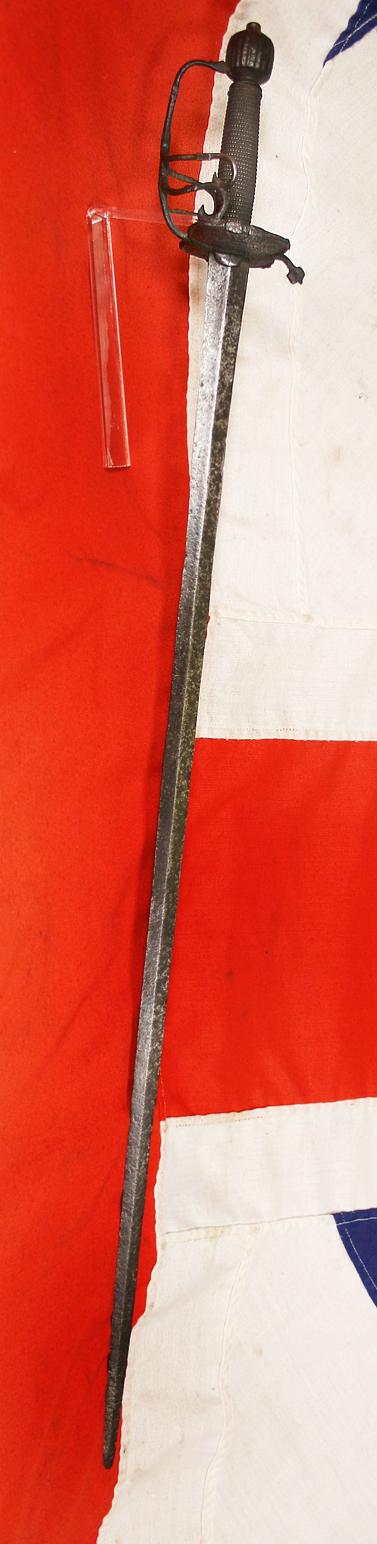
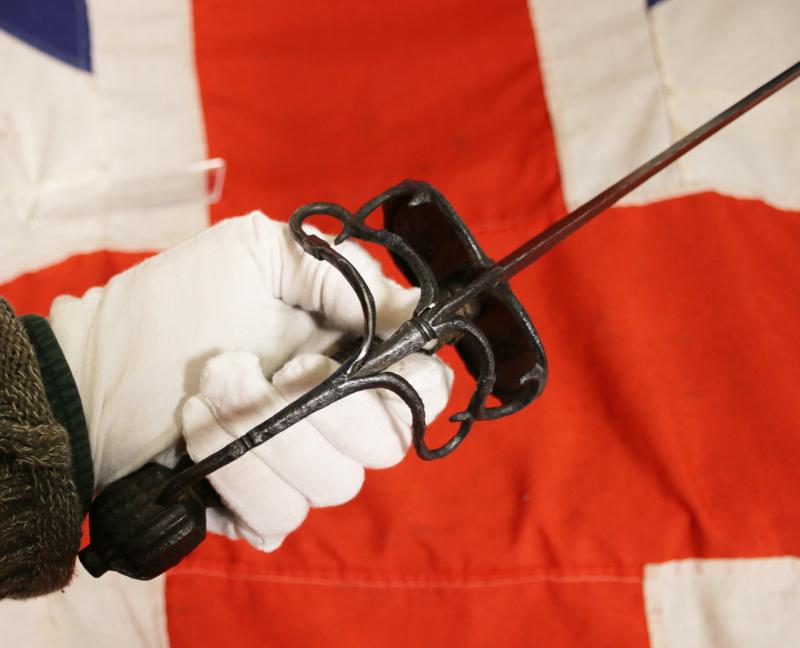
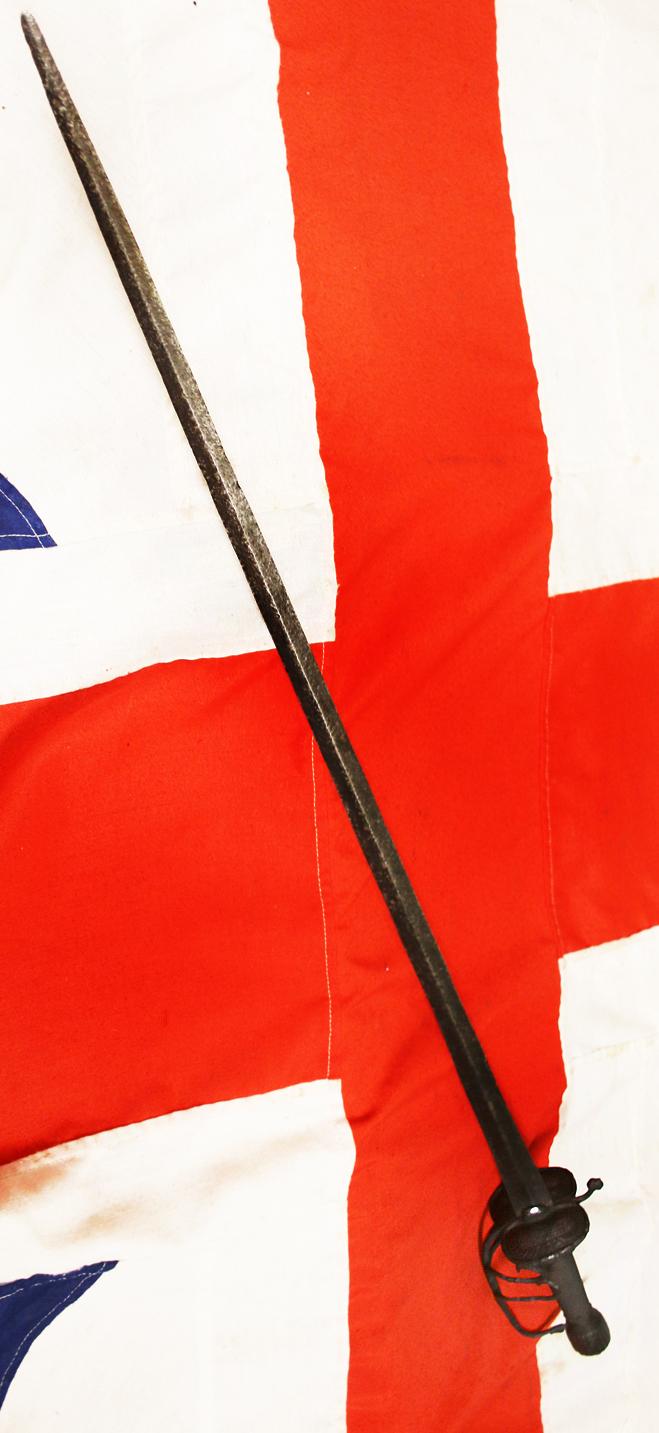
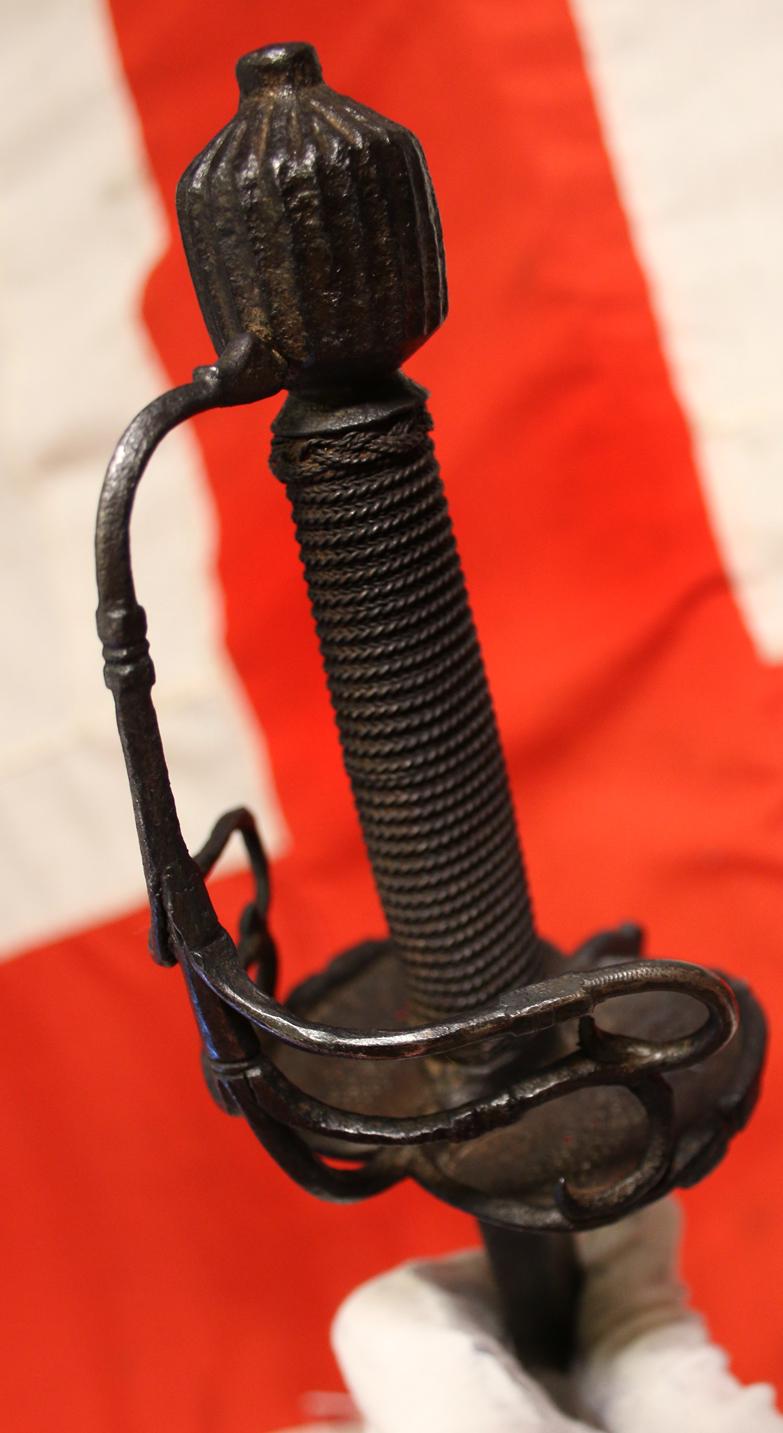
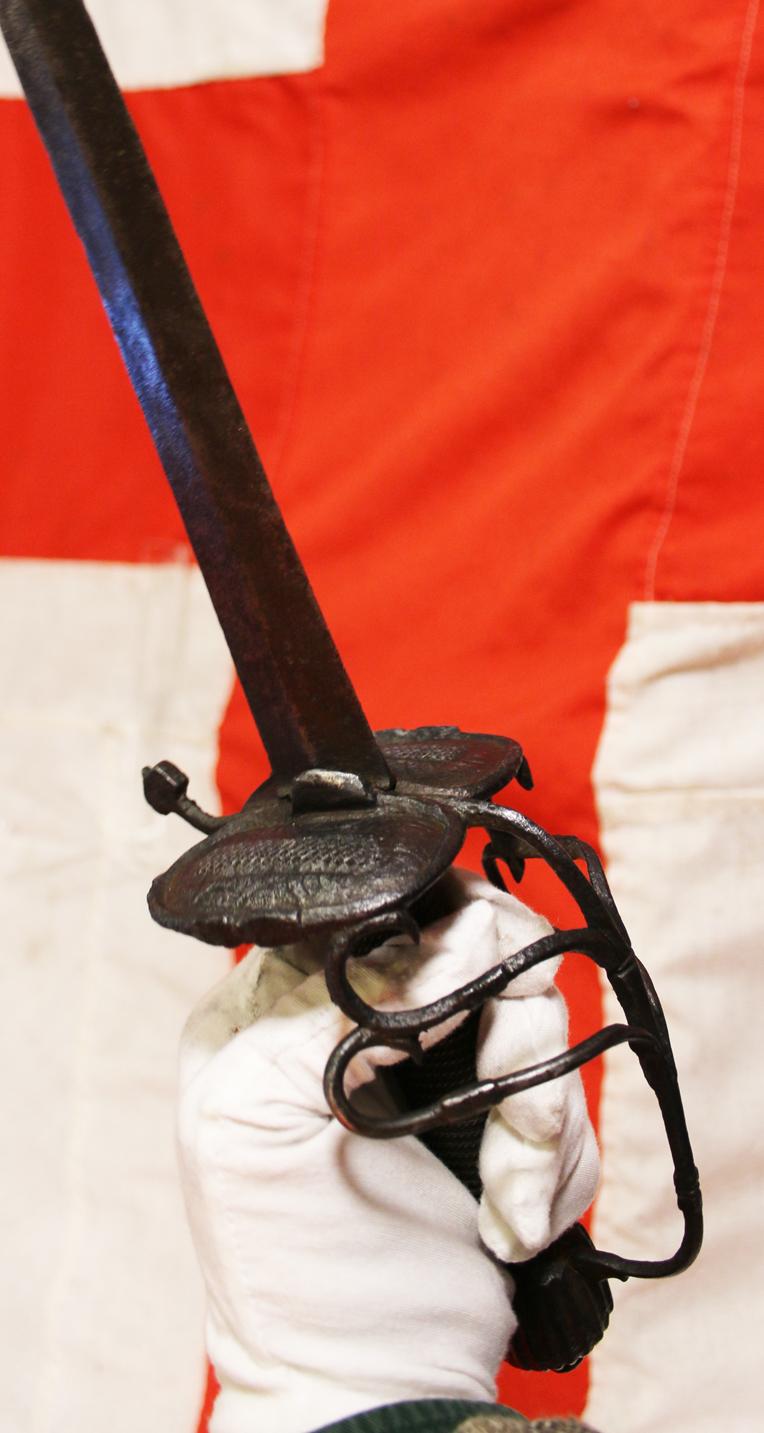
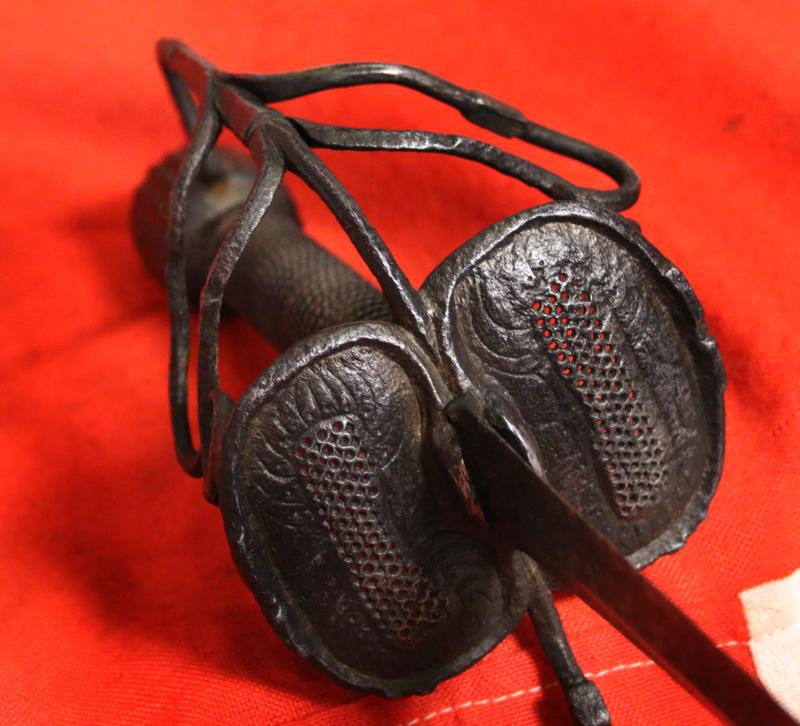
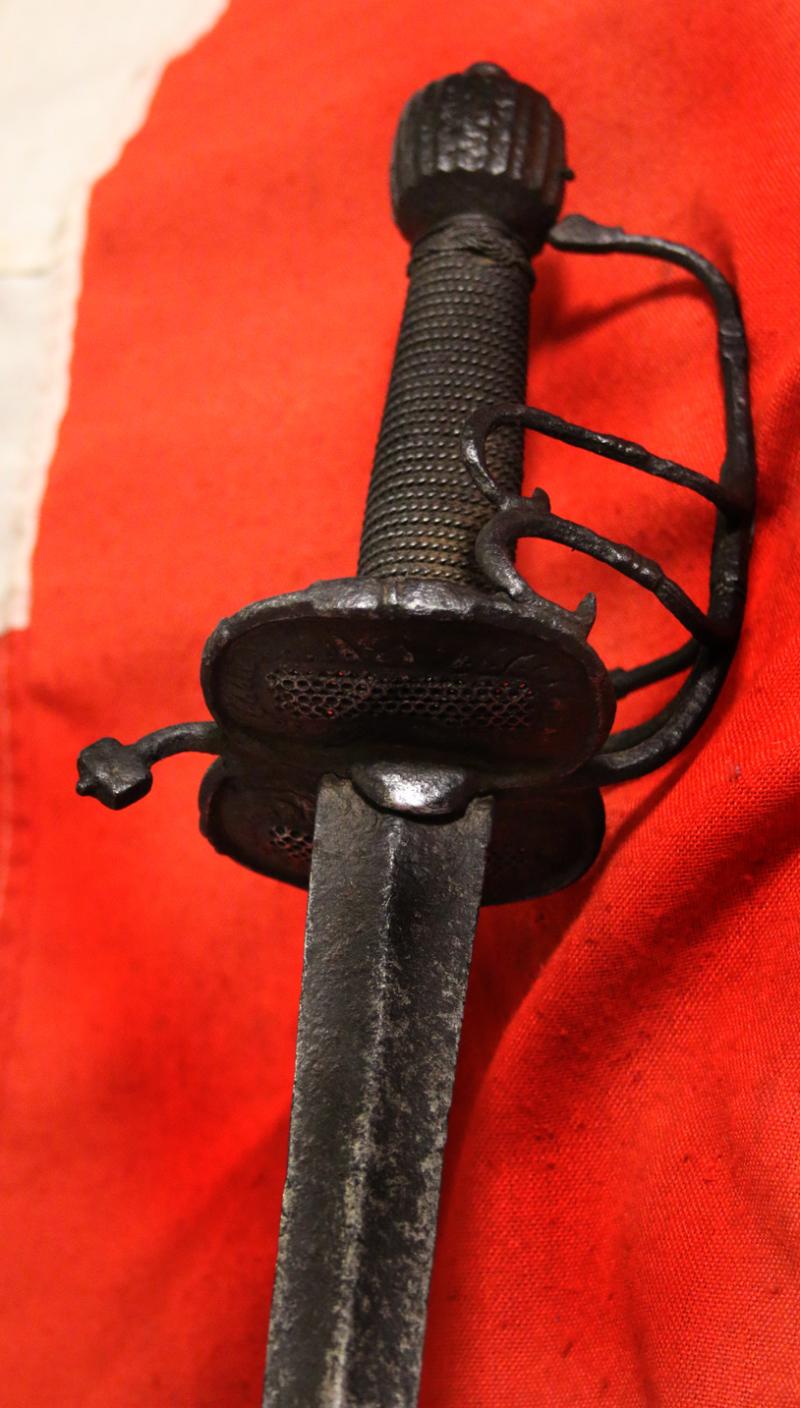
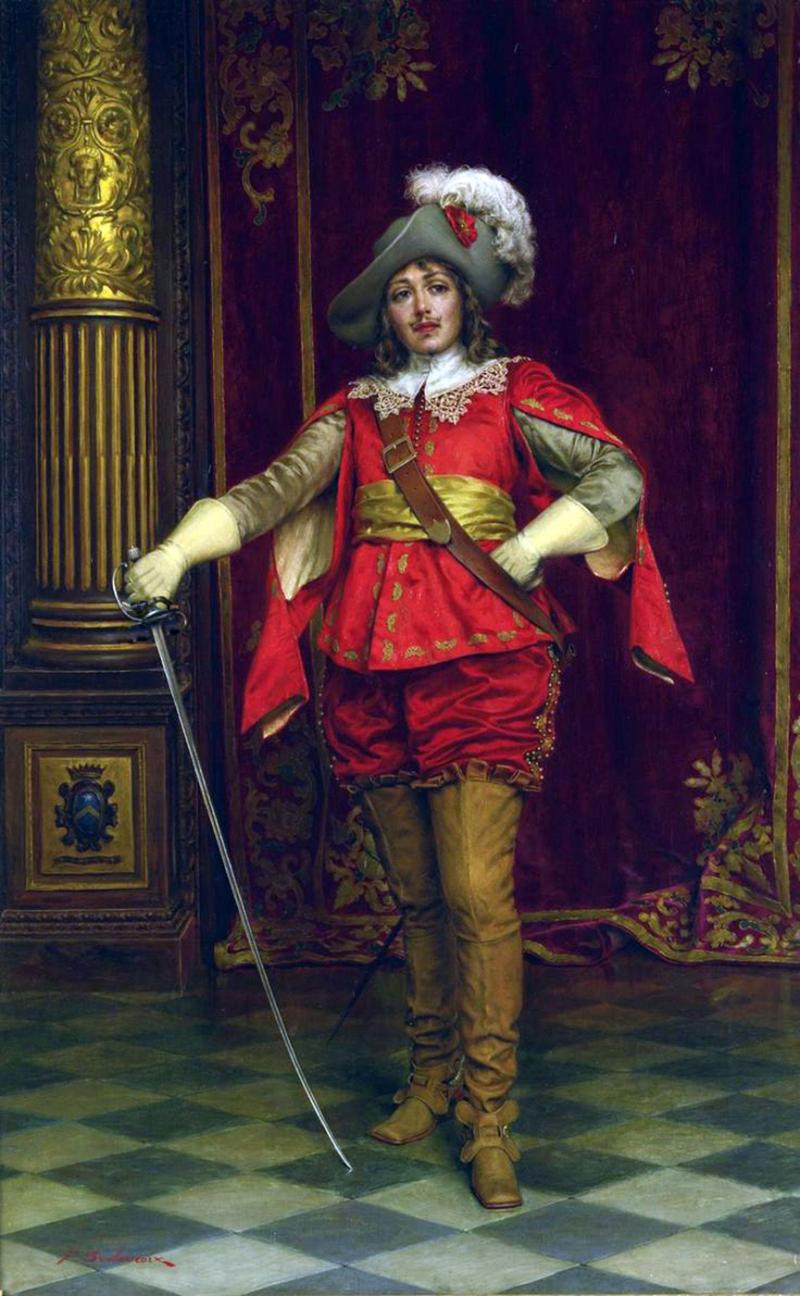
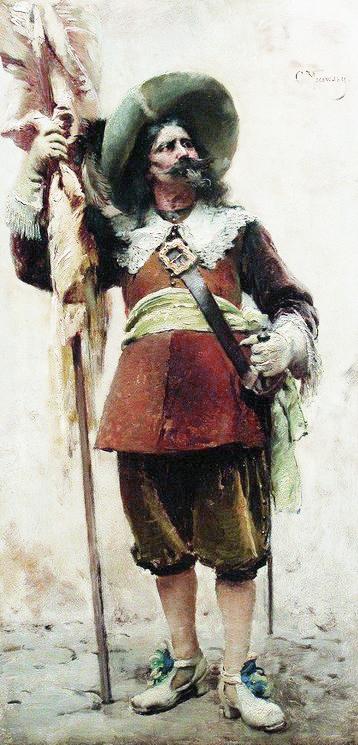
A Very Fine 1640's English Civil War Officer's and Musketeer's Sword, Twin Shell Guard with Multiple Piercings, Knuckle Bow Basket Hilt with Four Scroll Bars Double Edge Rapier Blade
DIamond section long blade, iron basket hilt with four scrolling bars, multiwire grip binding with turks head knot ends. Multi ribbed long pommel. Superb and beautifully hand pierced double shell guards.
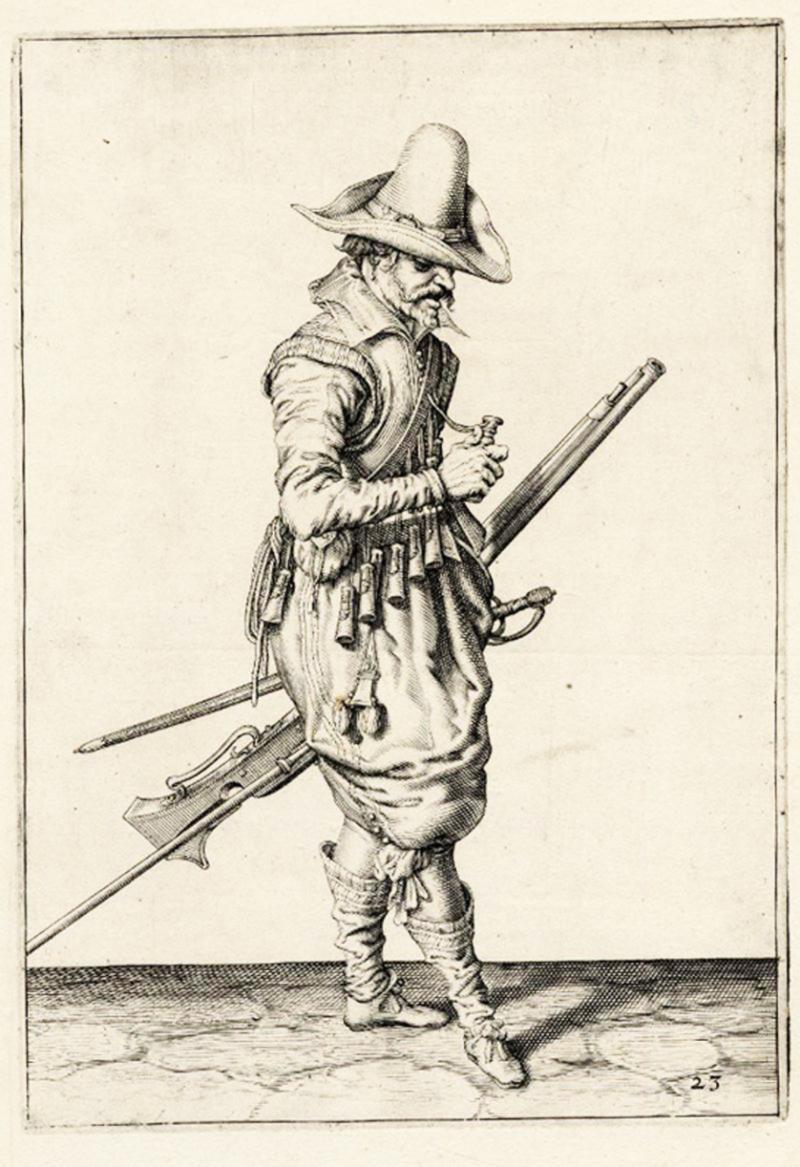
During the English Civil War (1642–1651), rapiers were Musketeers played a vital role in the battles and sieges of the English Civil Wars (1642-1651). As the war dragged on, weapons became lighter and more accurate, and the musketeers became more capable of effective battlefield manoeuvres.
Volley-fire, where alternate ranks of musketeers provided a continuous barrage of lead bullets, could be extremely effective, and the success of the musket brought about the decline of other types of weapons as warfare, now dominated by gunpowder, became much louder and deadlier than ever before.
Rapiers excelled at accurate thrusts—useful for targeting gaps in armour or heavy buff coats—while cutting swords like backswords and mortuary-hilted swords were widely favoured for chopping and cavalry work
Civil War rapiers generally had long, tapering blades (often around 33 to 43 inches) with diamond, lenticular, or hexagonal cross-sections and stiff points.
Civil War rapiers generally had long, tapering blades (often around 33 to 43 inches) with diamond, lenticular, or hexagonal cross-sections and stiff points.
Infantry were armed with either pikes (5.5-metre/18-foot long poles topped with a long spike), rapiers for officers or muskets. The typical ratio was one pikeman to three musketeers, but this varied throughout the war. and Royalist armies often had a higher proportion of musketeers as they were considered very effective troops. In battle, the infantry companies were arranged into as many as six rows with the musketeers on the flanks and the pikemen in the centre of each group. The most experienced fighting men were placed at the front, and it was the job of the pikemen to protect the musketeers, particularly from enemy cavalry. Sergeants were responsible for keeping good order and ensuring everyone had a ready supply of powder and ammunition. Troop movements in battle were dictated by the use of flags and the sound of drummers, who had a repertoire of at least eight different calls.
Musketeers did not win battles on their own during the English Civil Wars (1642–1651) as both Parliamentarian and Royalist armies fought with combined arms of musketeers, pikemen, and cavalry. However, musketeers played a major role in key victories by both sides, including Powick Bridge (1642) for the Royalists, and Marston Moor (1644) and Naseby (1645) for Parliament
Battle of Marston Moor (July 1644 – Parliamentarian and Scottish Covenanter victory). Musketeers fought in the main infantry blocks and were placed in platoons among cavalry divisions to disrupt opposing horsemen, helping break Royalist control of northern England.
Battle of Powick Bridge (September 1642 – Royalist victory). Prince Rupert used mounted musketeers (dragoons) to fire on advancing Parliamentarian cavalry in a narrow lane, creating confusion and forcing a retreat.
33.5 inch blade
Code: 26453
2950.00 GBP