
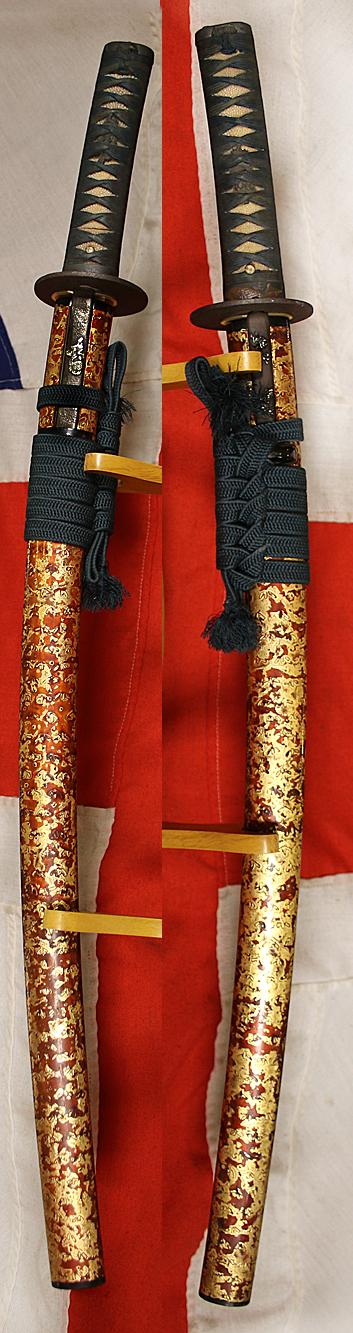
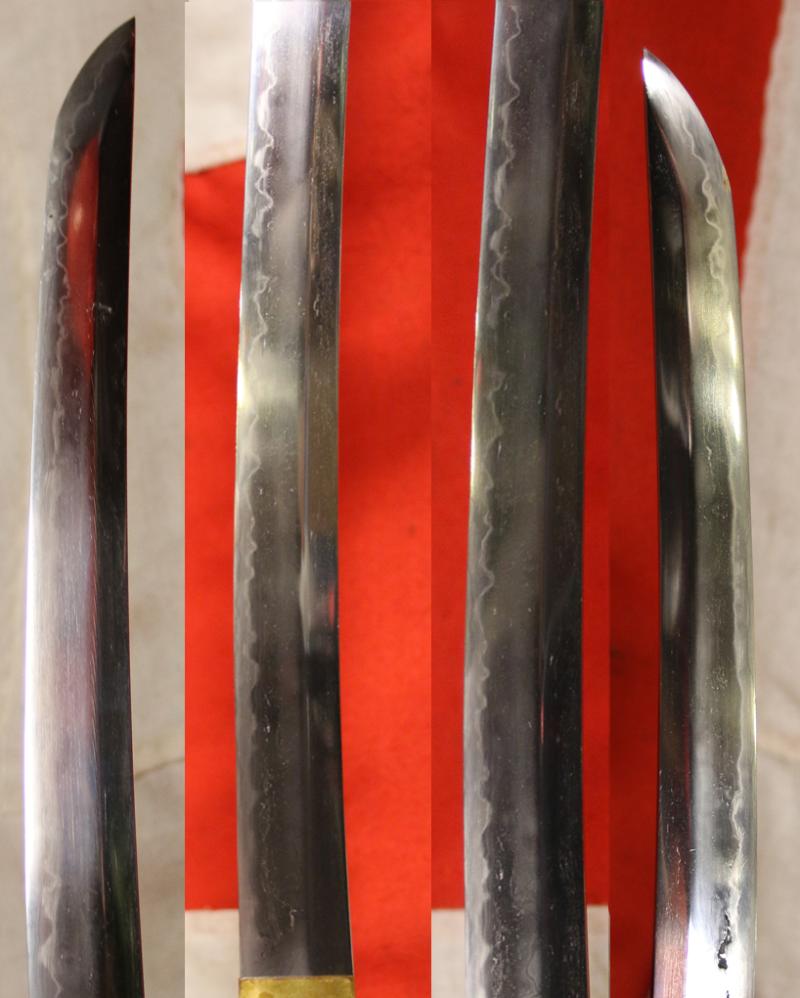
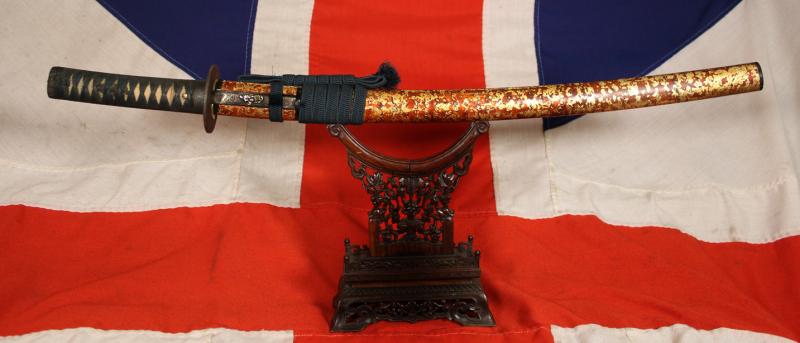
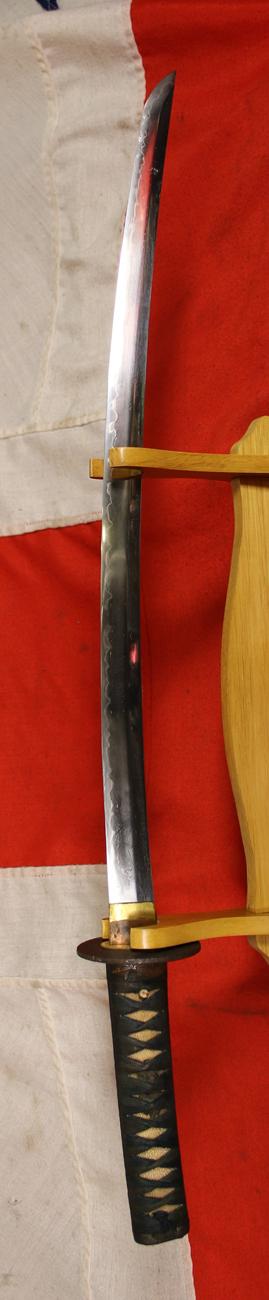
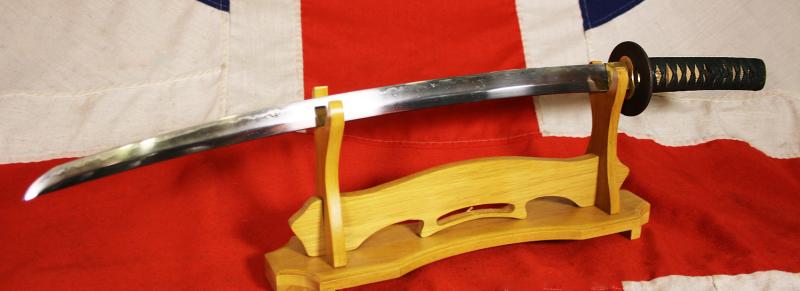
末三原正家 Mihara Masaiye School Signed Chisa Katana With Fabulous Gunome Midare Hamon and A Saya of Kinpaku Gold Work Over Kawari-nuri 変わり塗, Made For, Or Presented To, 吉村次左エ門八市 Yoshimura Jizaemon Hachiichi
Late Muromachi circa 1550, signed Masaiye from the Mihara line of swordsmiths.
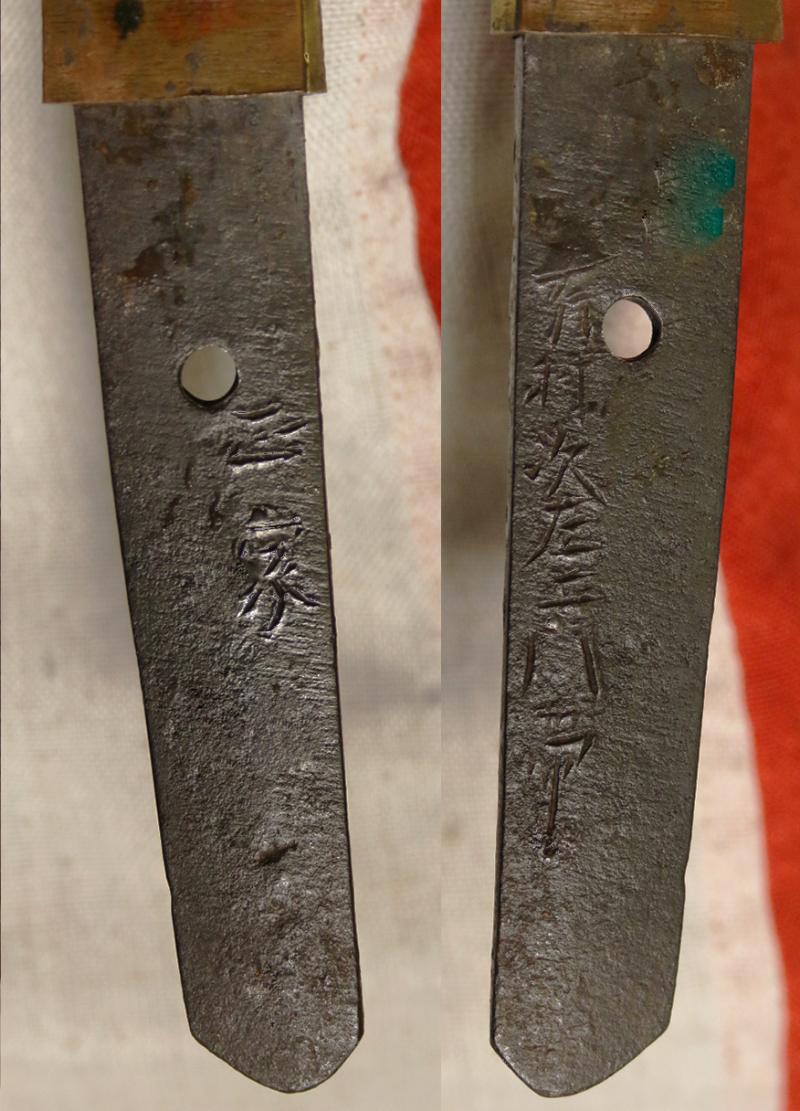
The other name inscribed on the nakago is likely for whom it was made or presented.
吉村次左エ門八市 Yoshimura Jizaemon Hachiichi
吉村 (Yoshimura) is the Japanese family name (surname). The top character (吉) is partially obscured by heavy wear and corrosion near the peg hole (mekugi-ana).
次左エ門 (Jizaemon) was a traditional male given name from the Edo period or earlier. The character エ (e) is used here as an abbreviated phonetic substitute for the more complex kanji 衛 (e in Jizaemon, 次左衛門).
八市 (Hachiichi) Which is ikely a secondary given name, common name (tsūshō), or personal identifier associated with the owner or maker.
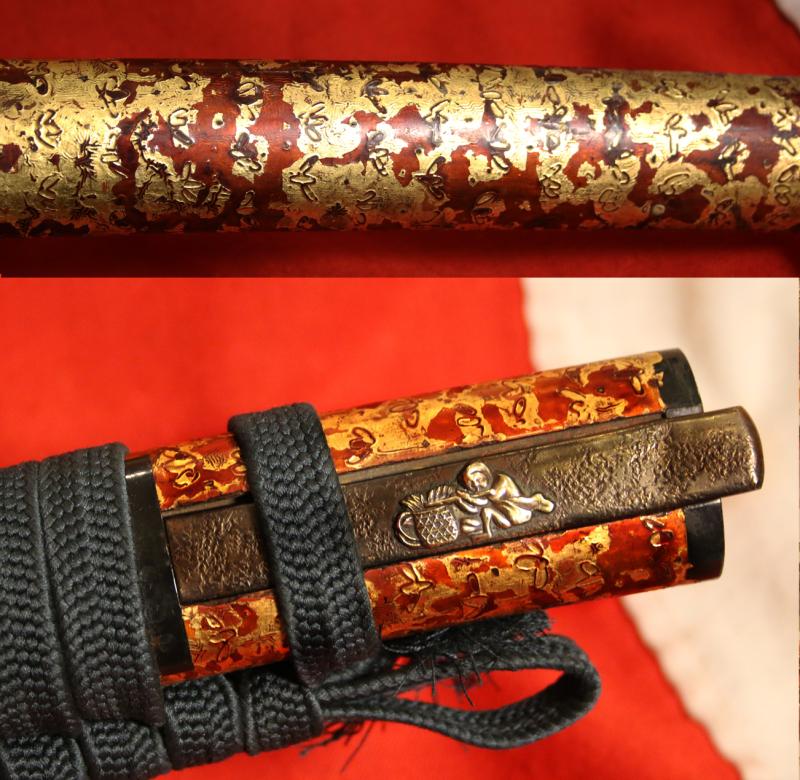
The scabbard (saya) displays a classic Edo-period Kawari-nuri (変わり塗, "variant lacquer") finish combining reddish-brown urushi lacquer with applied gold leaf (kinpaku).
The finish belongs to the kawari-nuri family—a broad category of decorative, textured lacquerwork that flourished during the Edo period (1603–1868) specifically for sword mountings (koshirae).
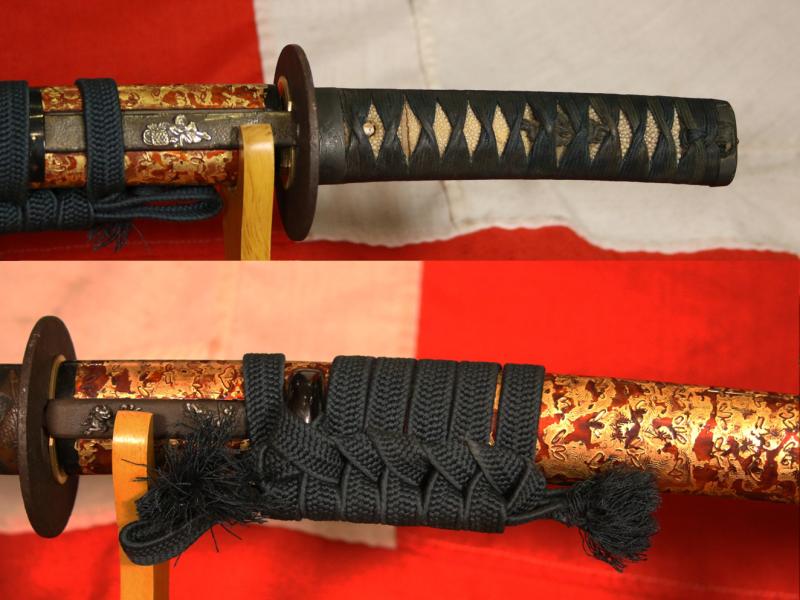
Gold Foil Application (Kinpaku-oshi / Haku-e). Irregular patches of gold leaf are pressed onto a base of warm, reddish-brown lacquer (shu-urushi or benigara-urushi) and sealed beneath transparent topcoats (suki-urushi) that deepen to an amber hue over time. Small, raised, organic impressions—resembling scattered pine needles, seeds, or stylized leaf clusters—are built up in the underlayers before the gold foil is burnished over them, creating high-contrast recesses where the dark red lacquer shows through.
During the peaceful Edo period, sumptuary laws often restricted overt displays of wealth, prompting samurai and artisans to innovate subtle yet luxurious saya-nuri (scabbard lacquer) styles that showcased craftsmanship through texture and layered materials rather than purely pictorial gold maki-e.
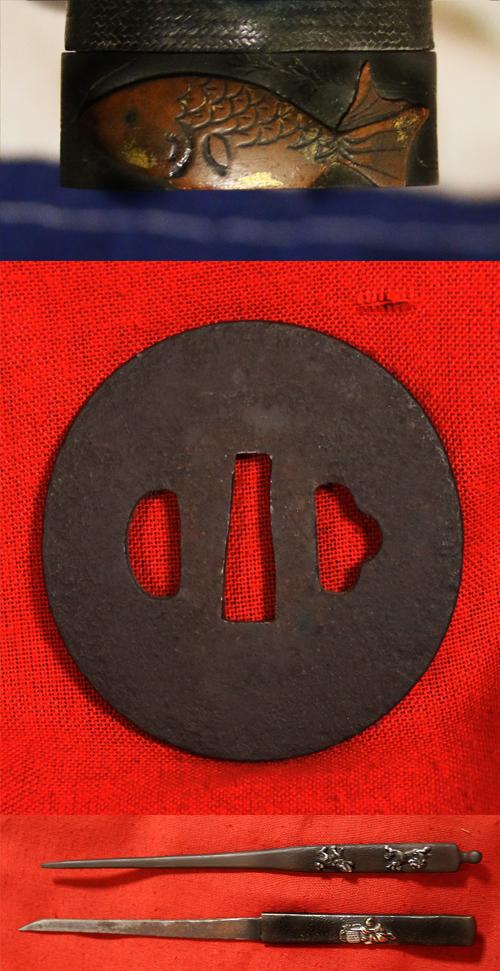
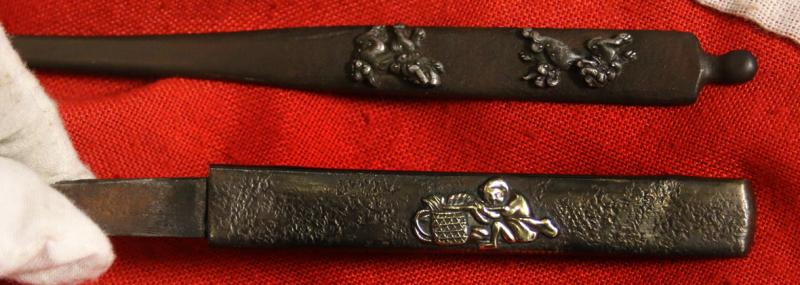
The fuchi is shakudo with a takebori carp signed Kiyonaga, the tsuba is very reserved, in plain circular tettsu iron with both kozuka-ana and kogai-ana. the kashira is iron with a small applied decorative feature, the kozuka is sinchu decorated with a seated peasant playing a flute. The later kogai is plain iron Higostyle with takebore shishi. The menuki, underneath the original Edo tsuka-ito, above the samegawa, are iron dragon.
The blade shows superb beauty and the surface has natural, aged, blade thinning, showing small light kitae-ware, fukure.
Code: 26444
Price
on
Request