
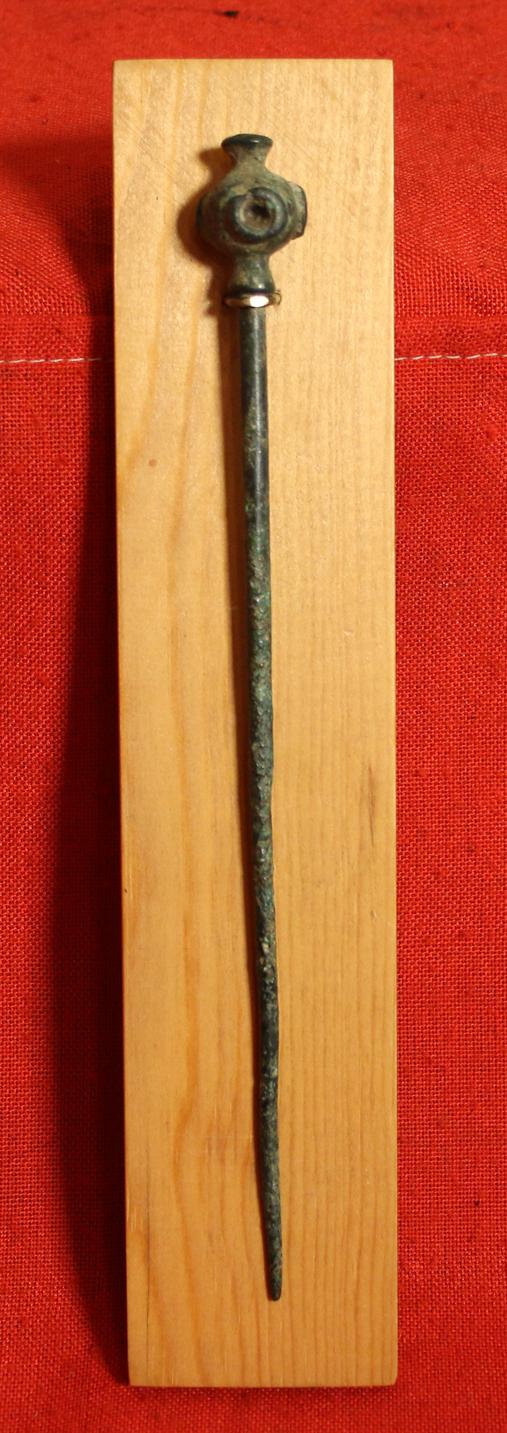
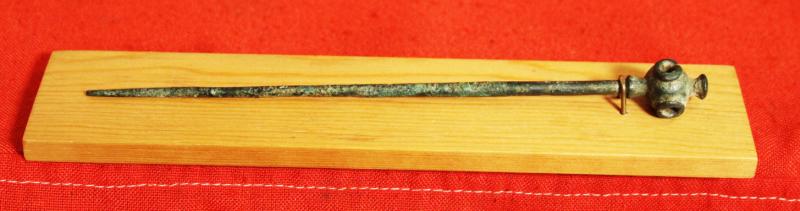
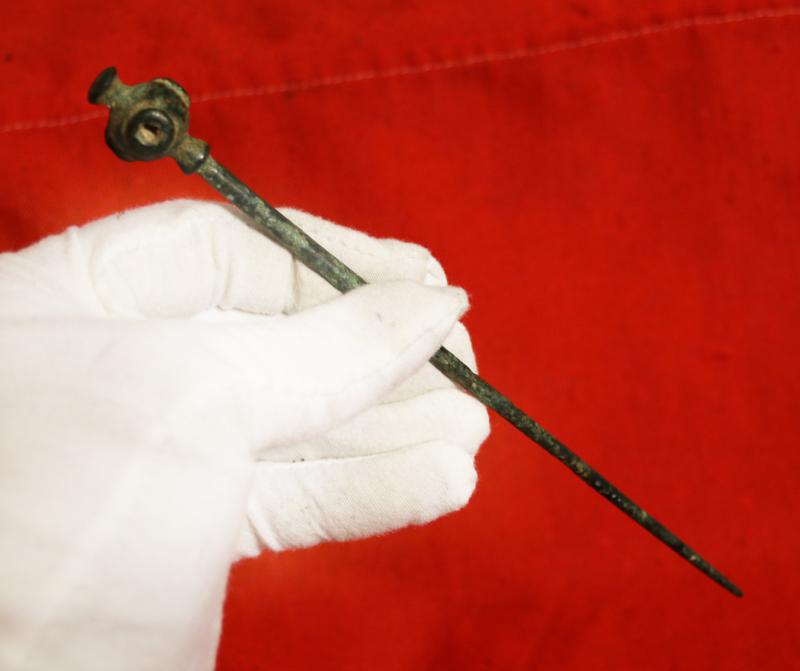
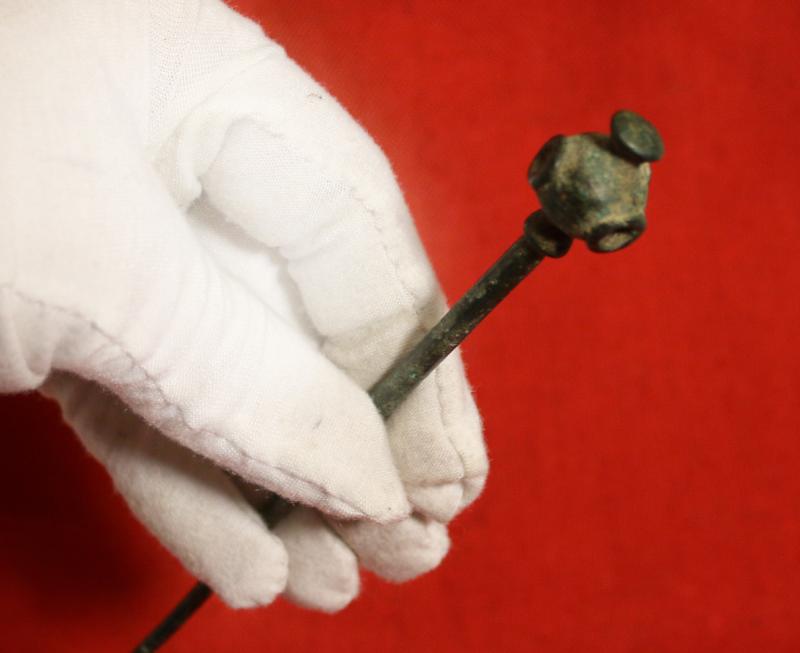
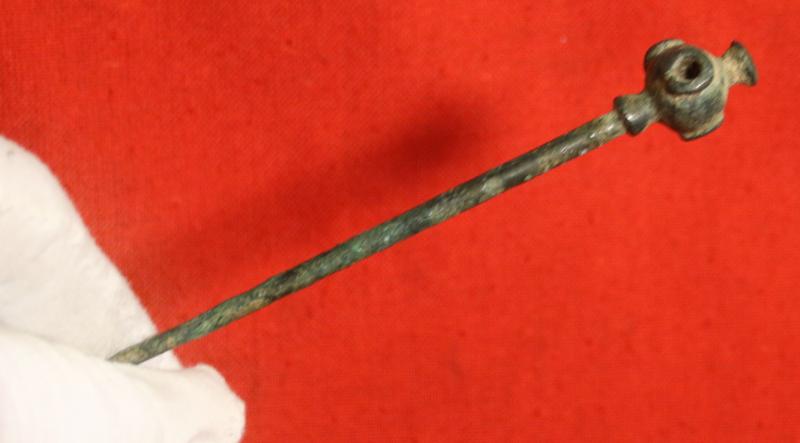


A Stunning & Most Rare Large Viking Bronze Stylus With Bulbous Finial and Circular Eraser for Wax Tablets. Similar to Another In Oldsaksamlingen, Historisk Museum, Oslo, Norway. 9th Century. Often Buried With a High Rank Viking To Take To The Afterlife
A typical 9th-century Viking bronze stylus was dual-purpose, operating as both a pen and an eraser:
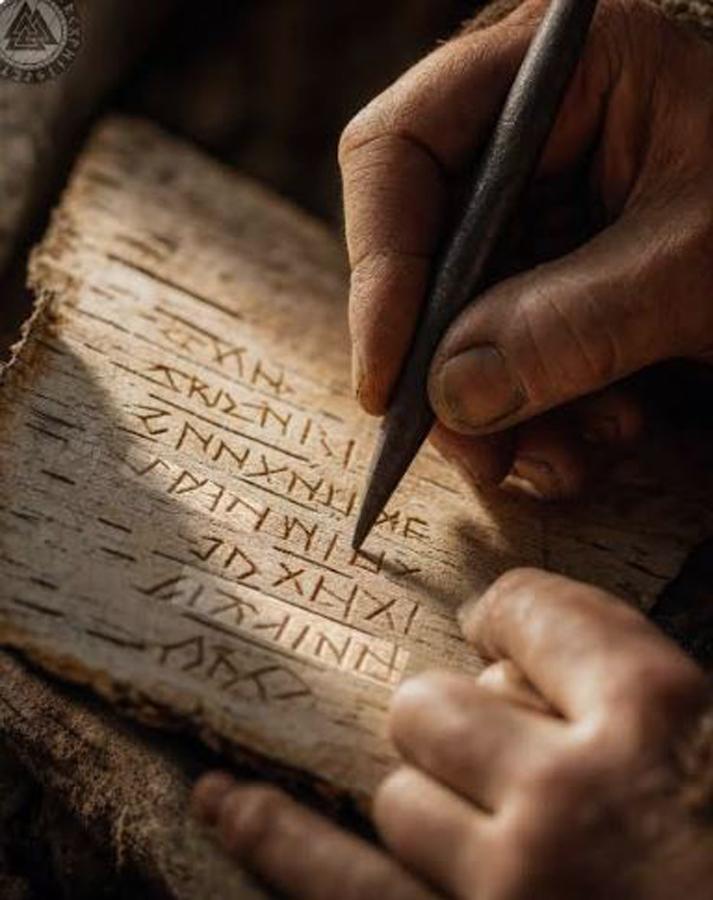
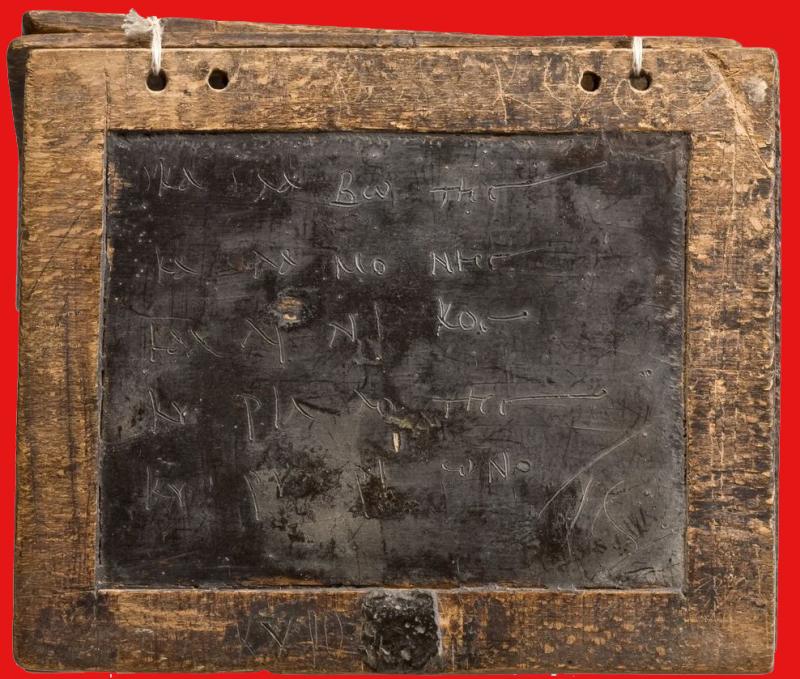
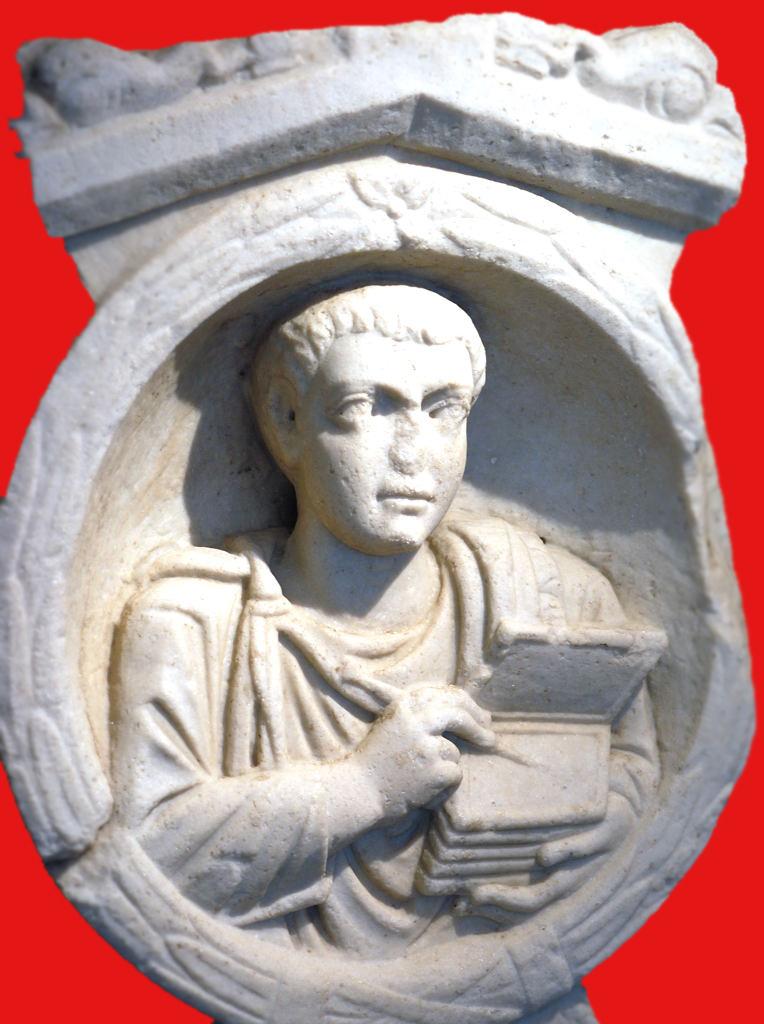
These styli were used to compose temporary text, layout draft designs, and teach literacy. They were utilized for writing everything from Norse runes to Latin and Glagolitic characters depending on the trade network. Because metal writing tools were expensive and wax tablets required specialized upkeep, styli are typically recovered from high-status trading hubs, early Christian churchyards, or rich pagan burials where merchants and elites wanted to take their prized tools to the afterlife
Extant examples from this era show incredible regional variety. For example, a 9th-10th century bronze stylus found in Borre, Norway features an intricate bulbous finial formed by curved bands, while other regional variants found across Eastern Europe (such as the Kievan Rus spheres) display highly unique zoomorphic symbols or attached suspension rings
The opposite end featured a flattened, widened, or bulbous decorative side. This was used to smooth or flatten the wax out, essentially "rubbing out" mistakes or clearing the tablet so it could be reused.
The Viking afterlife
Valhalla: Odin's golden hall in Asgard, where half of the elite warriors slain in combat are chosen by the Valkyries to train and feast in preparation for Ragnarök.
Fólkvangr: The "field of the host" ruled by the goddess Freyja, who claims the other half of those who fall in battle. Poetic Edda poem Grímnismá.
Fólkvangr er inn níundi,
en þar Freyja ræðr
sessa kostum í sal;
halfan val
hon kýss hverjan dag,
en halfan Óðinn á.
Rán's Realm: An underwater domain beneath the waves presided over by the sea goddess Rán, welcoming those who drowned at sea.
The Schøyen Collection (MS 1987/12): Houses a famous Viking Stylus from Norway dating to the 9th–10th century. Discovered near Borre, Vestfold, it is an 18 cm bronze piece featuring a round, flattened eraser.
7.5 inches long
Code: 26422
295.00 GBP