
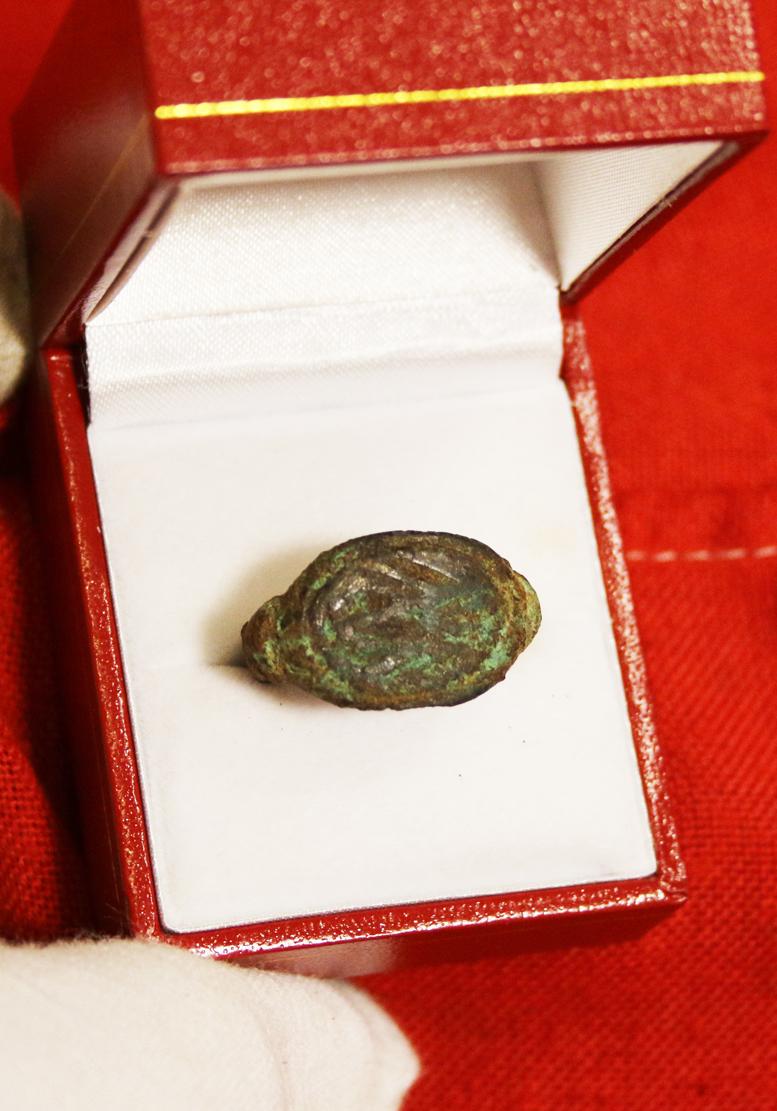
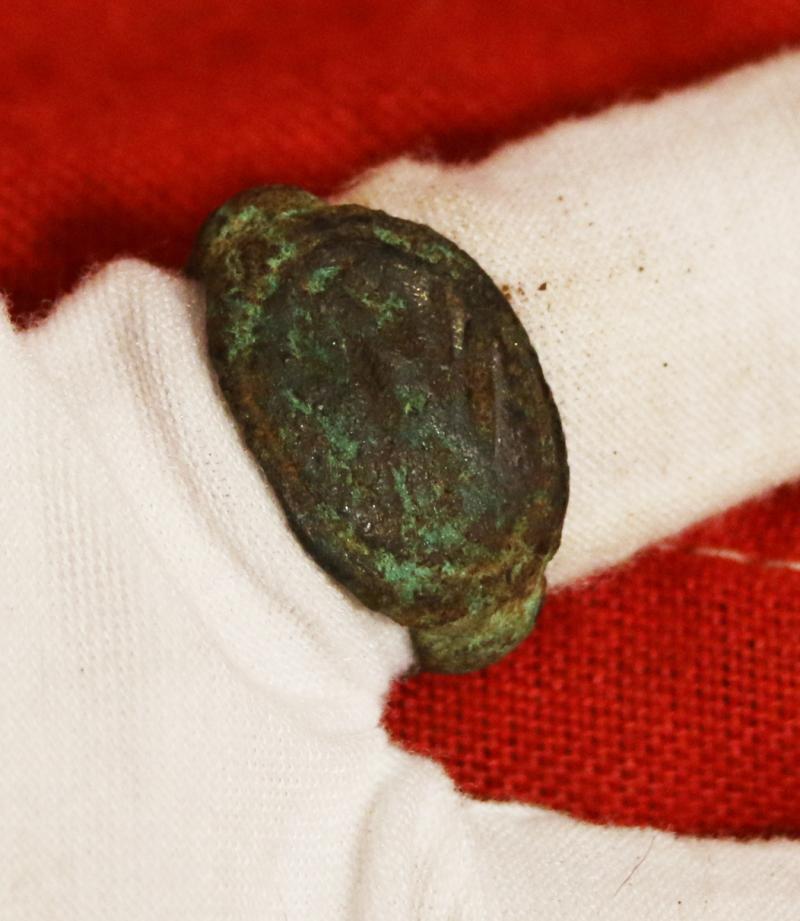
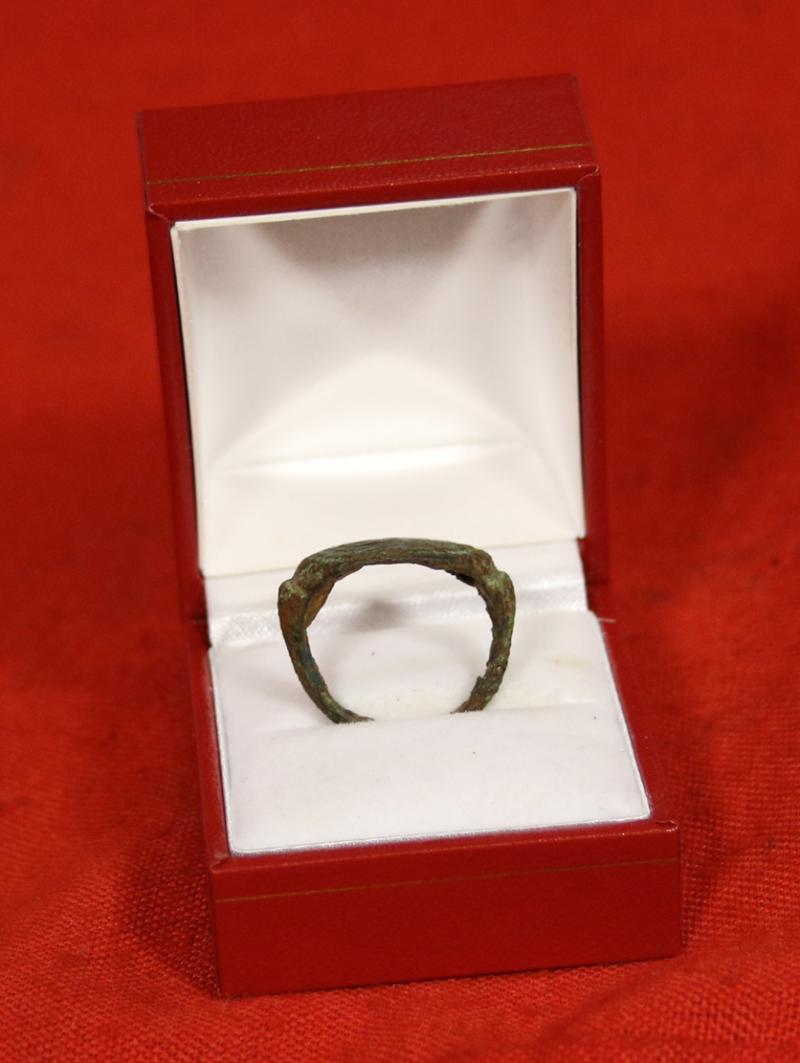
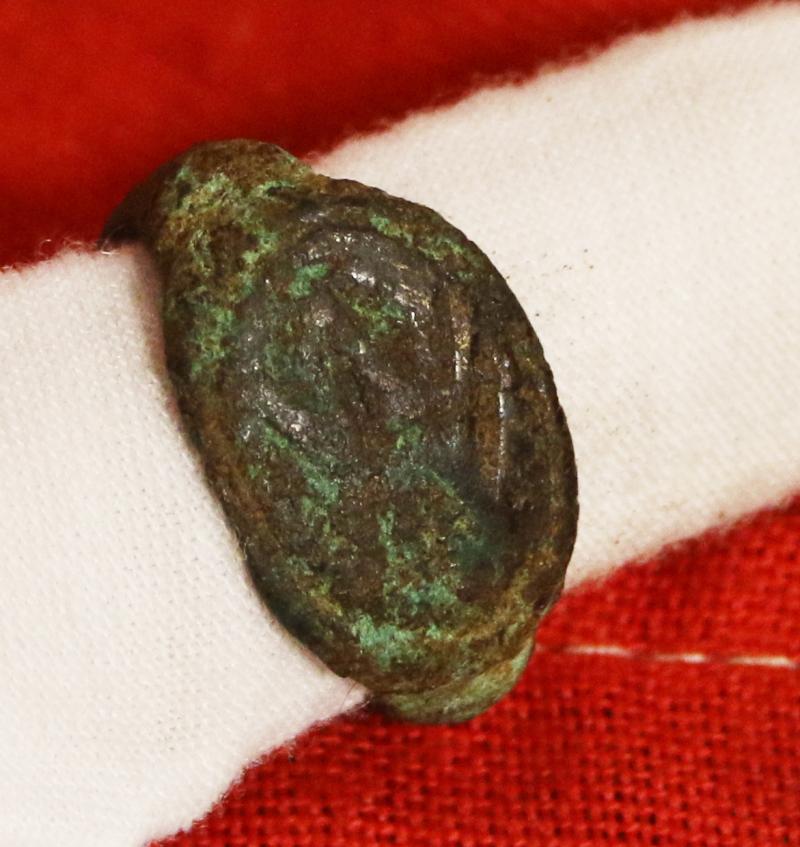
A Beautiful Original Roman 1st to 2nd Century A.D. Modius or Fire Alter Status Seal Ring. Worn From The Reigns Of Emperor Augustus Through To Emperor Flavian. Recovered at a Dig in the 1830's by Hadrian's Wall, by the 10th Duke of Hamilton
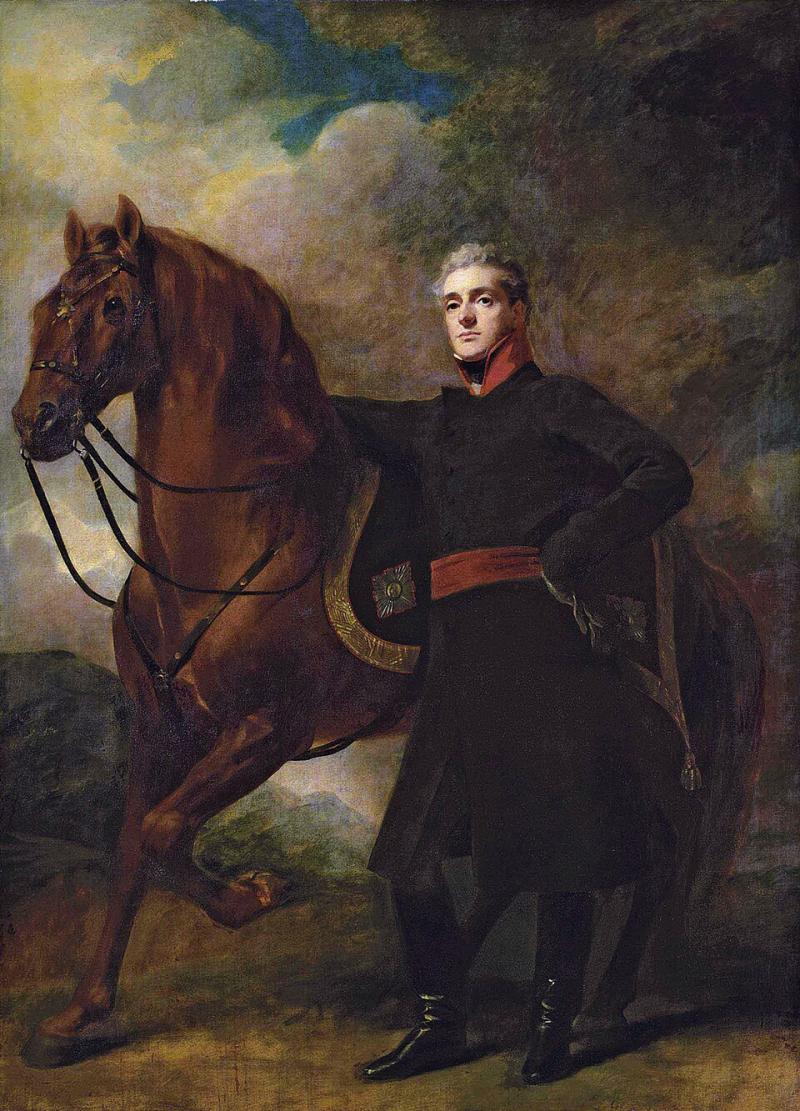
Hamilton was a well-known dandy of his day. An obituary notice states that "timidity and variableness of temperament prevented his rendering much service to, or being much relied on by his party ... With a great predisposition to over-estimate the importance of ancient birth ... he well deserved to be considered the proudest man in England." He also supported Napoleon and commissioned the painting The Emperor Napoleon in His Study at the Tuileries by Jacques-Louis David.
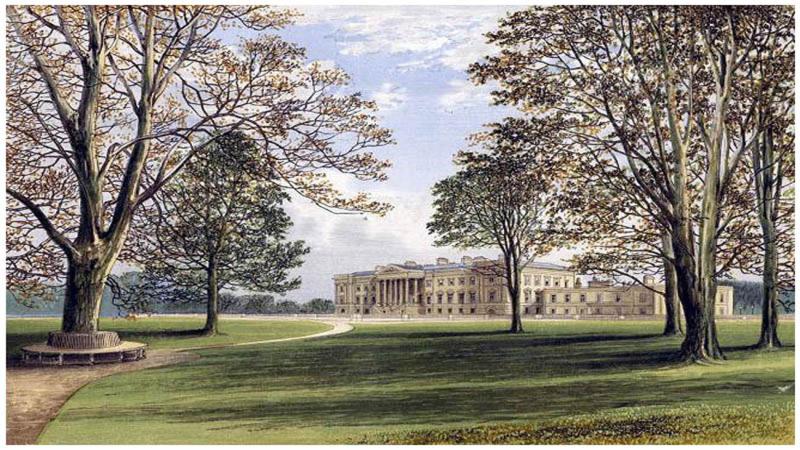
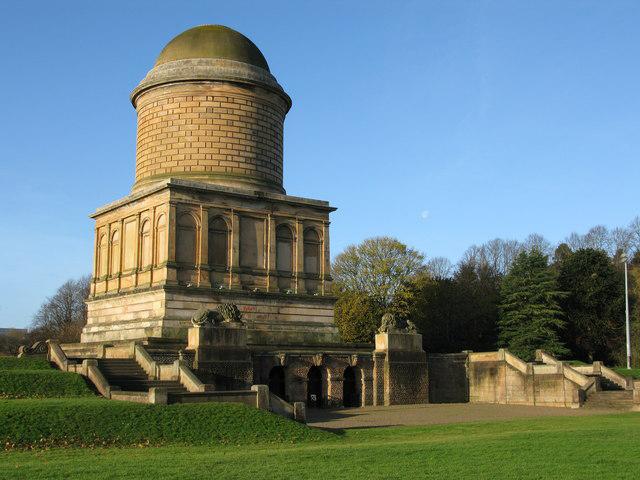
Hamilton had a strong interest in antiquities, especially Ancient Egyptian mummies, and was so impressed with the work of mummy expert Thomas Pettigrew that he arranged for Pettigrew to mummify him after his death. He died on 18 August 1852 at age 84 at 12 Portman Square, London, England and was buried on 4 September 1852 at Hamilton Palace, Hamilton,Scotland. Agreed by many, in its day, to have been one of the the most spectacular palaces in all Europe, and certainly the largest in Scotland, but sadly demolished in 1921. See picture 7 of the former Hamilton Palace in the gallery, picture 8 the10th Duke painted by Henry Raeburn, and picture 9 is the Hamilton Mausoleum today,
In accordance with his wishes, Hamilton's body was mummified after his death and placed in a sarcophagus of the Ptolemaic period that he had originally acquired in Paris in 1836 ostensibly for the British Museum. At the same time he had acquired the sarcophagus of Pabasa, an important nobleman which is now in the Kelvingrove Museum. In 1842 Hamilton had begun construction of the Hamilton Mausoleum as repository for the overcrowded family vault at the Palace. He was interred there with other Dukes of Hamilton, from the 1858 completion of the Mausoleum until 1921 when subsidence and the subsequent demolition of the Palace forced removal of the bodies to the Bent Cemetery in Hamilton, where he still lies buried in his sarcophagus.
“The destruction of Hamilton Palace… was one of the greatest losses to national heritage ever to happen in this country,” writes National Museums Scotland.
Once one of the most influential families in Scotland, the family heirlooms were unceremoniously sold off to the highest bidder, and the grand mansion torn down.
The end came for the palace in 1921; after almost four decades of neglect, it was demolished and erased from the landscape forever
His collection of paintings, objects, books and manuscripts was sold for £397,562 in July 1882, the equivalant today of around £62,000,000. The manuscripts were purchased by the German government for £80,000. Some were repurchased by the British government and are now in the British Museum.
Lord Lamington, in The Days of the Dandies, wrote of him that 'never was such a magnifico as the 10th Duke, the Ambassador to the Empress Catherine; when I knew him he was very old, but held himself straight as any grenadier. He was always dressed in a military laced undress coat, tights and Hessian boots, &c'. Lady Stafford in letters to her son mentioned 'his great Coat, long Queue, and Fingers cover'd with gold Rings', and his foreign appearance. According to another obituary in The Gentleman's Magazine, he had 'an intense family pride'.
The Julian Dynasty
Augustus (also known as Octavian, he was the first official emperor, reigning from 27 BC to AD 14)
Tiberius (reigned from AD 14 to 37)
Caligula (reigned from AD 37 to 41)
Claudius (reigned from AD 41 to 54)
Nero (reigned from AD 54 to 68)
The year of the 4 emperors, preceded by reign dates.
June 68 - Jan 69: Galba
Jan 69 - Apr 69: Otho
Apr 69 - Dec 69: Vitellius
The Flavian Dynasty
69 - 79: Vespasian
79 - 81: Titus
81 - 96: Domitian
The Nerva-Antonine Dynasty
96 - 98: Nerva
98 - 117 a.d.: Trajan
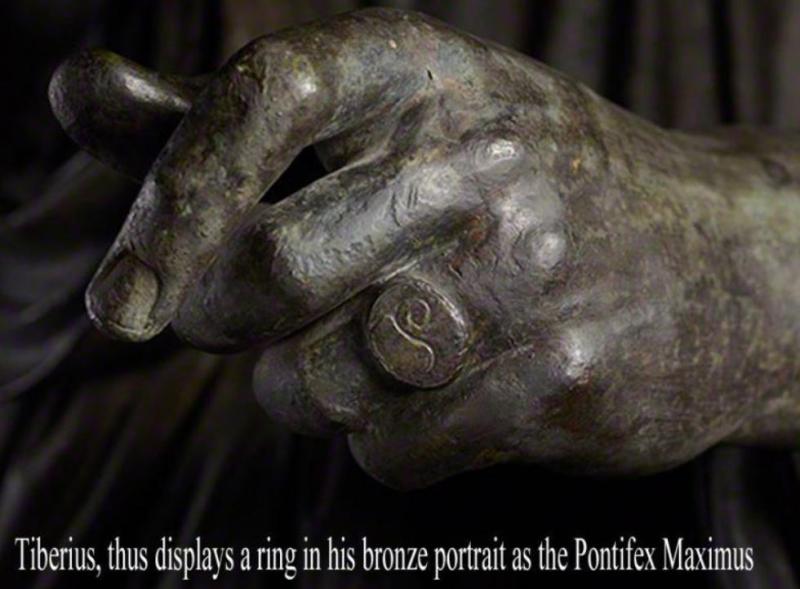
Henig type Xb. Wide oval bezel affixed to flattened shoulders engraved copper alloy. Almost identical to another one found in Britain near Hadrian's Wall. Engraved to either to represent the Zaroastrian fire altar, or vessel of sprouting grains. The engraved intaglio seal ring was important for displaying the Roman's status.
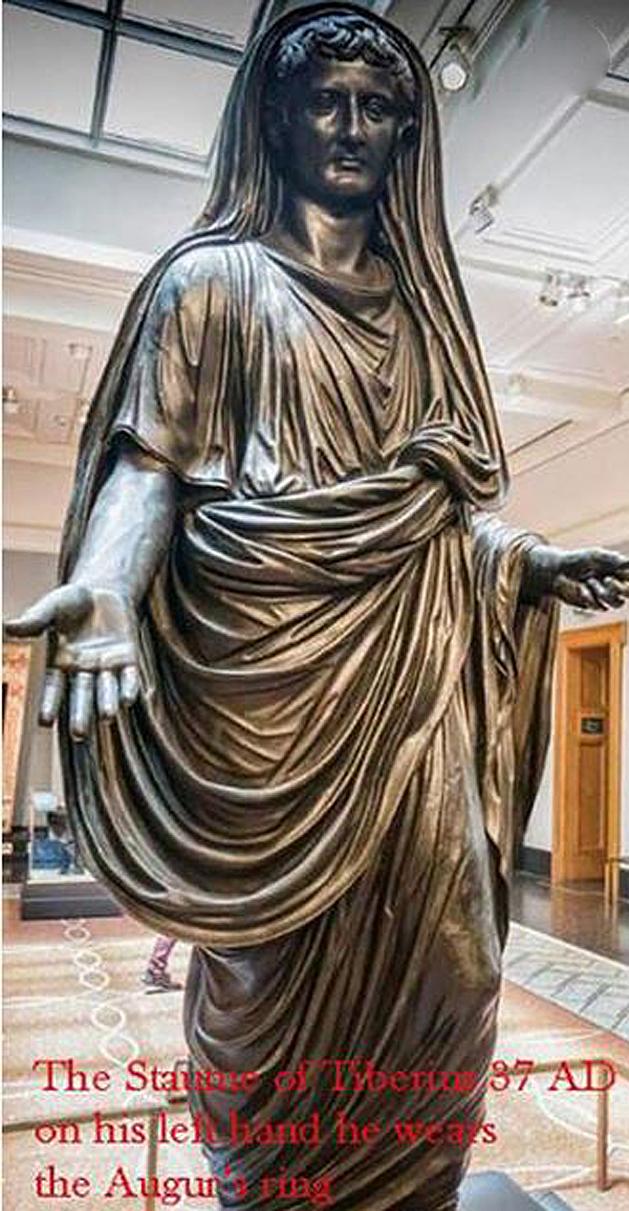
For example Tiberius, who was after all left-handed according to Suetonius, thus displays a ring in his bronze portrait as the Pontifex Maximus: The complete Roman Empire had around a 60 million population and a census more perfect than many parts of the world (to collect taxes, of course) but identification was still quite difficult and aggravated even more because there were a maximum of 17 men names and the women received the name of the family in feminine and a number (Prima for First, Secunda for Second…). A lot of people had the same exact name.
So the Roman proved the citizenship by inscribing themselves (or the slaves when they freed them) in the census, usually accompanied with two witnesses. Roman inscribed in the census were citizens and used an iron or bronze ring to prove it. With Augustus, those that could prove a wealth of more than 400,000 sesterces were part of a privileged class called Equites (knights) that came from the original nobles that could afford a horse. The Equites were middle-high class and wore a bronze or gold ring to prove it, with the famous Angusticlavia (a tunic with an expensive red-purple twin line). Senators (those with a wealth of more than 1,000,000 sesterces) also used the gold ring and the Laticlave, a broad band of purple in the tunic.
So the rings were very important to tell from a glimpse of eye if a traveller was a citizen, an equites or a senator, or legionary. People sealed and signed letters with the rings and its falsification could bring death.
The fugitive slaves didn’t have rings but iron collars with texts like “If found, return me to X” which also helped to recognise them. The domesticus slaves (the ones that lived in houses) didn’t wore the collar but sometimes were marked. A ring discovered 50 years ago is now believed to possibly be the ring of Pontius Pilate himself, and it was the same copper-bronze form ring as is this one. Comes in a complimentary box
Code: 26404
420.00 GBP