
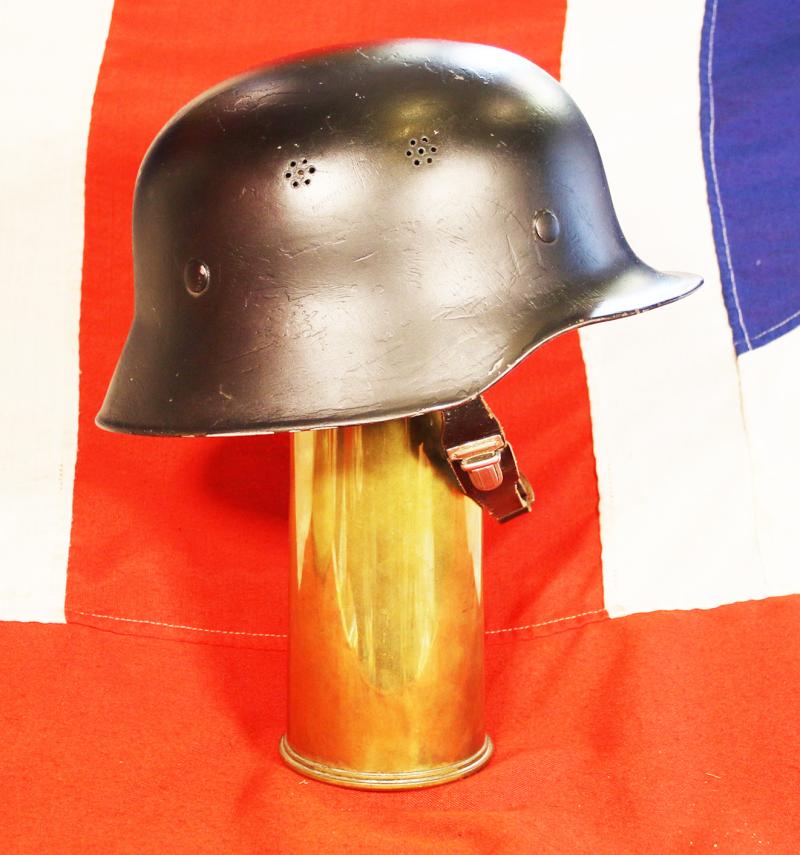
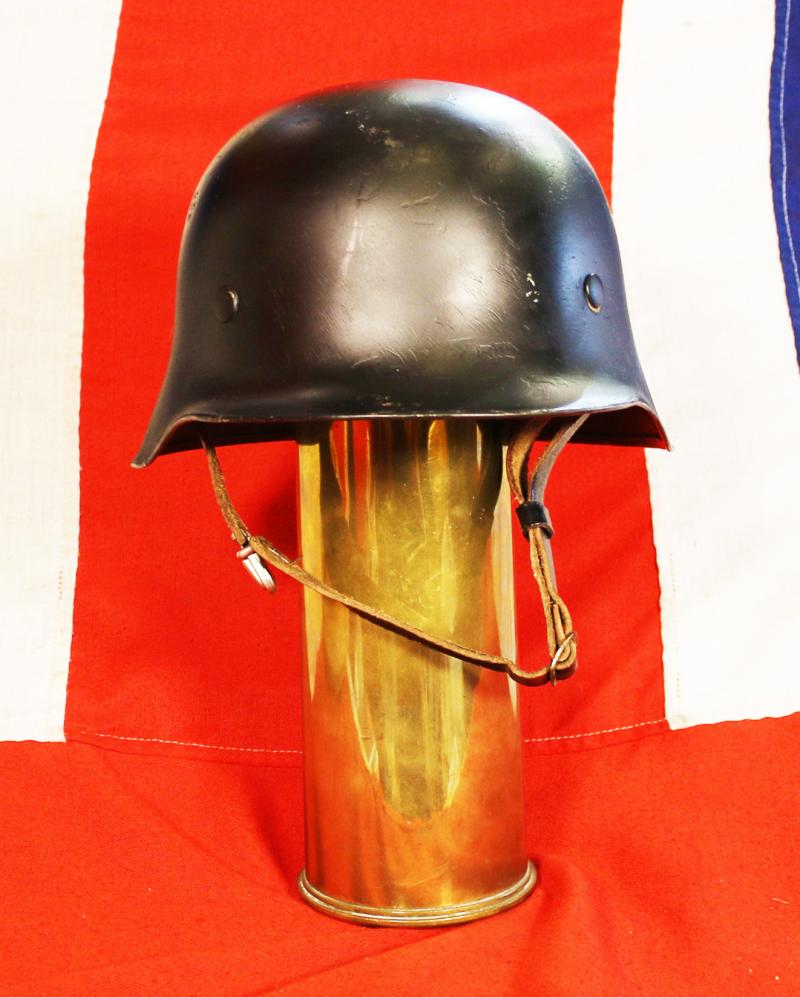
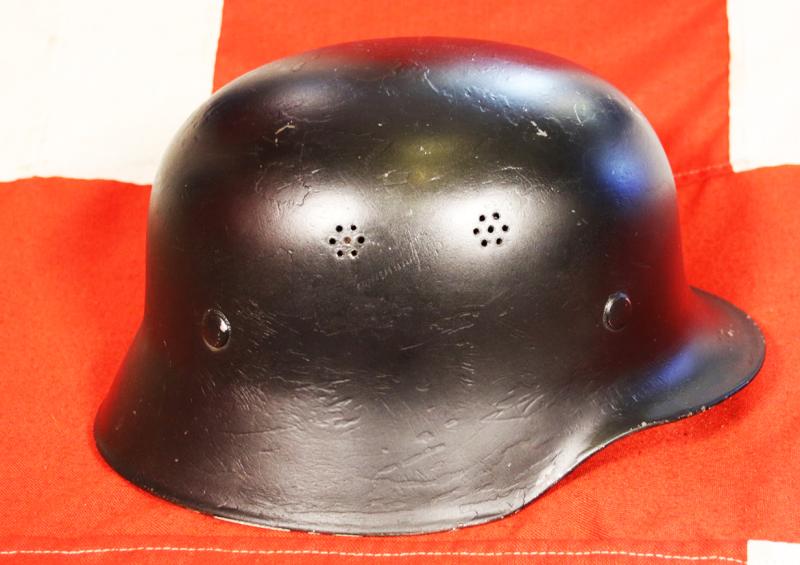
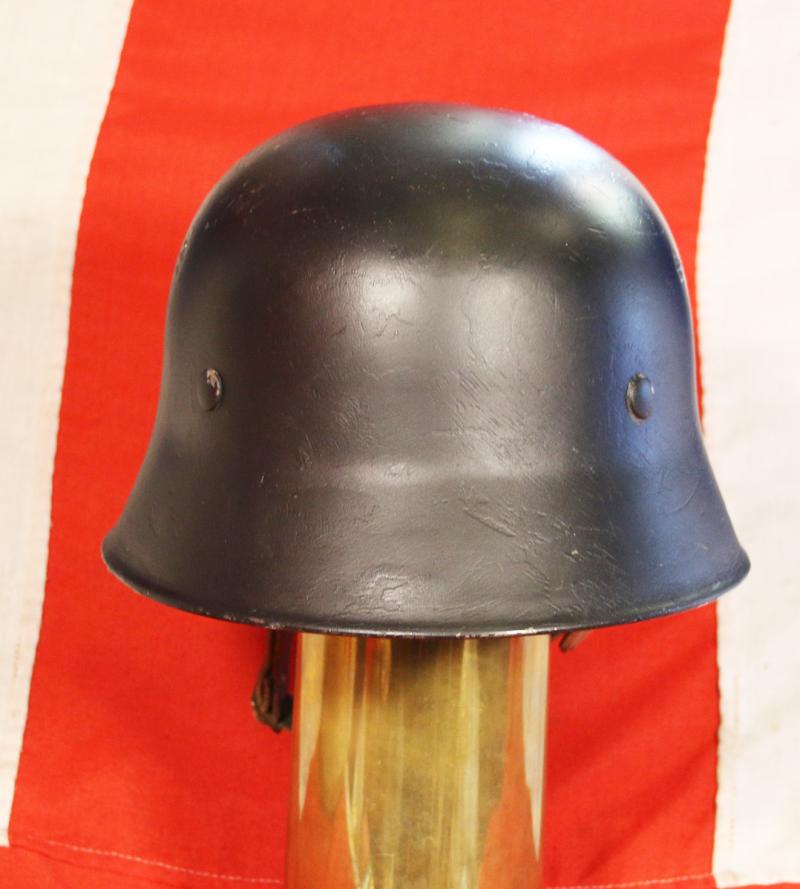
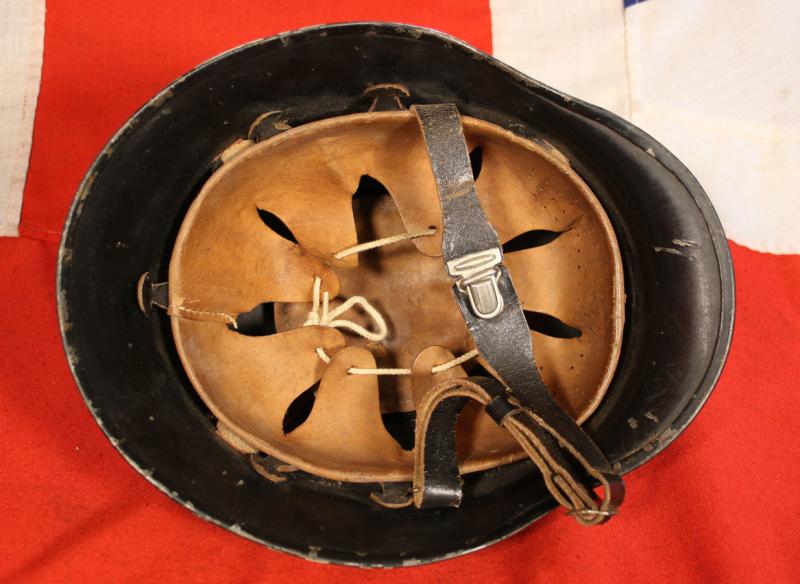
A WW2 German, Third Reich Period, Police Ordnungspolizei Helmet Complete with Original Liner and Chinstrap
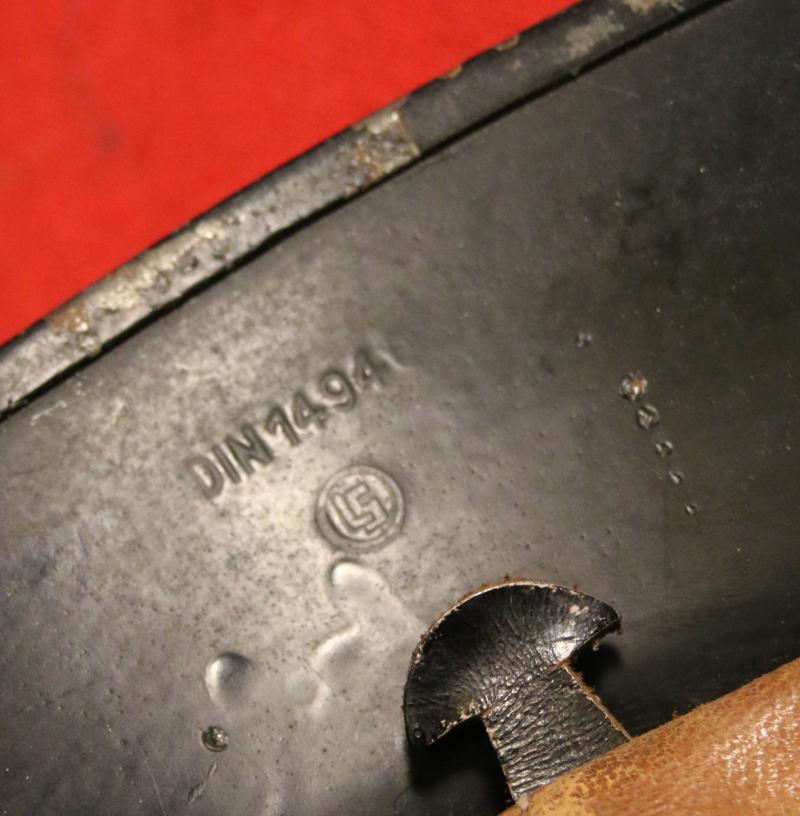
The pattern of helmet designed for service in the German Police. Complete with its original leather liner and its chinstrap present and spring clip-buckle. Interior skull stamped Din 1494 with maker monogram logo stamp used for traceability on industrial hardware components in WW2.
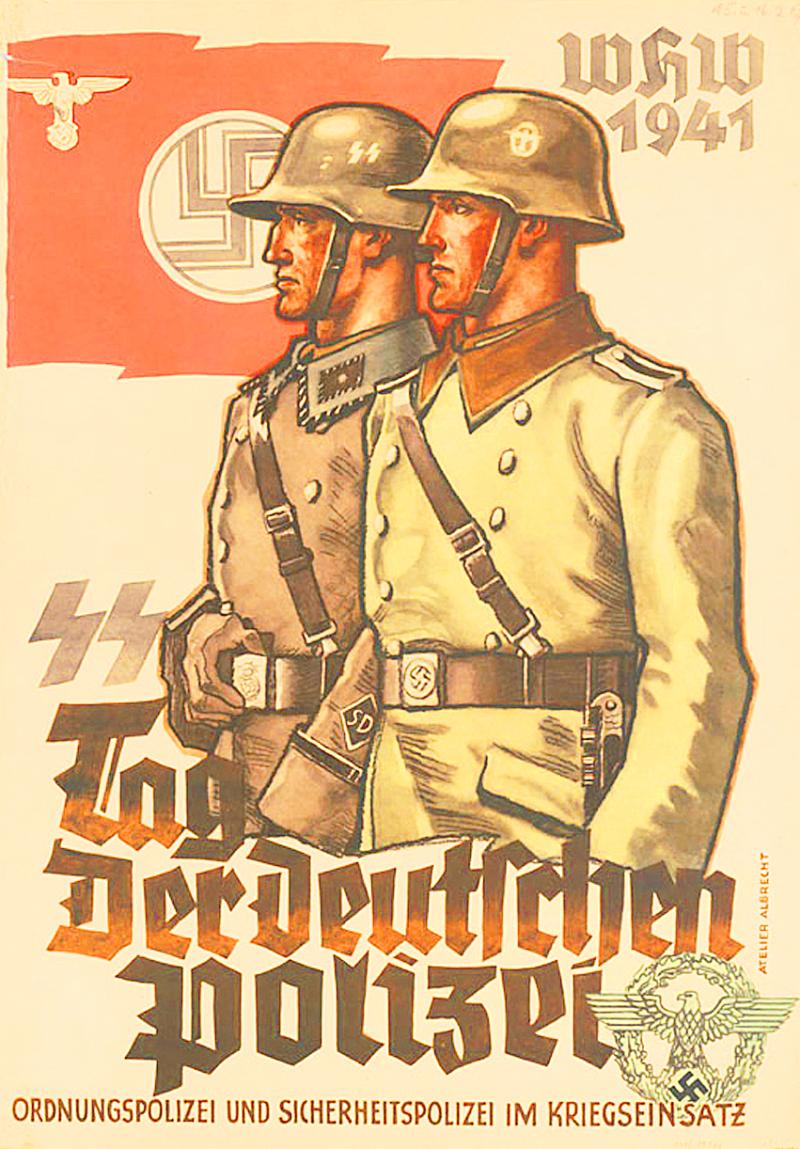
Reichsfuhrer-SS Heinrich Himmler was named Chef der Deutschen Polizei im Reichsministerium des Innern (Chief of German Police in the Interior Ministry) on 17 June 1936 after Hitler announced a decree which was to "unify the control of police duties in the Reich". Traditionally, law enforcement in Germany had been a state and local matter. In this role, Himmler was nominally subordinate to Interior Minister Wilhelm Frick. However, the decree effectively subordinated the police to the SS, making it virtually independent of Frick's control. Himmler gained authority as all of Germany's uniformed law enforcement agencies were amalgamated into the new Ordnungspolizei, whose main office became populated by officers of the SS.
The police were divided into the Ordnungspolizei (Orpo or regular police) and the Sicherheitspolizei (SiPo or security police), which had been established in June 1936. The Orpo assumed duties of regular uniformed law enforcement while the SiPo consisted of the secret state police (Geheime Staatspolizei or Gestapo) and criminal investigation police (Kriminalpolizei or Kripo). The Kriminalpolizei was a corps of professional detectives involved in fighting crime and the task of the Gestapo was combating espionage and political dissent. On 27 September 1939, the SS security service, the Sicherheitsdienst (SD) and the SiPo were folded into the Reich Main Security Office (Reichssicherheitshauptamt or RSHA). The RSHA symbolized the close connection between the SS (a party organization) and the police (a state organization). Police Battalions (SS-Polizei-Bataillone), for various auxiliary duties outside of Germany, including anti-partisan operations, construction of defense works (i.e. Atlantic Wall), and support of combat troops. Specific duties varied widely from unit to unit from one year to another. Generally, the SS Polizei units were not directly involved in combat. Some Police Battalions were primarily focused on traditional security roles of an occupying force while others were directly involved in the Holocaust. This latter role was obscured in the immediate aftermath of World War II, both by accident and by deliberate obfuscation, when most of the focus was on the better-known Einsatzgruppen ("Operational groups") who reported to the Reichssicherheitshauptamt (RSHA Reich Main Security Office) under Reinhard Heydrich.
Code: 26377
285.00 GBP