
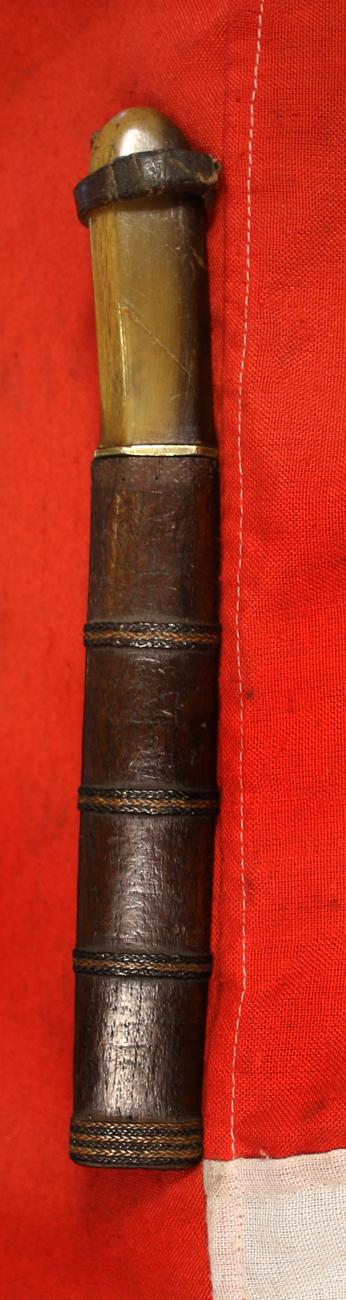
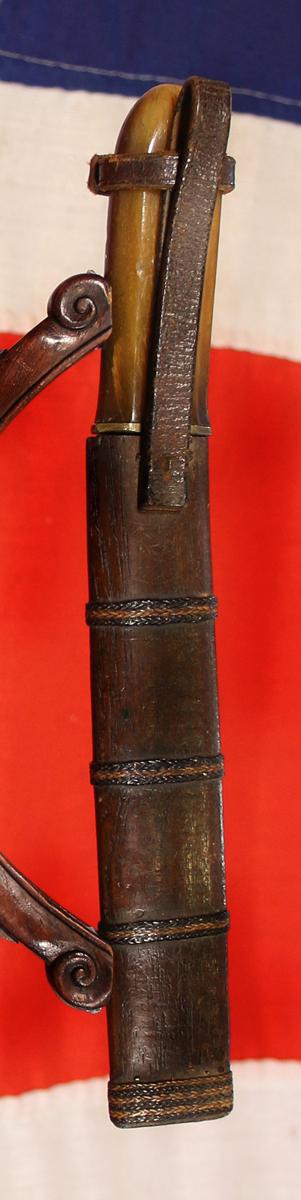
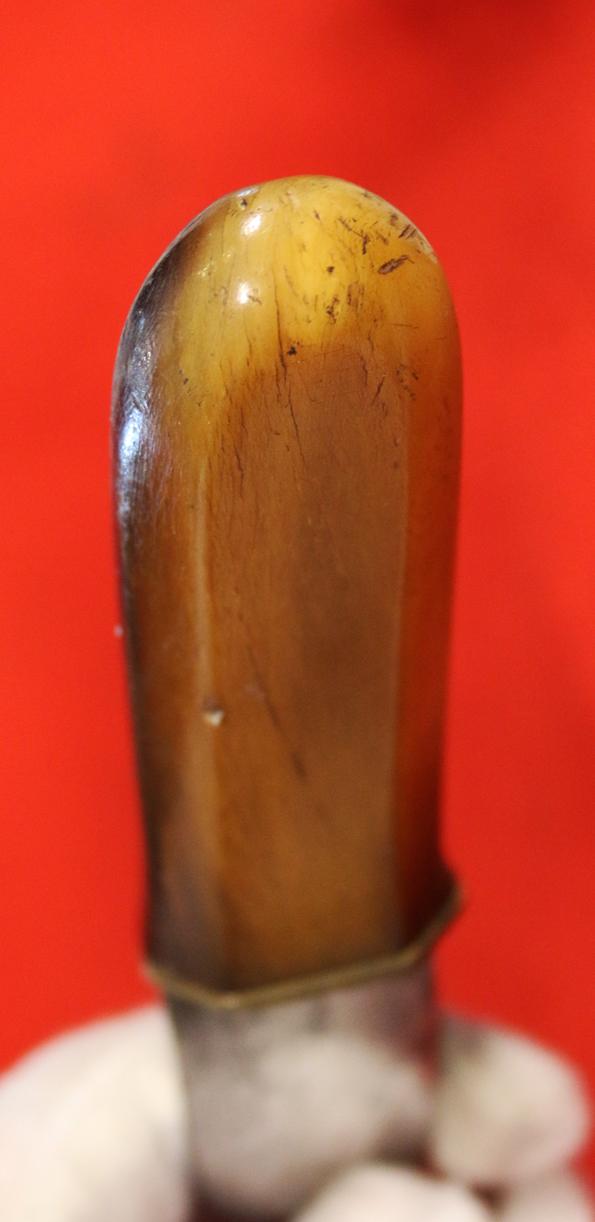
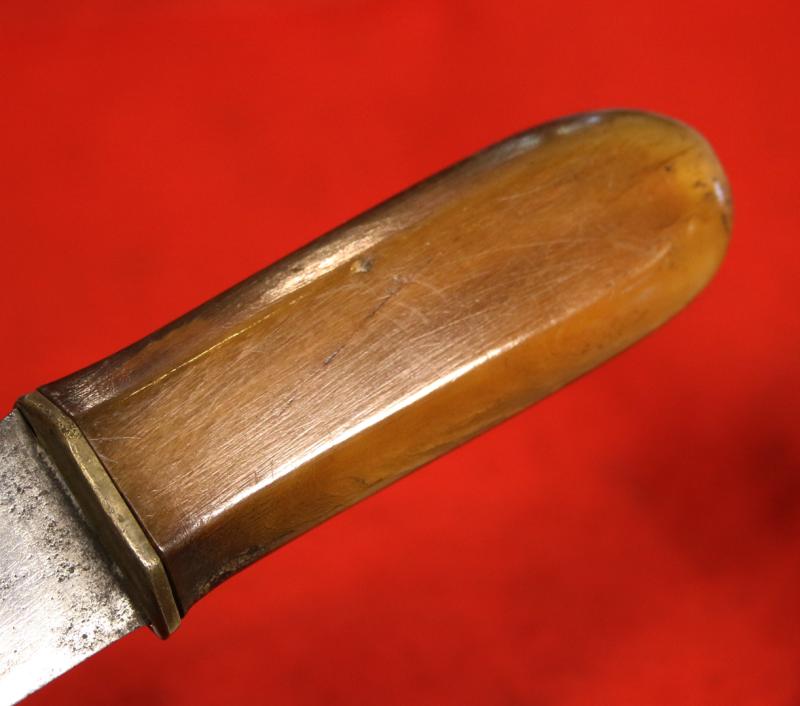
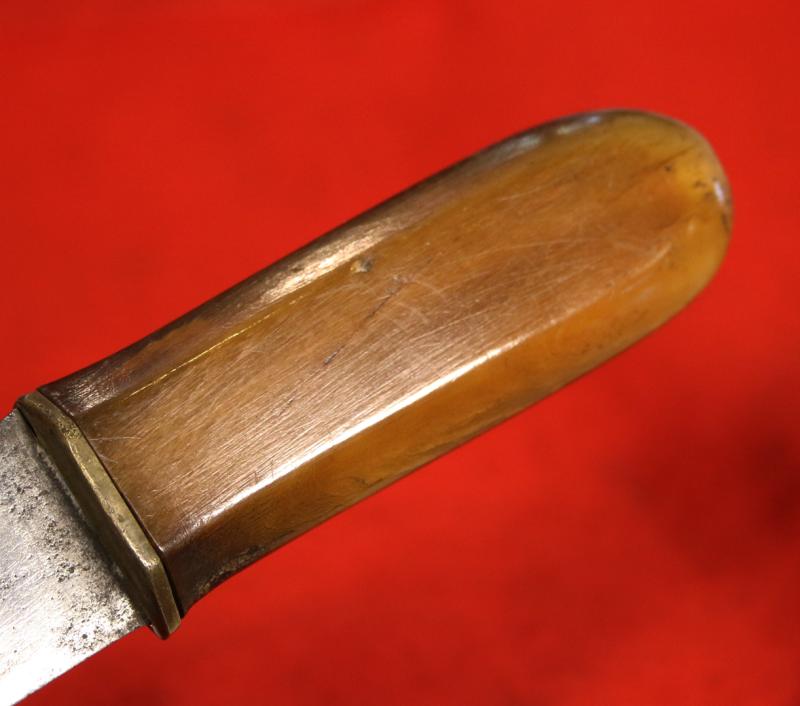
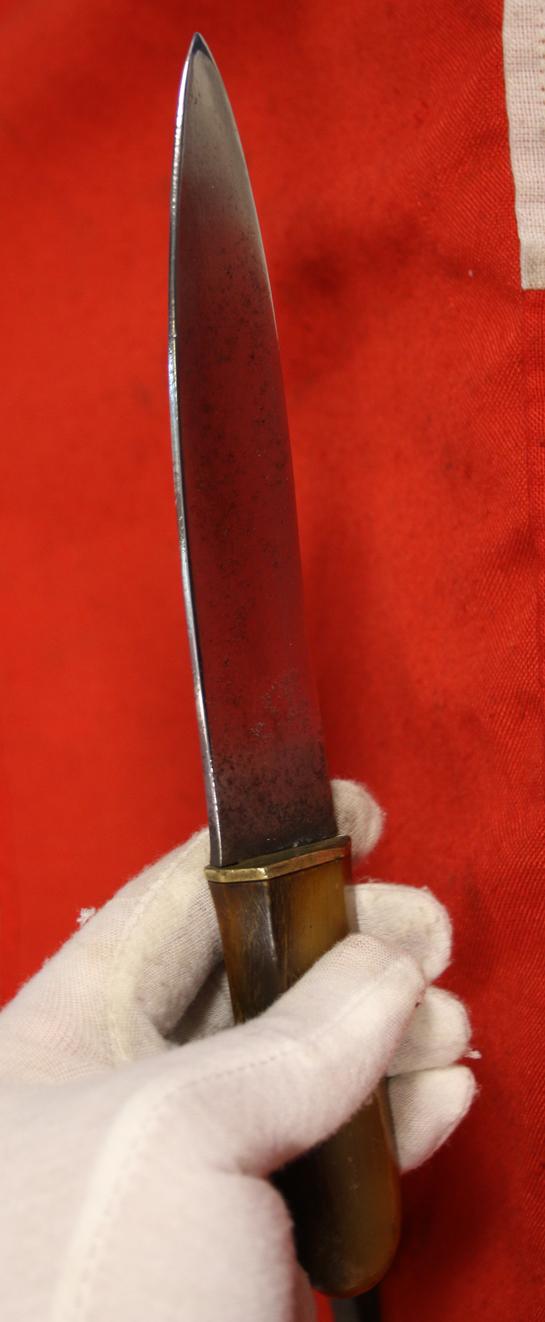
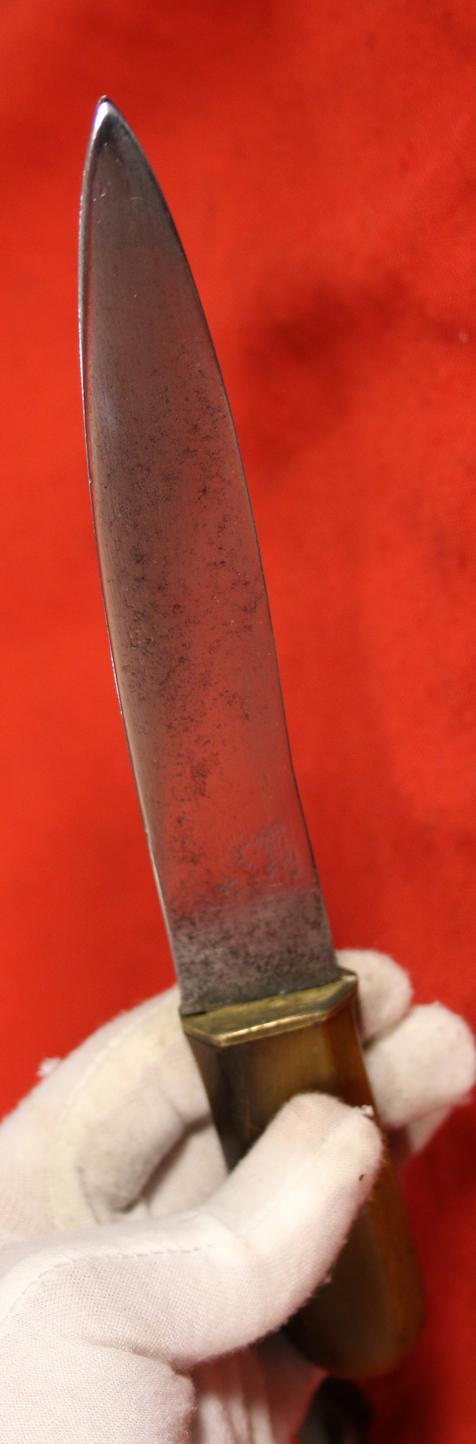

A Superb Antique Burmese Daggar, A Shan Aristocracy Noble's High Status Dha Hmyaung. His Personal Knife With Carved Rhino Horn Handle Circa 1770 to 1800. Most High Status Dha Hmyaung Daggars Feature The Cultural Influence Of The Shan People of Burma
A fine example with good quality blade, slightly curved single cutting edge. The hilt is superbly hand carved from white rhino horn. These fine hilts are often associated with the Moulmein and Pyinmana workshops in Southern and Central Burma.
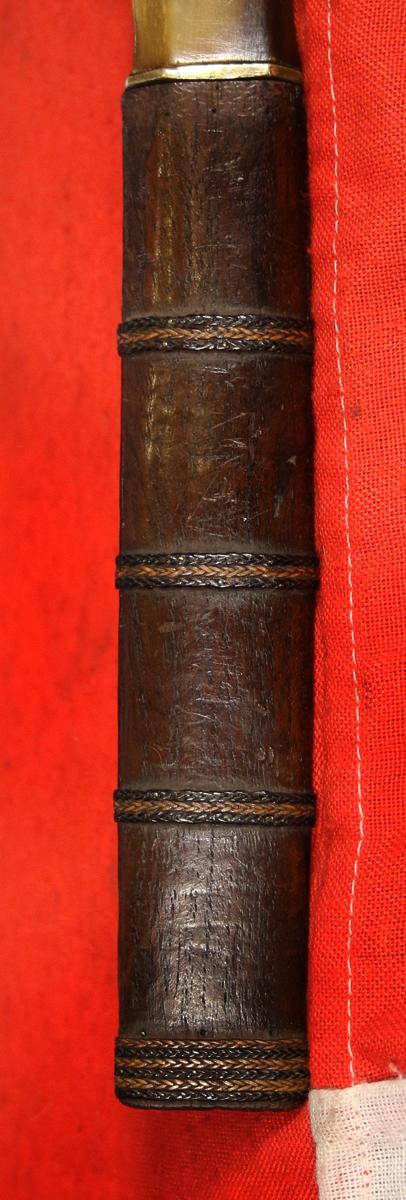
The scabbard is made of two panels of a very dark and dense patinated hardwood which is bound with complex multiple bands in a geometric, herringbone pattern, bound silver and copper wire. The silver wire binding has now aged to black as usual due to aged oxidisation.
A utility knife and formal status symbol among higher ranks of Burmese nobility.
The history of the Shan nobility centers on the Saophas (traditionally spelled Sao Phaa or Sawbwa in Burmese), hereditary rulers whose title translates literally to "Lords of the Sky" or "Celestial Lords". For nearly a millennium, this distinct aristocratic class governed an intricate network of semi-independent principalities across the Shan Plateau in modern-day Myanmar, Thailand, China, and Laos.
Powerful northern Shan states—such as Möng Yang, Möng Kawng, and Hsenwi—formed formidable alliances. In 1527, the Confederation of Shan States successfully captured the Ava Kingdom, positioning the Shan nobility as the dominant rulers of Upper Burma for decades
To ensure stability, Burmese monarchs and Shan nobility engaged in strategic intermarriages. In exchange for local authority, Saophas provided essential tax tribute and thousands of levies to fight in royal Burmese armies
When the British Empire annexed Upper Burma in 1885, they chose not to dismantle the traditional Shan social hierarchy. Saophas maintained their judicial powers, revenue collection, and lavish royal lifestyles inside their traditional palaces, known as Haws. They ruled over a highly stratified feudal society where farmers and commoners paid direct allegiance to their local hereditary lord.
In 1962 Burmese General Ne Win seized absolute power via a military coup, entirely abolishing the federal constitution. Dozens of Shan leaders, including former President Sao Shwe Thaik, were arrested and imprisoned; many died in custody or vanished.
A comparable status knife, but with a carved ivory handle, is on display in – The Metropolitan Museum of Art New York acc.nr. 36.25.998
Not suitable to export outside of the UK mainland
Code: 26376
595.00 GBP