
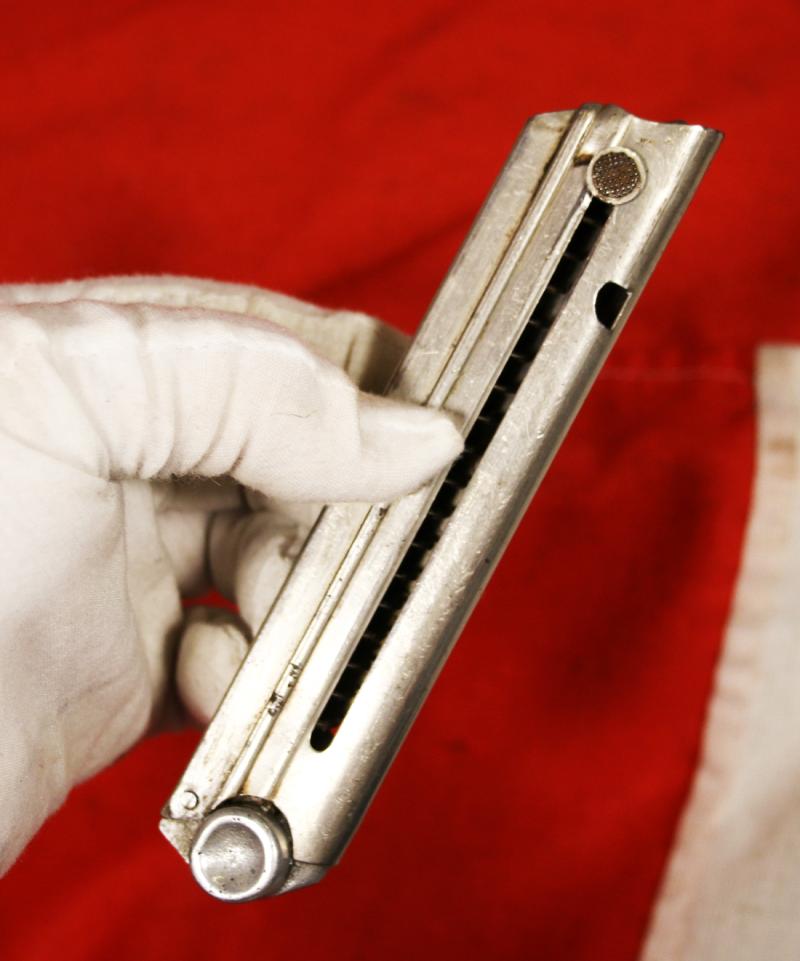
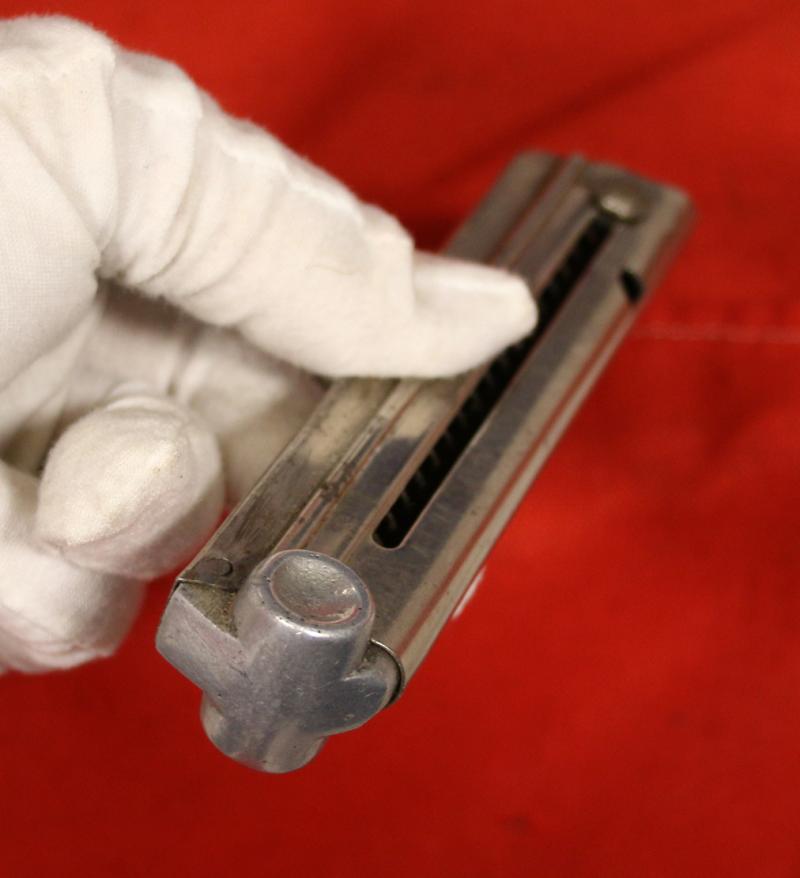
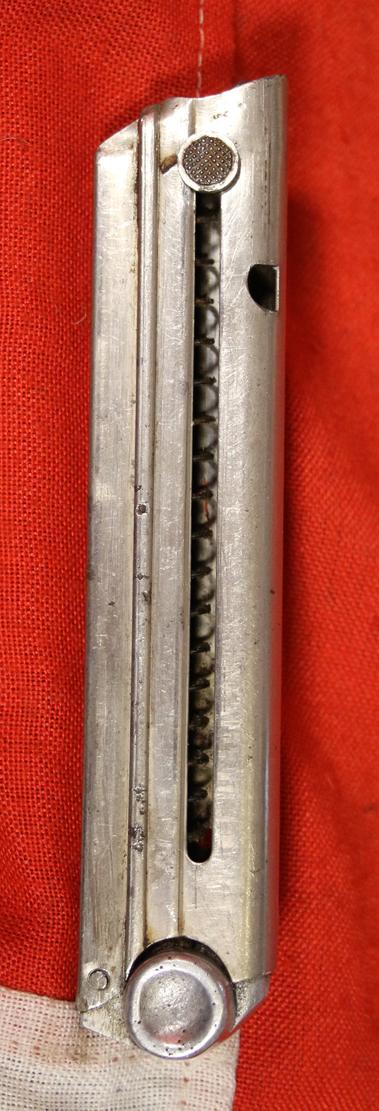
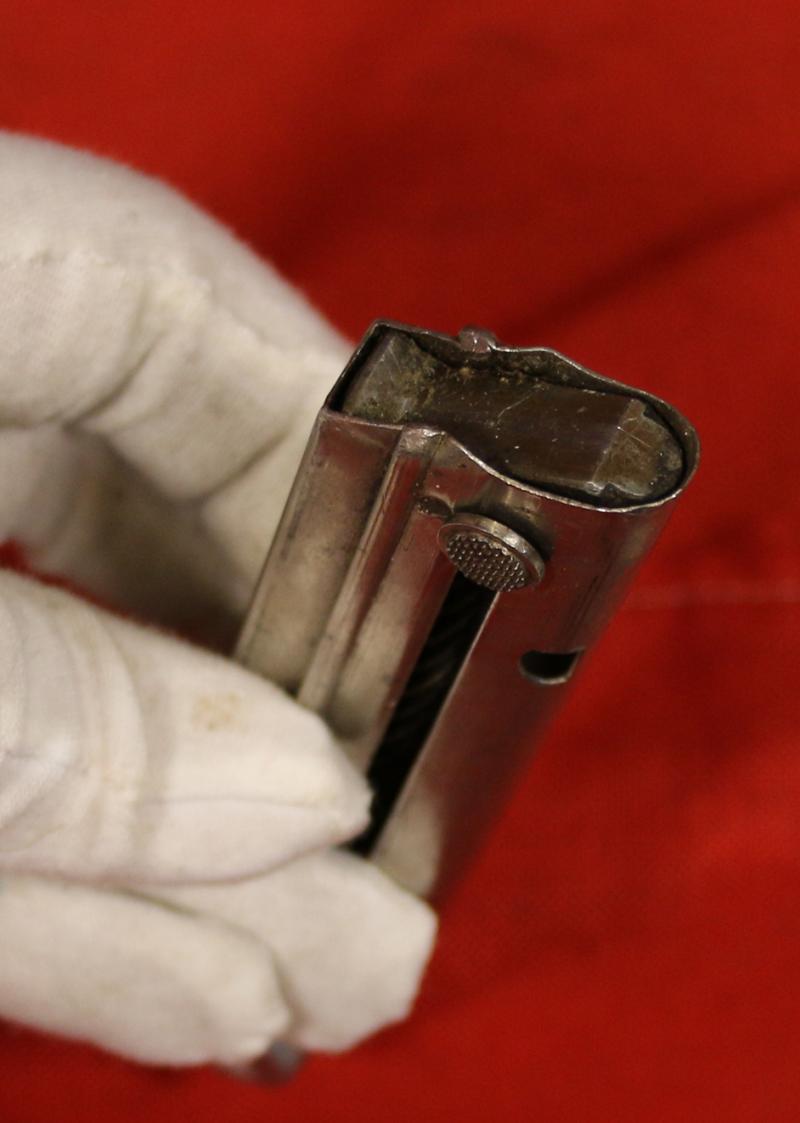
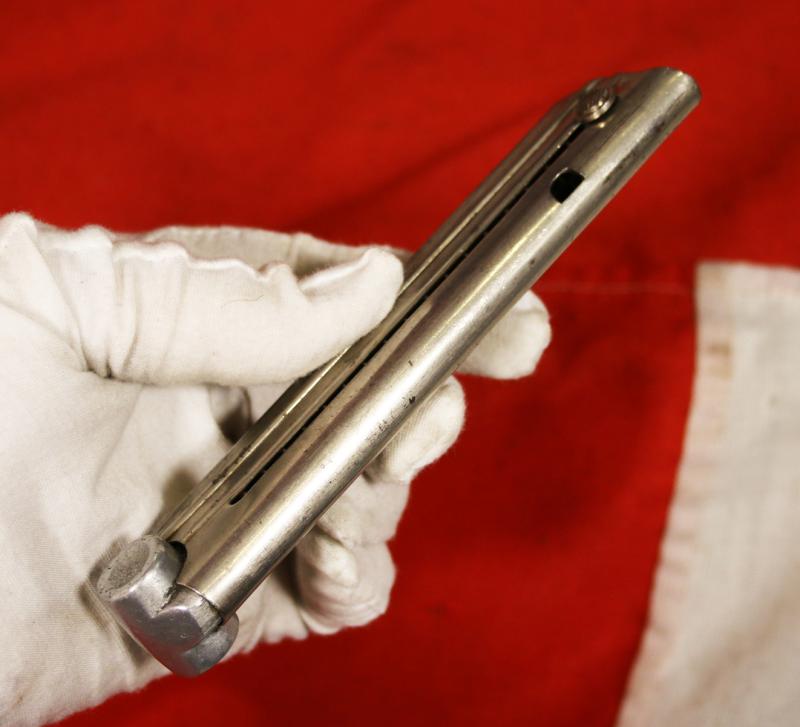
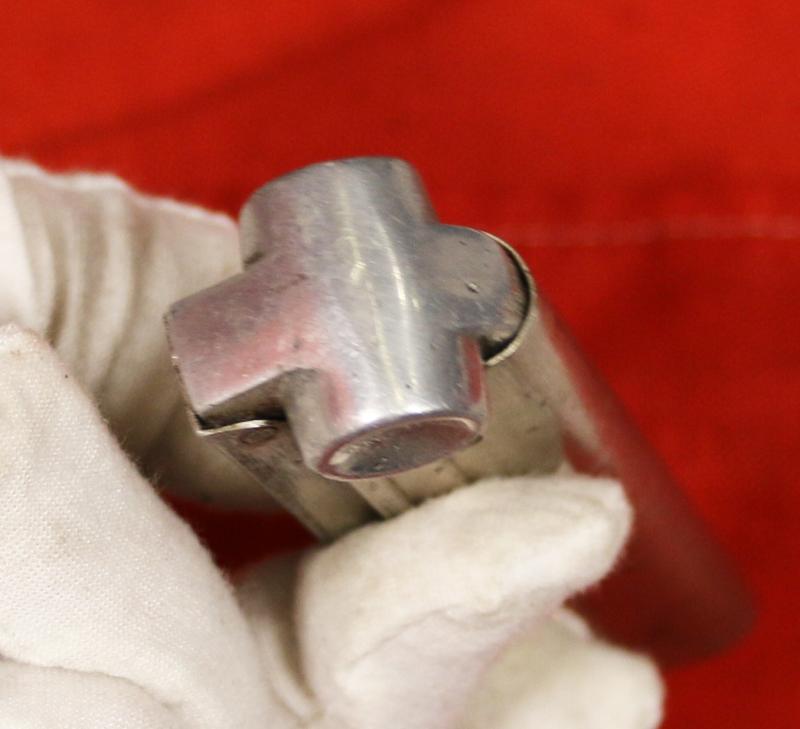
A Wonderful Original Accessory For a German WW1 and WW2 Service Luger Semi Auto Pistol. A 1930's German Spare Magazine With Aluminium Base Unnumbered
Wooden bases were used until 1926
DWM & Erfurt - wood, never aluminum
Simson, Krieghoff and Mauser all made aluminum bases
Base Bottom Transitioned to aluminum bases (often unnumbered or marked distinctively) around 1933–1934, though early Weimar-era reworks used retained wood bases.
The first known instance of the Luger being used in combat was during the Maji Maji Rebellion in 1905-1907. Therein, it was somewhat poorly-received because it was thought to be too heavy to be used quickly, in particular because the grip safety had to be held tightly, reducing accuracy. This led to the removal of the safety in the P08 model.
At the beginning of World War I, not all units of the German Army had been equipped with the Luger, leading to an acceleration in production. Alongside the P08, Germany also developed the LP08, a version with a stock and longer barrel that could also accept drum magazines. The LP08 was used by the Luftstreitkräfte during the early days of the war, before planes were equipped with machine guns, although due to a lack of pre-war production, the LP08 was much less commonly used than the P08. The main user of the LP08 was the Army, who used its drum magazine to deliver a high rate of fire at a close range, a concept which would lead to the development of the Stormtroopers and the MP 18. After the end of the war, Germany signed the Treaty of Versailles, which restricted the size of their army – the treaty specified that the German Army could only have 50,000 pistols, and prohibited submachine guns and pistols with stocks altogether.
As the Luger was expensive to produce, Germany started to look for a replacement as early as 1927, settling on the Walther P38 in 1938, which offered similar performance to the Luger, but took almost half the time to produce. Moving the production lines to the P38 once World War II started took longer than expected, leading to the P08 remaining in production until September 1942, and pre-existing copies remained in service until the end of the war. In East Germany, the P08 was used by the Volkspolizei, mostly from ex-Nazi stocks, but they produced a small number up until 1953
Code: 26365
245.00 GBP