
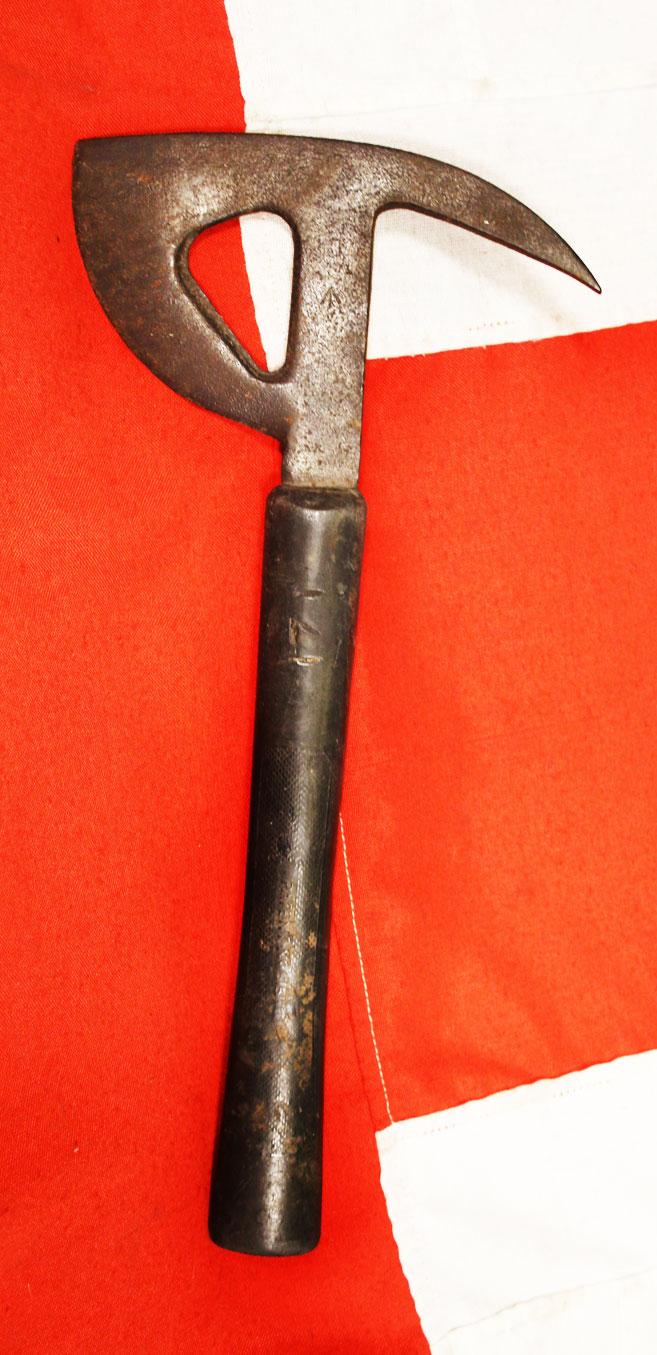
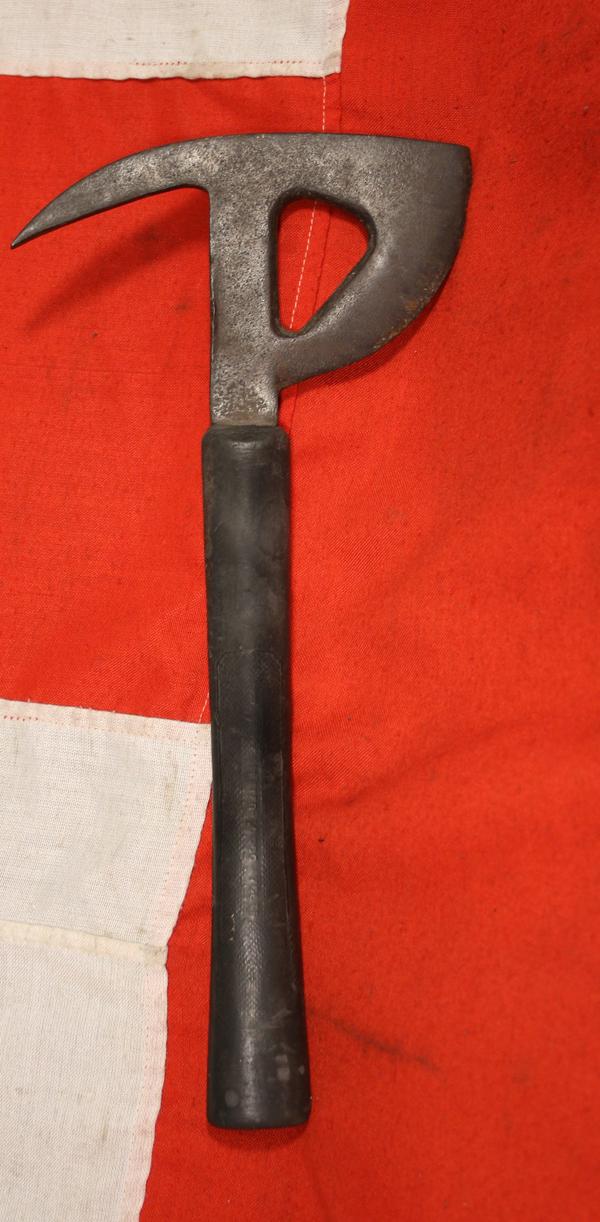
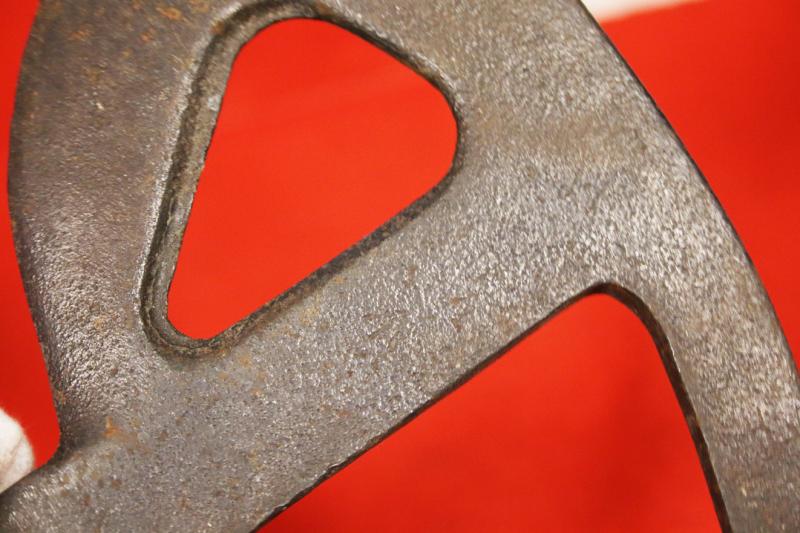
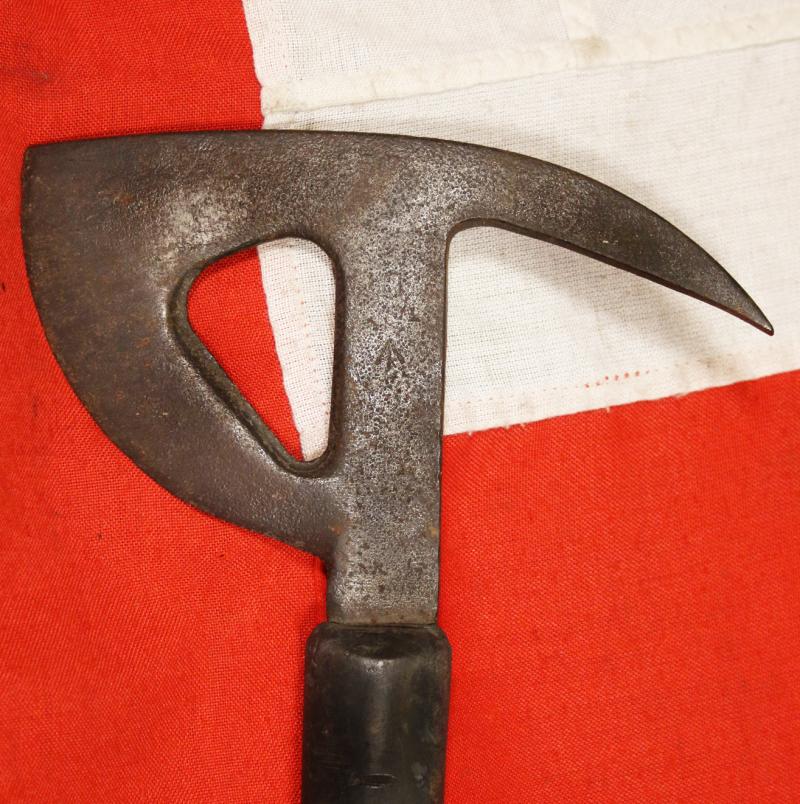
An Original WW2 British RAF Crash Axe With Insulated To 20,000 Volts Rubber Handle. Operation Market Garden Period Service
Most British WW2 aircraft carried these, and especially for the Horsa Gliders in Operation Market Garden at Arnham. As the name suggests, they were designed to be used by crew members to free themselves from crashed aircraft or to be used as a general survival tool. The handle is insulated with thick rubber and so it could be used to cut through electrical wires, with inslation value of protection up to 20,000 volts
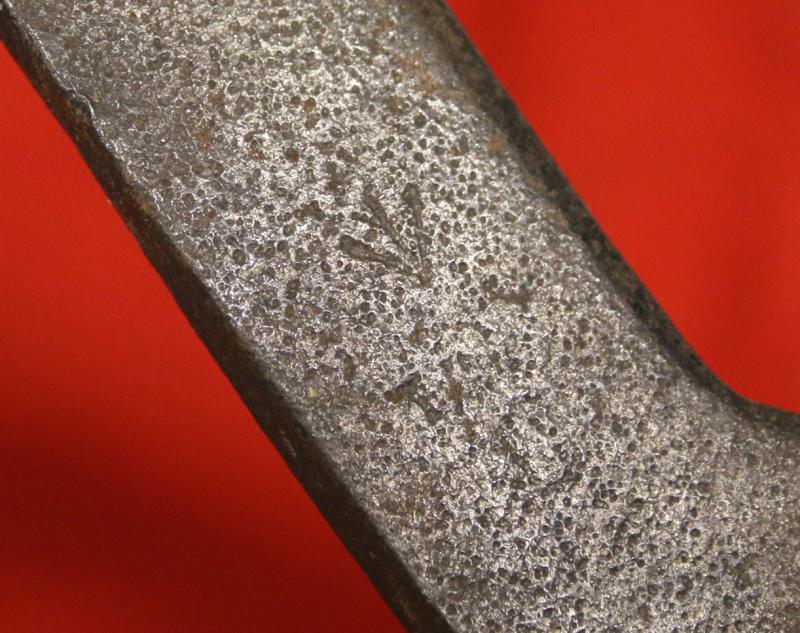
It is stamped with the ordnance broad arrow.
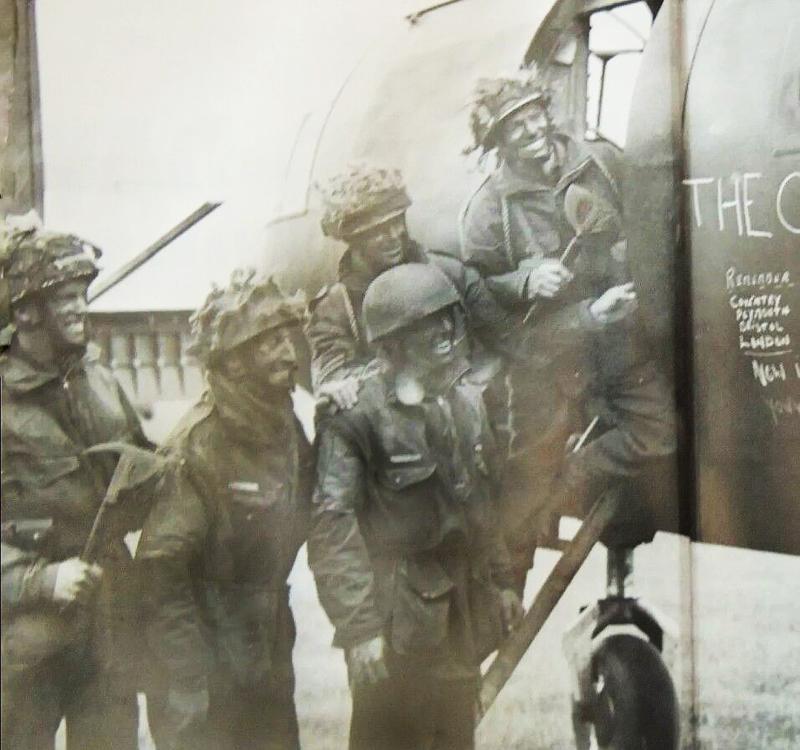
British Airborne troops often used these after taking them from their Horsa gliders. They made a vicious and very effective close combat item. One was just recovered this year in Arnhem on the positions of the King's Own Scottish Borders.
The British Parachute Regiment, nicknamed "The Paras," played a crucial role in the Normandy landings during World War II. They were tasked with securing key bridges, disrupting German communication lines, and neutralizing enemy strongholds before the main amphibious assault on the beaches. Their actions were vital to the success of D-Day.
6th Airborne Division:
The 6th Airborne Division, which included the Parachute Regiment, spearheaded the British airborne assault.
Operation Tonga:
This operation involved the 6th Airborne's initial drop into Normandy, with the primary objective of securing the bridges over the Caen Canal and the River Dives.
Pegasus Bridge:
The 5th Parachute Brigade was specifically tasked with capturing and holding Pegasus Bridge (also known as the Bénouville Bridge), which was a crucial objective.
Merville Battery:
The 9th Parachute Battalion was assigned to neutralize the Merville Gun Battery, a formidable German artillery position threatening the landing beaches.
The Paras' objectives were strategically vital for preventing German reinforcements from reaching the landing zones and for ensuring the overall success of the D-Day landings.
The airborne operation was incredibly challenging, with troops facing strong enemy fire and unpredictable landing conditions. Despite these challenges, the Paras displayed exceptional courage and resilience, achieving their objectives and contributing significantly to the Allied victory.
The actions of the Parachute Regiment in Normandy are remembered with immense respect and gratitude, with annual commemorations taking place to honor their sacrifice and bravery.
Operation Market Garden, a large-scale Allied airborne operation during World War II, involved paratroopers (Paras) and aimed to secure key bridges in the Netherlands, including Arnhem, to create a corridor for a rapid advance into Germany. The operation, though ambitious, ultimately failed to achieve its primary objectives and resulted in heavy casualties.
Operation Market Garden was a plan devised by British Field Marshal Bernard Montgomery to end the war in Europe by Christmas 1944.
It involved a two-part plan: "Market" (airborne landings) and "Garden" (ground advance).
The goal was to seize bridges over the Rhine River, including Arnhem, allowing a ground force to advance into Germany.
The 1st British Airborne Division, including paratroopers, was tasked with capturing the bridge at Arnhem.
The 1st British Airborne Division landed near Arnhem on September 17, 1944, but faced fierce resistance from German forces.
The paratroopers were to hold the bridge for 48 hours until relieved by ground forces.
The ground forces, however, were unable to reach Arnhem in time, and the paratroopers were caught in a prolonged and intense battle.
The airborne forces were dropped too far from the Arnhem bridge, losing the element of surprise.
German forces, including Panzer divisions, were stronger and better prepared than Allied intelligence had anticipated.
Ground forces struggled to advance, leaving the paratroopers isolated and under heavy attack.
The operation was ultimately a costly failure for the
Key points about the paratroopers' involvement:
The 1st British Airborne Division, including various parachute battalions, spearheaded the Arnhem attack.
The 2nd Parachute Battalion notably fought a prolonged and fierce battle at the Arnhem road bridge.
The paratroopers at Arnhem faced immense challenges and ultimately suffered heavy losses.
Every single item from The Lanes Armoury is accompanied by our unique Certificate of Authenticity. Part of our continued dedication to maintain the standards forged by us over the past 100 years of our family’s trading
Code: 26360
80.00 GBP