
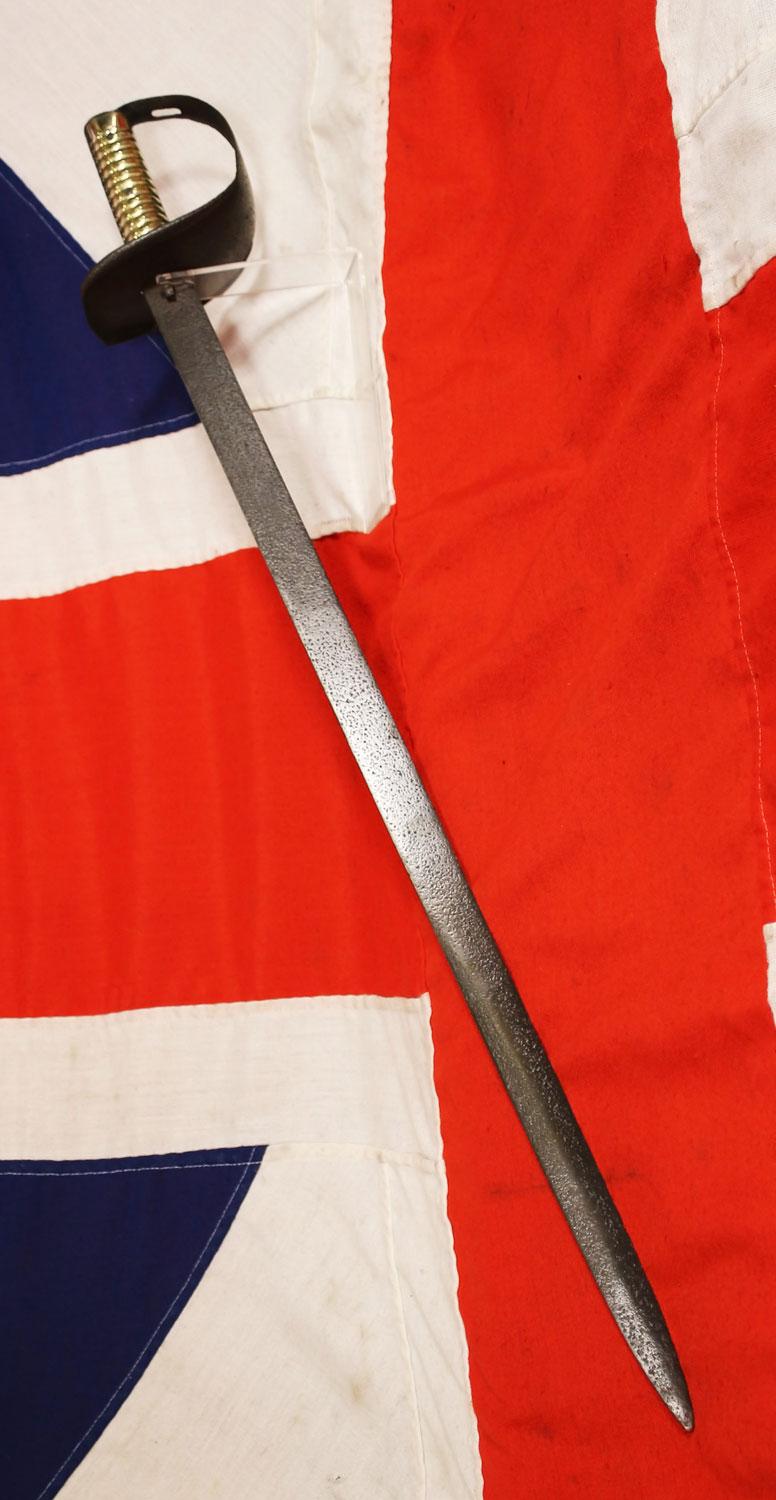
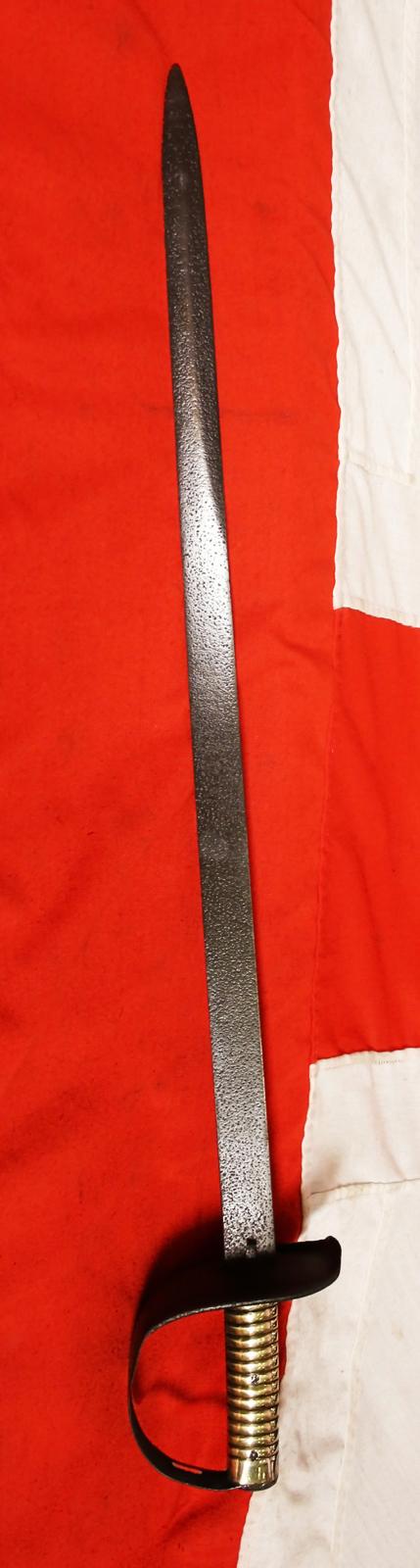
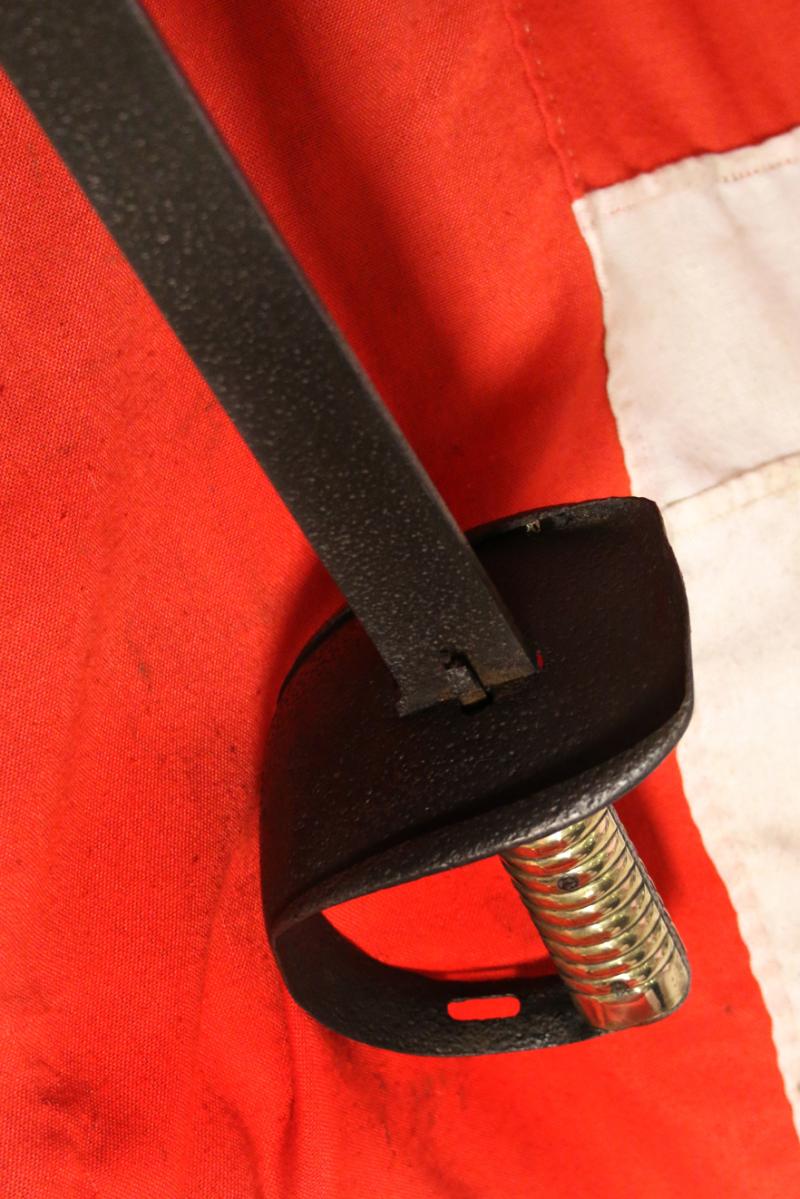
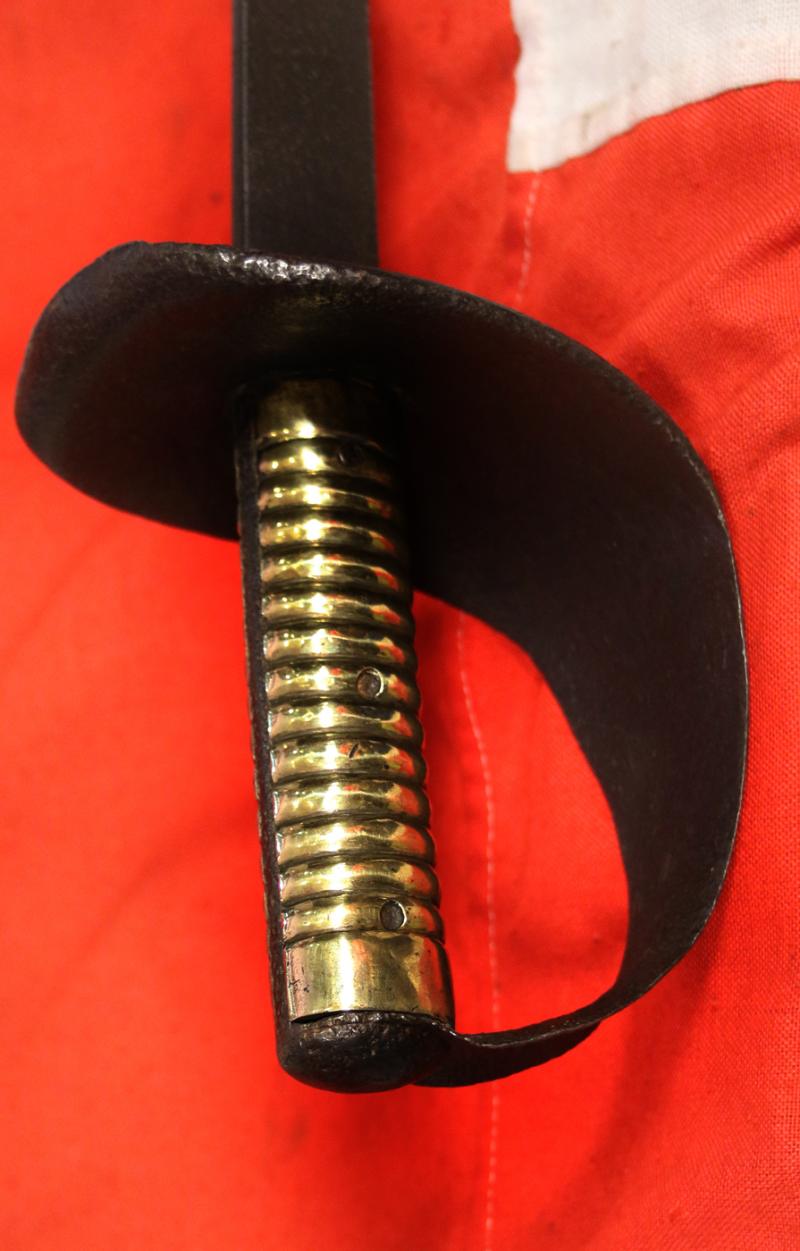
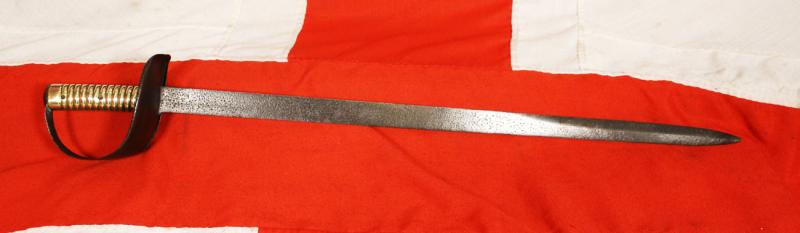

An Antique 19th Century, Victorian, Naval Ship's Cutlass Iron Bowl With Steel Blade and Cast Ribbed Brass Grip
Likely made by Henry Wilkinson and this particular pattern are recorded as part of Wilkinson's naval cutlass contract in the late 19th century.
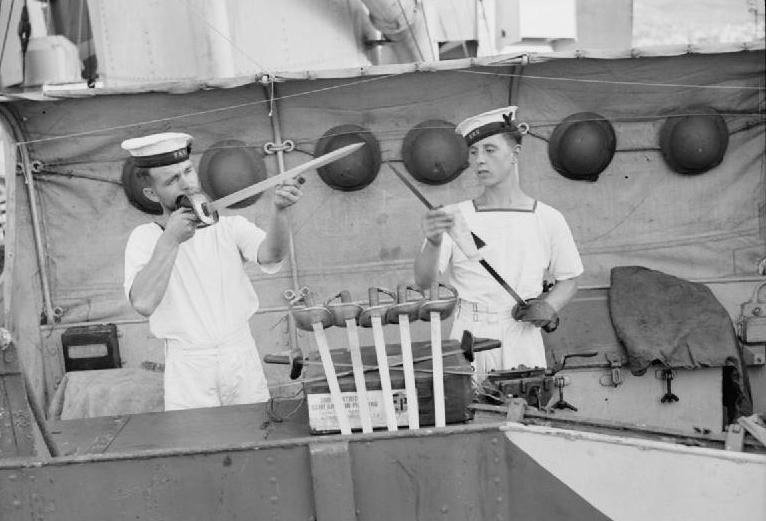
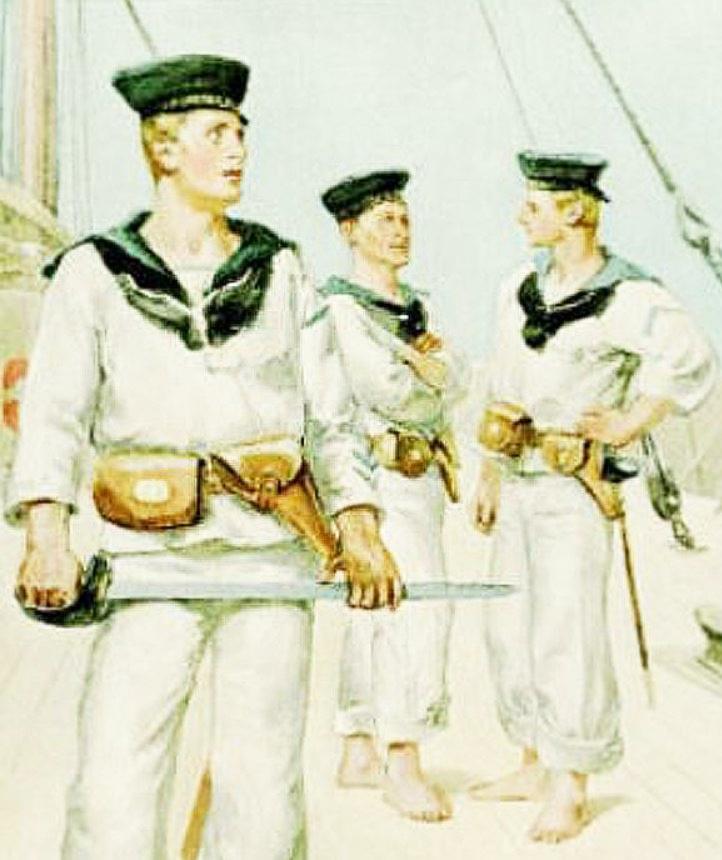
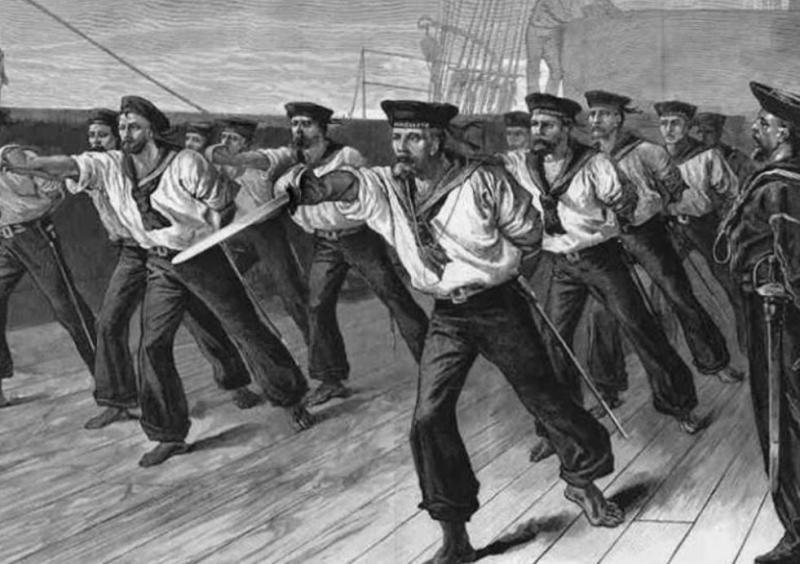
Ratings of the Royal Navy have used cutlasses, short, wide bladed swords, since the early 18th century. These were originally of non-uniform design but the 1804 Pattern, the first Navy-issue standard cutlass, was introduced at the start of the 19th century. This was a bluntish weapon that was perhaps intended for cutting away canvas and ropes rather than as a thrusting combat weapon. The 1845 Pattern cutlass introduced a bowl-style hand guard which provided greater protection, with a longer and more curved blade. Its sharper point made it more useful for thrusting attacks, which were now emphasised in the drill manual. The 1845 Pattern was modified several times including shortening and straightening the blades, which weakened them. The 1889 Pattern had a straight, spear-pointed blade with a hilt that curved outwards to catch and redirect an opponent's sword point. The 1900 Pattern, the last navy-issue cutlass, was similar to its predecessor with the introduction of a fuller and a hilt insert that cushioned the user's little finger. It was used in combat in 1900 during the Boxer Rebellion. The cutlass was withdrawn from service in 1936 but remains in use for ceremonial purposes. However, we show a photograph in the gallery of British seamen assesing and polishing the ships cutlasses before combat in WW2. Plus, one of our late artisan's was a formar navy man, and he used them in the South China Seas in boarding parties against pirates in the 1950's.
Sailors received little training in sword technique and indeed these weapons were often snatched up at the last minute from chests kept on deck, either to repel boarders or to take on a boarding made against another ship.
Scabbards were not needed because a sailor would need his cutlass for immediate use in battle. However one in ten were made with scabbards for shore parties.
Boarding over the side of another ship in the days of sail was often a difficult affair. Sometimes the enemy's vessel could be much bigger than your own, or indeed much smaller, necessitating either a climb up the gunports and through the anti-boarding nettings of the other ship or a plunge down, probably on a rope's end, onto the deck of the smaller vessel.
At the encounter between the 14-gun Speedy and the 32-gun Gamo in 1801 a British boarding party led by Captain Thomas Cochrane took the Spanish frigate by boarding in a fierce action. The small British ship was manoeuvred to come close alongside the enemy and eventually under the Spanish guns' maximum depression. Then Cochrane led the entire 40 crew - except for eight casualties and the surgeon who was left at the wheel.
Armed with cutlasses, axes and pikes the British sailors fought ferociously in hand-to-hand combat with Cochrane calling loudly for another 50 fictitious reinforcements to follow. The Spanish flung down their weapons and surrendered.
The RN retained cutlasses in service aboard vessals officially until 1936, although there are reports of personnel carrying such weapons in WWII. And it is still used in Courts Marshal. The cutlass was last officially used in the Altmark incident where the British Naval Ship, HMS Cossack, liberated the prisoners captured by the Battleship Graf Spee that were being transported illegally through Norwegian waters by the German ship Altmark.
Code: 26347
575.00 GBP