
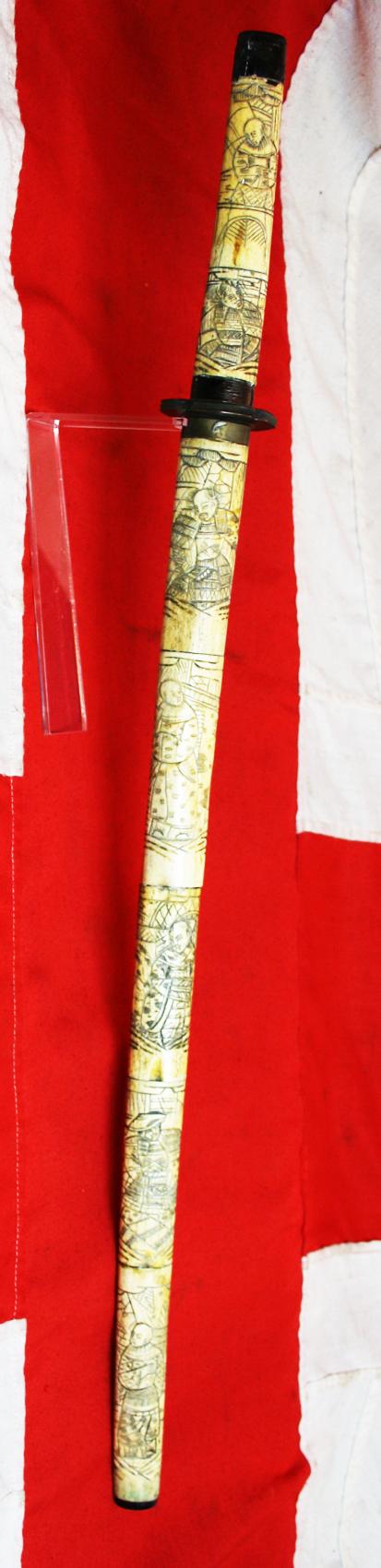
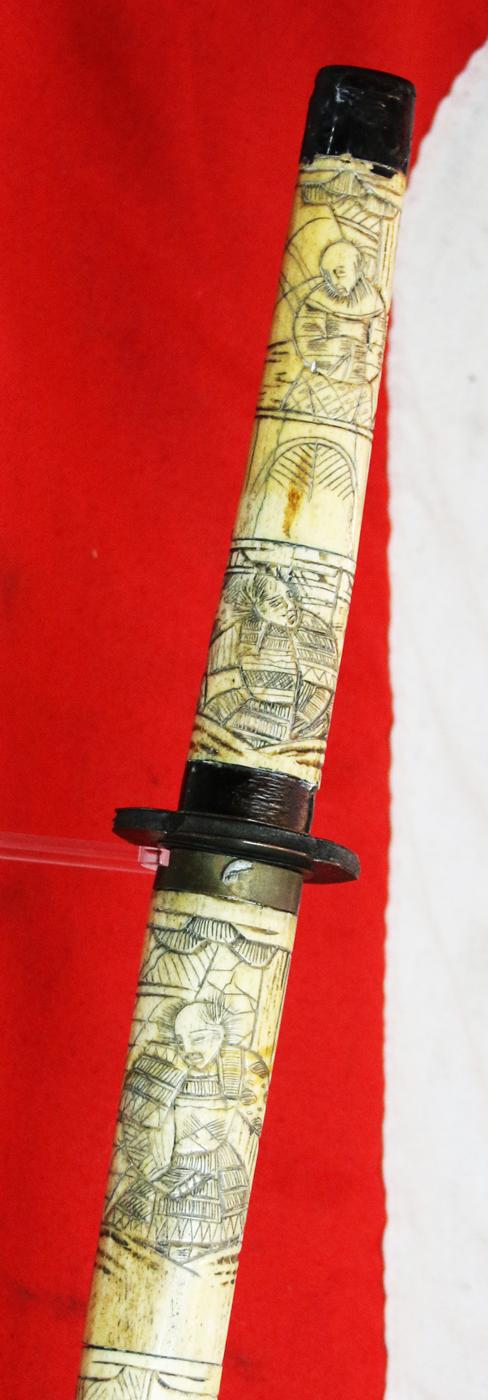
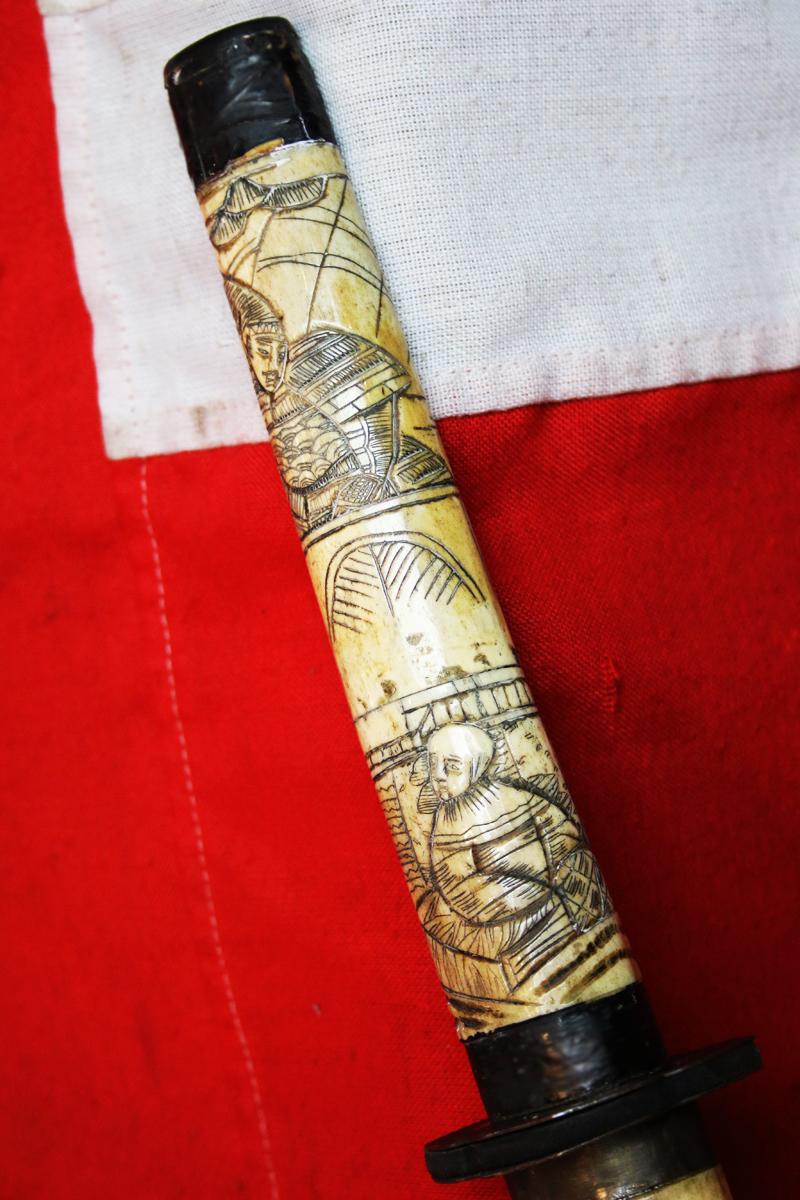
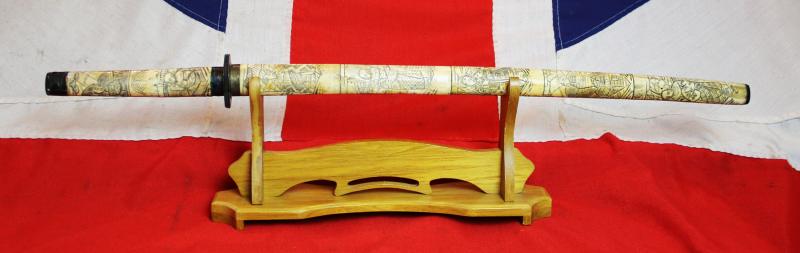

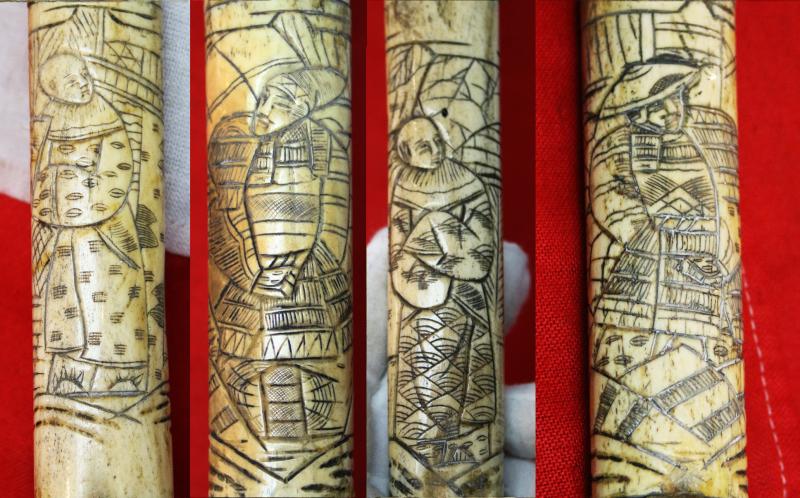
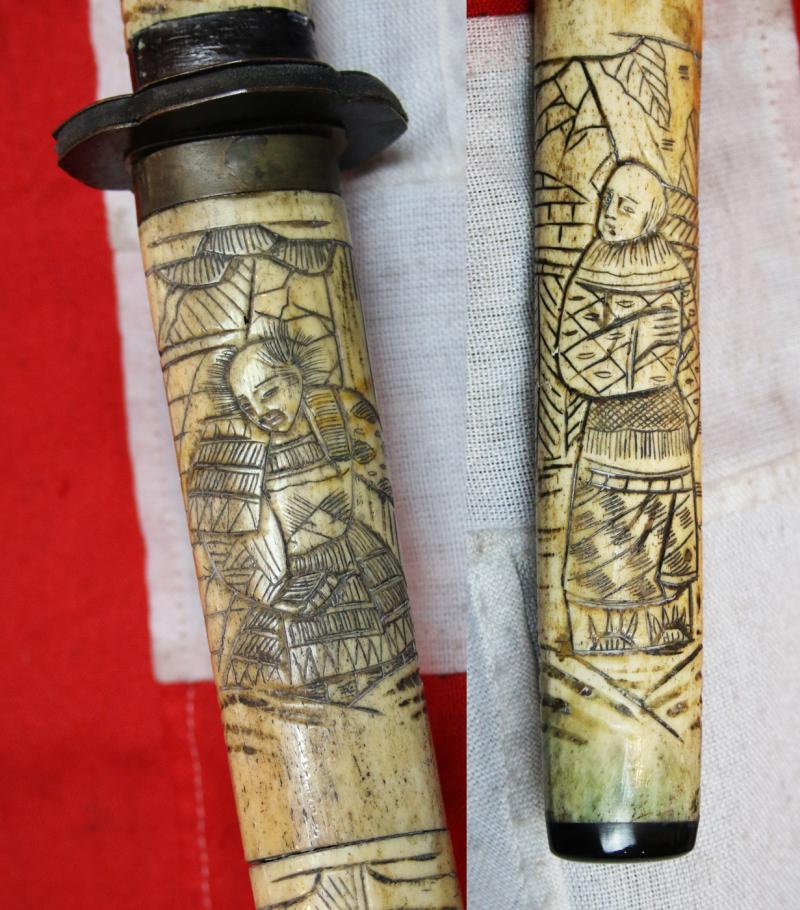
A Late 19th Century Most Attractive Hand Carved Japanese Samurai Style Export Sword From the Late Edo to Taisho Period. Decorated Throughout With Takebori Carved Figures of Armoured Samurai & Nobles In Court Dress
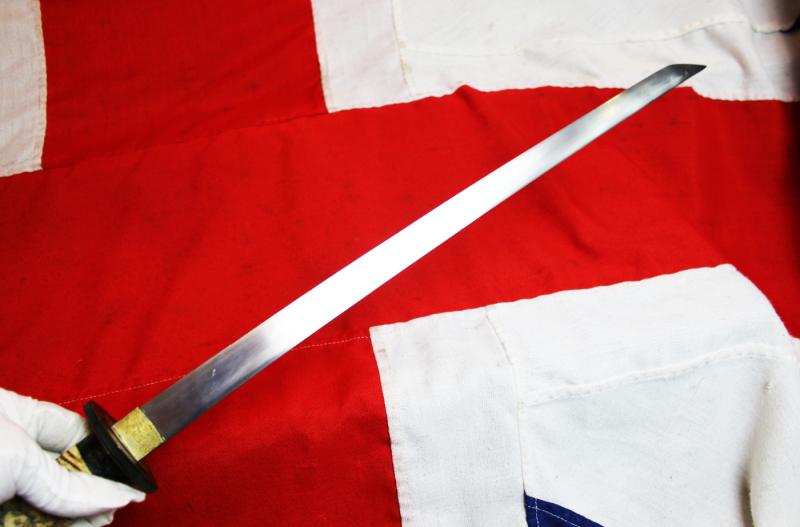
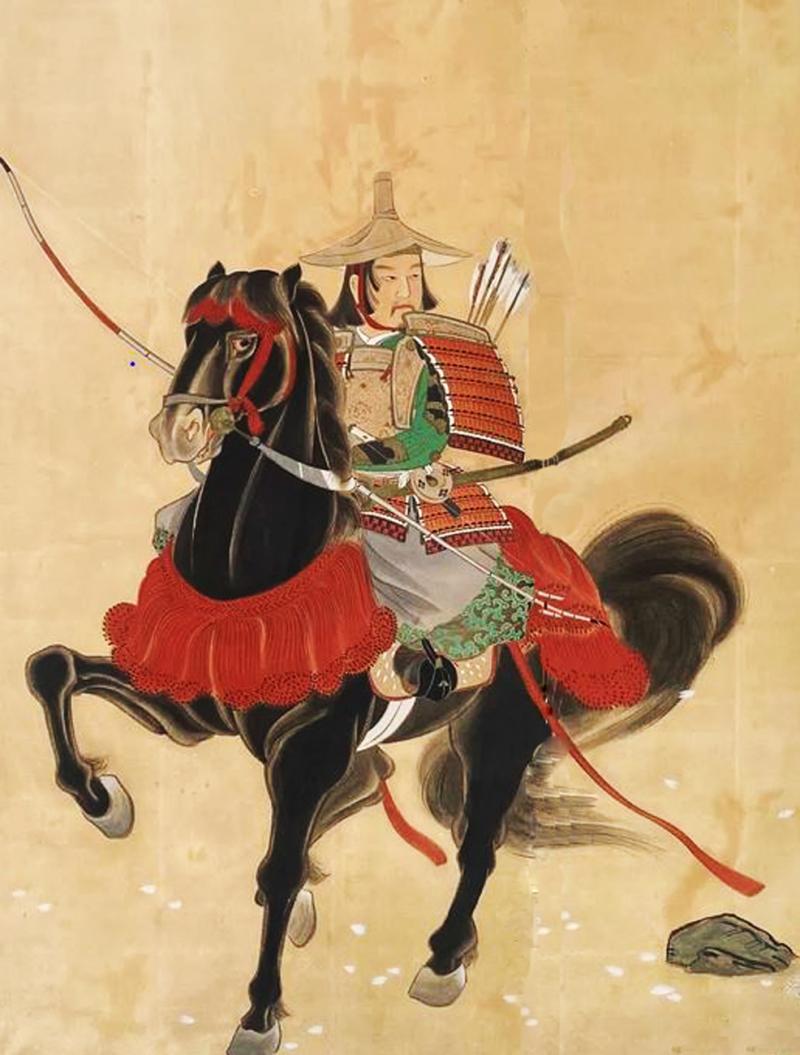
A very decorative original antique Japanese sword depicting as a representation the samurai tachi of old. Meiji period, circa late`19th century, fully carved faux ivory {bone} mountings {called koshirae}, with hand carved figures of Japanese armoured samurai with court cap hats and jingasa. Made in the late Meiji to Taisho period as a most decorative and attractive samurai style sword, with a Japanese Hocho Tetsu {cutler's} blade.
Of course this was not a traditional sword mounting for conflict, but when Japan was opening up to the world, after being a closed feudal society for almost 400 years, and the wearing of the samurai sword was forbidden in public, starting with the Haito edict. These swords were made for the newly opening Victorian, British, export market, and Europe's fascination with the ancient samurai warriors of Japan.
Thus samurai style swords and dagger fittings, such as this, were made especially for the early steam ship visitors from Europe, that arrived from the early steamship trade that started in Victorian England, through companies such as Thomas Cook & Co.
The tachi is a Japanese term referring to the traditional weapon, the slung sword, of the samurai.
The Haitōrei was one of a series of steps taken by the government to abolish the traditional privileges of the samurai class. The first Haitōrei of 1870 prohibited farmers or merchants from wearing swords and dressing like samurai. This measure was in part an effort to restore public safety and order during the tumultuous period immediately after the Meiji Restoration and during the
Boshin War.
In 1871, the government issued the Danpatsurei Edict, allowing samurai to cut their top-knots and wear their hair in the Western manner. However, this was not required, simply allowed and encouraged. Universal military conscription was instituted in 1873, and with the creation of the Imperial Japanese Army, the samurai lost their monopoly on military service. The hereditary stipends provided to the samurai by their formal feudal lords (and assumed by the central government in 1871) were likewise abolished in 1873. The prohibition on wearing swords was controversial with the Meiji oligarchy, but the argument that it was an anachronism not in keeping with the westernization of Japan won out.
On March 28, 1876 the Haitō Edict was passed by the Daijō-kan. It prevented former samurai, now known as shizoku, from carrying swords.
These changes in Japanese society and in the social and economic status of the samurai, then part of the four classes, were a major cause of discontent in early Meiji period Japan, and led to a number of samurai-led insurrections, particularly in western Japan and Kyūshū
Code: 26338
750.00 GBP