
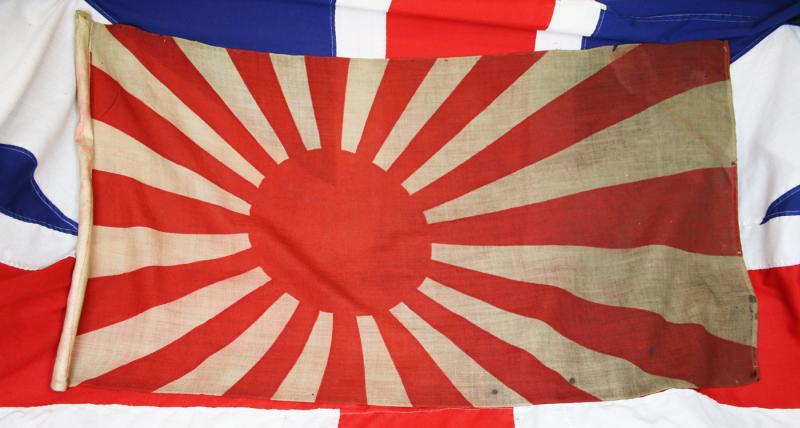
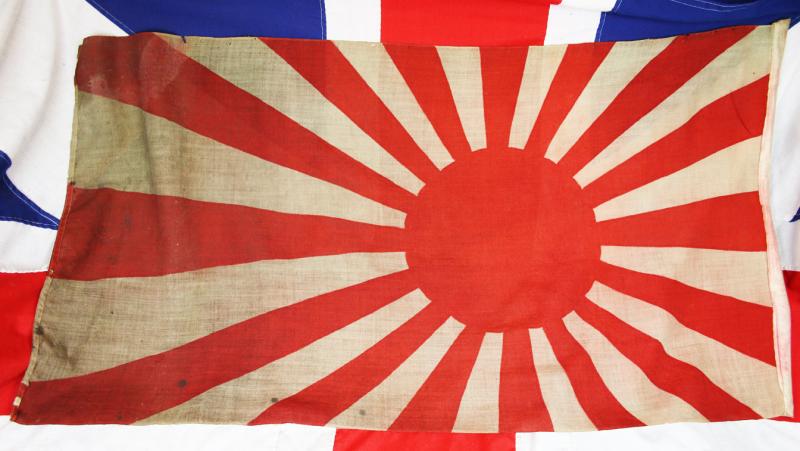
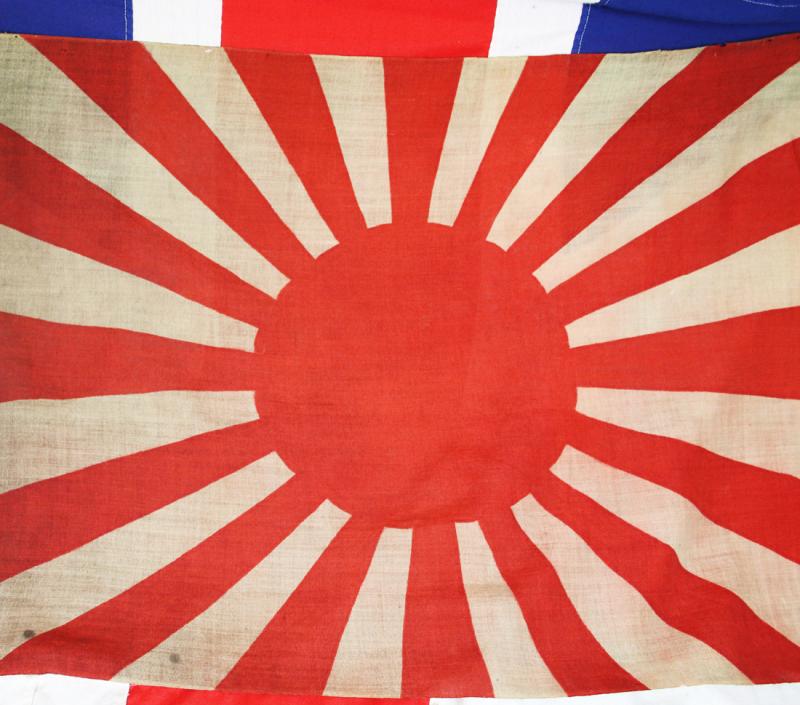
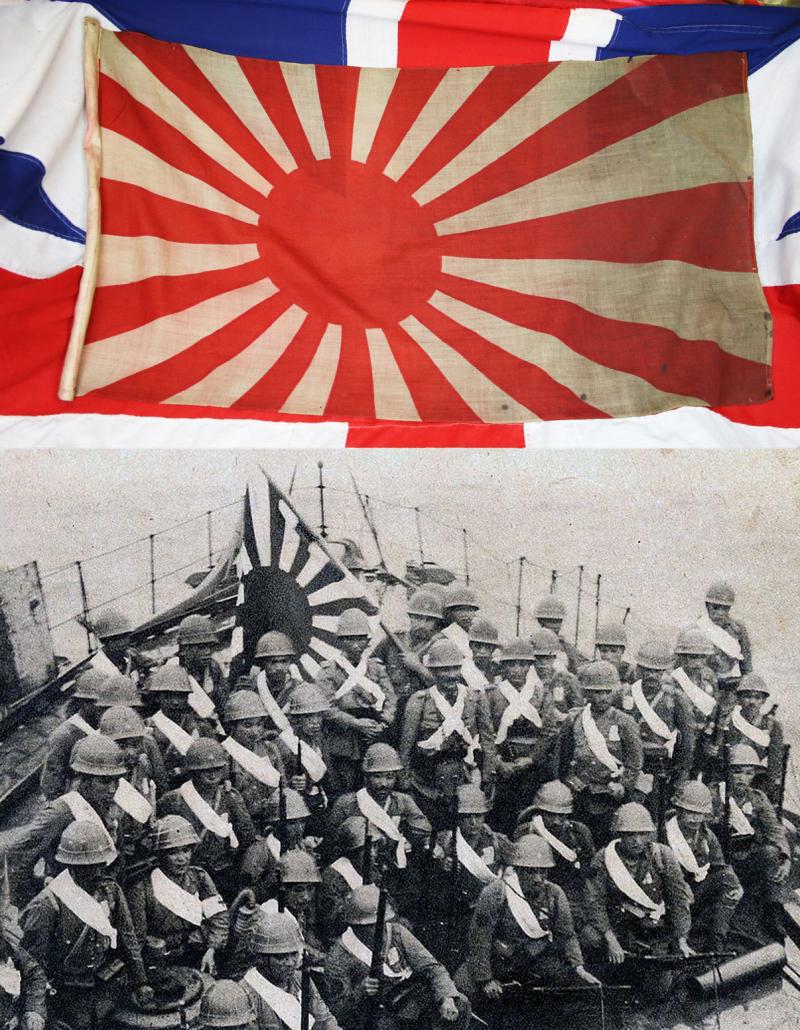
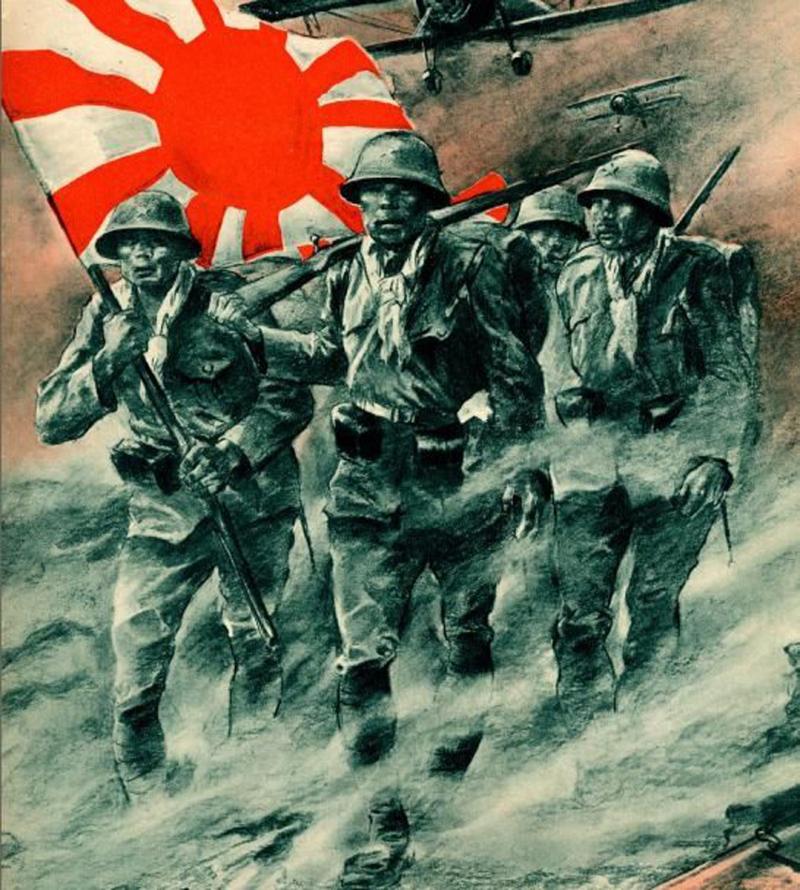
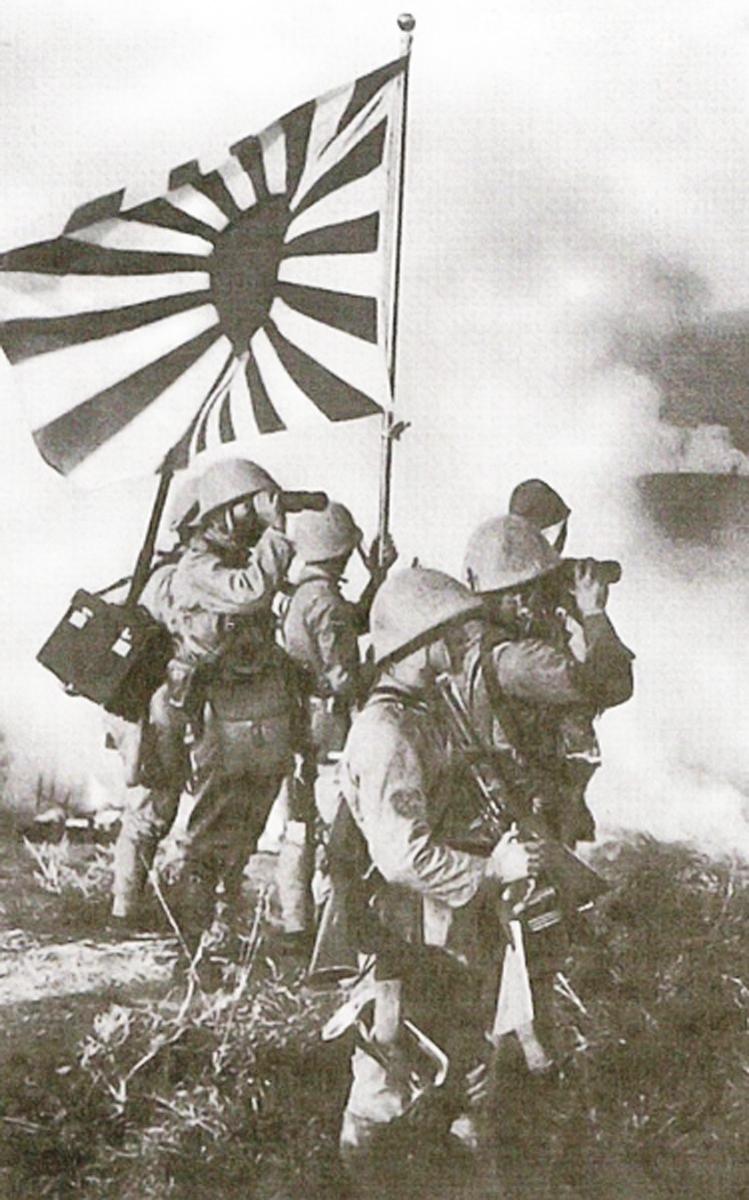
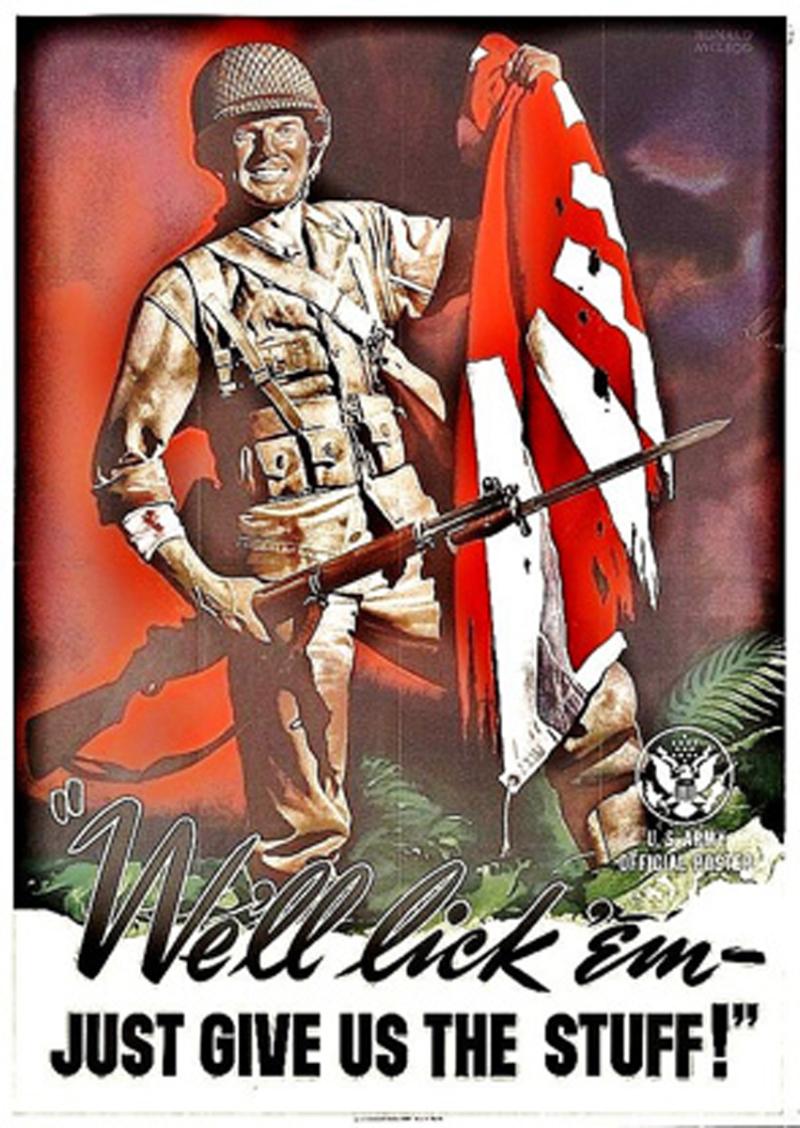
A Very Good Original 1930's Japanese WW2 Rising Sun Battle Flag Kyokujitsu-ki. Excellent Size For Display Purposes For Collectors of The Pacific Theatre War From 1936 -1945
Made from likely cotton-muslin, with a left side flag pole sleeve, double stitched for added strength. The flag is darker through its service at the bottom third, than the top 2/3rds, as it was carried on a flag pole in service, by a Japanese soldier, and the bottom section would be closer to the ground and the jungle and or river crossings. It could likely clean, but we would recommend to leave it 'as is' to demonstrate its in-built historic context.
The Japanese Rising Sun Flag (Kyokujitsu-ki) features a red central sun disc with 16 radiating red rays on a white field. Symbolizing the sun, the design dates back to the Edo period as a feudal warlord banner, and became the official Japanese military flag in the late 19th century.
The artistic motif of a sun with radiating beams was used by regional lords (daimyo) in Japan during the Edo period (1603–1868) to decorate banners and equipment.
On May 15, 1870, the Meiji government adopted a 16-ray design as the war flag for the Imperial Japanese Army.
On October 7, 1889, a variation with an off-centre sun was adopted as the naval ensign for the Imperial Japanese Navy. Troops carried these banners into battle during the First Sino-Japanese War, the Russo-Japanese War, and World War II.
A WW2 Pacific Theatre, Burma combat souvenir, originally wrapped around a surrendered Japanese officer's sword, and stored accordingly since the war.
The World War II Burma Campaign (1941–1945) was a brutal, multi-year struggle where Allied forces—primarily the British Indian Army, British units, and Chinese troops—fought to recapture Burma from the invading Empire of Japan. Fought through punishing jungles, monsoon rains, and disease, the campaign aimed to reopen supply lines to China and protect India.
The Japanese Invasion (1942).
Japanese forces swiftly overran Burma, forcing a disastrous, long-range retreat of British and Chinese troops back toward the borders of India.
Under leaders like General William Slim, the Allies reformed the British Fourteenth Army, mastering jungle warfare, logistics, and airborne resupply.
Japanese offensives at Imphal and Kohima failed catastrophically when Allied defenders held their ground using air drops for food and ammunition, decimating the Japanese forces.
The Allied Reconquest (of 1944–1945) where the Allies counter-attacked, swept through central Burma, reopened overland routes to China, and recaptured Rangoon, securing total victory before the war ended.
Overall in very nice survived condition, with just a few moth holes at the outer edges.
70cm {27.5 inches} high, 129cm wide {51 inches}
Code: 26333
Price
on
Request