
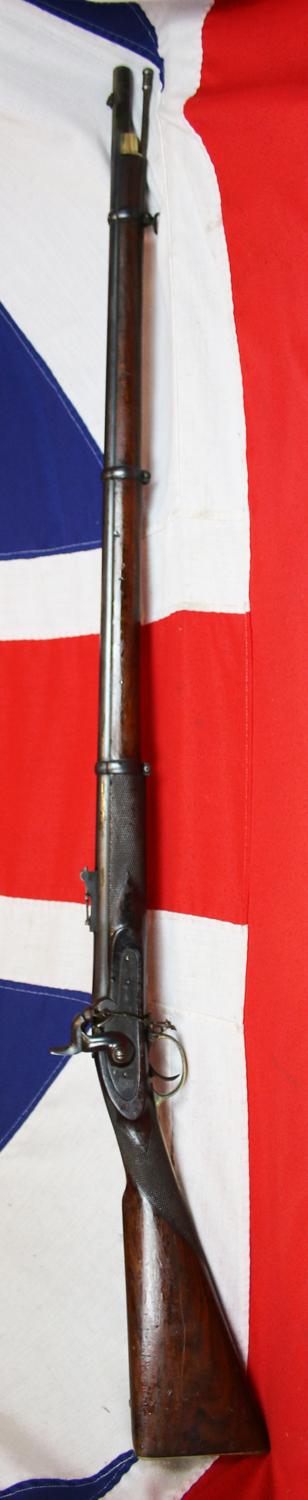
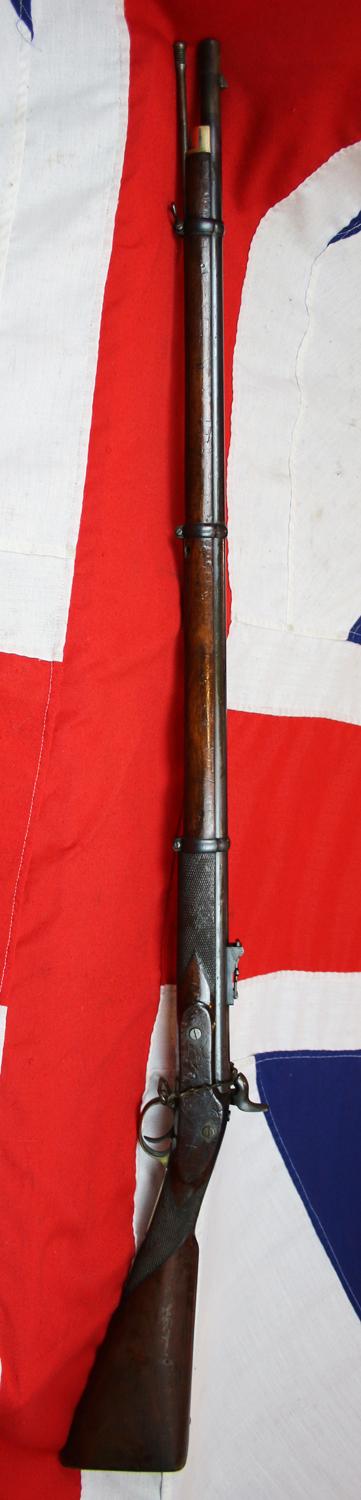
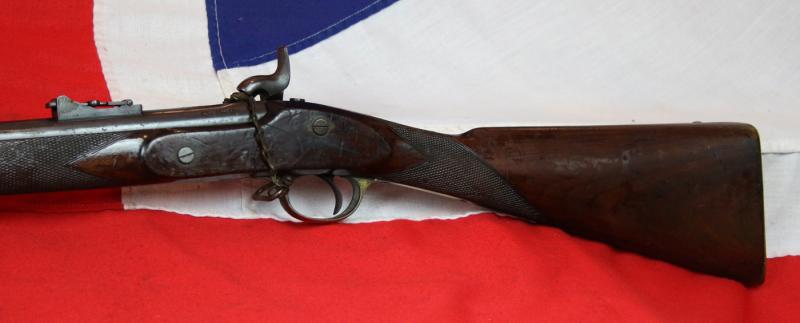
An Original Superb 1853 Three Band Enfield Pattern Rifle Made in the 'Tower Of London' Armoury. Issued For the British Infantry for Service In The Crimean War in Russia, In 1855. Used Later In The Indian Mutiny & Potentially in The US Civil War & Japan
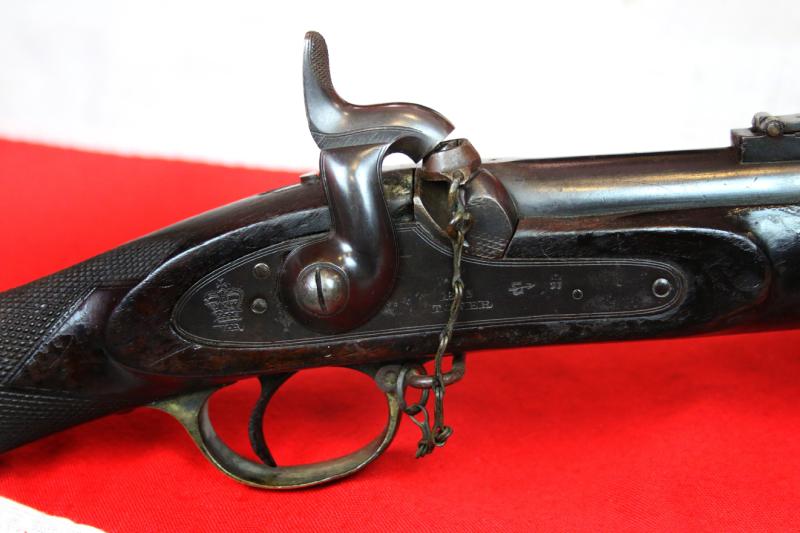
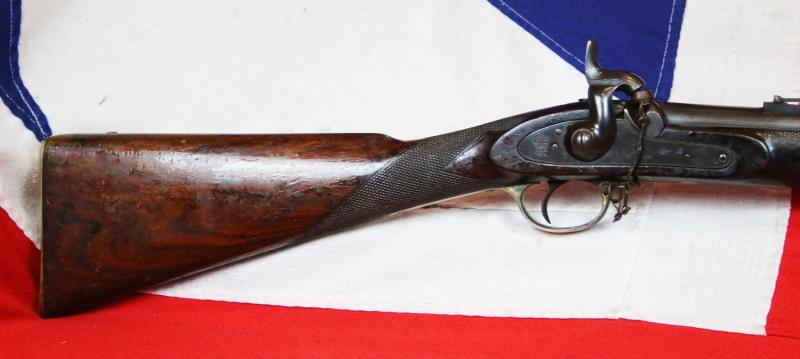
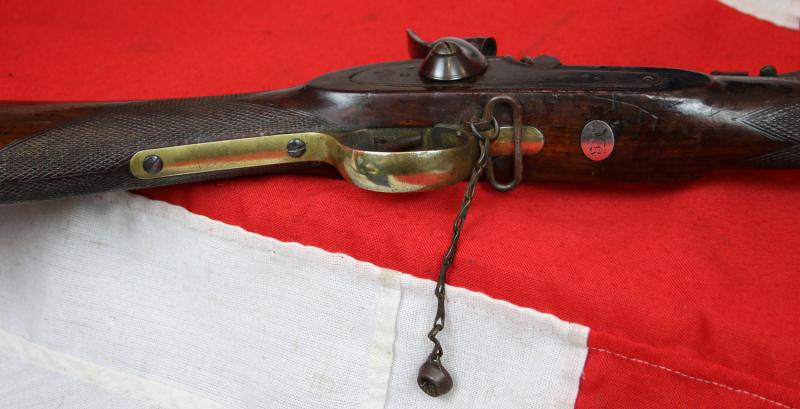
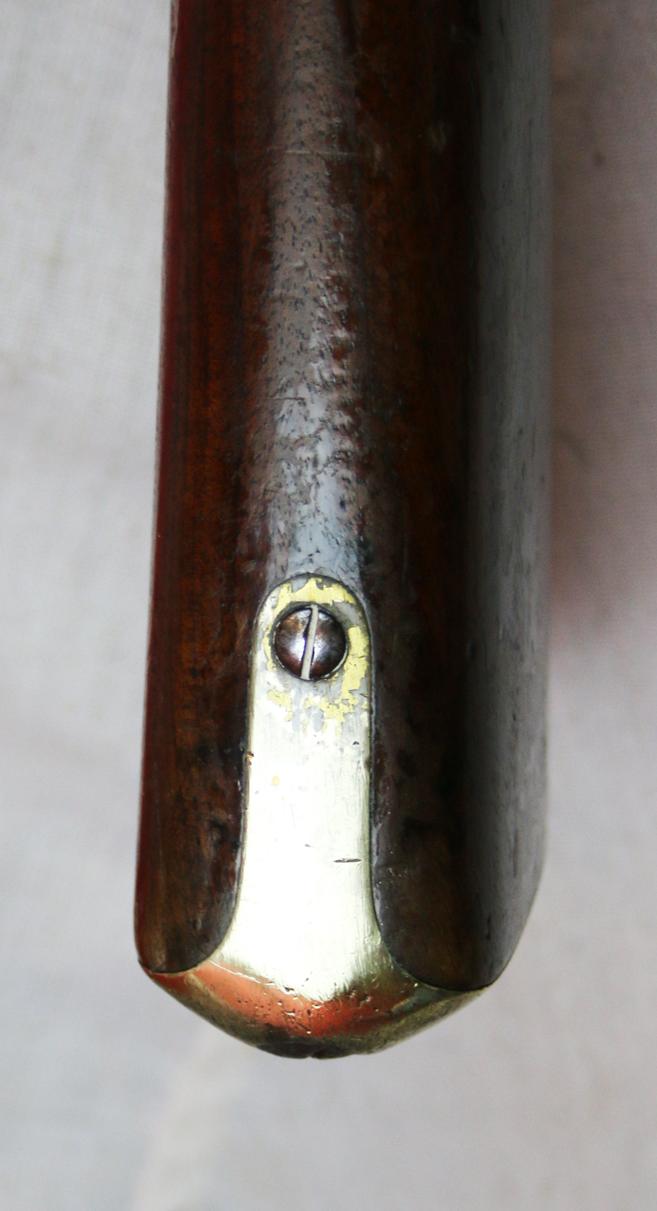
Overall in super condition with much original blueing, and a rare original chain mounted cover to protect the nipple from damage through missfires. The rifle has clearly seen service in combat in its working life, with overall surface light bruising, during its almost 50 combat years, but it has been very nicely cared for since, and all the steel parts are excellent.
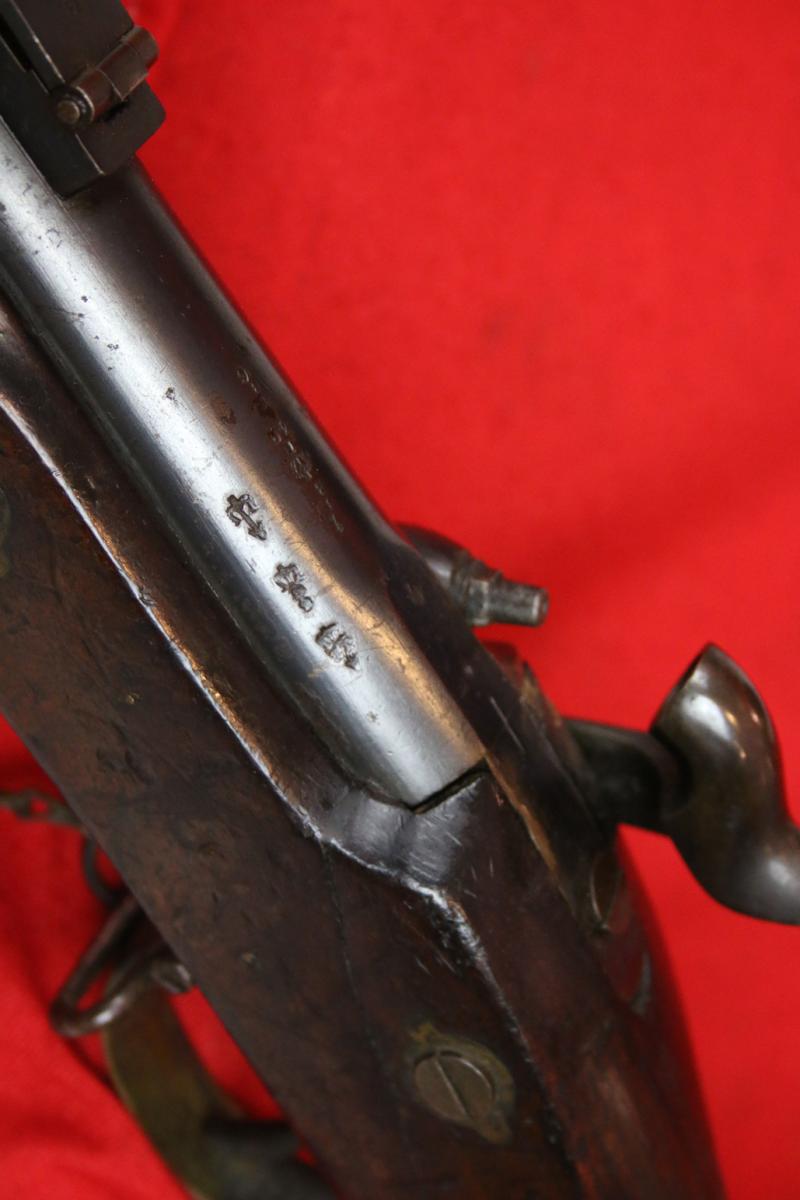
The 'Enfield 1853' Pattern Rifle-Musket was the mainstay of the British Army during the Crimean War and Indian Mutiny. It was later replaced briefly by the 2 Band Enfield, the Snider conversion, and ultimately by the Martini Henry .450 577. This example is very attractive indeed with much of its original steel blueing, and, profusely and fully ordnance marked throughout by the ordnance inspectors.
After the Indian Mutiny the British ordnance declared many hundreds of thousands of rifles as 'out of service' and were then sold to the American's, for their Civil War, both the North and South.
With war breaking out between the Turks and the Russians, in the Crimea, Britain realized that it was only a matter of time before they would be drawn into the conflict. The British Army however was in the midst of a significant weapons transformation from smoothbore muskets, to rifled muskets. While three of the four divisions of the field army in the Crimea had been supplied with the pattern 1851 Minie rifle-musket, the other regiments of the army around the Empire still carried the 1842 pattern smoothbore musket. By the end of 1853, the Enfield rifle-musket was approved by the War Department for the army and was put into production.
The Enfield saw extensive action in the Crimean War, 1854–1856, with the first Enfield rifles being issued to troops from February 1855
It was a rifle that was also used by both the North and the South in the American Civil War, and was the second most widely used infantry weapon in the war, surpassed only by the Springfield Model 1861 Rifled Musket.
The Confederates imported more Enfields during the course of the war than any other small arm, buying from private contractors and gun runners when the British government refused to sell them arms after it became obvious that the Confederacy could not win the war. It has been estimated that over 900,000 P53 Enfields, just like this fine example. They were imported into America, and saw combat service in every major engagement from the Battle of Shiloh (April, 1862) and the Siege of Vicksburg (May 1863), to the final battles of 1865.
At the Battle of Gettysburg on July 2, 1863, the 20th Maine Volunteer Infantry, led by Colonel Joshua L. Chamberlain, were armed with Enfield 1853 Rifle-Muskets during their famous bayonet charge against a relentless attack by Confederate Forces attempting to destroy the left flank of the Union Army on Little Round Top.
Here is an excerpt from Chamberlain's Official Battle Report:
"The intervals of the struggle were seized to remove our wounded (and those of the enemy also), to gather ammunition from the cartridge-boxes of disabled friend or foe on the field, and even to secure better muskets than the Enfields, which we found did not stand service well."
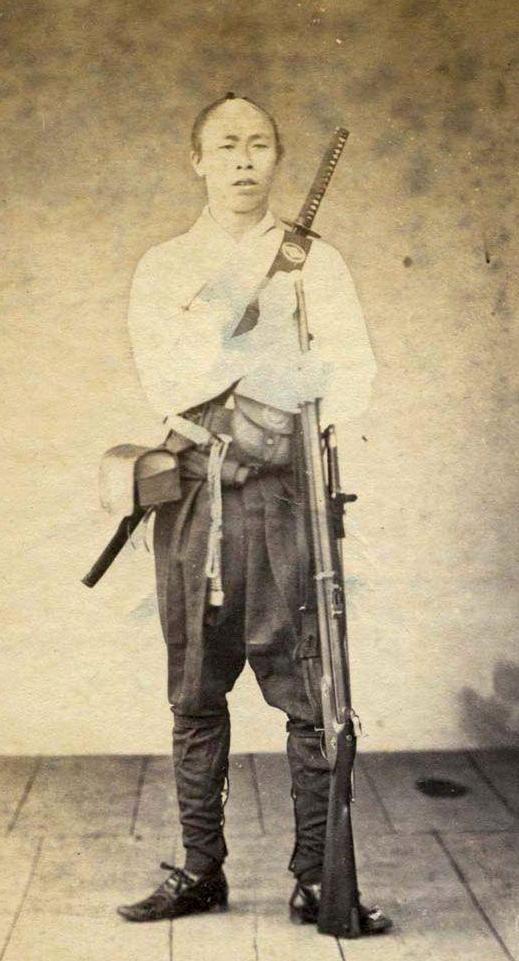
The ferocious charge of the 20th Maine, with bayonets fixed to their Enfield Rifle-Muskets, was victorious against the stunned Confederates, and Colonel Chamberlain received the Medal of Honor for his day on Little Round Top. The P53 Enfields capabilities were largely lost by the lack of marksmanship training by both the Union and Confederacy. Most soldiers were not trained to estimate ranges or to properly adjust their sights to account for the "rainbow-like" trajectory of the large calibre conical projectile. Unlike their British counterparts who attended extensive musketry training, new Civil War soldiers seldom fired a single cartridge until their first engagement. After the end of the war, hundreds of formerly Confederate Enfield 1853 muskets were sold from the American arms market to the Tokugawa shogunate, as well as some prominent Japanese domains including Aizu and Satsuma. These units were later used in the Boshin War, and some remaining in Satsuma were also used by rebelling former samurai in the Satsuma Rebellion about a decade later.
The Enfield Pattern 1853 rifle-musket (also known as the Pattern 1853 Enfield, P53 Enfield, and Enfield rifle-musket) was a .577 calibre Minié-type muzzle-loading rifled musket, used by the British Empire from 1853 to 1867; after which many were replaced in service by the cartridge-loaded Snider–Enfield rifle.
History and development
The parts of the Enfield cartridge, including the papers, the Pritchett bullet, and forming tools
The term "rifle-musket" originally referred to muskets with the smooth-bored barrels replaced with rifled barrels. The length of the barrels were unchanged, allowing the weapons to be fired in ranks, since a long rifle was necessary to enable the muzzles of the second rank of soldiers to project beyond the faces of the men in front. The weapon would also be sufficiently long when fitted with a bayonet to be effective against cavalry. Such weapons manufactured with rifled barrels, muzzle loading, single shot, and utilizing the same firing mechanism, also came to be called rifle-muskets.
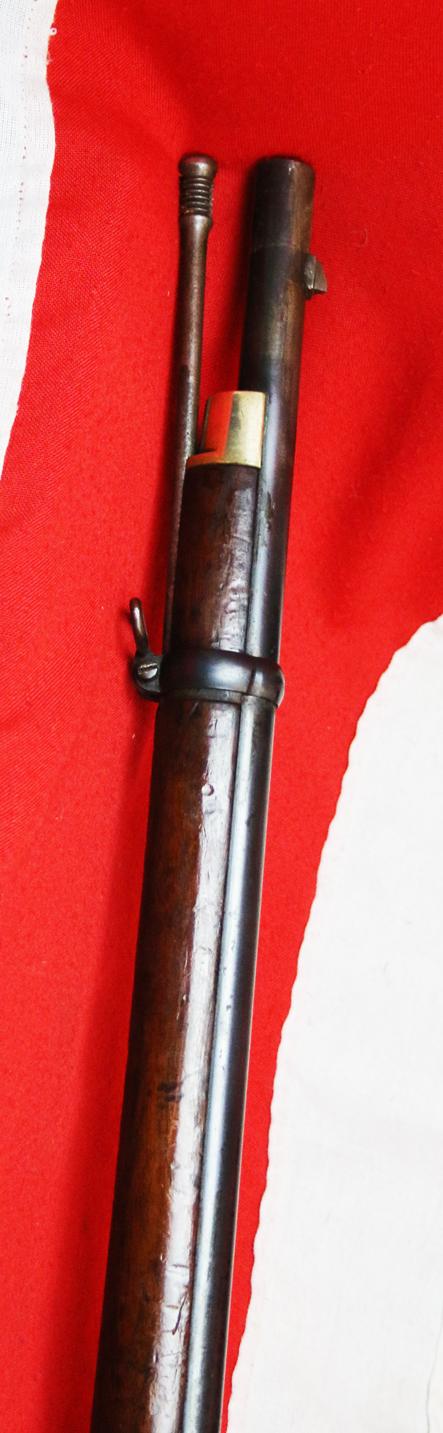
Royal Small Arms Factory developed the Pattern 1853 Enfield in the 1850s. The 39 in (99 cm) barrel had three grooves, with a 1:78 rifling twist, and was fastened to the stock with three metal bands, so that the rifle was often called a "three band" model. The rifle's cartridges contained 2+1⁄2 drams, or 68 grains (4.4 g) of gunpowder, and the ball was typically a 530-grain (34 g) Boxer modification of the Pritchett & Metford or a Burton-Minié, which would be driven out at approximately 1,250 feet (380 m) per second.
Last photo in the gallery is a Japanese samurai standing with his pattern 1853 Enfield, purchased from the States after the Civil War and used in the Japanese Boshin War and the Satsuma Rebellion.
Code: 26321
1850.00 GBP