
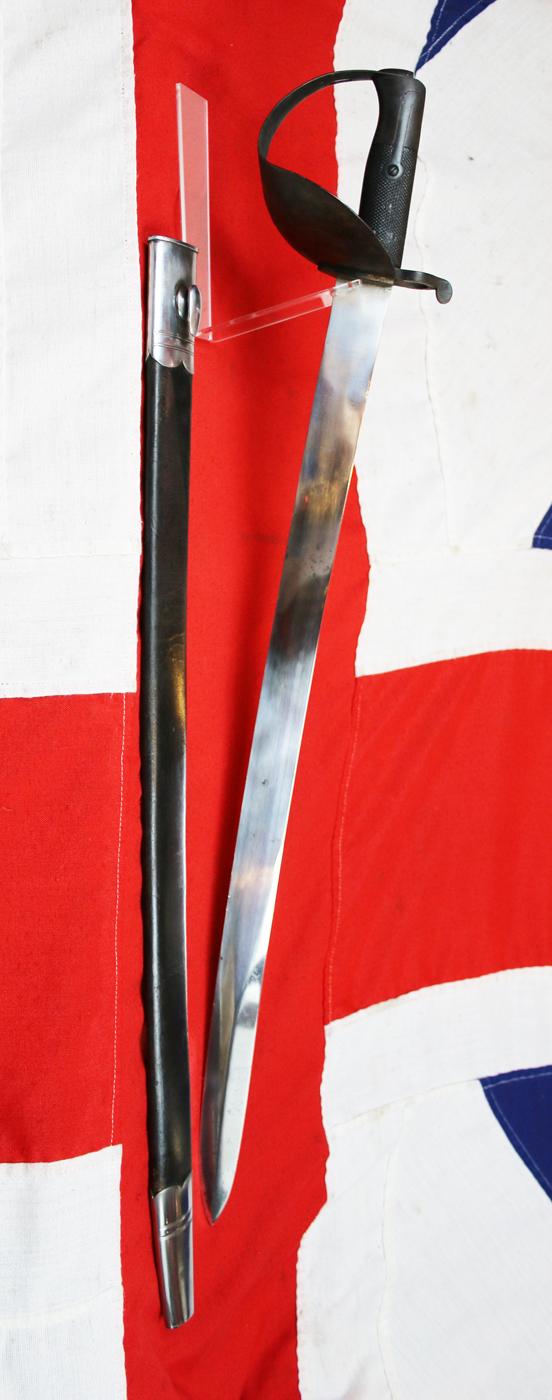
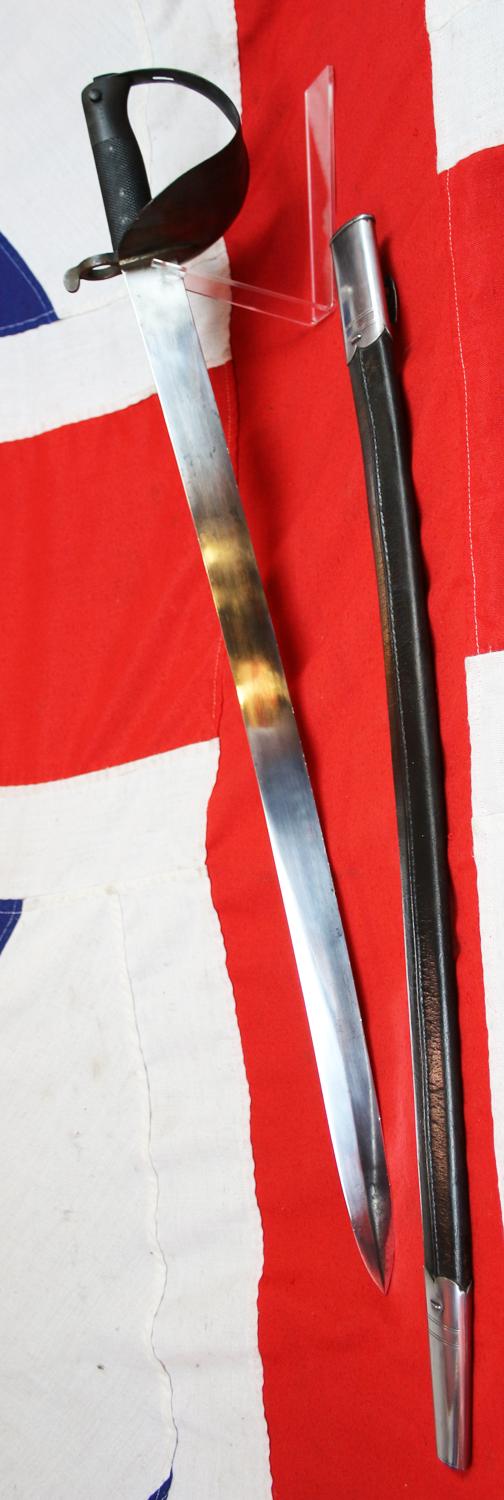
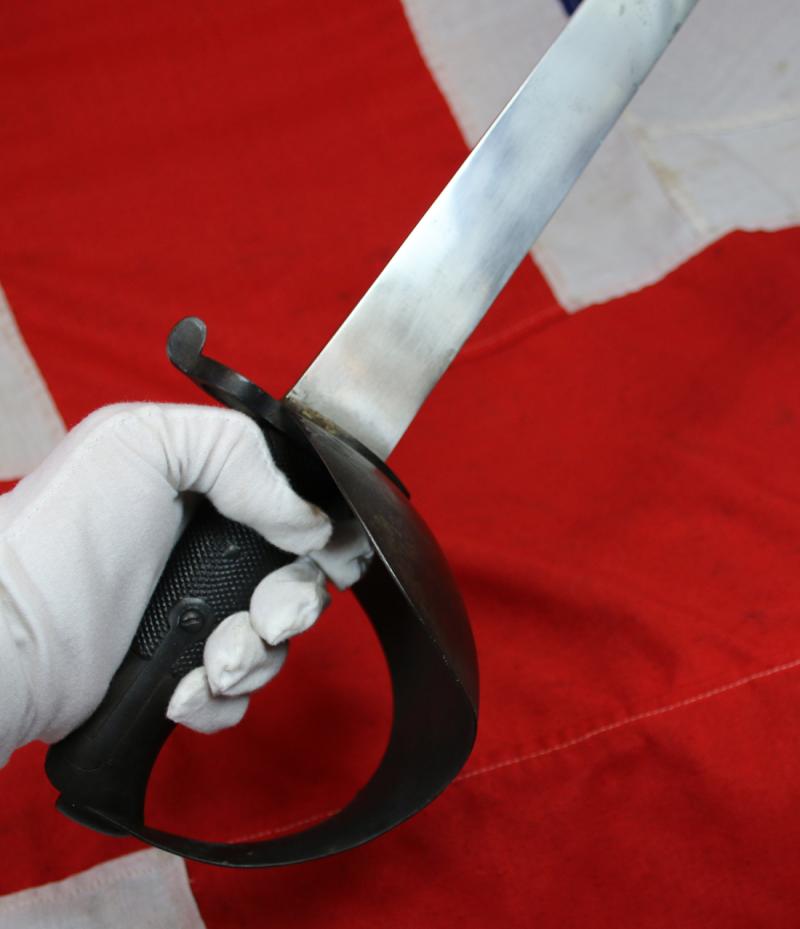
A Most Rare, Historic, British, Pattern of 1859 Naval Cutlass Bayonet With Scabbard By Reeves. One of Only 800 Made. An Absolute Beauty with a Stunning Blade & Scabbard and Original, Blackened Japanned Finish, Steel Bowl Guard
Without doubt a superb and excellent example that would be nigh on impossible to improve upon.
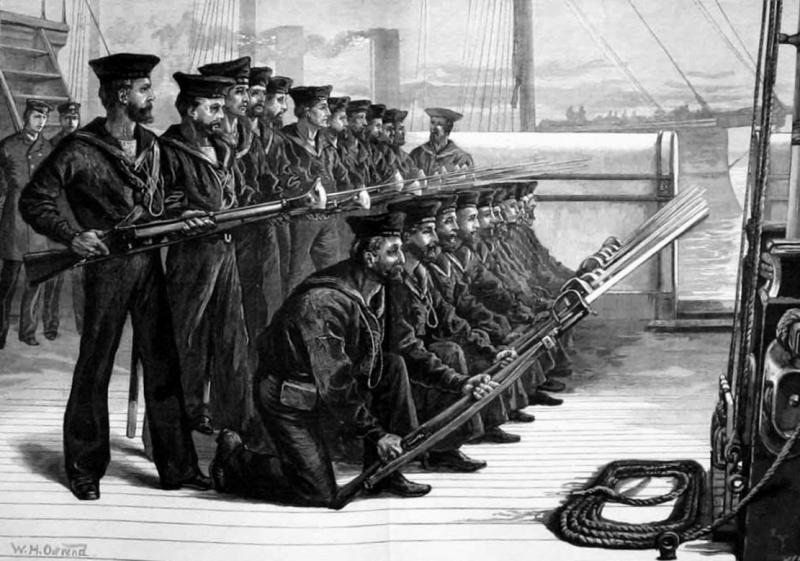
British forces widely used the Pattern 1858 Enfield Naval Rifle (often paired with the 1859 Pattern cutlass bayonet) during the Second Opium War (1856–1860).
The Royal Navy and British Army infantry used the P1858 during joint operations, including the capture of the Taku Forts and the advance on Beijing. During the Boxer Rebellion at the end of the 19th century, older muzzle-loaders and Enfields could occasionally be found in auxiliary and reserve roles within the international expeditionary force.
The Enfield Rifle Pattern 1859 Cutlass Bayonet was imported during the Civil War by both the North and South for the both their Navy and Coastal Artillery units.
The rifle and cutlass bayonet were employed by British colonial forces and British regiments stationed in New Zealand.
Used by European mercenary forces and foreign powers involved in suppressing the rebellion in China.
Used by various factions during the Boshin War and Satsuma Rebellion as the Tokugawa Shogunate and imperial forces rapidly modernized their arsenals
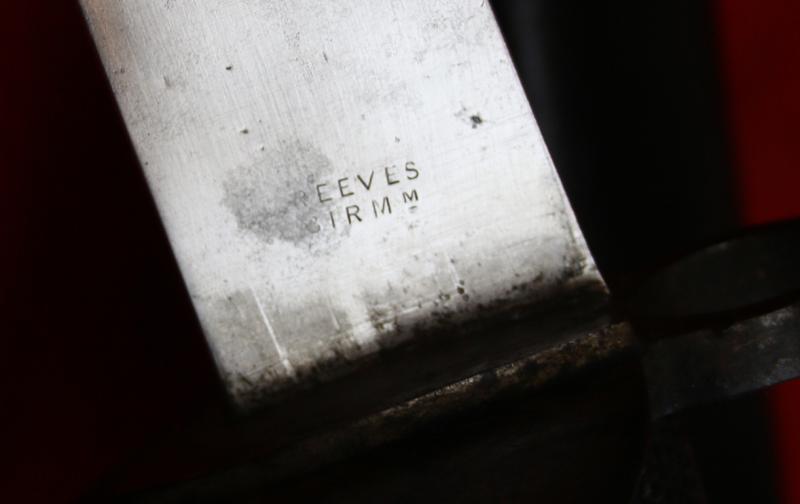
The British Pattern 1859 Naval Cutlass Bayonet was designed for the Royal Navy to pair with the Pattern 1858 Enfield Naval Rifle. Manufactured by Charles Reeves & Co. of Birmingham, genuine Reeves-stamped examples are exceptionally scarce, as Reeves produced fewer than 800 pieces. The vast majority of Pattern 1859 bayonets were outsourced to Solingen, Germany
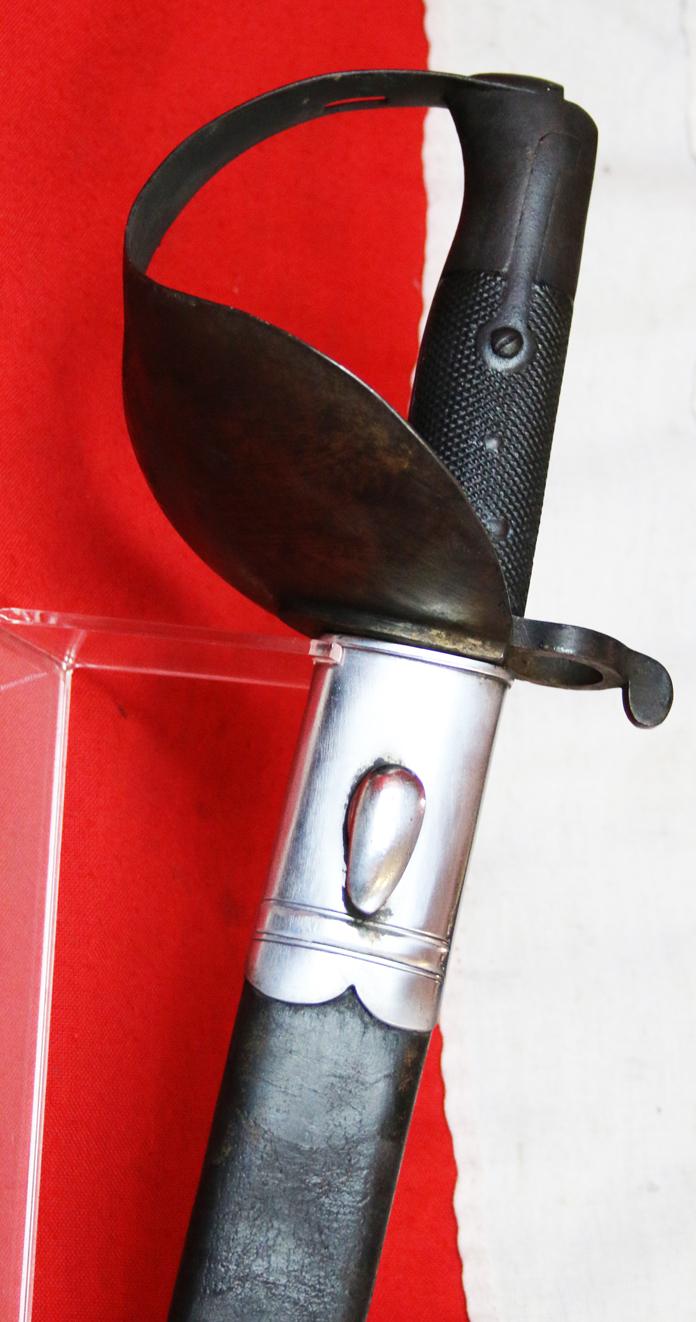
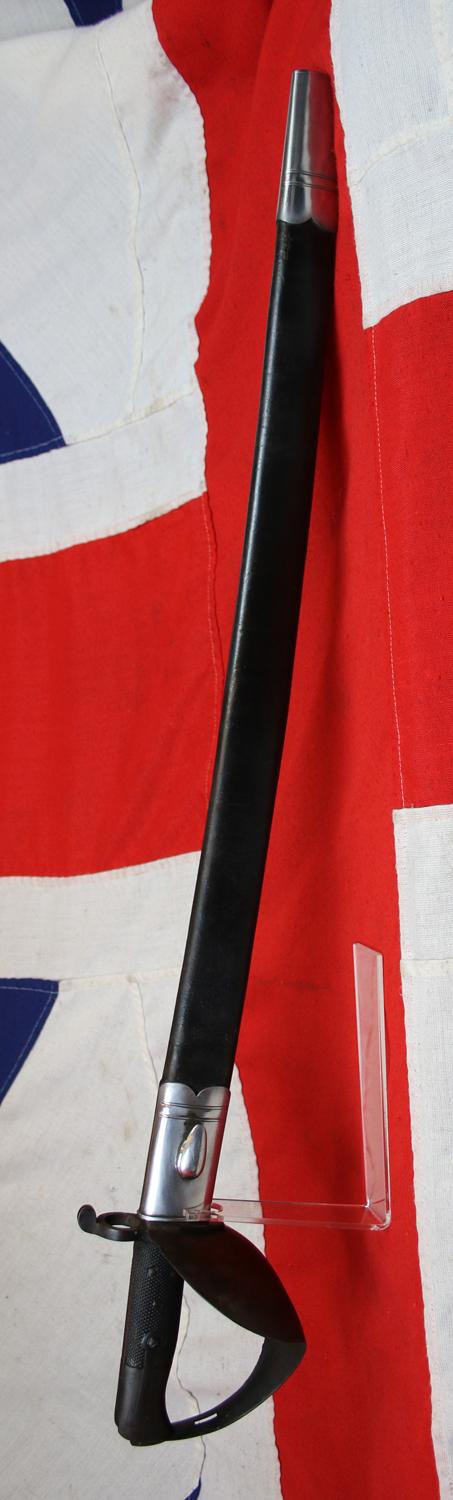
This 1859 cutlass bayonet scabbard, is stamped "SG". The "SG" mark stands for Simmons & Ginder ordnance scabbard makers. Scabbards were made of black leather with steel or brass mounts, this example has the steel mounts
This is a very fine example of the scarce British Pattern 1859 Type II Naval Cutlass Bayonet & Scabbard for use on the Pattern 1858 “Enfield” Naval Rifle. These rifles had thicker barrels than the standard Pattern 1856 rifle and were rifled with 5 grooves instead of the normal 3 grooves. The British military wanted to create a dual-purpose bayonet for the rifle, much like Admiral Dahlgren did with his Bowie Knife/Bayonet for the US Model 1861 Naval Rifle and settled on a combination naval cutlass and bayonet as the most practical design. However, the length and weight of the bayonet must have made its use on the end of a rifle very awkward. The British military contracted for about 80,000 of these cutlass bayonets, and it is interesting to note that aside from a small contract of less than 800 delivered by Reeves of Birmingham, all of the other contractors involved used Solingen made blades in the fabrication of their bayonets.
In fact, established Solingen sword maker and cutler Carl Reinhardt Kirschbaum of Solingen, working under the business name of C.R. Kirschbaum, established a new business venture for the specific purpose of producing Pattern 1859 Naval Cutlass Bayonet blades.
This cutlass is one of those 800 very rare examples made by Reeves of Birmingham.
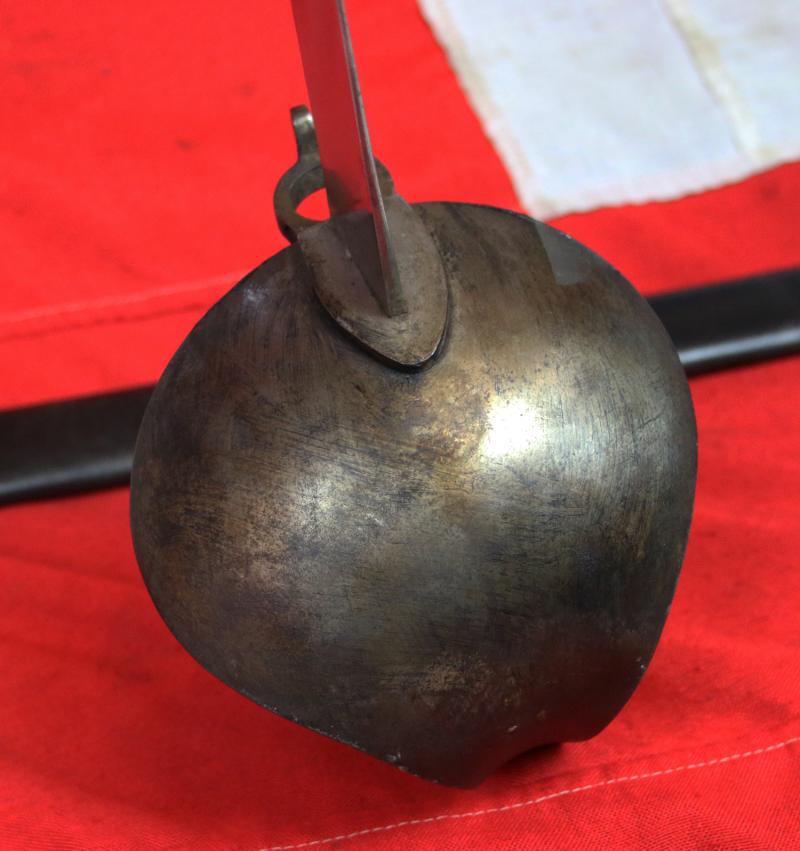
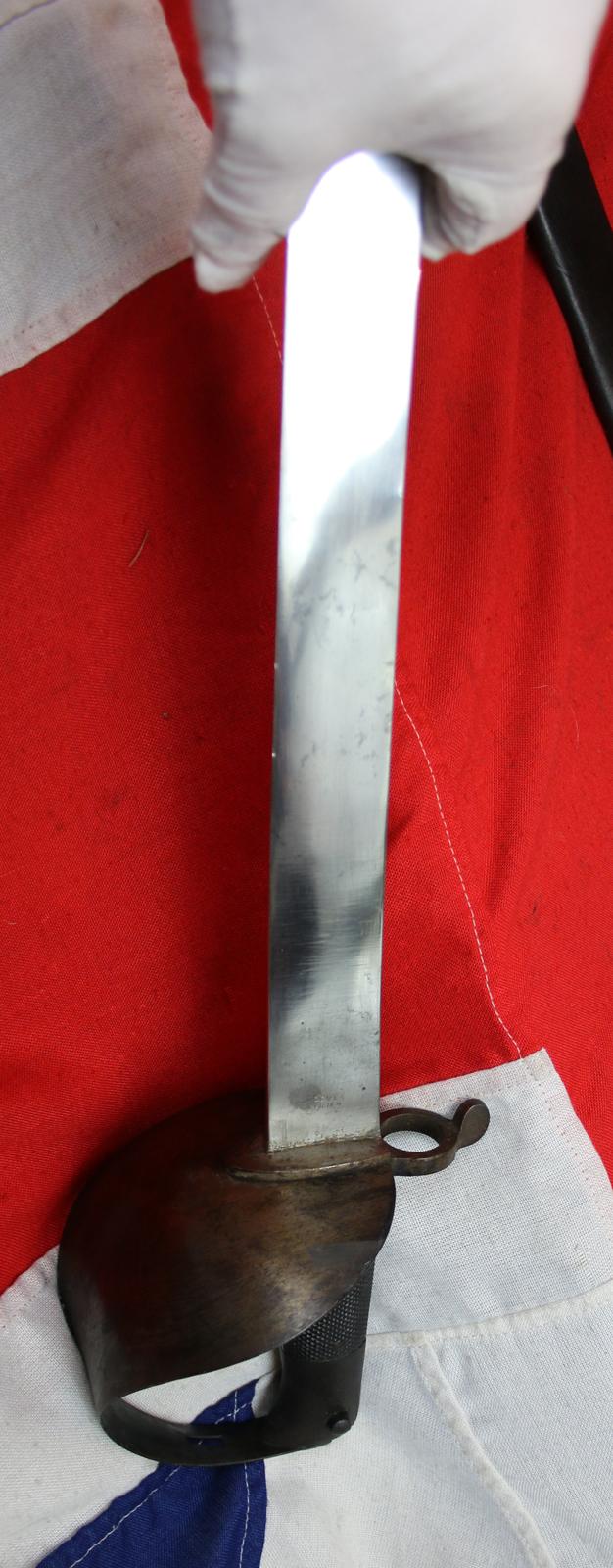
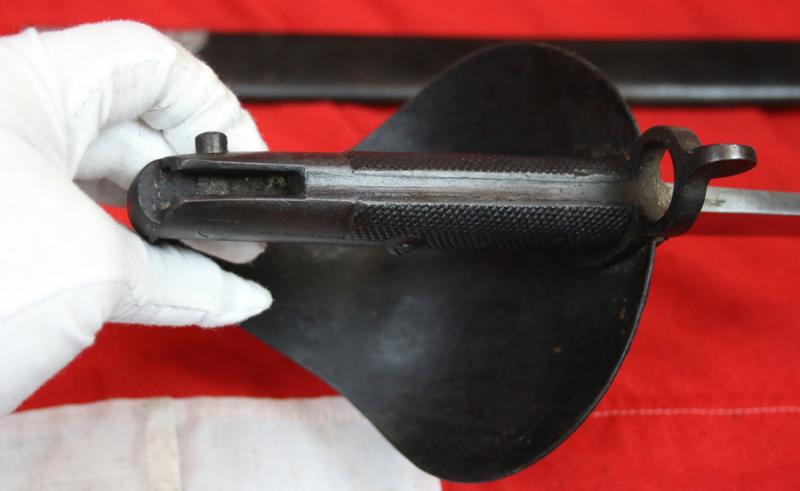
The Pattern 1859 Type II Naval Cutlass Bayonet offered here is in FINE condition overall and is accompanied by a very hard to find original scabbard, that is in very good condition. The blade is full-length at 27” and is clearly marked with the maker mark of Reeves on the ricasso. The muzzle ring measures .830”. The blade has its original high polished steel appearance. The blade is almost entirely smooth, along its entire length. The solid iron basket hilt has a fine appearance. The interior of the guard retains about 90%+ of its original black jappaning with only some scattered scratching, light wear and surface scuffing. The original locking spring is present in the grip and functions exactly as it should. The two-piece pressed leather grip panels are in about fine condition and show only minimal shrinkage and retain about 80%+ of their original finish. The grips retain the majority of their roll embossed knurling (while the pattern is “checkered” it is not actual checkering but embossing with a roll die) and show only some light wear, minor scuffmarks and some light rounding to the sharp checking tips. The grips are much nicer than they are normally encountered on a bayonet of this pattern and are really attractive. The balance of the iron hilt has thinly oxidized brown patina that is almost entirely smooth, over the duller gray base metal. The original scabbard accompanies the bayonet, which is an extremely difficult item to come by. The scabbard is in complete and solid condition with both original iron mounts in good condition and well secured to the leather scabbard body. The scabbard body is solid and complete with the original stitching securely in place along the seam in the rear. These cutlasses in their original scabbards are very hard to find, especially by Reeves, and this is a solid, very good looking example.
Overall this is a really attractive example of one of the rarer British bayonets to be found. While there is no way to be sure, the lack of British acceptance marks raises the possibility that this cutlass bayonet may have been purchased by US or CS agents for use on one of the Enfield Pattern 1858 Naval rifles that were imported by both sides during the war. Of all the Enfield “short rifles”, the Naval Rifle was one that was imported in very small quantities, making the bayonets even more uncommon in America today. The bayonet is in really fine condition and is accompanied by a very scarce original scabbard.
This is a great example of a rare bayonet, complete with scabbard, and would be a great addition to display with any bayonet, cutlass or sword collection, especially a Pattern 1858 Naval rifle, and to add to any collection of Civil War era bayonets.
The slashing attack with the cutlass at sea wasn't practical. One must remember that ship's decks were extremely tight quarters and overcrowded. Although some longer swords made it to sea, the primary edged weapons were short hangers, cutlasses, dirks, etc. Thrusting weapons were the item of choice, evidenced by the reemergence of the ancient pike, much shortened to fit on a crowded ship's deck. The point is that it makes sense that the cutlass could be used as a sharpened bludgeon, but worked better as a stabbing implement like the pikes and dirks.
A jab to the face or neck could obviously be lethal, penetrating the airway, severing the trachea, carotids and jugular. To the chest, there is penetration of the lungs, bronchus (all fatal), heart and great vessels (aortic arch), abdominal cavity with its vascular liver and pancreas.
Also consider the cutlass in the use for defense of the ship vs the aggressor boarding party. Netting was placed over the ship to discourage boarders, with the sailors stabbing through the netting as the enemy attempted to clamber onto the deck. Again, a cutlass would work far better here as a thrusting defensive weapon, stabbing through the tight ropes at those on the other side.
Code: 26277
920.00 GBP