
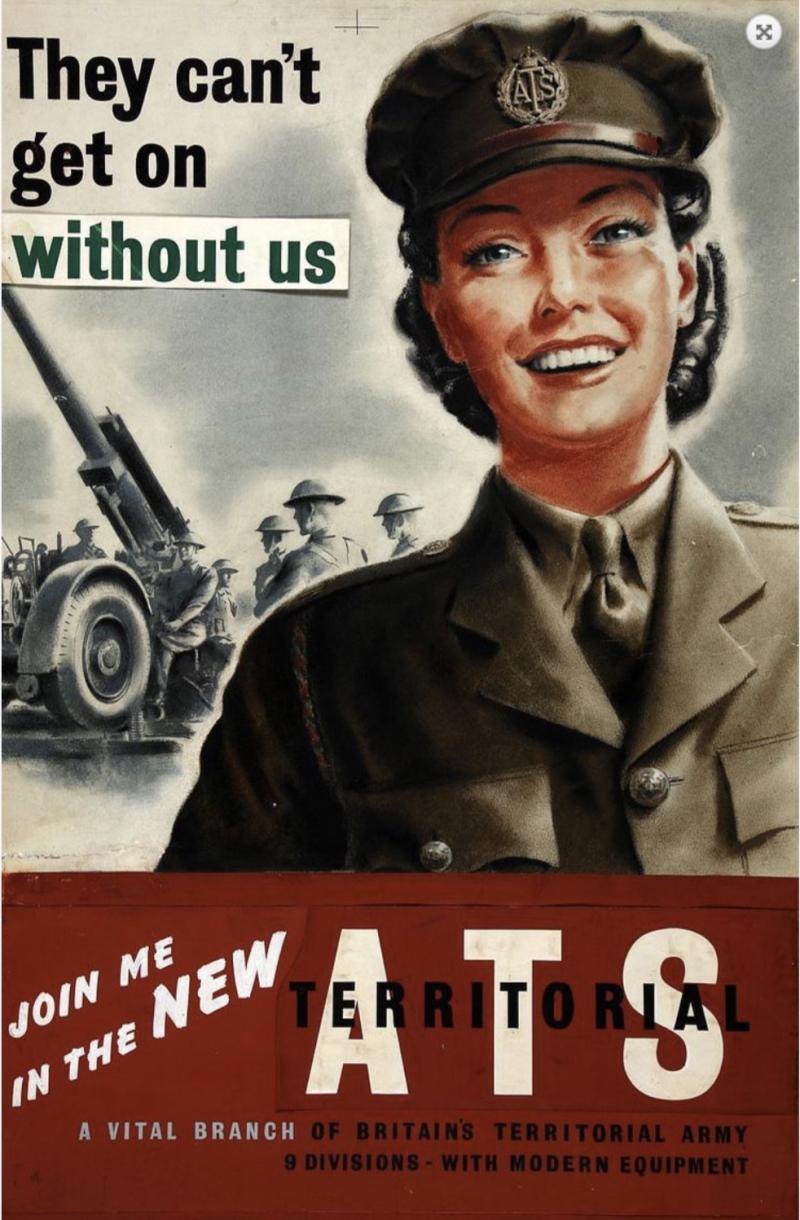
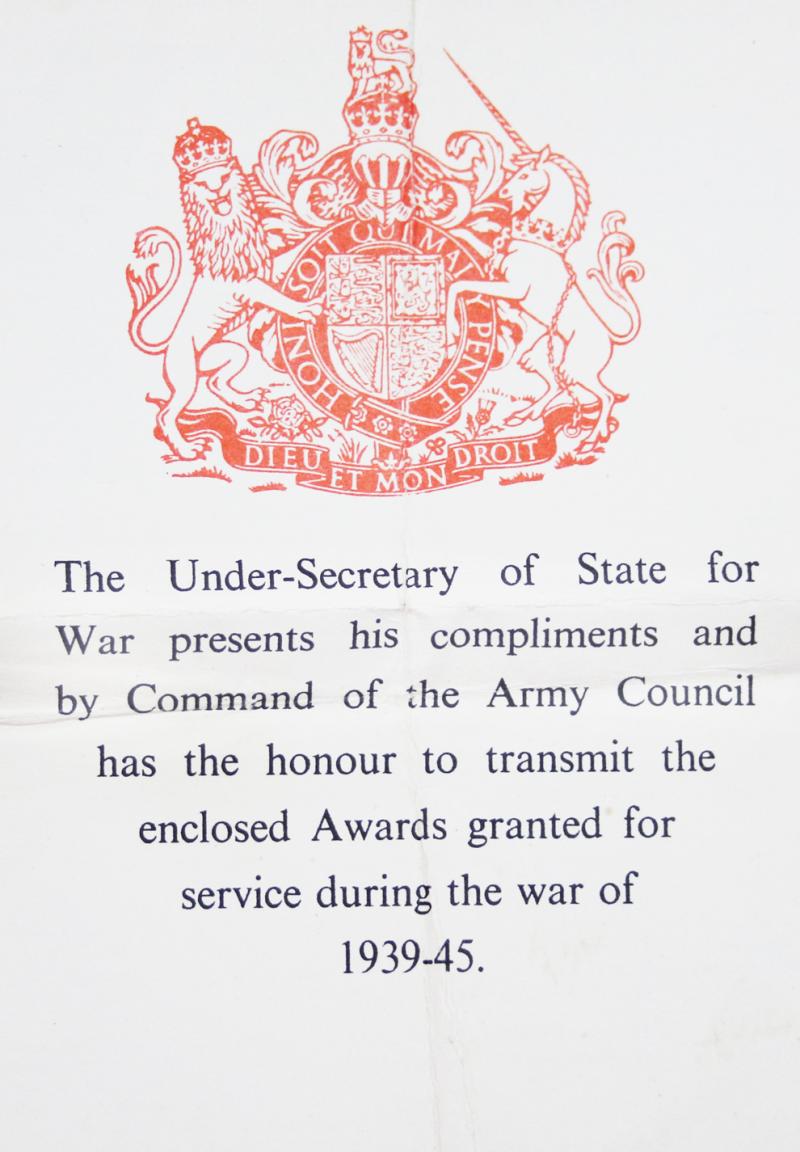
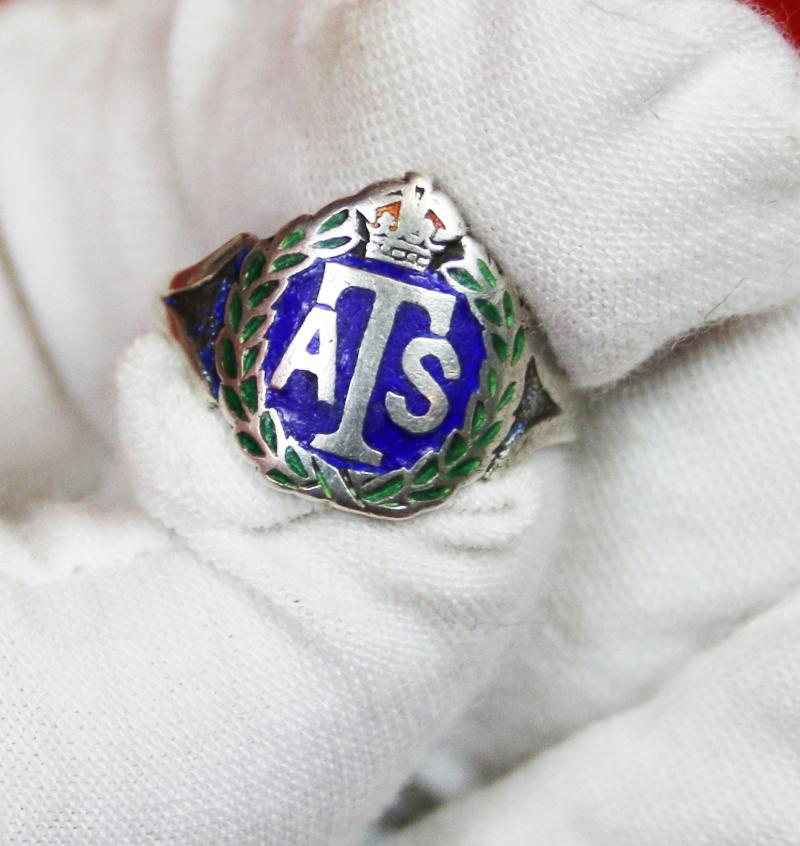
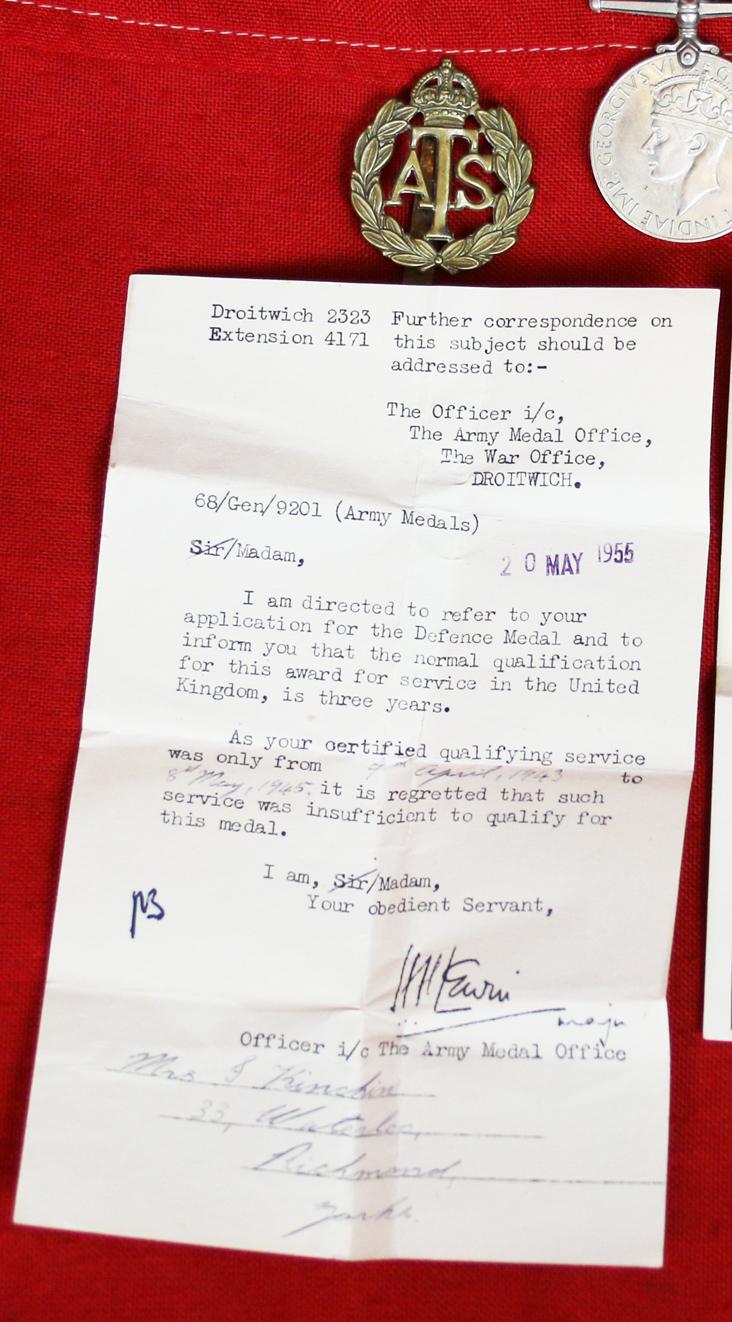
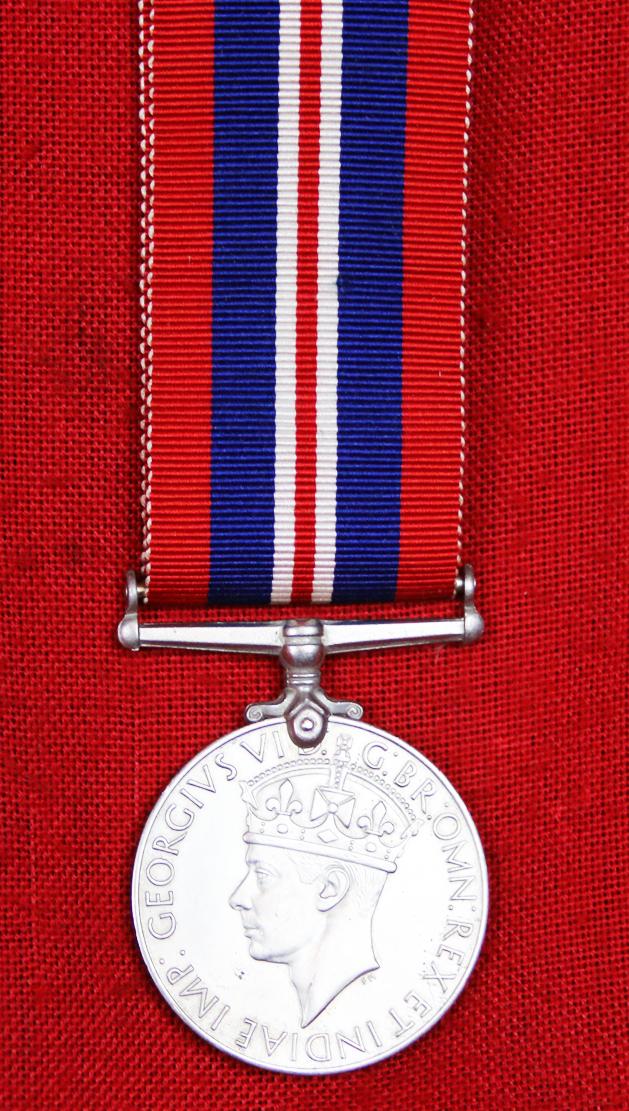
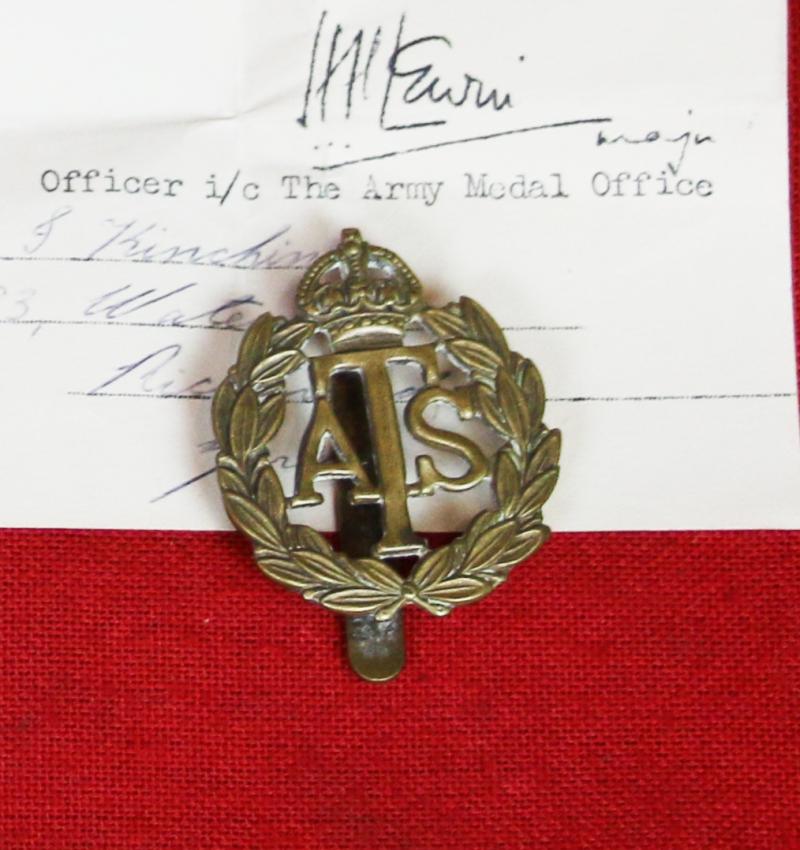
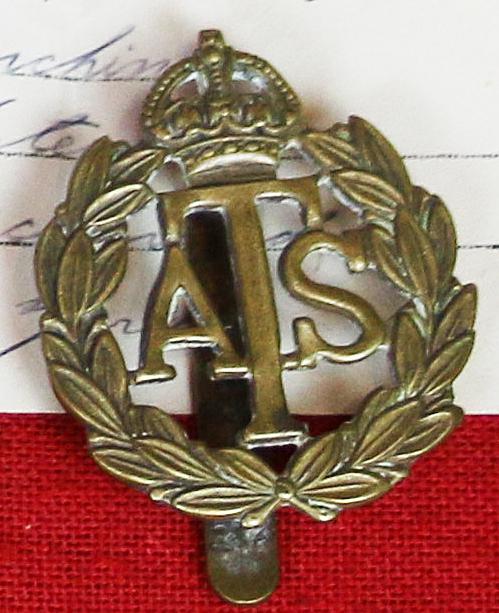
Medal Of Iris Kinchin {nee Armstrong} Former SOE Cypherette in The Far East. With Her Letter From The Medal Department, Medal Issue Box, Silver Enamel Ring and Badge.
Iris Armstrong-Kinchin was a female operative who served as a secretary and cypherette (codebreaker) for the British Special Operations Executive (SOE) in the Far East during World War II.
She was born in Singapore. Prior to her recruitment into clandestine warfare, she was employed at the India Office in Whitehall, London
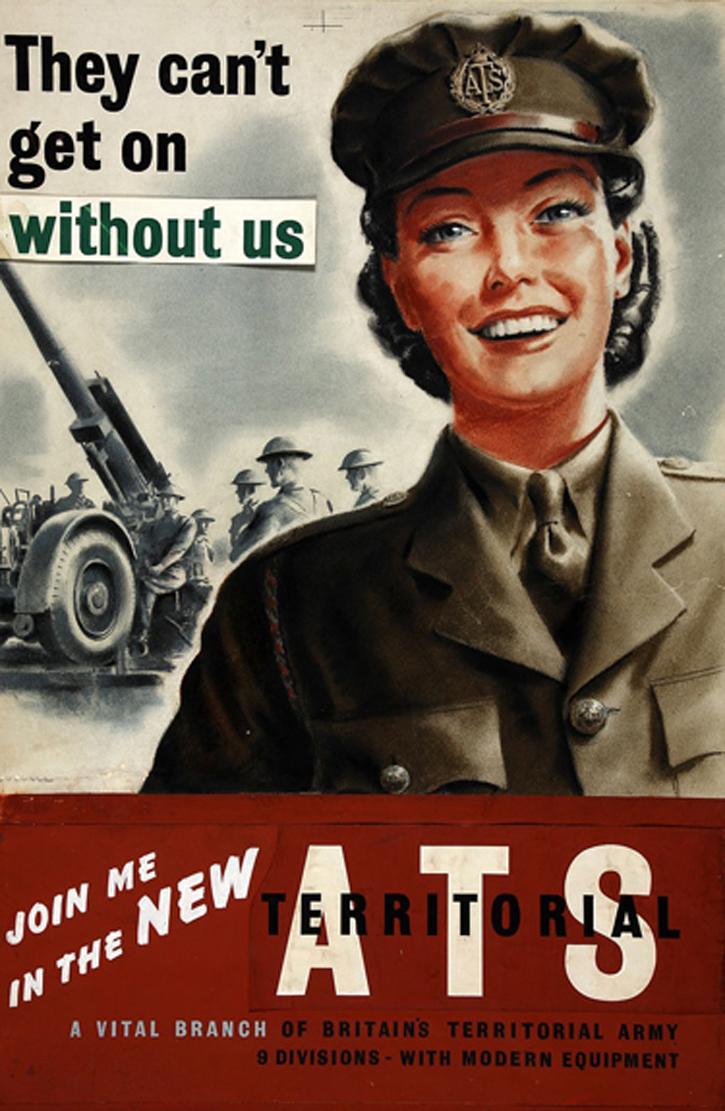
Following the outbreak of hostilities in the Pacific theatre, she was successfully evacuated from Singapore in January 1942, shortly before the British stronghold fell to Japanese forces. She joined the ATS in April 43, then underwent security screening—referred to in historical records as being "put through the cards"—in September 1943. She was formally brought on as an SOE secretary that same month.
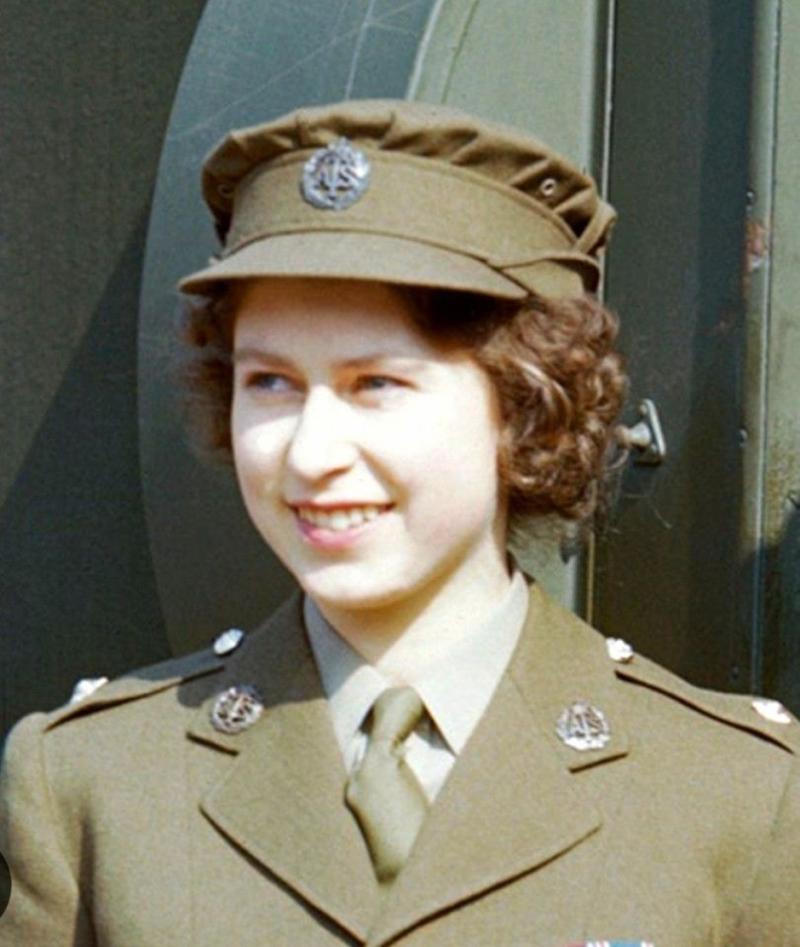
She deployed to Cairo, Egypt, on November 14, 1943.India (Force 136) Her technical post was as an ATS member, for which she wore the cap badge and private purchase silver and enamel ring {one presumes in case of capture or to aid her true SOE role}
From April 1945, she was posted to India, which served as the operational headquarters for SOE's Far East branch, known as Force 136.Role: In June 1945, her official records show she transitioned to working as a "cypherette". In this critical capacity, she handled the encryption and decryption of highly sensitive, coded wireless signals traveling between headquarters and agents operating deep behind enemy lines in places like Burma and Malaya.
In October 1945, she was granted six days of compassionate leave to reunite with her family members, who had just been released and repatriated from Japanese internment camps in Singapore. She officially signed off from her duties with the SOE on February 15, 1946—exactly on the fourth anniversary of the fall of Singapore.
She was awarded a single war medal but in 1955 applied for the Defence Medal was refused as her service failed to cover three full years. Letter enclosed for that refusal from HM Medal Dept. Addressed to her current then address in Richmond Yorkshire under her married name, Iris Kinchin.
The total number of female personnel supporting SOE in the Far East by July 1945 was 723. This page is dedicated to them, for without them, Force 136 would not have been able to do what it did. A great deal of their work was concerned with Burma, as that was where SOE’s largest operational commitment to the war against Japan was focused.
Of the 723 women employed by SOE, 449 belonged to the First Aid Nursing Yeomanry, or FANY; 274 remained civilians and ATS.
At 368, just over half of the 723 were employed by the Signals establishment. During 1945, they were responsible for 1,422,356 cipher groups {messages} going into and coming out of the field from approximately 183 operational W/T sets across Southeast Asia. There were over 50 W/T sets in Burma alone. Women working as cipherettes often worked 12 hour shifts, ensuring that messages to and from operations were sent and received 24 hours a day, 7 days a week.
The remaining 355 women were distributed on clerical and secretarial roles.
We have her medal in its named issue box, and a letter for the application of here second medal from the medal dept. in 1955. They said no as she didn't serve long enough, 3 years minimum in England, to get her defence medal.
Working for 12 hours a day, 7 days a week, for the SOE doing in the Far East, the same as they did in Bletchley but deciphering messages for Force 136
Force 136 was a far eastern branch of the British World War II intelligence organisation, the Special Operations Executive (SOE). Originally set up in 1941 as the India Mission with the cover name of GSI(k), it absorbed what was left of SOE's Oriental Mission in April 1942. The man in overall charge for the duration of its existence was Colin Mackenzie.
The organisation was established to encourage and supply indigenous resistance movements of British ruled India in enemy-occupied territory, and occasionally mount clandestine sabotage operations. Force 136 operated in the regions of the South-East Asian Theatre of World War II which were occupied by Japan from 1941 to 1945: Burma, Malaya, Sumatra, Siam, and French Indochina
Although the top command of Force 136 were British officers and civilians, most of those it trained and employed as agents were indigenous to the regions in which they operated. Burmese, Indians and Chinese were trained as agents for missions in Burma, for example. British and other European officers and NCOs went behind the lines to train resistance movements. Former colonial officials and men who had worked in these countries for various companies knew the local languages, the peoples and the land and so became invaluable to SOE. Most famous amongst these officers are Freddie Spencer Chapman in Malaya and Hugh Seagrim in Burma
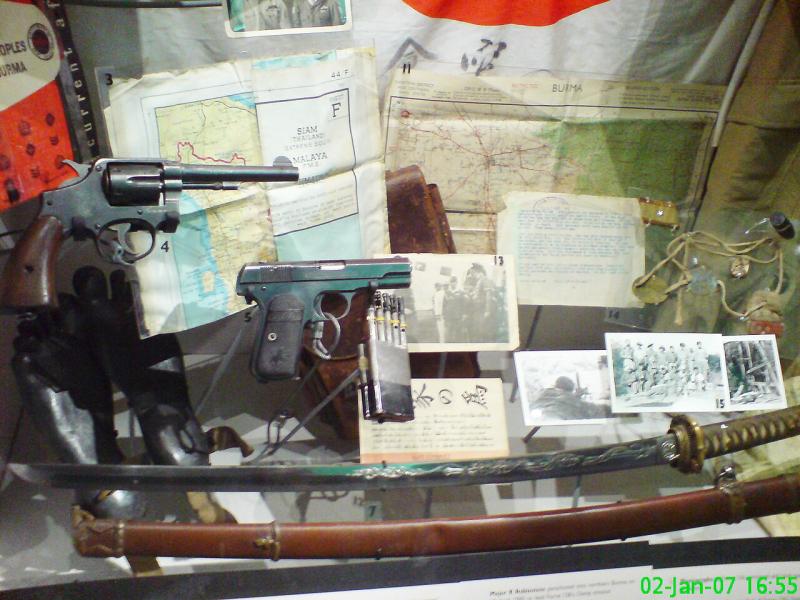
Photo in the gallery of 'War in the Far East' gallery in the Imperial War Museum, London.
Force 136 Among the collection are a Japanese Good Luck Flag, operational map (numbered 11), photographs of Force 136 personnel and guerillas in Burma (15), a katana that was surrendered to a SOE officer in Gwangar, Malaya in September 1945 (7), and rubber soles designed by SOE to be worn under agents boots' to disguise footprints when landing on beaches (bottom left).
By Wolcott - Own work, CC BY-SA 3.0, https://commons.wikimedia.org/w/index.php?curid=12460127
Code: 26263
Price
on
Request