
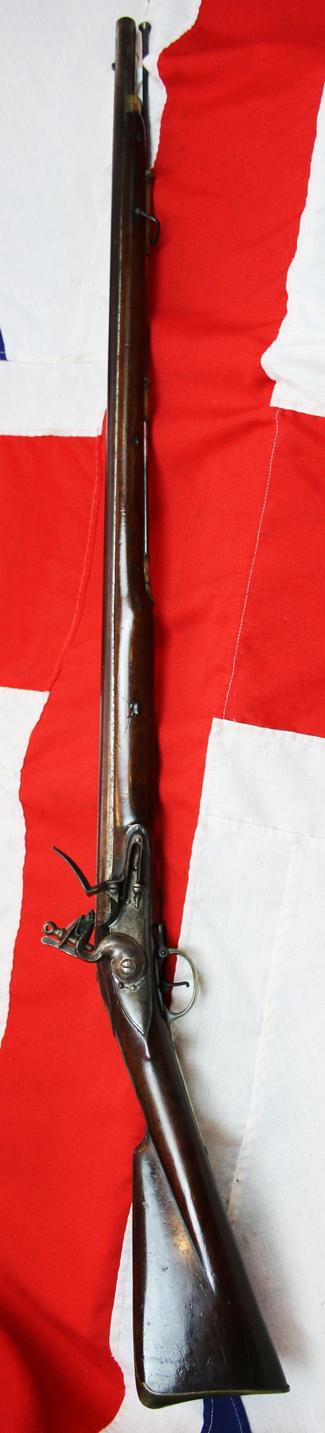
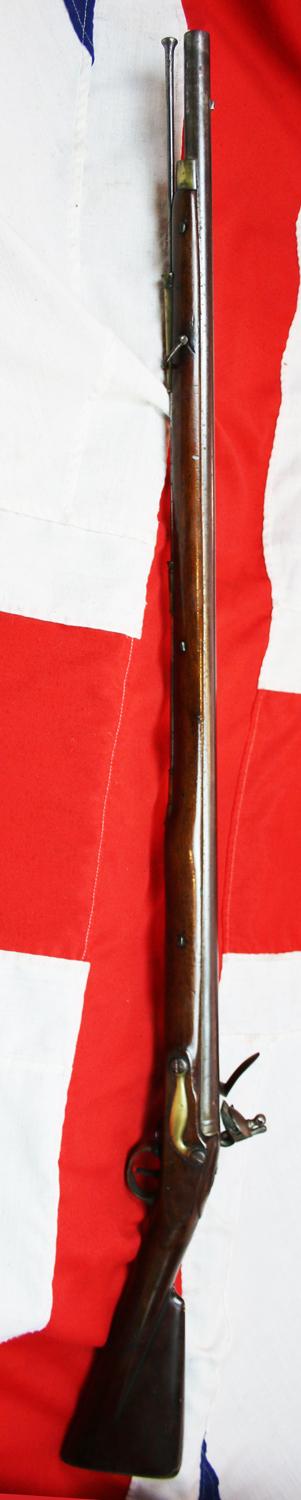
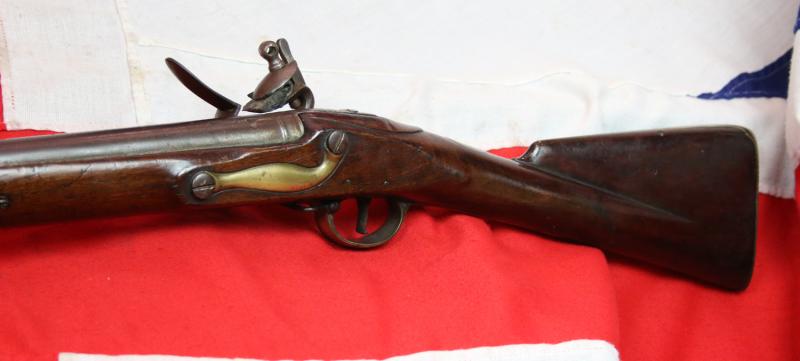
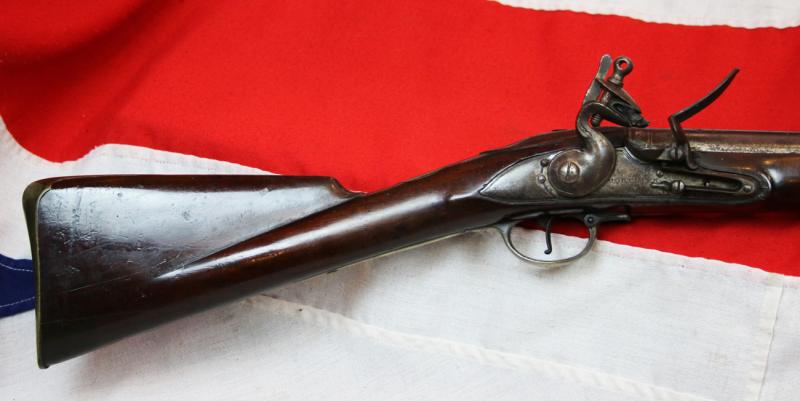
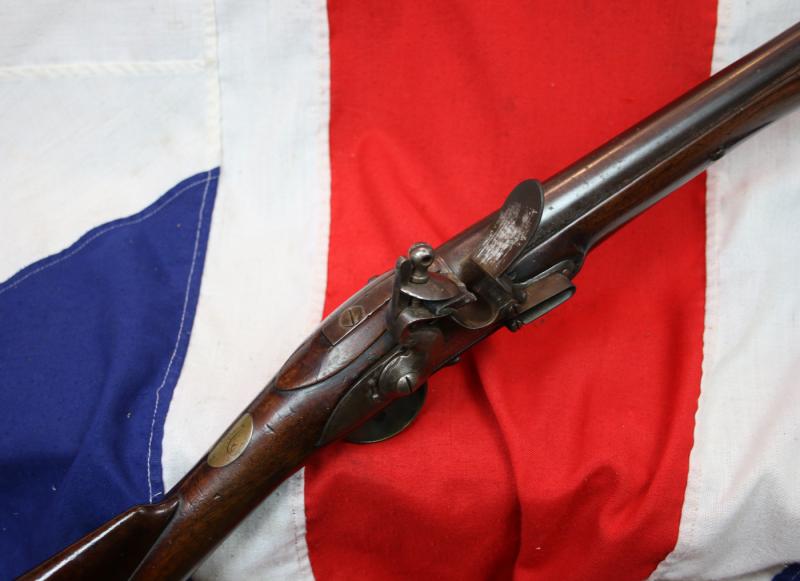
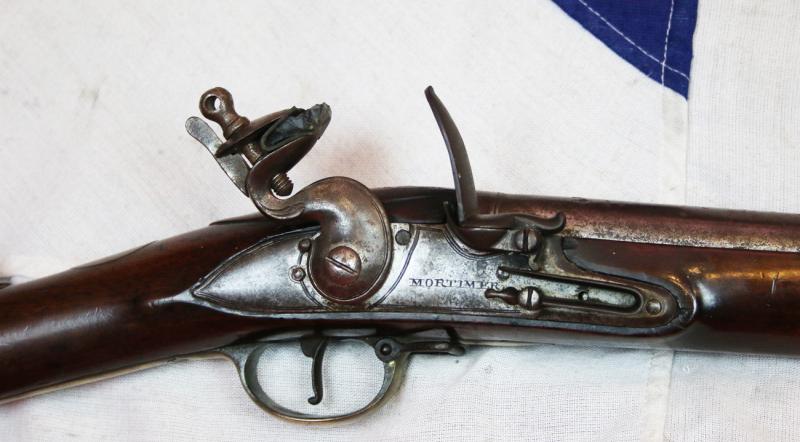
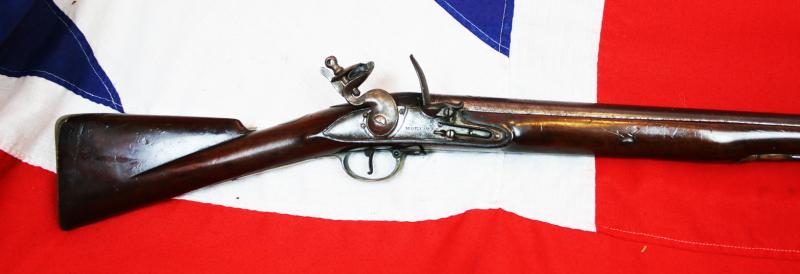
Wonderful Napoleonic Wars 'Brown Bess' Officer's Musket, Made by One Of The Most Famous & Greatest English Gunsmiths, Harvey Walklate Mortimer. A Fabulous Example, In Superb Condition. A Far Better Example Than The Mortimer Bess in The Royal Collection
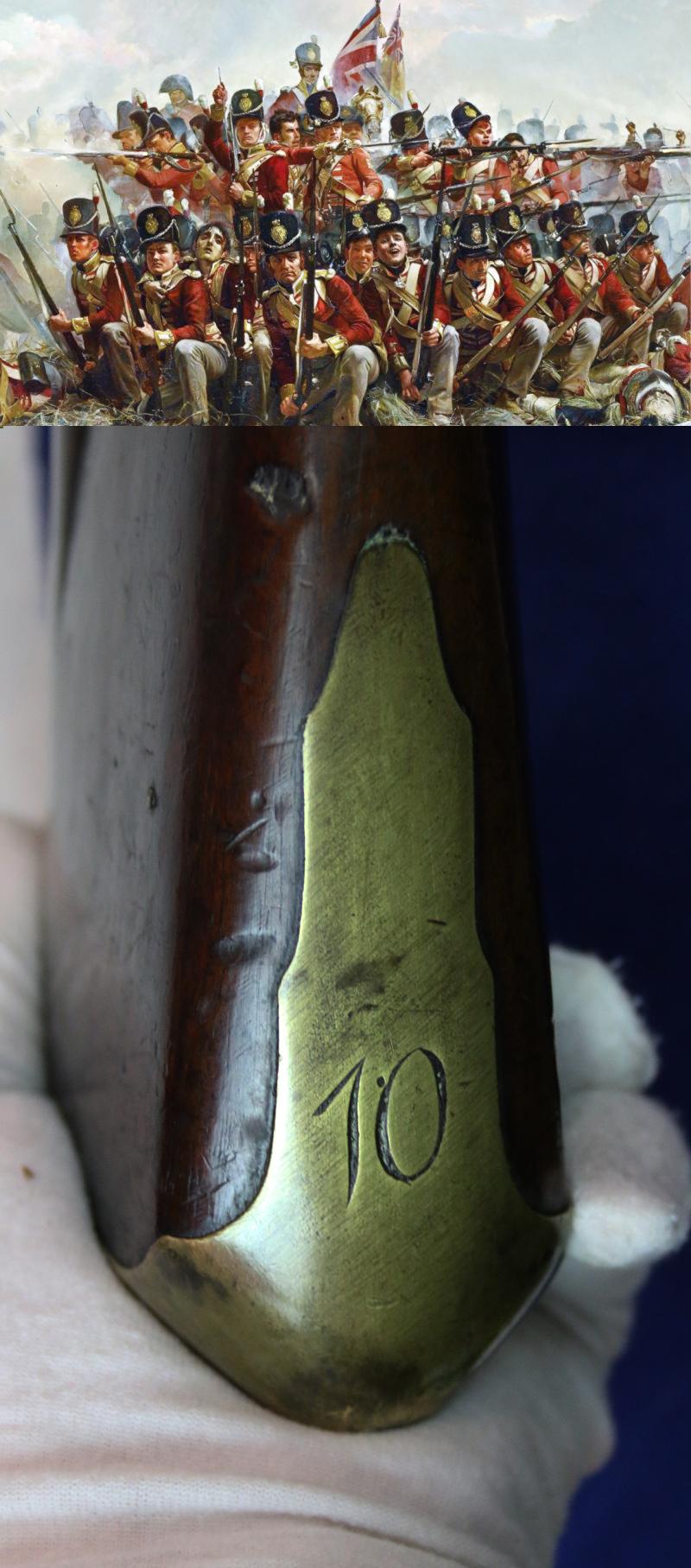
Excellent steel on all parts, barrel and lock, finest walnut stock with stunning natural patina, very fine regulation pattern brass mounts, including side plate ramrod pipes and butt plate {regimentally numbered 10} both original sling swivels present. As this is the officers issue Brown Bess, this would be very unlikely to be a rack number, as the officers did not keep their muskets on racks with the other ranks guns, but in their quarters on campaign, thus it may represent the 10th (North Lincolnshire) Regiment of Foot.
The regiment served with particular distinction in the Napoleonic Peninsular War (1808-14) from 1812 to 1814. Their key campaigns were the Siege of Tarragona: The battalion formed part of General John Mackenzie’s 2nd Division in 1813.
The Battle of Castalla: Fought in April 1813, this was one of their major engagements, resulting in a successful allied victory against French forces. The Blockade of Barcelona: The regiment saw out the final stages of the Peninsular War in Spain through 1814 as operations shifted to Catalonia. The battalion also saw service in Malta, Sicily, and northern Italy
It would be very hard indeed to see a better example, of an officer's issue 'Brown Bess' {Third Pattern} anywhere. Another one of these India Pattern, 1st model ‘Brown Bess’, also by H W Mortimer, likely from the very same contract order, is now in the British Royal Collection, and it is not in anywhere in as good condition as this absolute beauty.
Harvey Walklate Mortimer (1753-1819) gun maker for His Majesty the King, was a British gunsmith known for his exquisite craftsmanship and innovative designs. His pistols, and muskets, often adorned with intricate engravings, were highly sought after by both military officers and civilians. Mortimer's work is characterized by its precision, balance, and meticulous attention to detail, showcasing a mastery of both form and function. His legacy continues to inspire gunsmiths and collectors today, cementing his place as a significant figure in the history of firearms.
The Royal Collection has an identical British infantry officer's example, made for the Napoleonic Wars, Object number:
XII.103, but their Brown Bess by Mortimer has been converted to a percussion action.
The 'Brown Bess' infantry musket was the standard weapon of the British infantry for more than a century.
From the Seven Years war, the American revolution, The Anglo French Wars and The Napoleonic Wars. Also soldiers on both sides of the Anglo American War of 1812 employed it in battle, staring down its barrel at opponents across distances of less than a hundred yards.
British foot soldiers marched into battle with this musket—nicknamed “Brown Bess”—for more than 100 years. British redcoats used the 'Brown Bess' to fight the War of Independence in the colonies, and many of their opponents in the Americans’ Continental army used it as well. British soldiers fighting in the Napoleonic wars carried it into battle, and it was the principal firearm used by the infantrymen who fought the War of 1812.
The Brown Bess had several distinctive features. It was a large-calibre weapon: the bullet it fired was a lead ball up to three-quarters of an inch in diameter, three times the diameter of a modern .22-caliber rifle round. The inside of its barrel was smooth: unlike more accurate “rifled” muskets used by the famous rifle regiments, the Brown Bess had a smooth bore with no grooves to make its fire more accurate. Soldiers loaded the musket through the muzzle, which meant that each bullet had to be forced down a longer than three foot barrel before firing. Even trained soldiers could only launch two or three shots per minute.
Because the weapon was slow to load and relatively inaccurate (experienced soldiers generally estimated its range between 50 and 100 yards), armies developed tactics that helped compensate for its shortcomings. The limitations of smoothbore muskets like the Brown Bess forced units employ “linear tactics,” in which a hundreds of soldiers stood in neat lines, shoulder-to-shoulder and out in the open. While such tactics appear decidedly unstealthy to twenty-first century eyes, they proved essential on the battlefields of all the conflicts which Britain was involved.
There, stealth was a low priority. Packing the men into blocks allowed officers to coordinate their troops’ fire into synchronized volleys. Firing a hundred guns in the same direction at once helped ensure that at least some, often most of the inaccurate musket balls found their targets. And grouping the men into neat lines out in the open helped commanders ensure that few of their troops gave in to the natural instinct to flee.
Of course, packing troops into blocks and fighting in the open required tremendous discipline from the individual soldiers. Infantrymen had to stand exposed to enemy fire as they loaded and fired their own muskets. And in some situations, soldiers learned the grisly dangers of fighting in lines—as at the Battle of New Orleans in the 1812 war, where American artillery attacked the exposed British formations with devastating effect.
The world changed in 1793, a mere 10 years after the loss of the American colonies. Britain found itself once again at war, this time with Revolutionary France. An army now reduced in size to an authorized strength of only 44,432 men had to be expanded rapidly, along with the local militia and volunteer forces. The call for muskets was huge. Indeed, in 1793 the total stock of muskets in all the armouries around Britain, including the central arsenal at the Tower of London, was around a mere 60,000. The stocks held in French arsenals amounted to over a very sensible 700,000. Although it is clear that we are currently abysmally unprepared for the defence of these islands today, 250 years ago, it was exactly the same, as it was in 1939 before WW2. Around 110 years ago former army general Baden Powell created the Boy Scouts with the motto 'Be Prepared', hopefully, to instill in those young minds, a sound and sensible life principle to counter the constant unpreparedness, for all manner of emergencies, of the British Government. A situation that the General Staff consistently find so tragic, yet it is never able to change the policy of the politicians, and this appalling deadly situation, continues, even unto today.
The Board of Ordnance had to fill the gap. They did this by ordering 10,000 muskets from the Birmingham and London gun trade
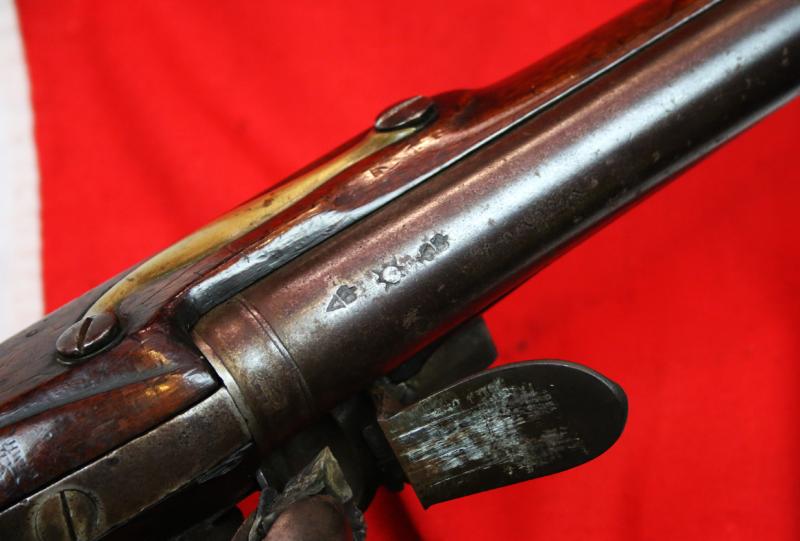
The lock is stamped by the primary, senior ordnance inspector, for arms provided by ordnance contractors for the armaments required for the Napoleonic Wars
Richard Duce {his mark of Crown 2}. He was also the controller of tempering & hardening of locks, after their arrival from the stores for fitting to the musket.
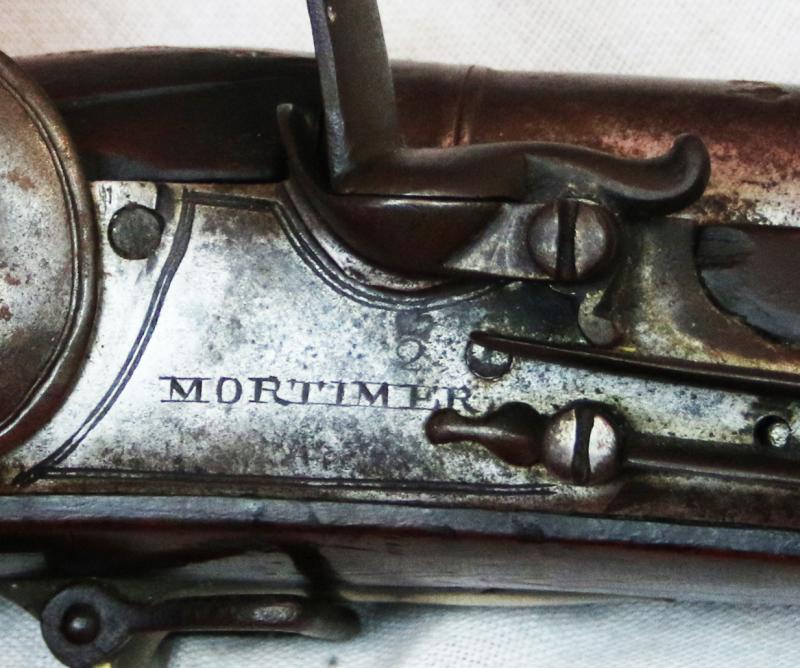
Stamped with London Gunmaker's Company proof marks. It has a hook breech and is secured by three slides. Lock engraved with the name of the maker Mortimer.
He also inspected all the EIC Brown Bess that were handed over to the British Ordnance for the Napoleonic Wars. An account that was confirmed to us by our friend and historic colleague, Howard Blackmore of the Tower of London armoury.
Code: 26253
3950.00 GBP