
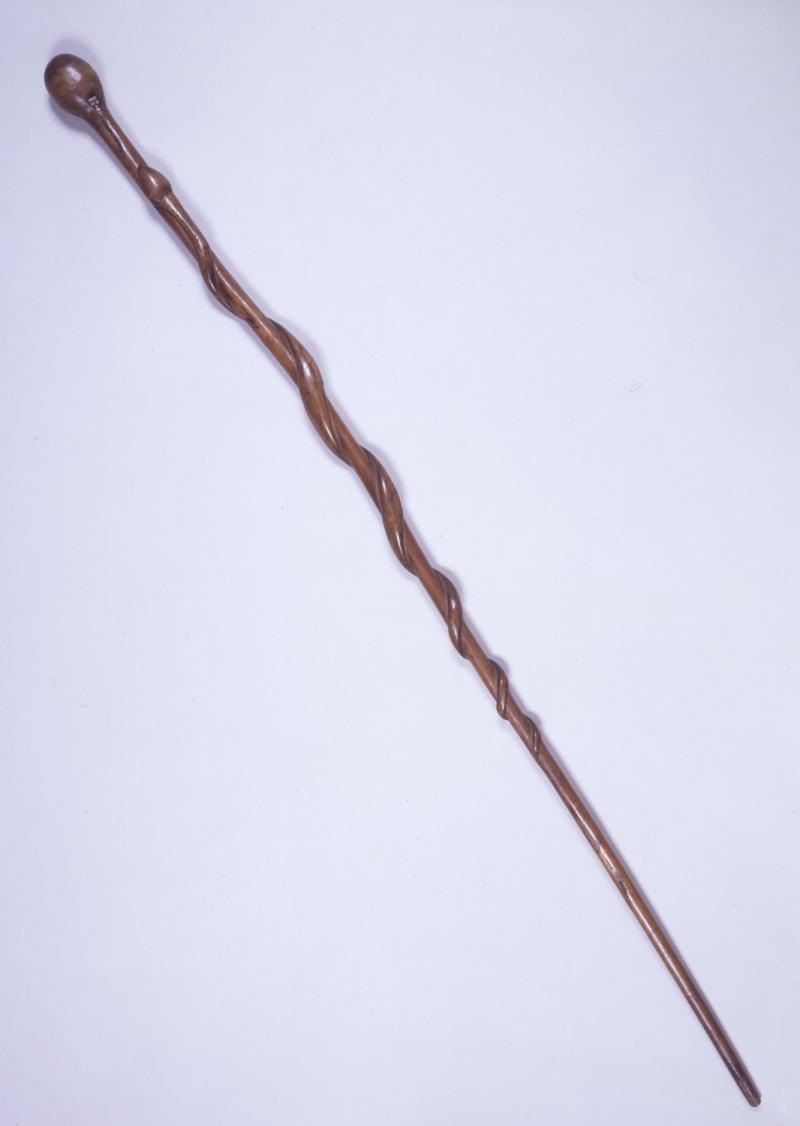
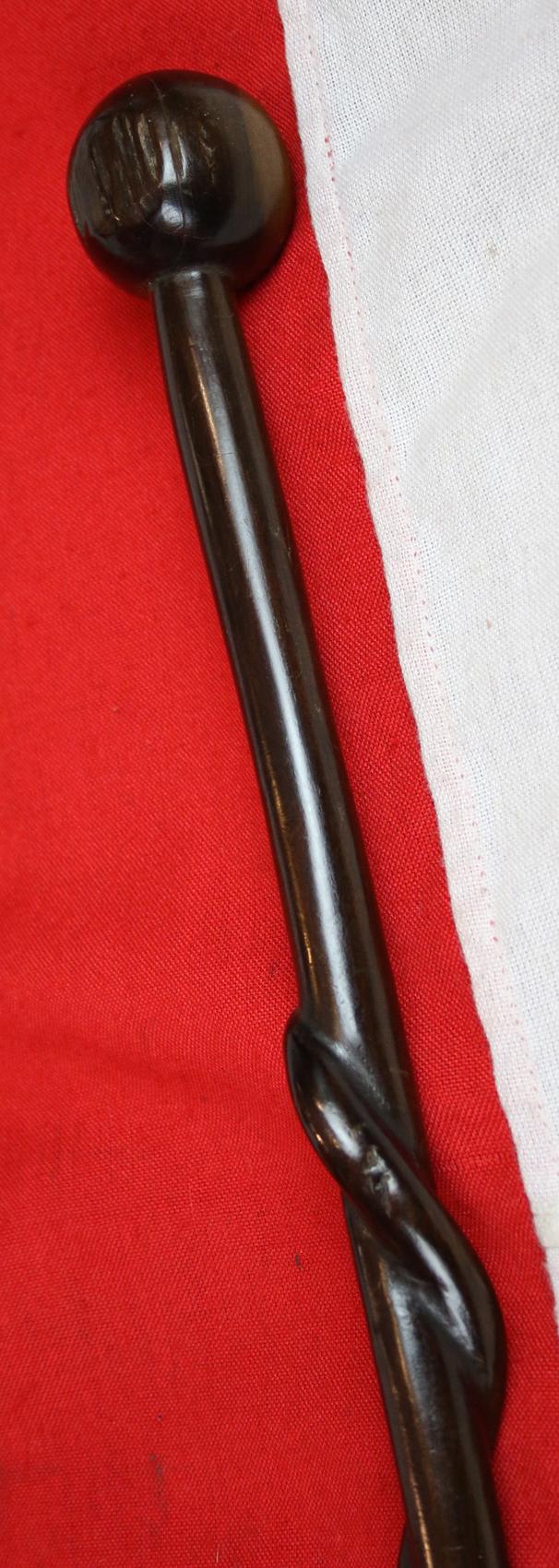
A Superb Zulu War Zulu Chiefs Knopkerrie Staff, With Entwined Serpent, Identical to King Chetwayo's Staff, It was the British Museum Since 1963. A Typical Senior British Officer's Souvenir of the Zulu War.
Chetswayo's staff is now in the National Army Museum
Although it is typical for officers that commanded their men in the Zulu War of 1879 to return to England with souvenirs such as this beauty, this is absolutely not a typical example. The serpent entwined knopkerrie staff is incredibly rare, and this is an exceptionally rare Zulu War artefact.
Chiefs were awarded the privilege to use the knopkerrie staff, but so few used the serpent entwined type.
Made of South African hardwood the knopkerrie long staff were permitted to be used by high ranking Zulu warrior veterans such as chiefs and kinglets, and as one can see that King Chetswayo had the same one it confirms just how rare the serpent entwined version really is.
This is a stunning example with breathtaking natural age patina and in superb condition.
King Cetshwayo was the last Zulu King. At the time British people spelt the name Cetewayo, but nowadays it is more likely to be Cetshwayo, closer to the actual pronunciation. After a long and brave fight by the Zulu army, the King was captured after the battle of Ulundi in 1879 by Major Richard J.C. Marter of the Kings Dragoon Guards. Colonel Harford described the moment King Cetewayo gave himself up – “the King …strode in with the aid of his long stick, with a proud and dignified air and grace, looking a magnificent specimen of his race and every inch a warrior in his grand umutcha of leopard skin and tails, with lion’s teeth and claw charms round his neck”.
In 1882, Mr F.C. Lucy took a collection of these valuable items back to Britain after a trip to South Africa. The list was long and included Cetewayo’s knopkerrie walking stick, 13 throwing and stabbing assagais (light spears), 3 knobkerries (clubs), clothing with bead work, 2 Kaffir pipes and 2 Zulu pipes, as well as a number of natural history objects.
These were donated to the Banff Museum by Mr Lucy of London, via his mother-in-law Mrs Ewing, who lived in St Catherine Street. The walking stick is listed as being in the museum in 1919 (Banff and District by A. Edward Mahood). After this it is difficult to track what happened to Cetewayo’s stick until it turns up in the British Museum in 1963 {see their photograph of his knopkerrie walking stick}. It is there listed as being previously owned by Cetshwayo kaMpande, Banff Museum, and from the collection of Captain A.W.F. Fuller.
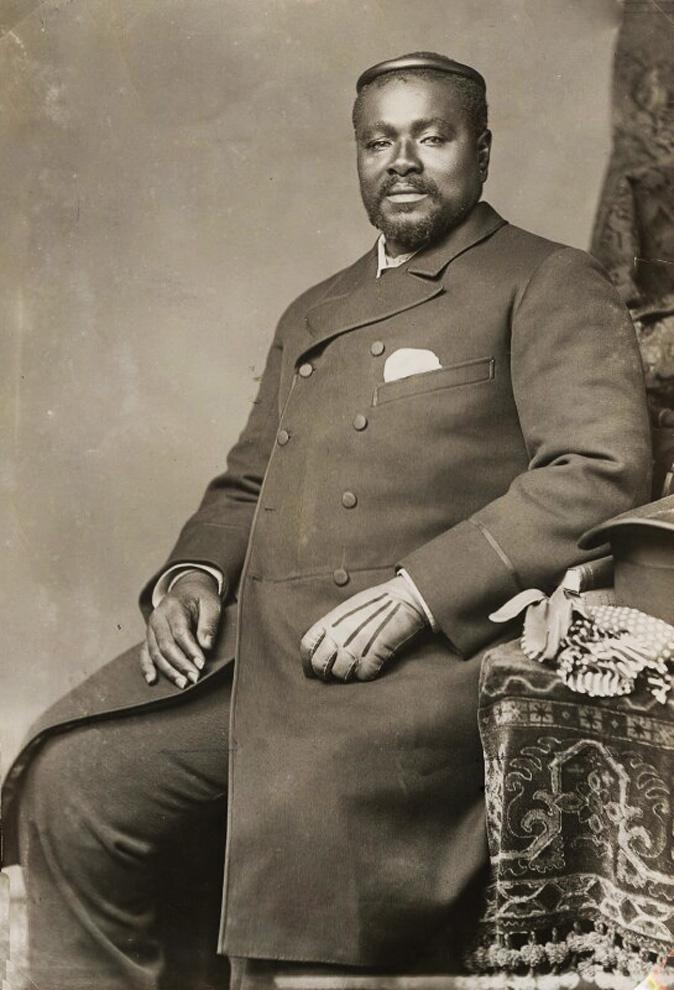
As one can see, this knopkerrie stick is near identical to Chetswayo's knopkerrie walking staff, that is shown in photo 4, photo 2 is an original photo portrait of King Chetswayo
34 1/5 inches long overall
Code: 26212