
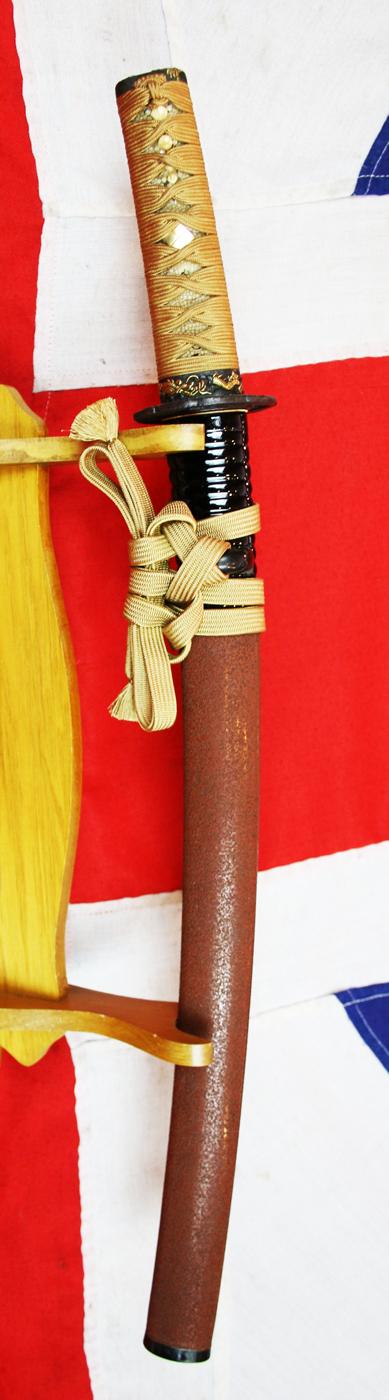
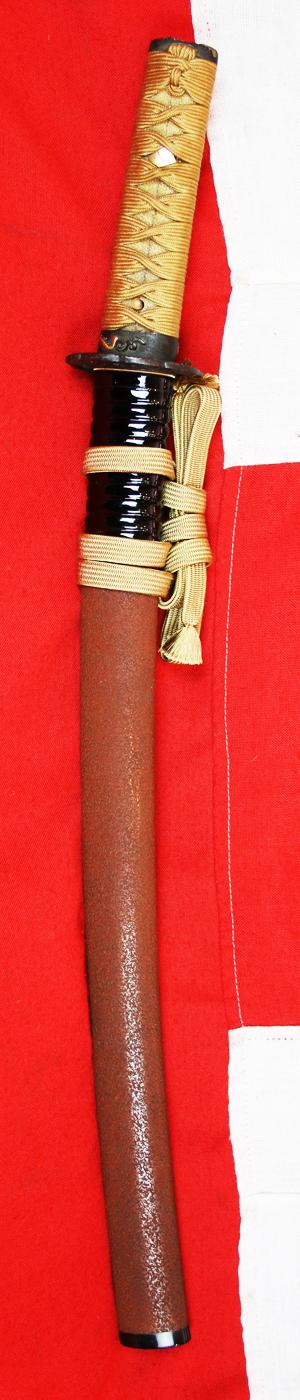
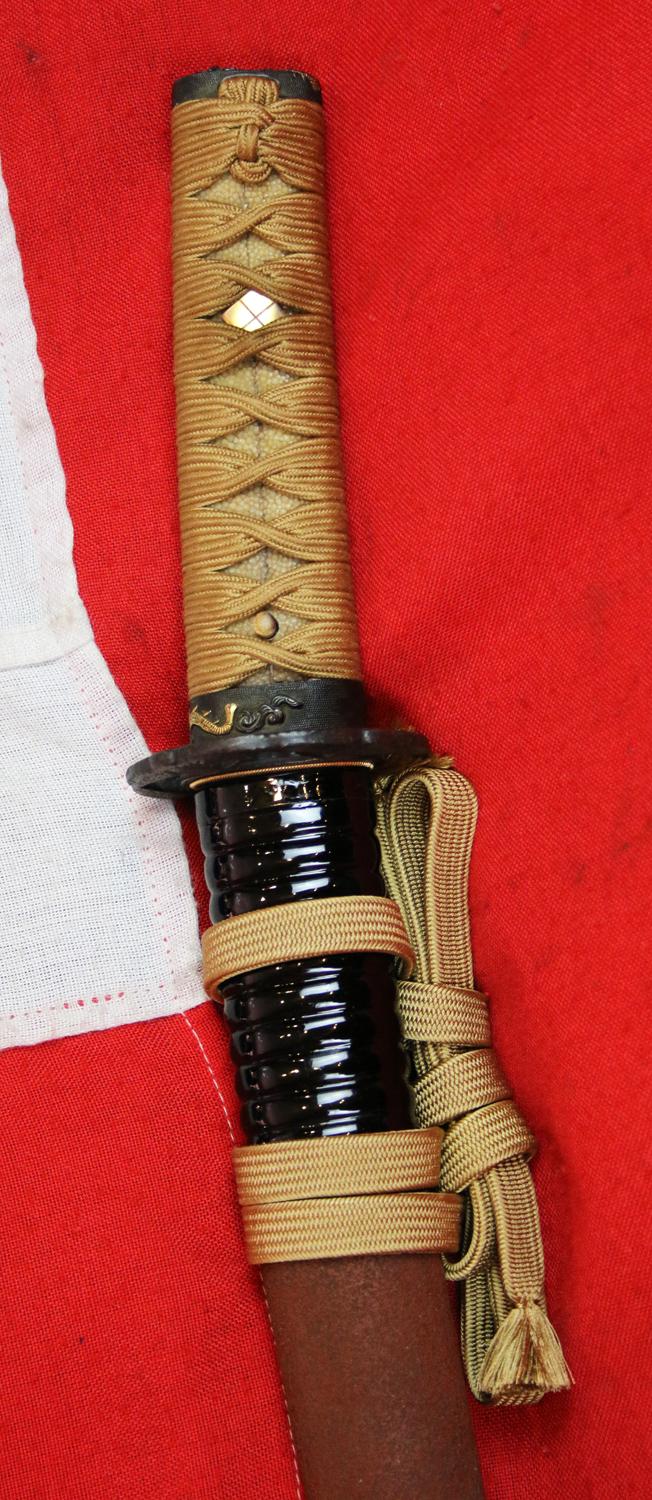
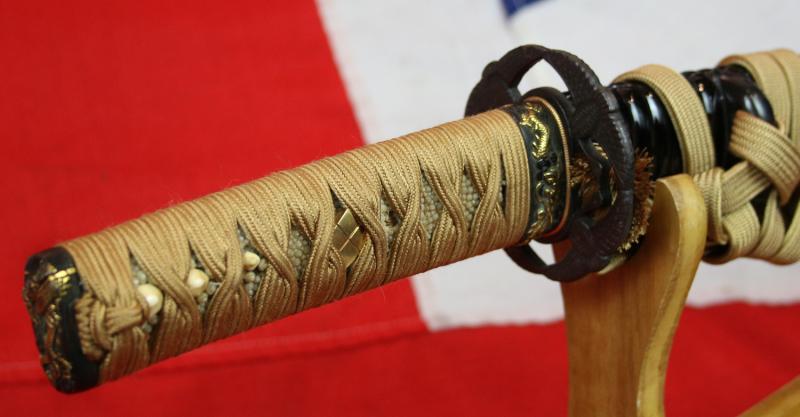
A Simply Breathtaking and Spectacular O-Tanto By One Of The Shinto Period, Great, 'Best of the Best' Samurai Sword Smiths Dewa Daijo Fujiwara Kunimichi circa 1615, With Glorious Soten Dragon Fuchigashira, Tsurumaru Tsuba
Dewa Daijo Kunimichi is considered to be among the “best of the best” (jo-jo saku) of the Shinto period.
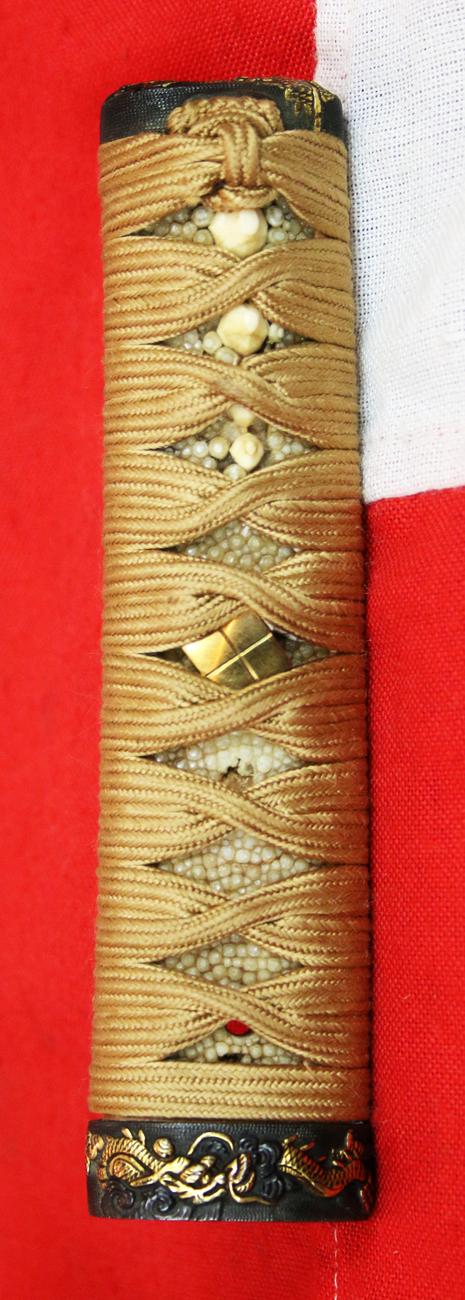
Superb original Edo Soten school fuchigashira of pure gold takebori dragon over shakudo nanako ground. Gold menuki of Takeda Shingen's four diamond mon.
Many more photos to add tomorrow, of the blade and signature on the tang, it looks truly amazing, and it would be perfectly at home in the King's Royal Collection.
This blade signed by Dewa Daijo Fujiwara Kunimichi (出羽大掾藤原国路), who was especially active during the the Genna-Meireki era (1615-1658: Early Edo period) in Yamashiro province (today’s Kyoto prefecture).
It is said that Kunimichi originally belonged to Mishina school at the beginning of his career and later started to serve Horikawa Kunihiro school. He also signed Heianjo Kunimichi (平安城国道), Heianjo Jyu Kunimichi (平安城住国路), Dewa Daijo Fujiwara Rai Kunimichi (出羽大掾藤原来国路).
He was born in the 4th year of the Tensho era (1576: Azuchi Momoyama period). Based on available records, he started to officially appear in Japanese sword history in the 13th year of the Keisho era (1608: The beginning of the Edo period).
He first signed Kunimichi (国道). As you can see, the letter of Michi is different from the one seen on this blade. Those who belonged to Mishina (三品) school used Michi (道) as their maker’s names, such as Iga no Kami Kimichi (伊賀守金道). That is why it is believed that Kunimichi originally belonged to Mishina school. Also, at the end of his career, he used Rai (来) in his maker’s name, which is the only characteristic of the swordsmiths who belonged to Mishina school back then.
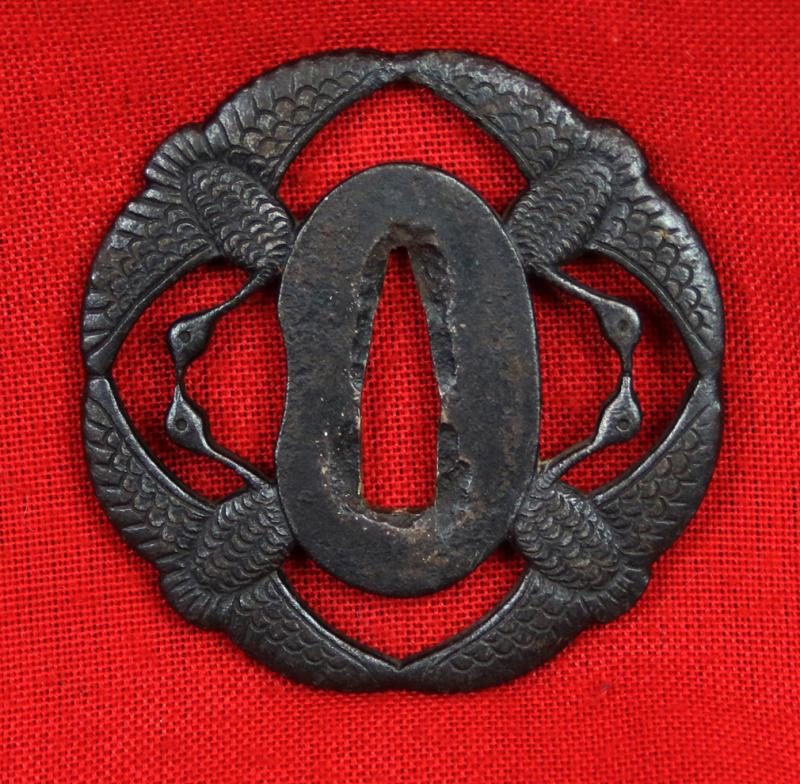
This is an iron tsuba (Japanese sword guard) "Tsurumaru" or crane circle, featuring a four crane sukashi (openwork) design. The crane is a deeply significant motif in Japanese culture, representing longevity, purity, and good fortune.
The design depicts four cranes arranged symmetrically. In Japanese art, cranes are often portrayed as "dancing" or in flight, symbolizing high status and refined elegance. The style emphasizes wabi-sabi—simple, elegant, and sophisticated aesthetics popular with the samurai class, with a delicate, "positive silhouette" (positive, or ji-sukashi) that is characteristic of the Kyoto school.
Sukashi, this technique involves cutting away sections of the iron plate to create negative space. This not only adds aesthetic beauty but also lightens the guard to balance the sword’s weight.
While similar designs are found across several schools, this style—with its balance of openwork and strong iron lines—is characteristic of Kyo-Sukashi (Kyoto) or Owari schools from the Edo period (1603–1868).
It is a maru-gata (circular) tsuba, which was the most prevalent form for centuries.
Code: 26211
Price
on
Request