
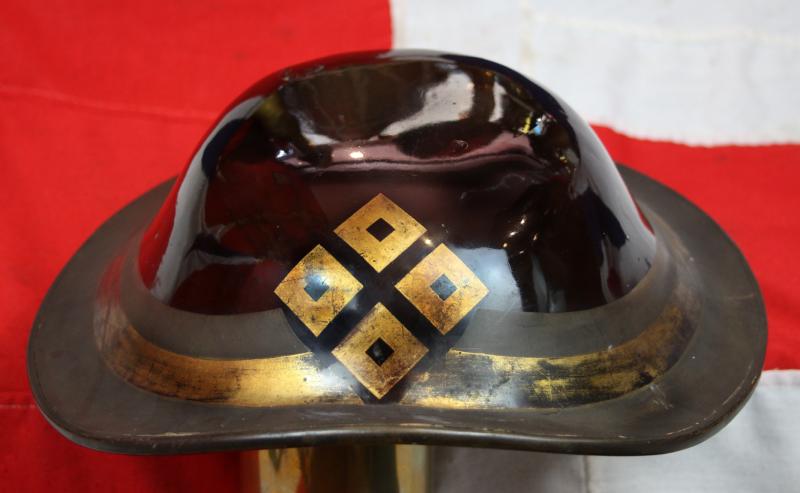
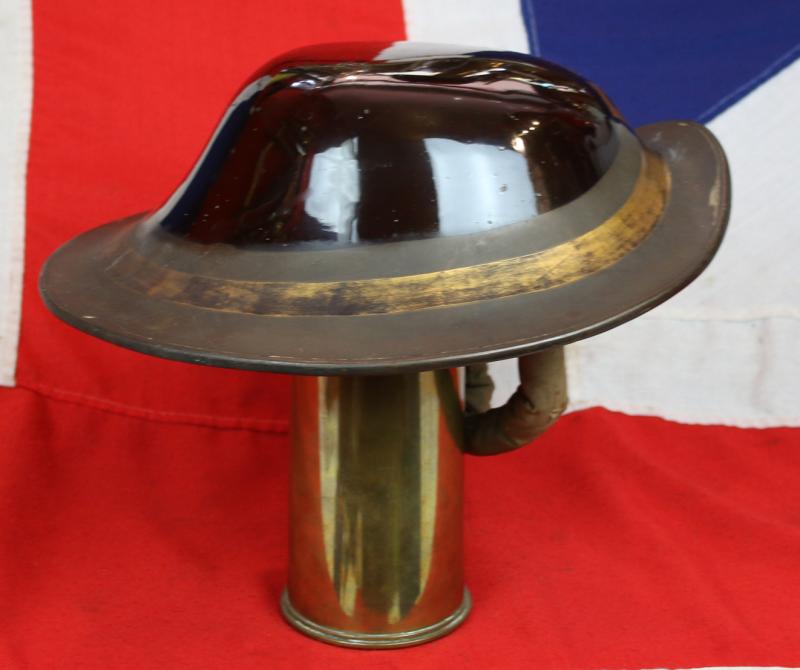
Beautiful Edo Jingasa Samurai Horserider's War Hat With Clan Mon of Kamei Korenori (亀井 茲矩; 1557 – February 27, 1612) Was a Japanese Daimyō. From The Collection of Likely The World's Greatest Authority, Author On Japanese Polearms & Their Use
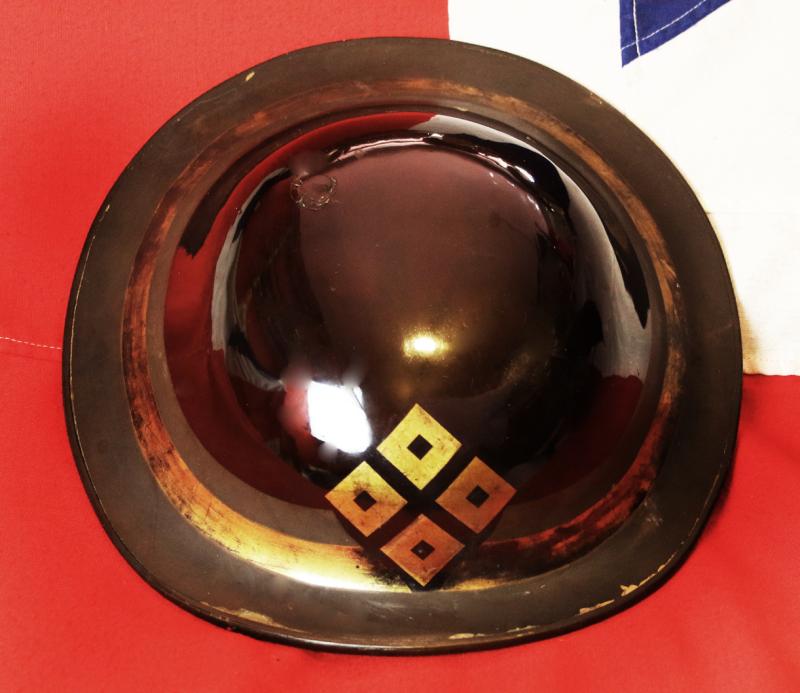
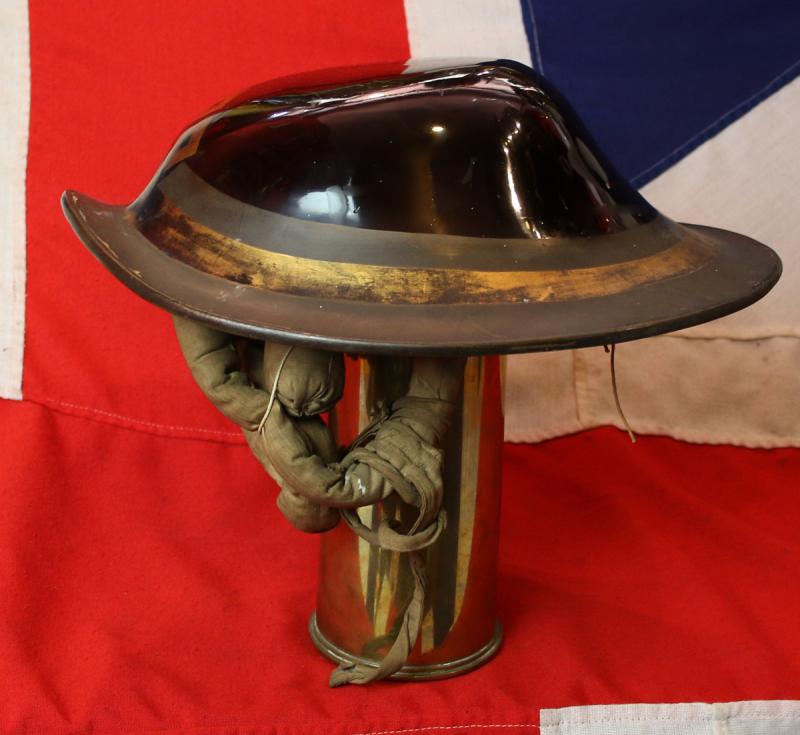
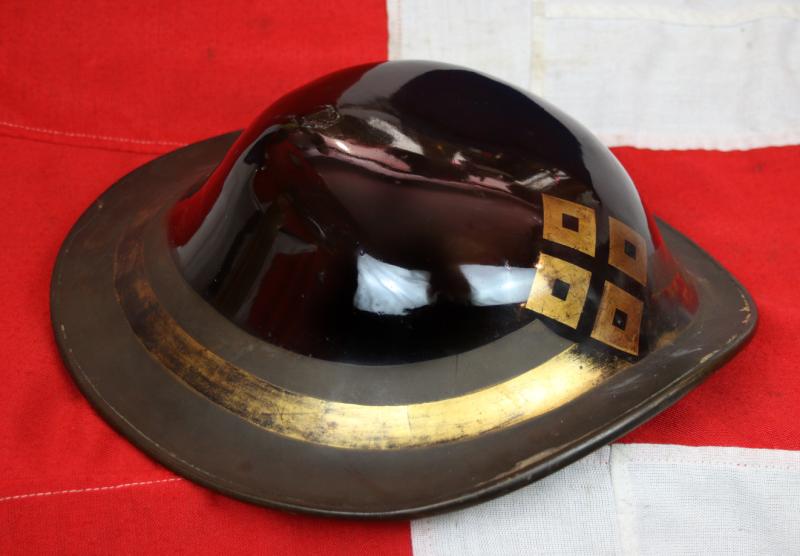
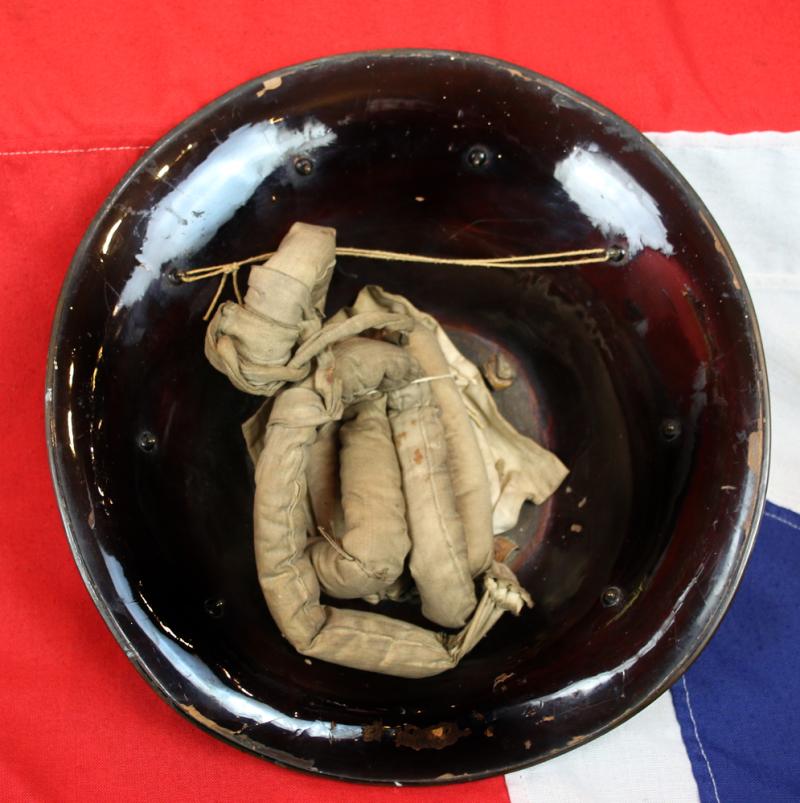
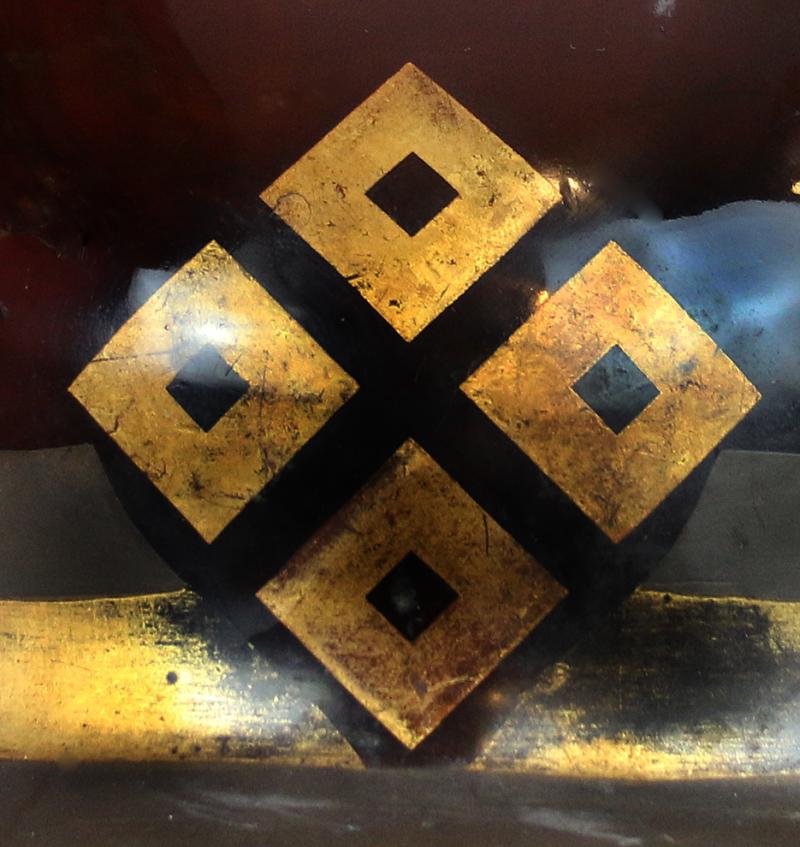
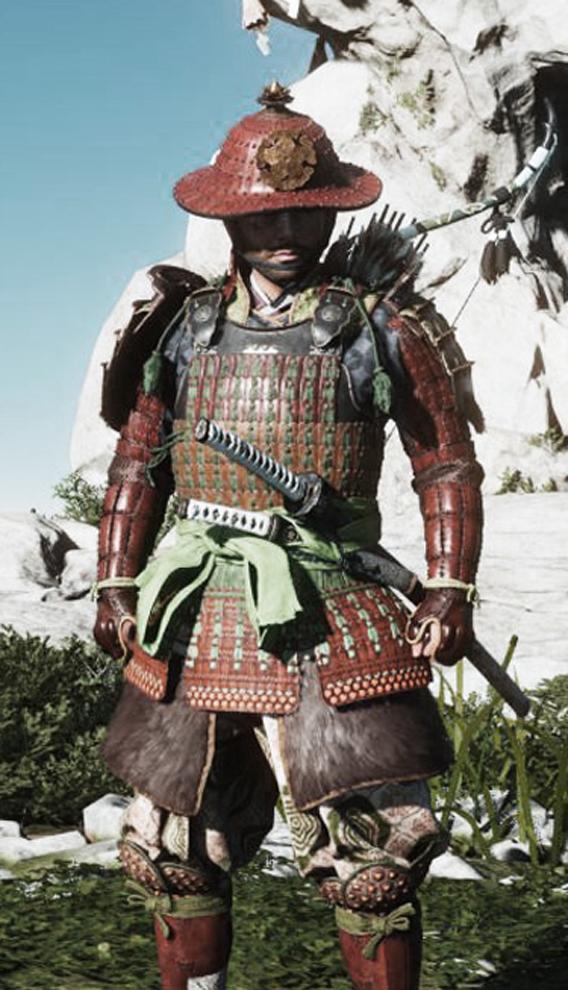
Edo period original jingasa of the Kamei clan. in black urushi lacquer, large gold Kamei mon, and two ishime stone finish lacquer bands, either side of a gilt band. Some interior padding present
Their mon (family crest) is famously known as the Oi-katsubishi (追いかつ菱), which consists of two overlapping or "chasing" diamond shapes (hishimon). The clan, based in Tsuwano han during the Edo period, used this distinctive geometric crest.
These geometric kamon were popular during the Sengoku period because they were easy to recognize on battlefields.
Kamei Korenori (亀井 茲矩; 1557 – February 27, 1612) was a Japanese daimyō who lived through the early Edo period. He was first a retainer under the Amago clan of Izumo Province, but eventually became a daimyō in his own right.
Chūgoku Campaign (from 1578): After the fall of the Amago, he joined Hashiba (Toyotomi) Hideyoshi, fighting against the Mōri clan, specifically taking part in the Siege of Tottori Castle.
Receiving Shikano castle in Inaba Province as a reward for his notable service in 1578, Korenori ascended to higher rank as he assisted in Hideyoshi's 1587 invasion of Kyūshū.
Kyushu Campaign (1587): Participated in Toyotomi Hideyoshi's campaign to subdue the Kyushu region.
Invasions of Korea (1592–1598): Involved in the campaigns against Korea under the Toyotomi banner.
Battle of Sekigahara (1600): Fought for the Eastern Army under Tokugawa Ieyasu. He helped attack the Western Army's Minakuchi Okayama Castle.
Siege of Minakuchi Okayama (1600): Following the Battle of Sekigahara, he joined forces with Ikeda Nagayoshi to capture Natsuka Masaie at Minakuchi Okayama Castle.
Burning of Tottori Castle Environs: During his time in Inaba Province, he was involved in burning the village around Tottori Castle in conjunction with Masahiro Saimura.
Failed Ryukyu Expedition (1590): Though not a battle, Korenori prepared a fleet to target the Ryukyu Islands but was blocked by the Shimazu clan.
Korenori's descendants were eventually made daimyō (lords) of the Tsuwano Domain, which they ruled until the Meiji Restoration (1868).
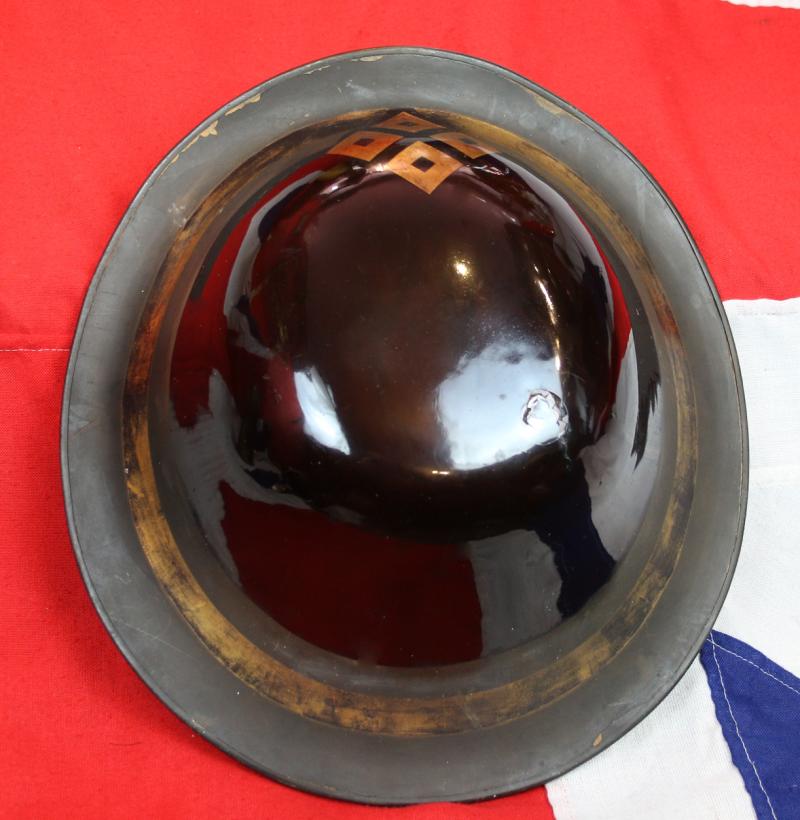
Overall in jolly nice condition, the top of the helmet, off centre, has a small impact dent about the size of a pound coin {see photo 4}. Very small age losses to the lacquer
Code: 26209
1250.00 GBP