

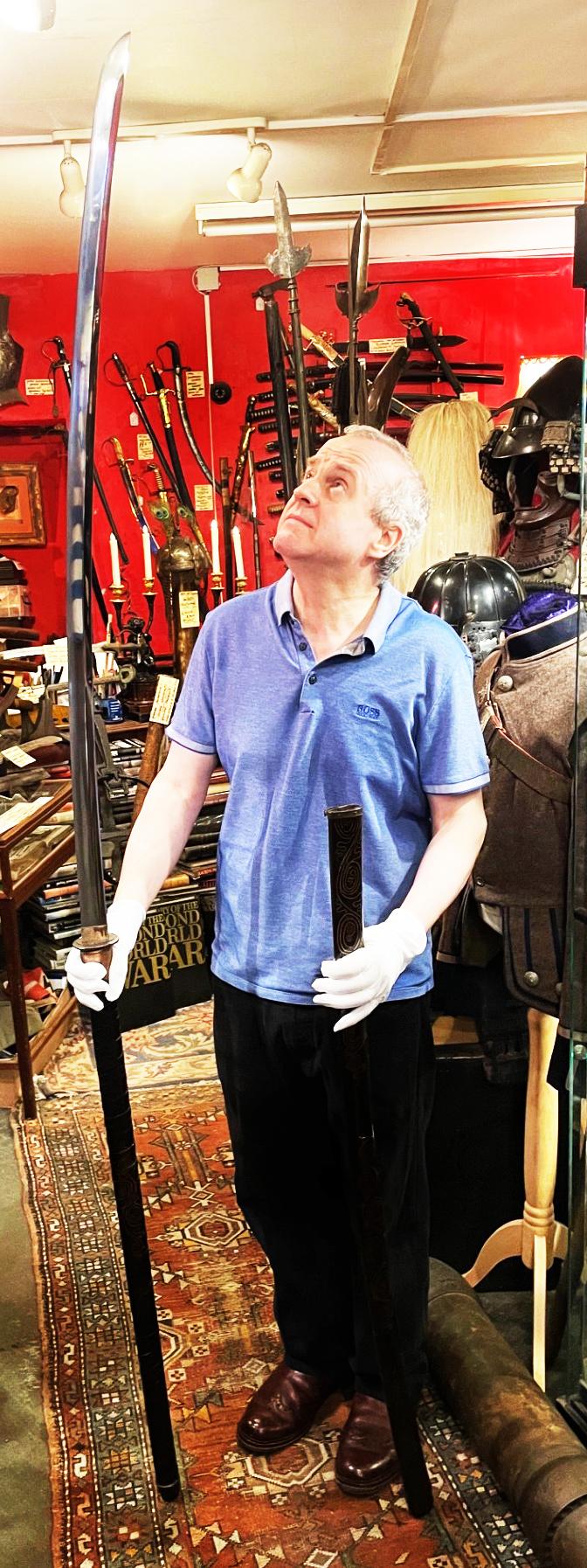
Just Returned From Artisan Blade Cleaning & Conservation The Most Incredible Rare Early Samurai Sword Ever To Be Seen The Great Sword Nagamaki, From The Collection of Likely The World's Greatest Authority & Author, Japanese Polearms & Their Use
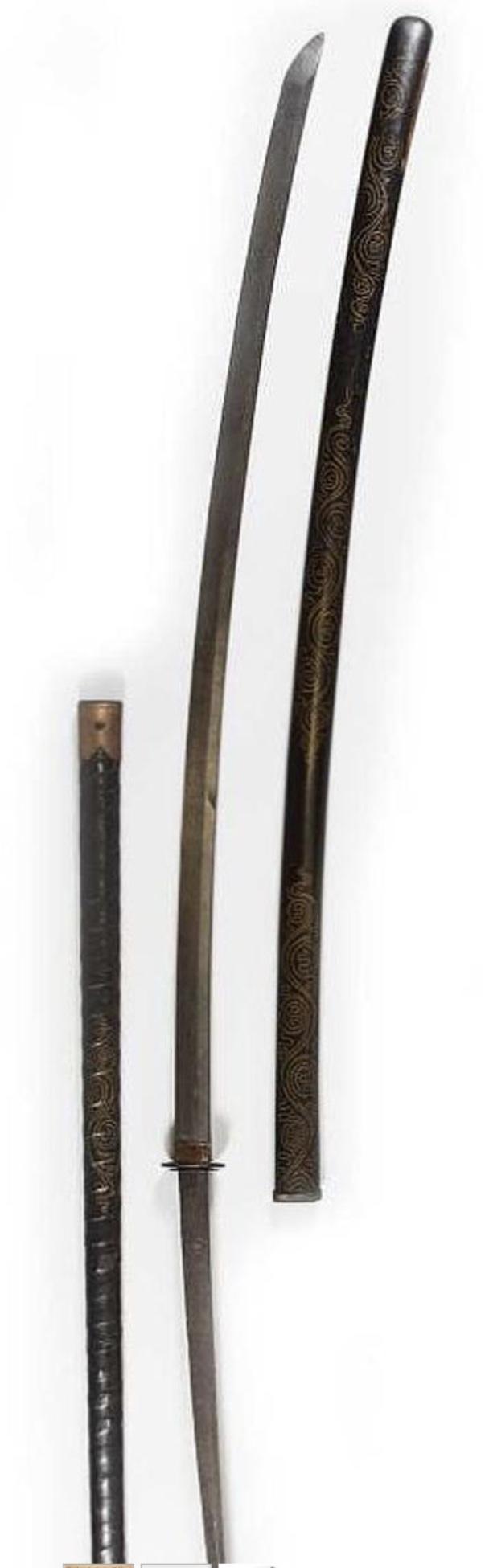
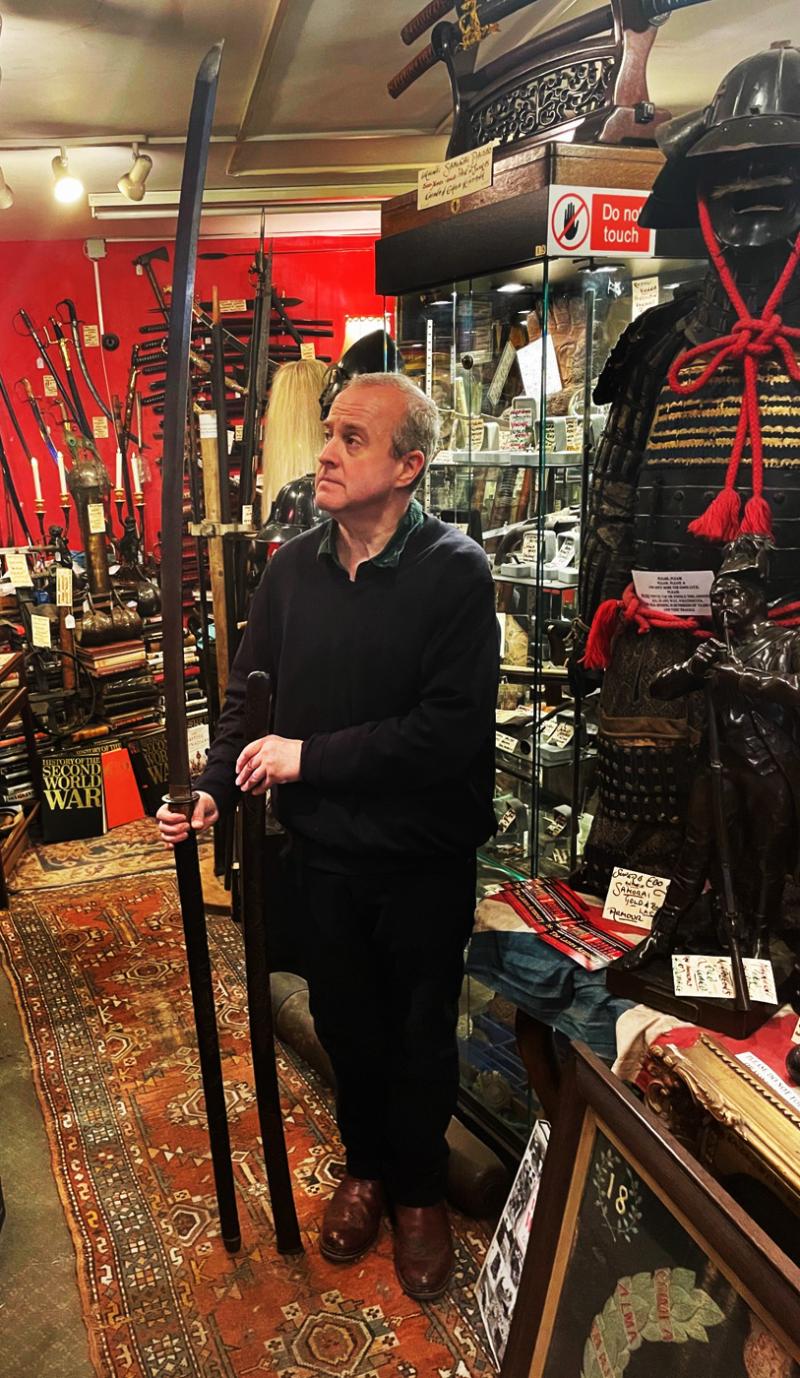
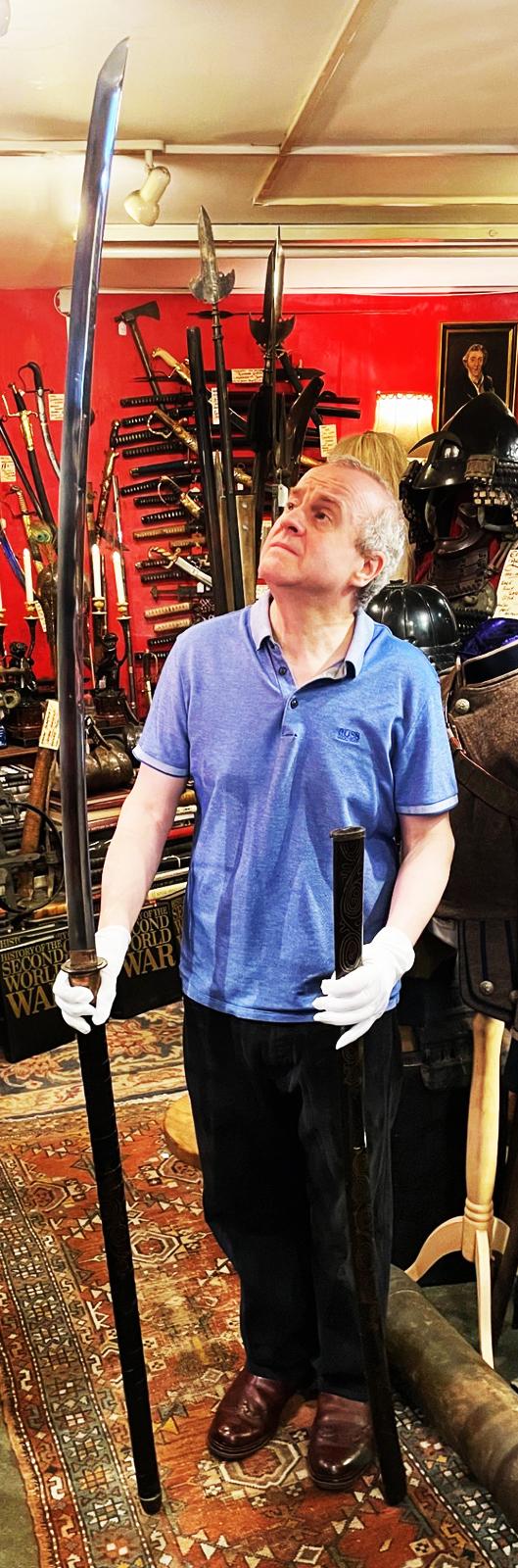
Our magnificent Nagamaki Japanese great sword, almost seven feet long, has just returned, after an 80 hour blade conservation, by hand, in the artisan workshop {about twice as long as we estimated} and it has achieved wonders.
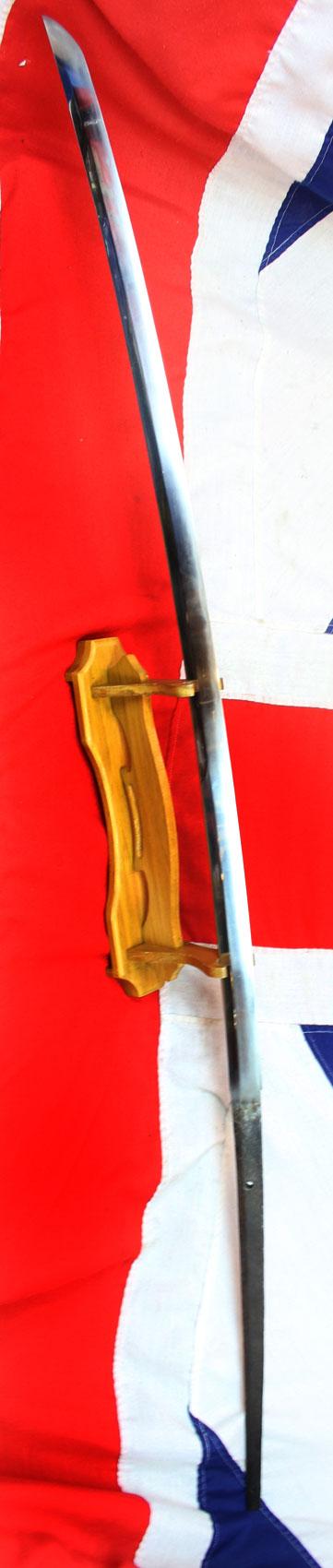
Around 500 years old it is likely the only full length, original, surviving example available anywhere in the world outside of Japan, and those within Japan are mostly in museums, and certainly not for sale. The blade is superb, and a rare unokubi-zukuri form with a shinogi-ji that is crafted to become abruptly narrower before the middle of the blade, and forwards on towards the kissaki; the unokubi zukuri then regains its thickness just before the point.
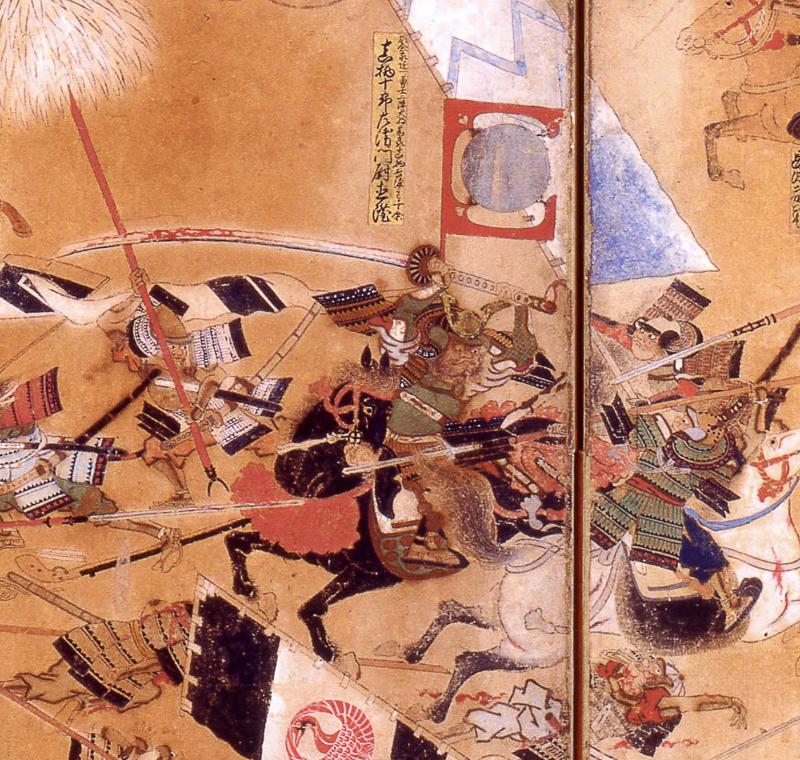
The weapon became synonymous with the bodyguards of elite warlords, most notably Uesugi Kenshin, who employed a dedicated vanguard of nagamaki-wielding retainers. Nagao Kagetora (長尾 景虎; February 18, 1530 – April 19, 1578, later known as Uesugi Kenshin (上杉 謙信), was a Japanese daimyō (magnate). He was born in Nagao clan, and after adoption into the Uesugi clan, ruled Echigo Province in the Sengoku period of Japan. He was one of the most powerful daimyō of the Sengoku period. Known as the "Dragon of Echigo", while chiefly remembered for his prowess on the battlefield as a military genius and war hero.
Our behemoth of a sword may well have been created for such a daimyō guard.
What a magnificent beauty! The Great Nagamaki sword that crosses the divide between the fearsome naganata long pole-arm and the no-dachi great sword.
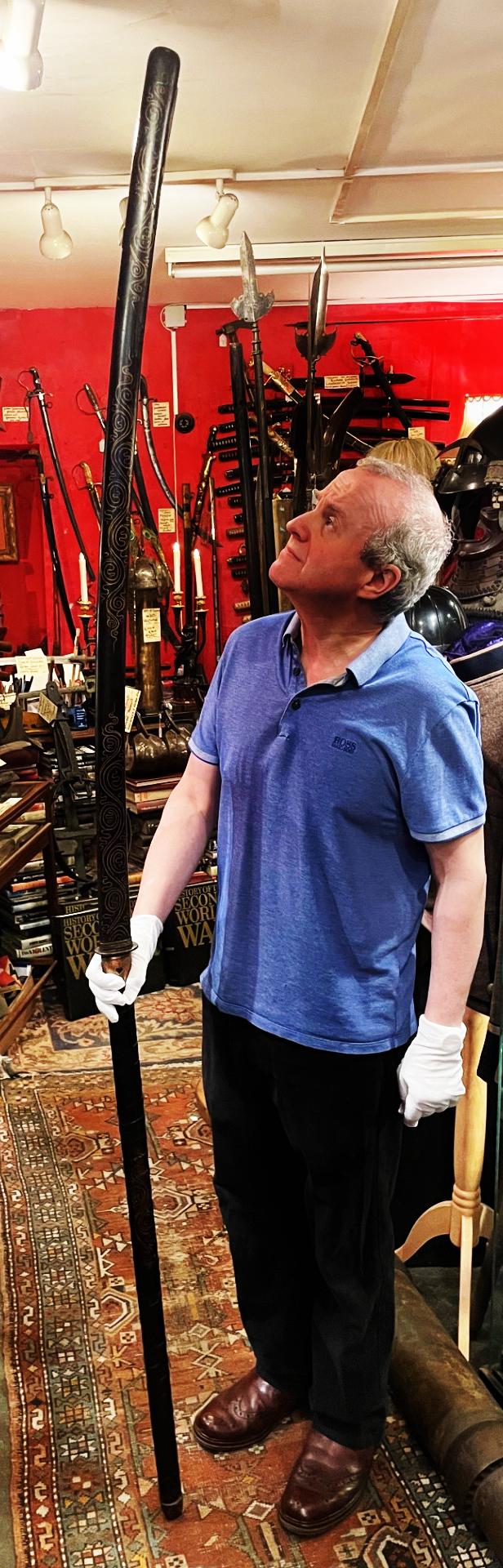
It is a joy to acquire this monumental and incredibly rare example of ancient samurai arms, even if just for a brief while. We show it in the gallery now after the intense conservation’s completion. The original Edo period koshirae fittings will be relatively left untouched as they are already in great condition, with light artistic 風が吹いている (kaze ga fuite iru) ‘the wind is blowing’ decor. Which may be a symbolic representational name of the sword, such as 山颪 yamaoroshi, ‘wind blowing down from a mountain’
The blade has no damage, and in superb order which is remarkable, apart from a just a couple of very slight, very thin, surface openings {around the width of a human hair, around half an inch long } a common age trait, due to its several polishings over the past 500 years. The tsuba is a nice small, oval, and shibui plain iron with some kanji stampings, and it has a nice traditional copper habaki
We also show in the gallery early Japanese woodblock prints of similar examples used by great figures of samurai history.
Famous Users: The weapon became synonymous with the bodyguards of elite warlords, most notably Uesugi Kenshin, who employed a dedicated vanguard of nagamaki-wielding retainers. Nagao Kagetora (長尾 景虎; February 18, 1530 – April 19, 1578, later known as Uesugi Kenshin (上杉 謙信), was a Japanese daimyō (magnate). He was born in Nagao clan, and after adoption into the Uesugi clan, ruled Echigo Province in the Sengoku period of Japan. He was one of the most powerful daimyō of the Sengoku period. Known as the "Dragon of Echigo", while chiefly remembered for his prowess on the battlefield as a military genius and war hero,
The nagamaki is a type of sword developed from the Odachi but has the reach of a polearm too. It offers versatile combat techniques, and has the cutting power and technique of a sword with the reach of a longer weapon/polearm.
This behemoth of a sword appears illustrated in the author's second seminal work on samurai polearms and their combat use, of 'Japanese Spears: Polearms and Their Use in Old Japan' published in 2004.
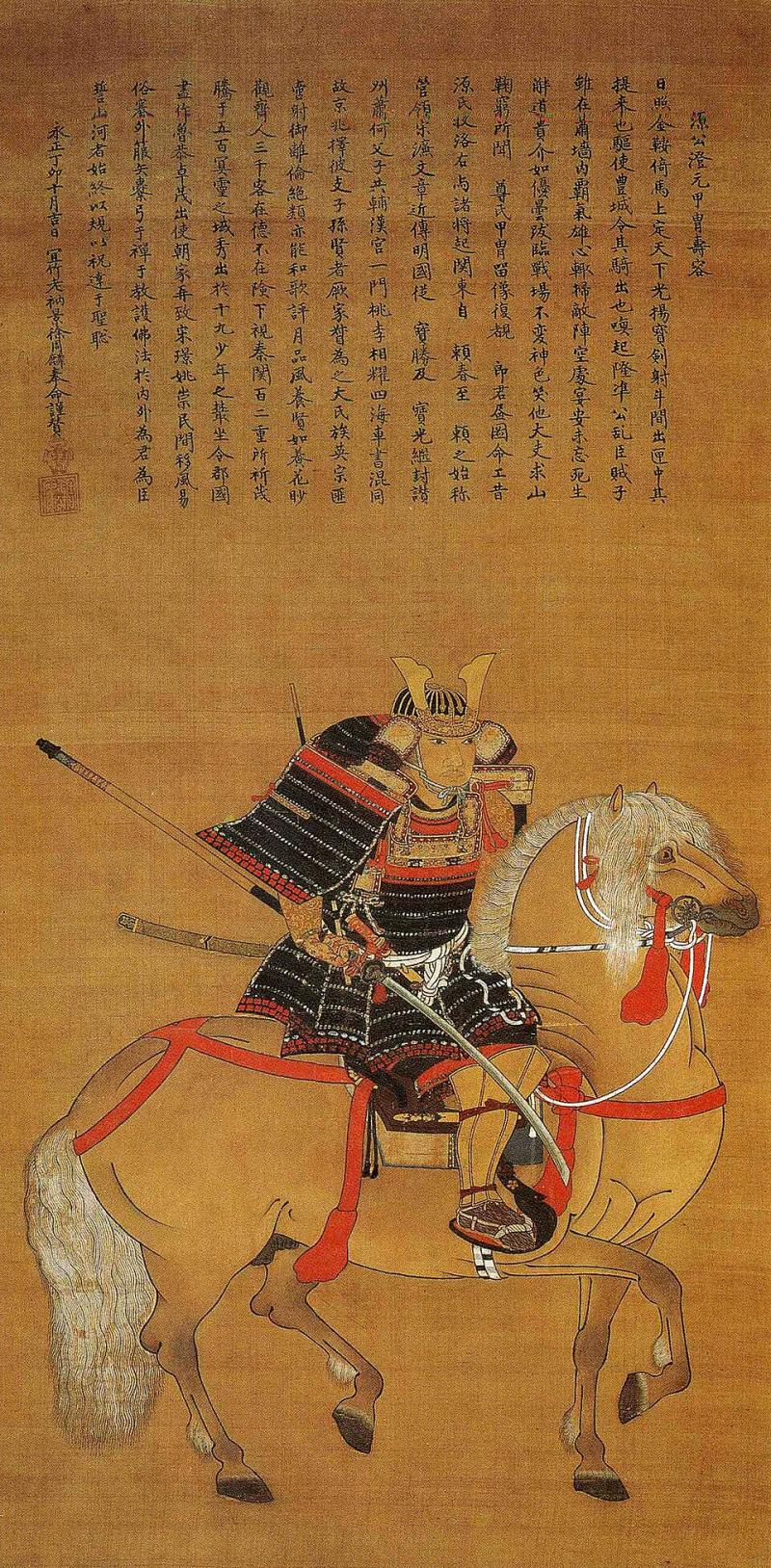
Hosokawa Sumimoto (1489–1520) was a prominent samurai commander during Japan's Muromachi period, often depicted in art holding or associated with the nagamaki, a distinctive, long-handled Japanese sword.
Sumimoto is famously depicted in a 1507 equestrian portrait by Kano Motonobu wearing armor and holding a nagamaki, which is often used in modern media to illustrate this specific weapon.
The nagamaki ("long wrapping") is a sword with a blade length similar or much longer than a katana or tachi {as has this beauty} and with a very long handle (sometimes equal in length to the blade) that is wrapped in cord or leather. It was used for powerful sweeping and slicing strokes, particularly effective for infantry against cavalry.
We acquired this collector's prized nagamaki great sword, that is almost seven feet long, in its Edo koshirae. The blade was made prior to the Azuchi Momoyama period, circa 1550. The type of samurai sword you very, very rarely see in Europe today outside of a museum, and often not in most museums either. This is one of the rarest types, of an example that escaped the Shogun's *edict to cut the nagamakis and no-dachis down to regular katana sword length, as he believed swords that were over length for regular close quarter combat and should be shortened. {see details below}
We show a famous woodbloock print of Hosokawa Sumimoto carrying his nagamaki while on horse back. Our nagamaki was likely made within eighty years or so of Sumimoto's sword, just around the time of the Battle of Sekigahara. From the dimensions in the print, our blade is likely around a foot longer than his nagamaki.
Hosokawa Sumimoto (1489–1520) was a prominent samurai commander during Japan's Muromachi period, often depicted in art holding or associated with the nagamaki, a distinctive, long-handled Japanese sword.
The nagamaki is a type of sword developed from the Odachi but has the reach of a polearm too. It offers versatile combat techniques, and has the cutting power and technique of a sword with the reach of a longer weapon/polearm.
The nagamaki ("long wrapping") is a sword with a blade length similar to a katana or considerably longer, our nagamaki has a 43 inch polished cutting edged length blade, and with a very long nakago over half as long again.
The tsuka {handle} sometimes equal in length to the blade that is wrapped in cord or leather. Ours is wrapped in leather, the saya is decorated in a blowing wind pattern. This incredible sword was used for powerful sweeping and slicing strokes, particularly effective for infantry against cavalry.
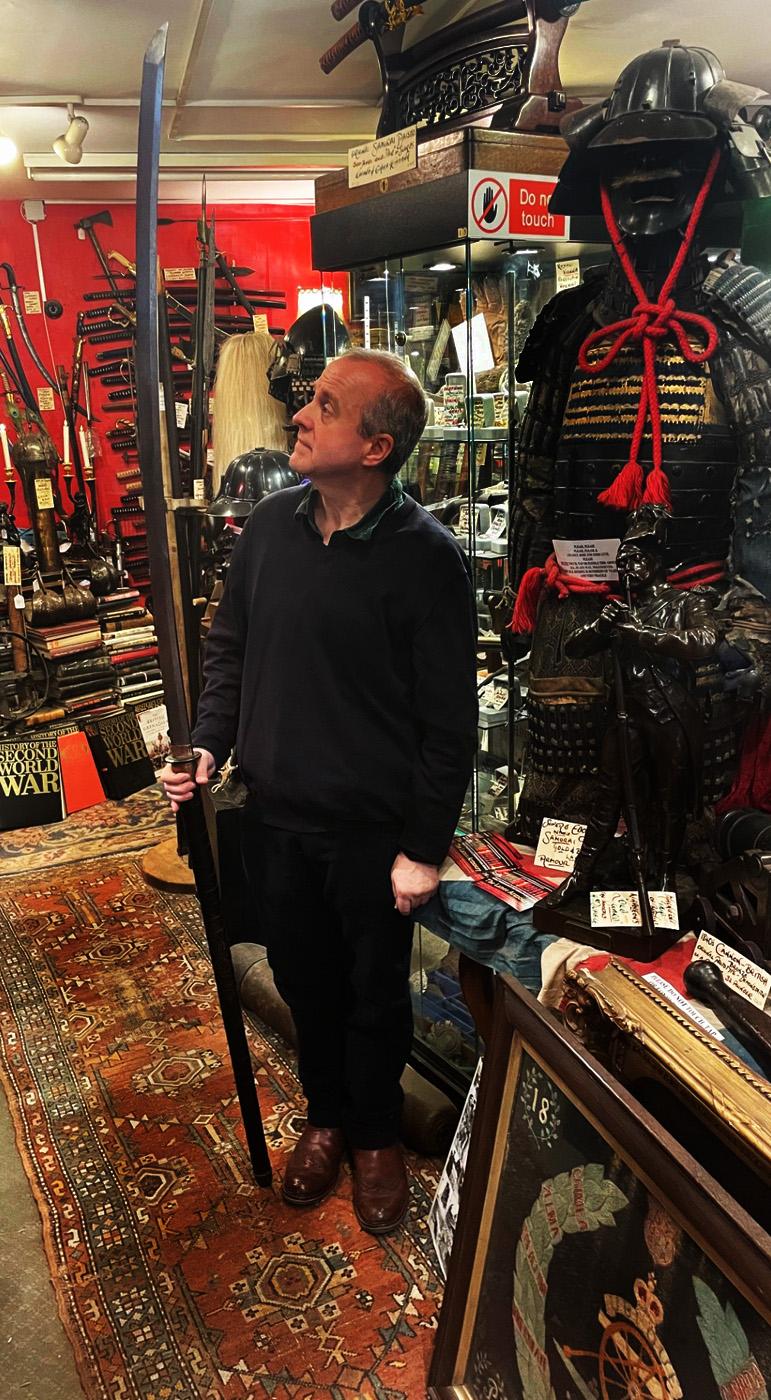
To appreciate the heft and greatness of this sword, by just reading here, the blades polished cutting edge is around 70% longer than a more usual long katana, and around 50% wider, and thicker, thus, likely six to eight times heavier. Is is already massively impressive un-mounted in its fittings but, once mounted it is likely the most impressive, original, and early samurai sword you will ever likely see or handle, a true behemoth of a museum piece.
*The Tokugawa shogunate did not issue a single, specific edict exclusively to reduce sword lengths but rather, in 1603, shortly after establishing the Tokugawa Shogunate, they enacted strict regulations that mandated all swords—including the massive no-dachi (field swords) and nagamaki, —be restricted to a specific, shorter length.
Many long no-dachi and nagamaki blades used in the previous warring era (Sengoku) were cut down at the tang (the handle part) and reduce the blade length to meet the new, shorter regulations to fit with the standard daishō (pair of swords) that samurai were allowed to carry.
As of this time we know of no other original length Nagamaki available on the worldwide collectors market today. In over 100 years we can recollect only owning three before, and we have likely handled in that time more original Japanese swords than any other still remaining antique sword dealers in the world today.
Many pieces that we acquired from the Roald Knutsen Collection were from his friend and fellow enthusiast Henry Russell Robinson's private collection. (7 May 1920, Hackney, London - 15 January 1978) He became Keeper of Armour at The Tower Of London, and it is likely many pieces of his was part of a display of Japanese armour he organised for display in the Tower of London. The Japanese armour exhibition in 1965, which featured samurai artefacts arranged to demonstrate evolving defensive technologies and cultural contexts, drawing thousands of visitors to the Tower.
This nagamaki may well have been displayed in the Tower of London exhibition of Japanese Armour in 1965, but we cannot find a surviving visitor catalogue list in order to check.
He was a British military armourer and historian.He served in the RAF during the Second World War making models interpreting aerial photographs. This was when he met Sir James Mann, Master of the Armouries at the Tower of London. Robinson joined the staff of the Tower Armouries in 1946 as a Temporary Assistant, before rising to Assistant Keeper and finally, in 1970, Keeper of Armour.
Robinson was a founder member and president of the Arms and Armour Society. In 1965, he was elected a Fellow of the Society of Antiquaries of London. In 1977, he was awarded an honorary MA by the University of Newcastle upon Tyne.
Between 1967 and 1969, he (a practical armourer) worked with Charles Daniels to interpret and reconstruct the Roman armour nowadays known as 'lorica segmentata'. He produced a series of reconstructions of the two sub-types of armour from the Roman site at Corbridge and one from Newstead in time for them to be exhibited at the 1969 Congress of Roman Frontier Studies held in Cardiff.
His work on the armour featured in one of his best-known books, The Armour of Imperial Rome. Published in 1975 by Lionel Leventhal at the Arms and Armour Press, it included line illustrations by his friend, Peter Connolly. Robinson's system of categorizing Roman helmets has been widely adopted in the UK and USA but never really found favour in Europe.
Robinson was not only known for Roman armour, since he worked on an exhibition of Japanese armour at the Tower Armouries and subsequently wrote two books on the subject. He was also an authority on Native American artefacts and was responsible for the production of the replica of the revised reconstruction of the Sutton Hoo helmet and wrote a guide to the Stibbert Museum.
We know from records, and from our mutual great friend and colleague of over 35 summers, Christopher Fox, who was Roald’s dojo sempei, that quite a few of his collection {acquired prior to 1978} were from, or gained with assistance, from Robinson and his invaluable recommendations.
There is another in the Royal Armouries Collection, but the cutting edge blade of theirs is considerably shorter {by 16 inches} at 27 inches long, ours is 43 inches. {see link below}
https://royalarmouries.org/collection/object/object-49421
Code: 26203