
A Wonderful Original Antique Signed Samurai Glaive, C.1725, An Honorific Representation of Seiryūtō, the 'Green Dragon', of Kanshō. And, The Great Sword Nagamaki, From The Collection of World's Greatest Authority and Author On Japanese Polearms
Part of the amazing collection, accumulated over 70 years, of edged weapons, helmets and armour that we acquired, from the late great collector and one of the most famous and first martial art practitioners and sensei in the UK, that shall be added soon for sale, once conserved in the workshop.
His number one friend and dojo ‘sempai’ was also our great friend and work colleague of 40 years.
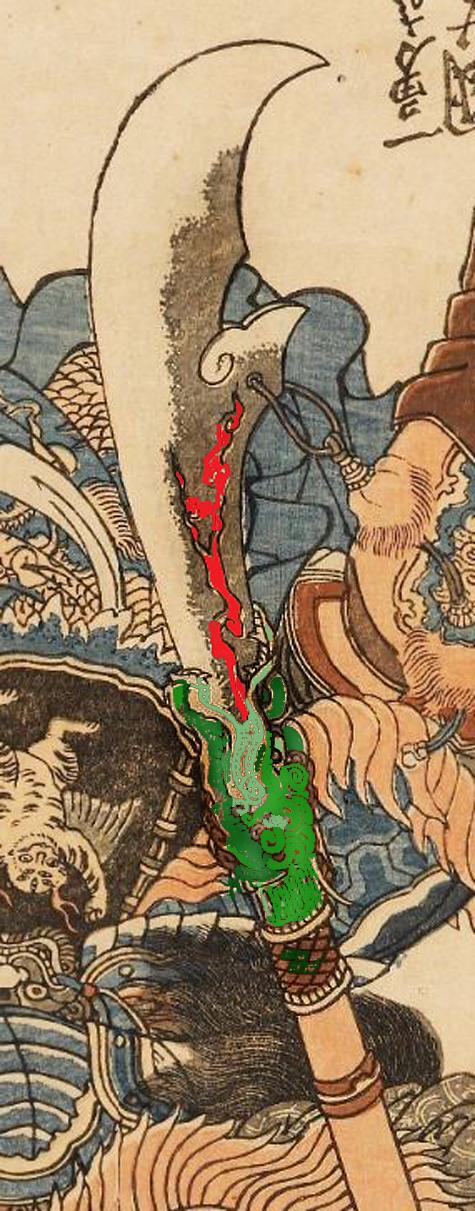
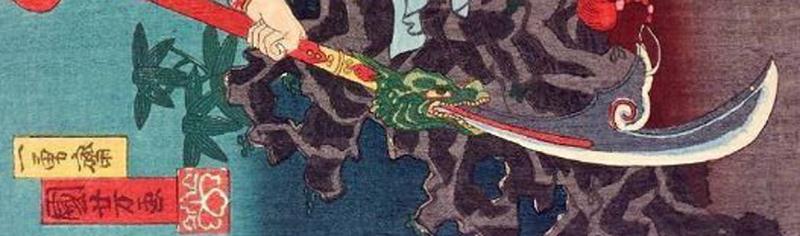
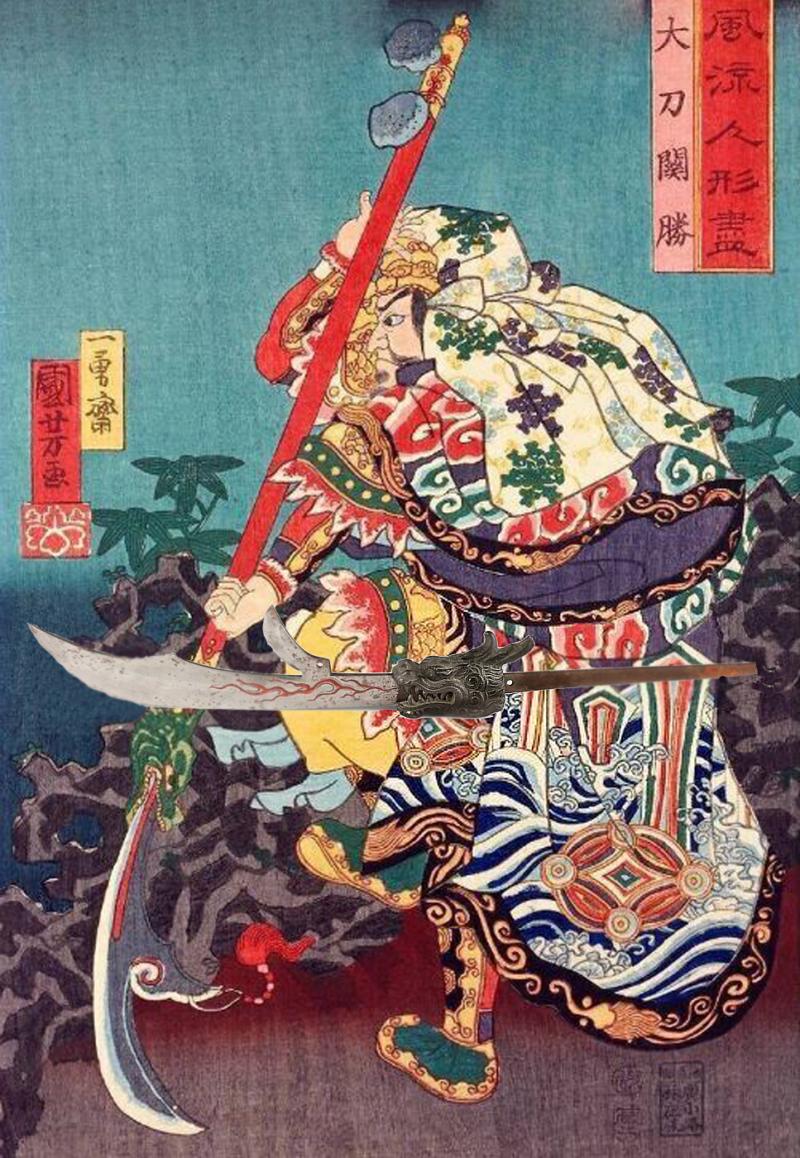
This wonderful 300 year old naginata, signed Mondonosho Masakiyo , is not only an incredible weapon of combat, but made as a representation of Daitō Kanshō's great spear, called Seiryūtō, and it appears illustrated in the author's second seminal work on samurai polearms and their combat use, of 'Japanese Spears: Polearms and Their Use in Old Japan' published in 2004.
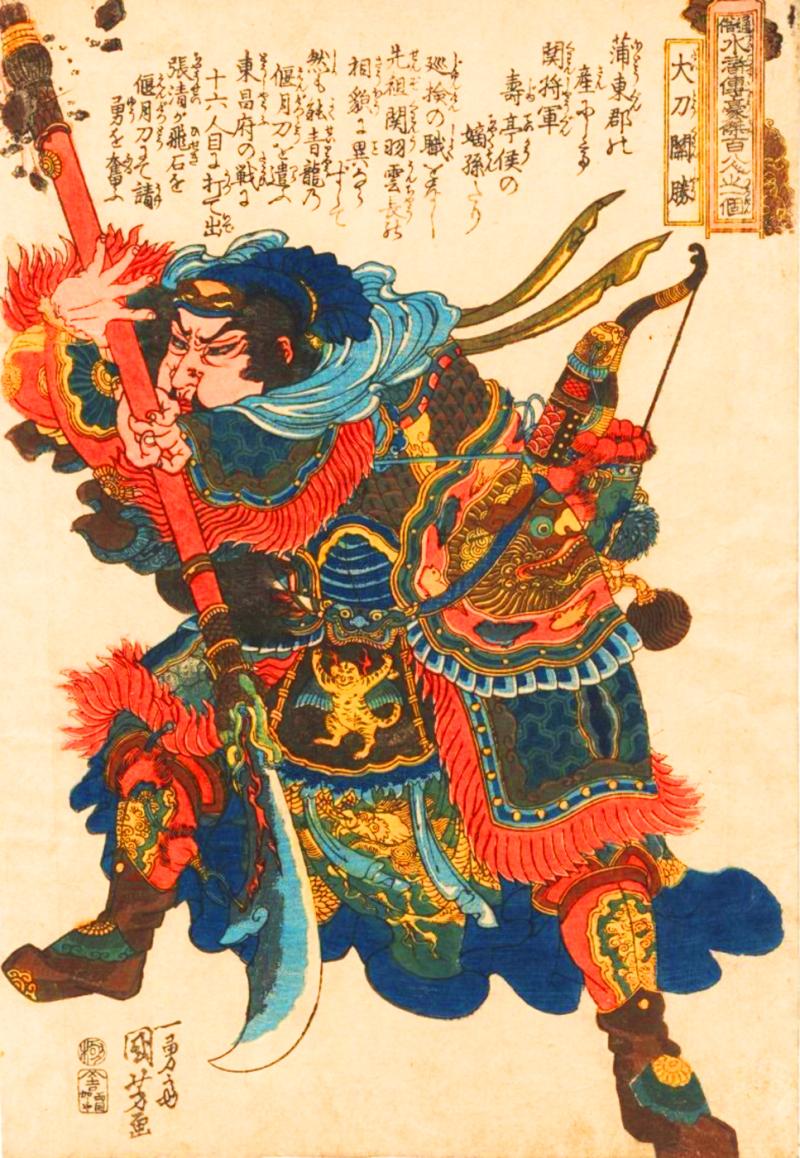
The original version is a very most fabulous polearm of legend, and represented in the book, written in the 14th century, Suikoden, and appears in chapter 62, used by Daito Kansho.
Daitō Kanshō was born in Hotō-gun, the grandson of Juteikō (Shouting hou), and was a descendant of the great general, Kan-u Unchō (Guanyu Yunchang), during the time of the Three Kingdoms; he is thought to have greatly resembled him. He was a municipal guard and always used a glaive called a 'seiryūtō', or ‘green dragon’ the origin of his nickname, Daitō (big spear). While he was young, he became well versed in martial arts and weaponry and his style of fighting was similar to that of Kan-u.
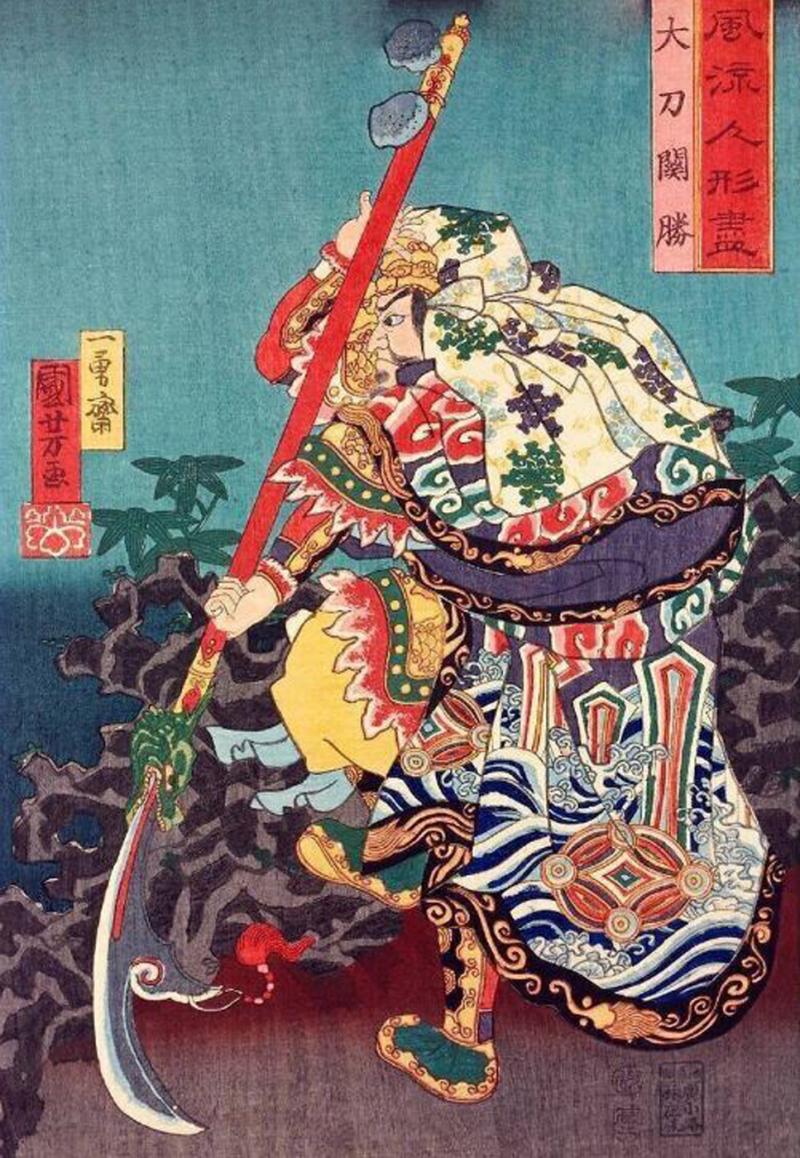
Famous prints, that we we show in the gallery, depicts the battle of Tōshōfu (Dongchang fu) where Kanshō is blocking the stones that are being thrown by Botsu-usen Chōsei (Zhang Qing), using the butt of his enormous glaive to parry them. He was considered particularly brave to fight against Chōsei who was famous for being able to hit his target with a stone ten times out of ten.
This print of Kanshō forms a diptych with a print of Chōsei in Kuniyoshi's Suikoden.
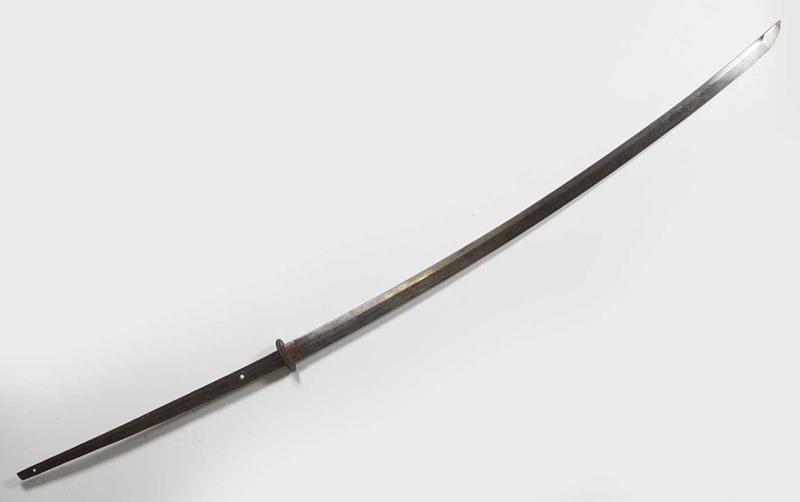
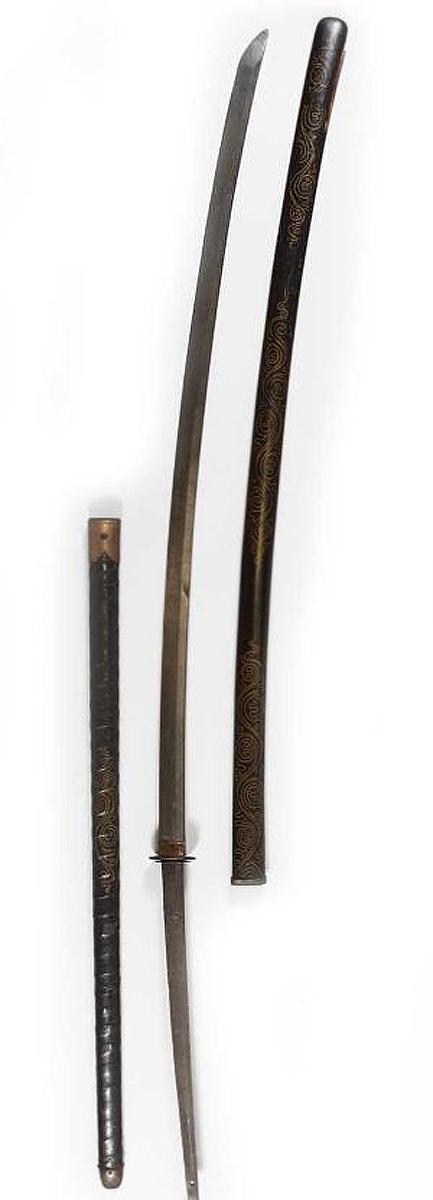
We have also acquired the collector's prized nagamaki great sword, almost six feet long in its koshirae. Early or pre Azuchi Momoyama period, circa 1550. The type of samurai sword you very, very rarely see in Europe today outside of a museum, and often not in most museums either. This is one of the rarest types, an example that escaped the Shogun's *edict to cut the nagamakis and no-dachis down to regular katana sword length, as he believed swords that were over length for regular close quarter combat and should be shortened. {see details below}
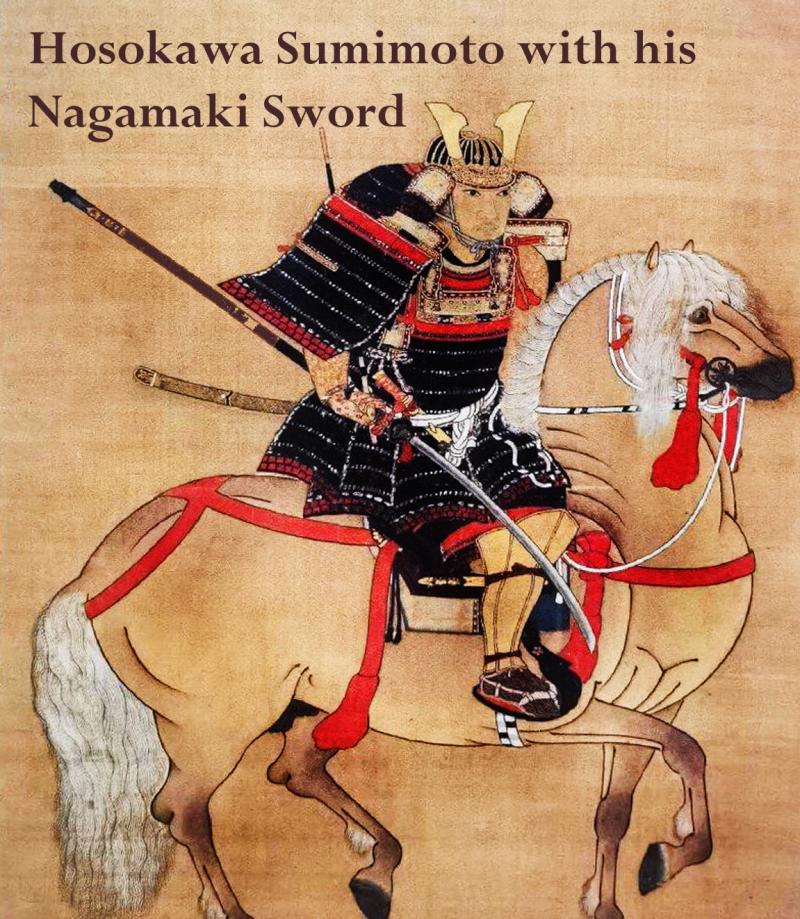
We show a famous woodbloock print of Hosokawa Sumimoto carrying his nagamaki while on horse back. Our nagamaki was likely made within eighty years or so of Sumimoto's sword, just around the time of the Battle of Sekigahara. From the dimensions in the print, our blade is likely around a foot longer than his nagamaki.
Hosokawa Sumimoto (1489–1520) was a prominent samurai commander during Japan's Muromachi period, often depicted in art holding or associated with the nagamaki, a distinctive, long-handled Japanese sword.
The nagamaki is a type of sword developed from the Odachi but has the reach of a polearm too. It offers versatile combat techniques, and has the cutting power and technique of a sword with the reach of a longer weapon/polearm.
The nagamaki ("long wrapping") is a sword with a blade length similar to a katana or considerably longer, our nagamaki has a 43 inch blade, and with a very long tsuka {handle} sometimes equal in length to the blade that is wrapped in cord or leather. Ours is wrapped in leather as is the saya, then over decorated in a pattern. It was used for powerful sweeping and slicing strokes, particularly effective for infantry against cavalry.
To appreciate the heft and greatness of this sword, by just reading here, it is around 70% longer than a more usual long katana, and around 50% wider, and thicker, thus, likely six to eight times heavier. Once mounted it is likely the most impressive, original, and early samurai sword you will ever likely see or handle, a true behemoth of a museum piece.
*The Tokugawa shogunate did not issue a single, specific edict exclusively to reduce sword lengths but rather, in 1603, shortly after establishing the Tokugawa Shogunate, they enacted strict regulations that mandated all swords—including the massive no-dachi (field swords) and nagamaki, —be restricted to a specific, shorter length.
Many long no-dachi and nagamaki blades used in the previous warring era (Sengoku) were cut down at the tang (the handle part) and reduce the blade length to meet the new, shorter regulations to fit with the standard daishō (pair of swords) that samurai were allowed to carry.
It also needs overall conservation, and will be shown and offered for sale once completed.
As of this time we know of no other original length Nagamaki available on the worldwide collectors market today. In over 100 years we can recollect only owning three before, and we have likely handled in that time more original Japanese swords than any other still remaining antique sword dealers in the world today.
Code: 26202
Price
on
Request