
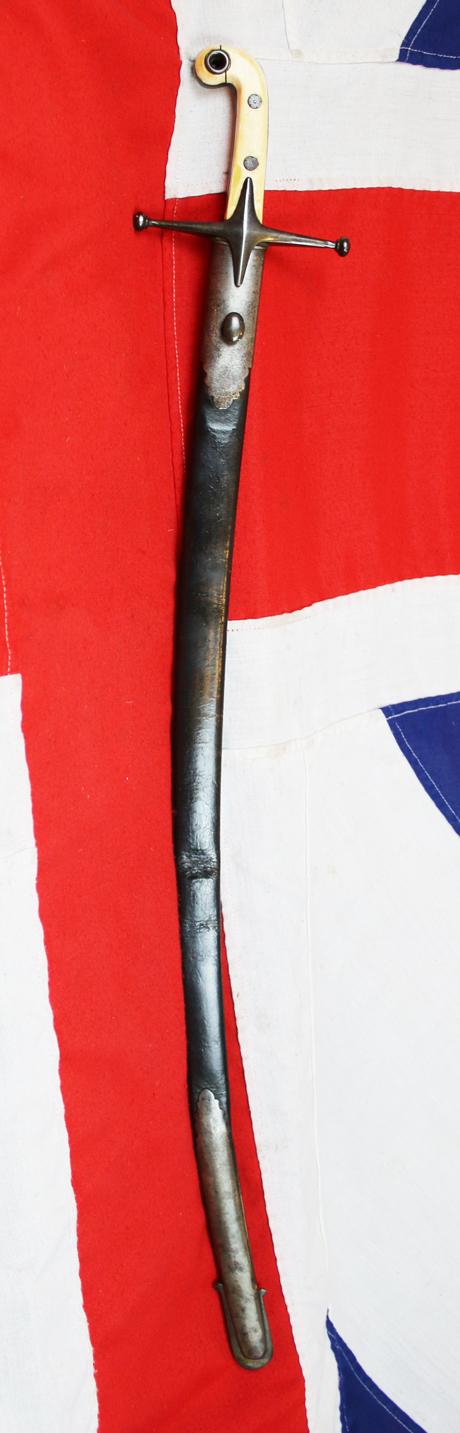
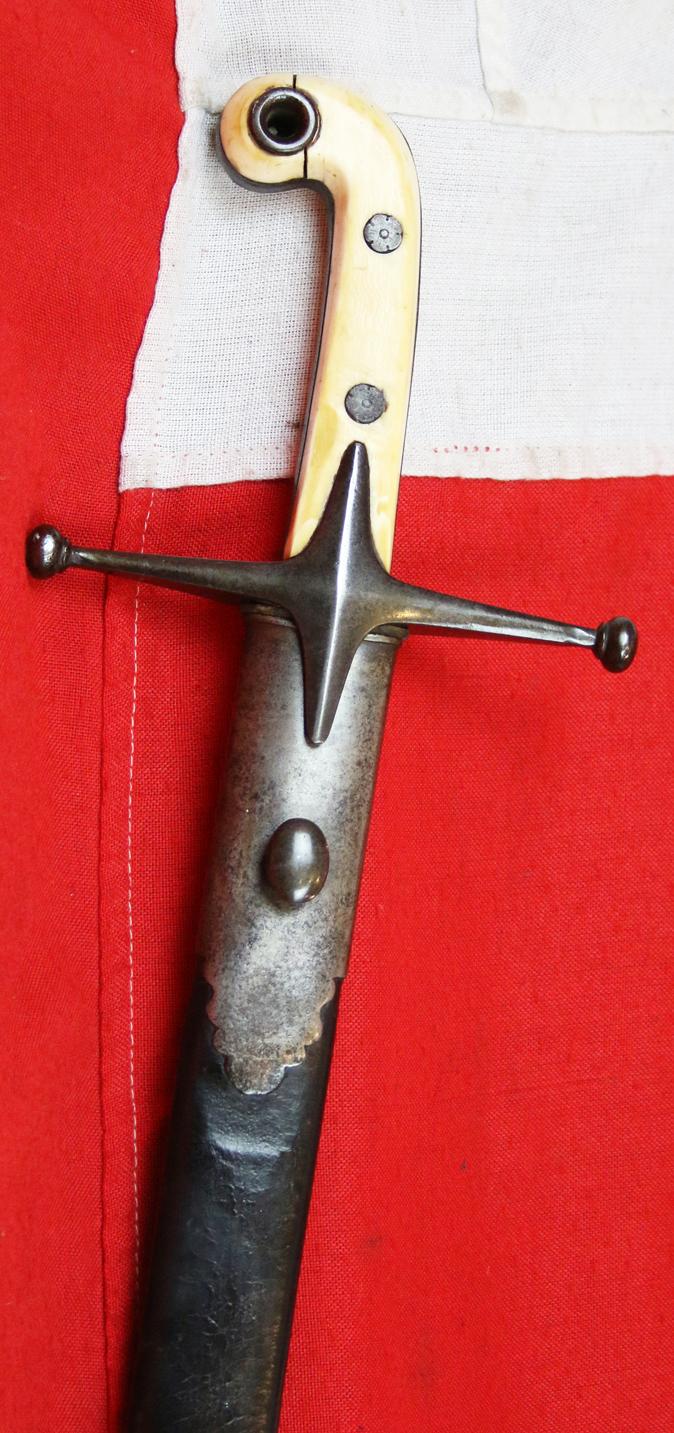
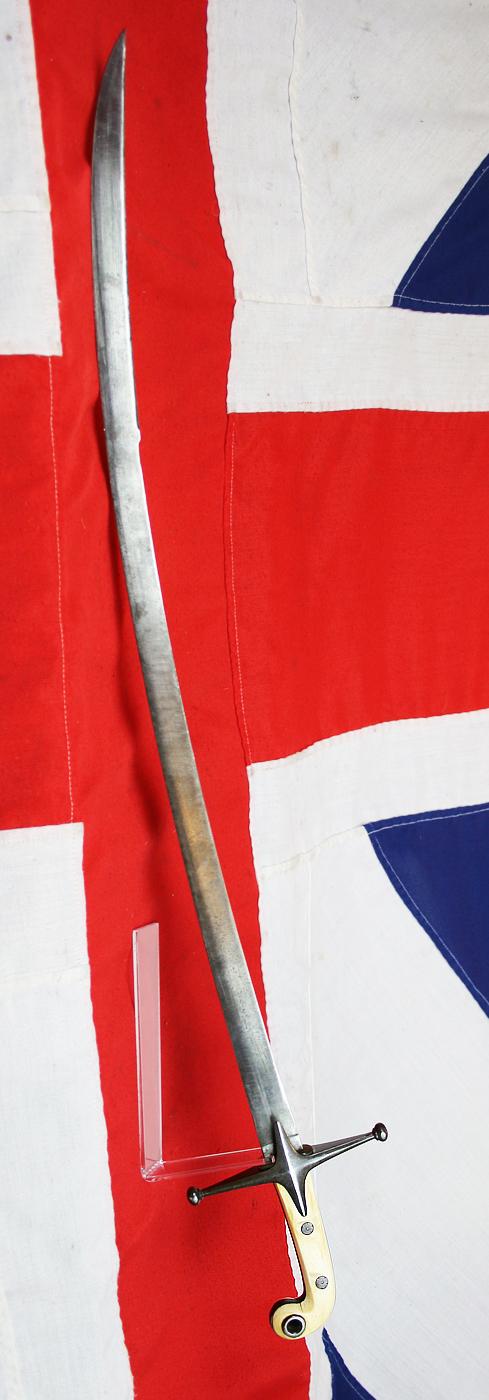
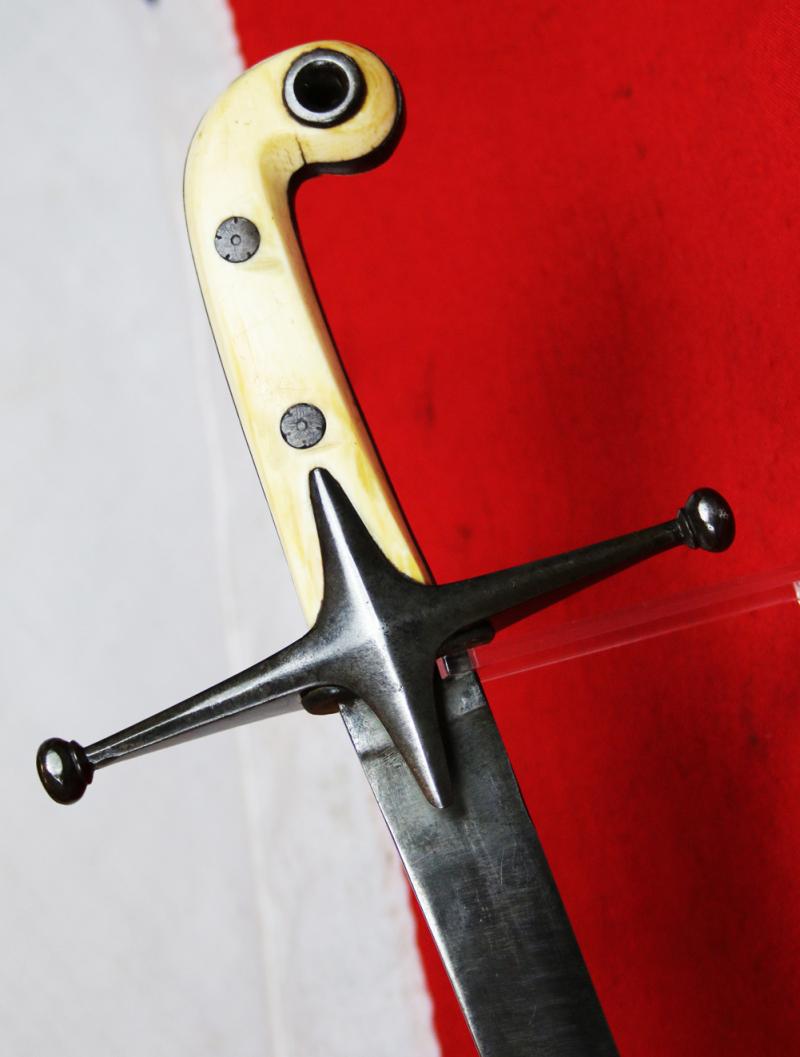
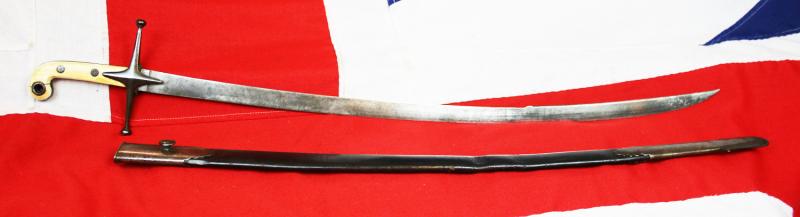
A Wonderful, Original, Napoleonic Wars, British Hussars and Light Dragoon Officer's Sword Circa 1805. In The Traditional Mameluke Style Adopted from the Mamelukes of the Battle of the Nile Campaign. The Favoured Sword Style of Napoleon and Wellington
In these British made versions of the Mameluke sword were in fact so popular for use by officers of both the British and French in the Napoleonic wars that it was formally adopted as the British generals and field marshals pattern of service sword in 1831,
In overall superb condition, ivory and steel hilted Hussars sword, with steel mounted leather scabbard, from the Napoleonic Wars.
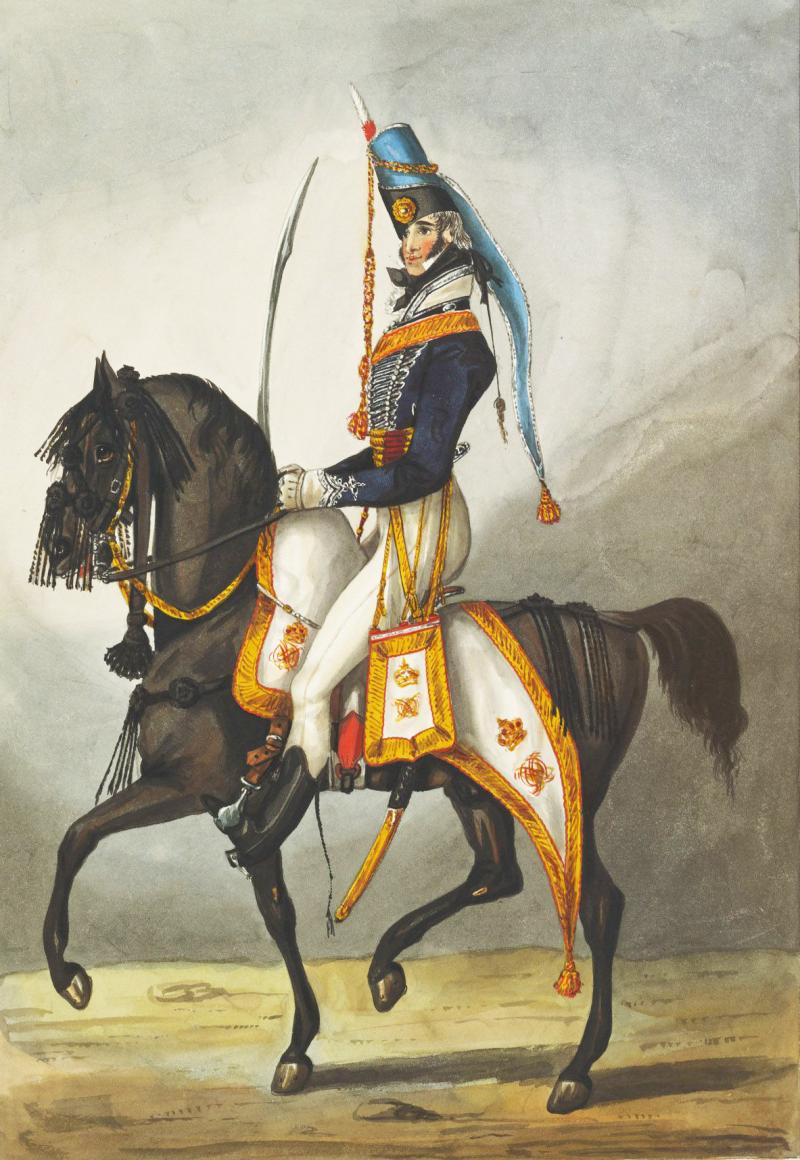
British Hussars in the Napoleonic Wars, converted from light dragoons around 1803–1807, they acted as elite light cavalry for scouting, screening, and shock charges.
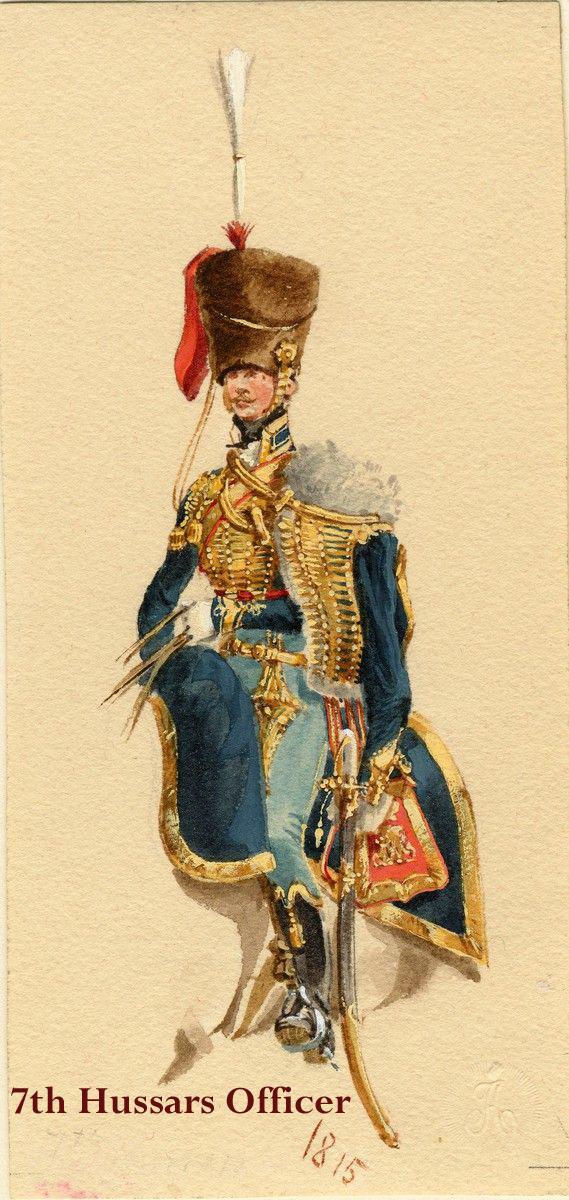
Renowned for their stylish uniforms (pelisse, busby) and reckless bravery, regiments like the 7th, 10th, and 15th served with distinction in the Peninsula War and at Waterloo, often at the forefront
The 15th Hussars (King's): Achieved fame at Sahagún (1808) under Sir John Moore, defeating two French cavalry regiments. They played a significant role at Vitoria (1813) and in the final Waterloo charge (1815).
7th Hussars (Queen's Own): Distinguished themselves at Orthez (1814) and conducted a notable rearguard action at Genappe before fighting at Waterloo.
10th Hussars (Prince of Wales's Own): Played a major role in the 1808–09 retreat to Corunna and was prominent in the 1813–14 battles of Morales and Vitoria.
18th Hussars: Heavily involved in the 1813 Vitoria campaign, where they were known for cutting off King Joseph’s retreat.
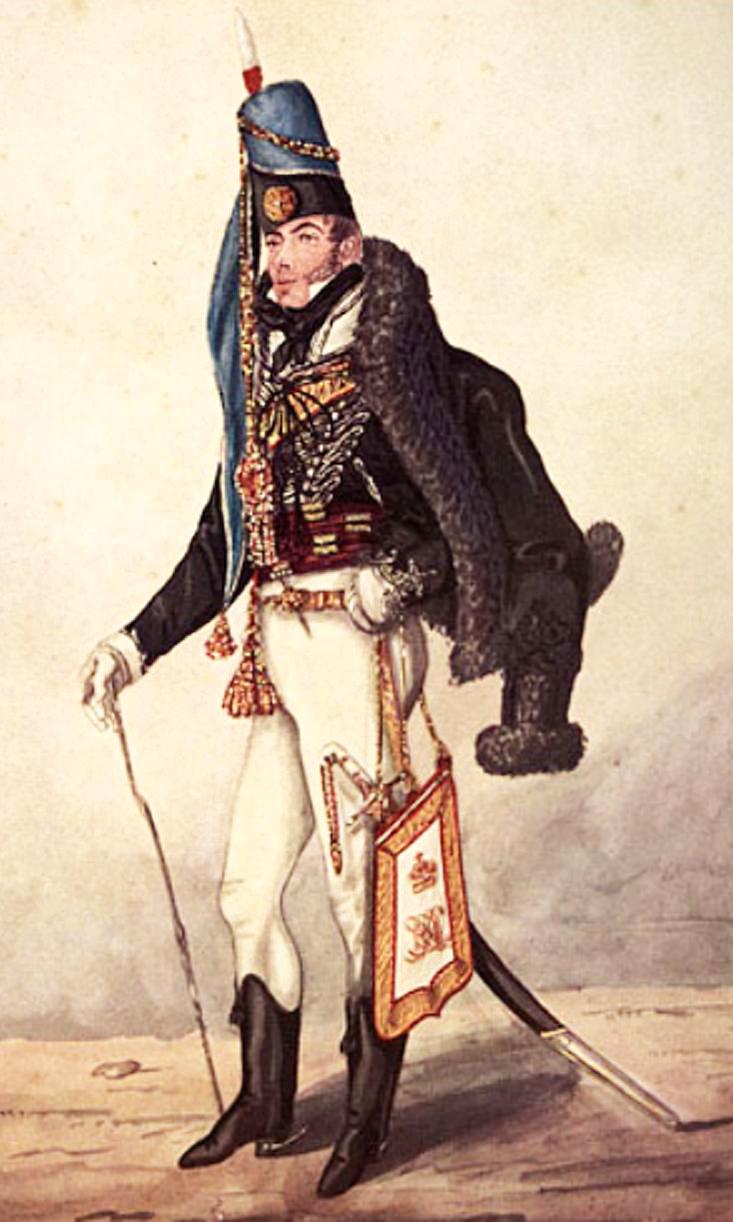
We show a Portrait of Major Hodge of the 7th Light Dragoons with his same mameluke sword. Before 1815, during the Napoleonic Wars and the Battle of Waterloo, the Mameluke-hilted sword was a fashionable, often personal, choice for British light cavalry officers (such as Hussars) and high-ranking staff officers, rather than a standard 1796 light dragoon officer's sword.
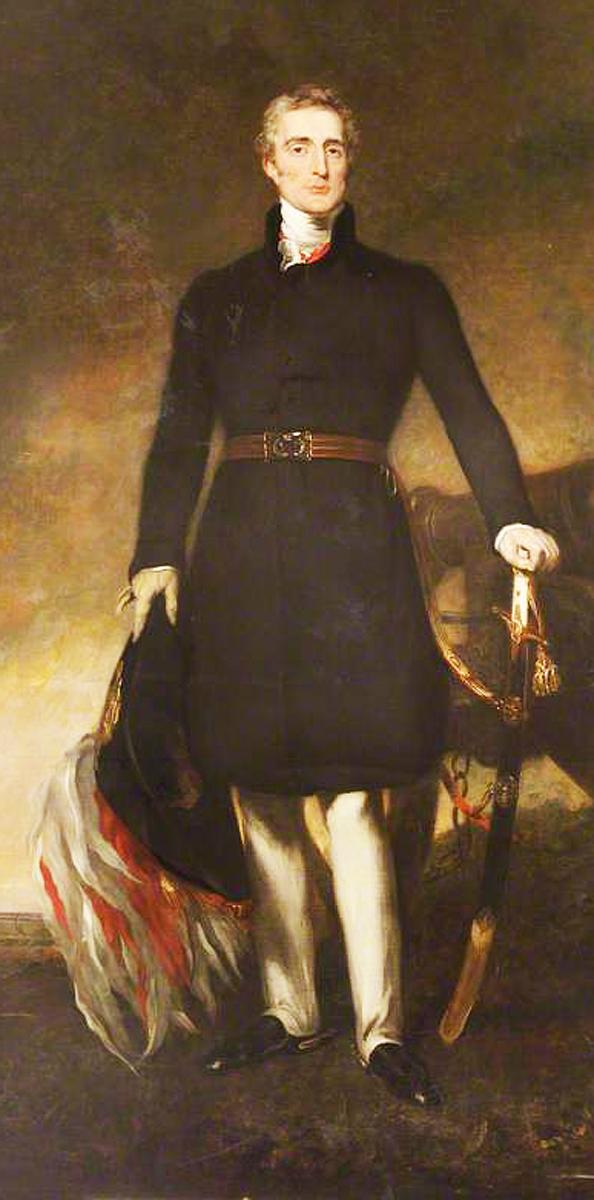
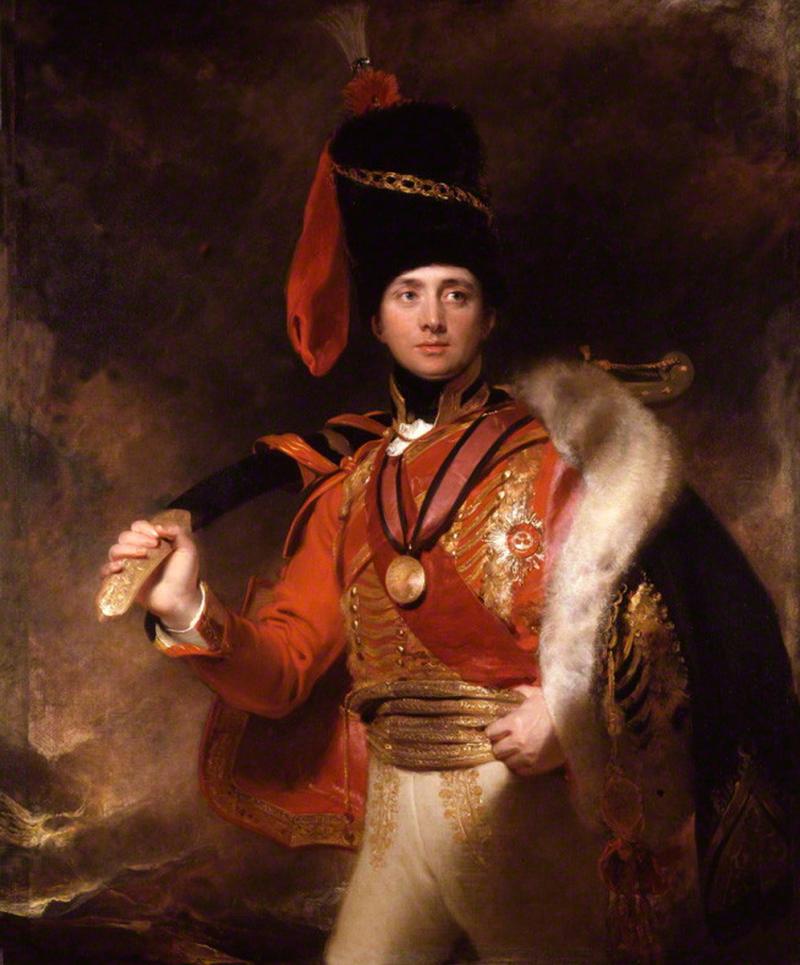
The style was adopted following campaigns in Egypt and India, influenced by Napoleon's Mameluke units and it was the personal preference of edged weapon of the Duke of Wellington.
Pictures in the gallery of paintings of the Duke of Wellington, with his favoured mameluke sword. And another, held upon his shoulder by Charles Vane, 3rd Marquess of Londonderry, a British Hussar general, with his Mameluke sword of Turkish manufacture ( painted in 1812)
All the steel mounts are very good, the hilt ivory is also good with a small north south crack at the pommel area. The leather is good and with a thumb print size bruise to the surface around 2/3rd the way down the scabbard. No scabbard seam stitching present at the reverse side.
Ivory Declaration Submission
IAntique ivory, 'worked' declaration submitted, but we can only sell this sword within the UK, it is not allowed for export. Ivory, however old cannot be imported into the USA.
Code: 26196
1400.00 GBP