
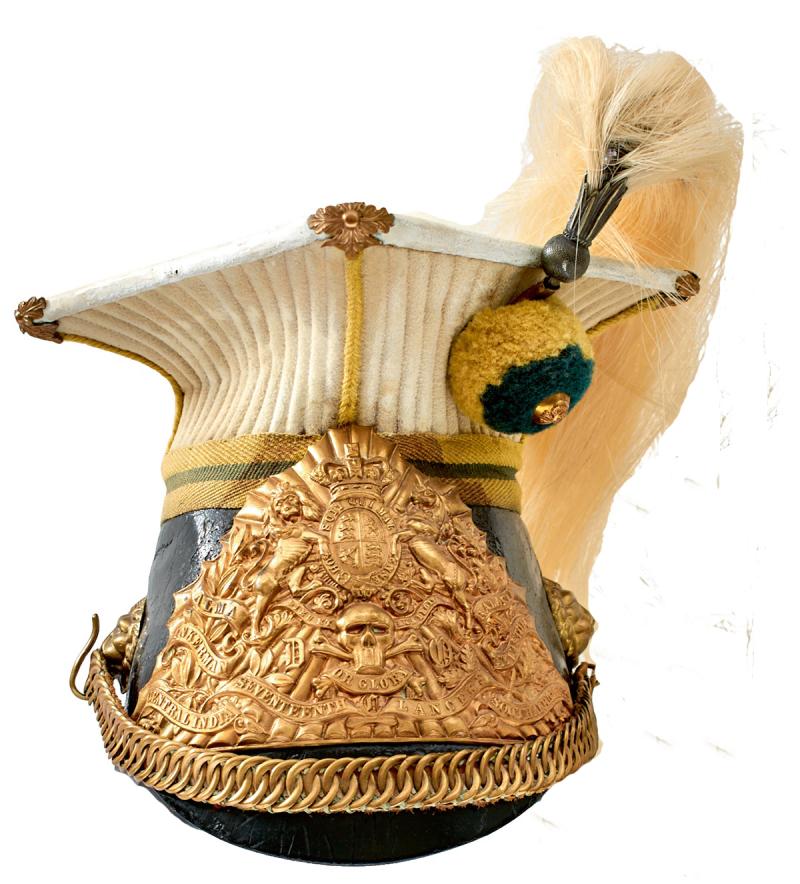
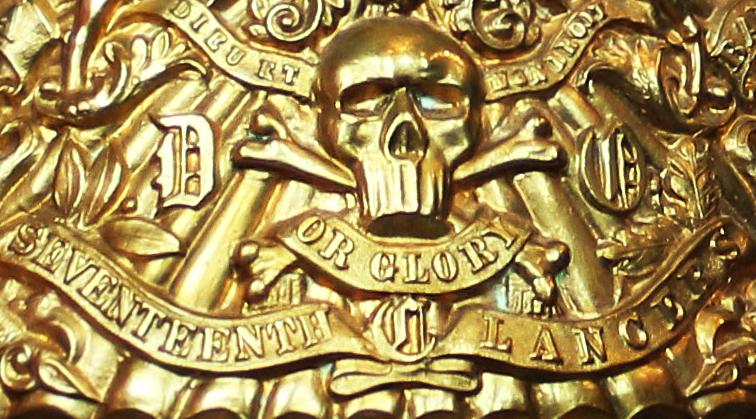
Antique Victorian Regimental Other Ranks Helmet {Chapka } Of the 17th Lancers, Motto ‘Or Glory’ Of The 'Charge Of The Light Brigade' Fame. One of the Most Famous & Historical Cavalry Regiments in the World.
Victorian 17th Lancers Helmet {a chapka lance cap} One of the great British cavalry regiments that took part in the Charge of the Light Brigade in the Crimean War.
“When can their glory fade?
O the wild charge they made!”
These words were made famous by Alfred Lord Tennyson in his poem, ‘The Charge of the Light Brigade’, and refer to that fateful day on 25th October 1854 when around six hundred men led by Lord Cardigan rode into the unknown.
The charge against Russian forces was part of the Battle of Balaclava, a conflict making up a much larger series of events known as the Crimean War. The order for the cavalry charge proved catastrophic for the British cavalrymen: a disastrous mistake riddled with misinformation and miscommunication. The calamitous charge was to be remembered for both its bravery and tragedy.
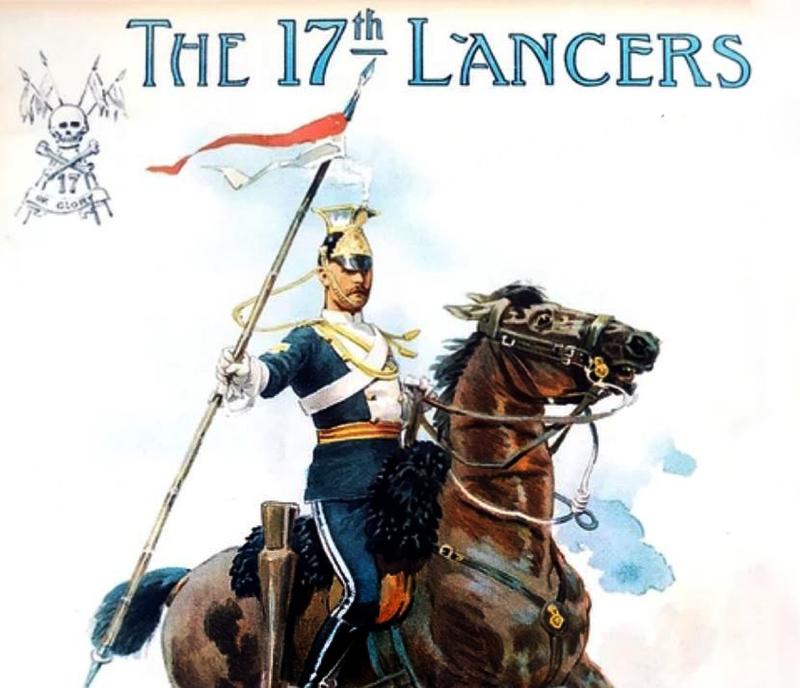
The 17th Lancers (Duke of Cambridge's Own) was a cavalry regiment of the British Army, raised in 1759 and notable for its participation in the Charge of the Light Brigade during the Crimean War. The regiment was amalgamated with the 21st Lancers to form the 17th/21st Lancers in 1922.
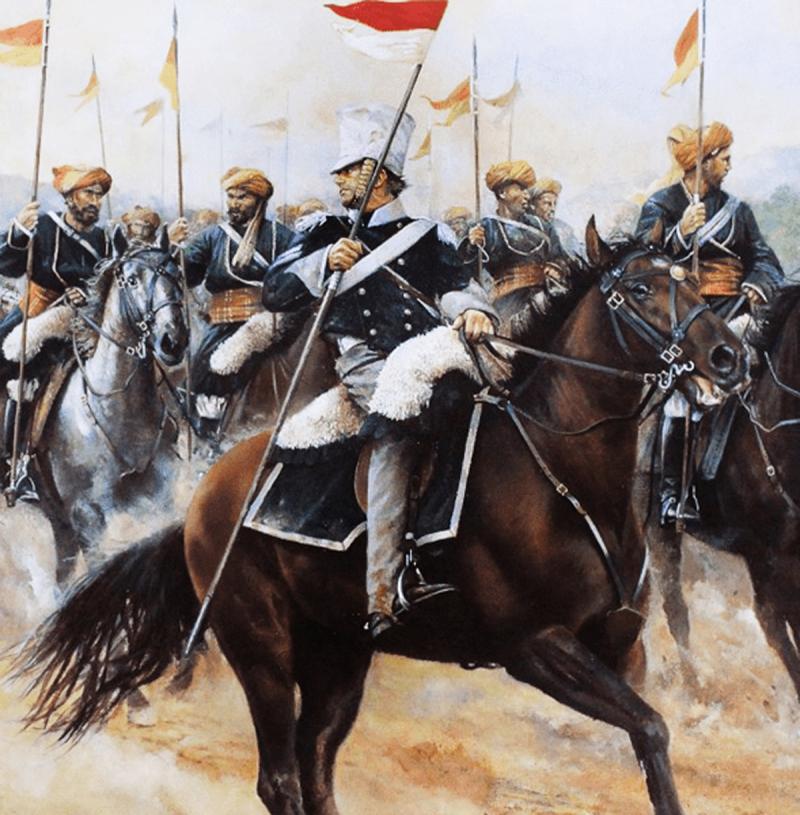
In December 1857 the regiment arrived in India to reinforce the effort to suppress the Indian rebellion against British rule. By the time the regiment was prepared for service, the rebellion was effectively over, although it did take part in the pursuit of Tatya Tope, the rebel leader. During the course of the pursuit, Lieutenant Evelyn Wood earned the Victoria Cross for gallantry. The regiment returned to England in 1865. The regiment became the 17th Regiment of Lancers in August 1861. When, in 1876, it gained Prince George, Duke of Cambridge as its colonel-in-chief, the regiment adopted the title of the 17th (The Duke of Cambridge's Own) Lancers.
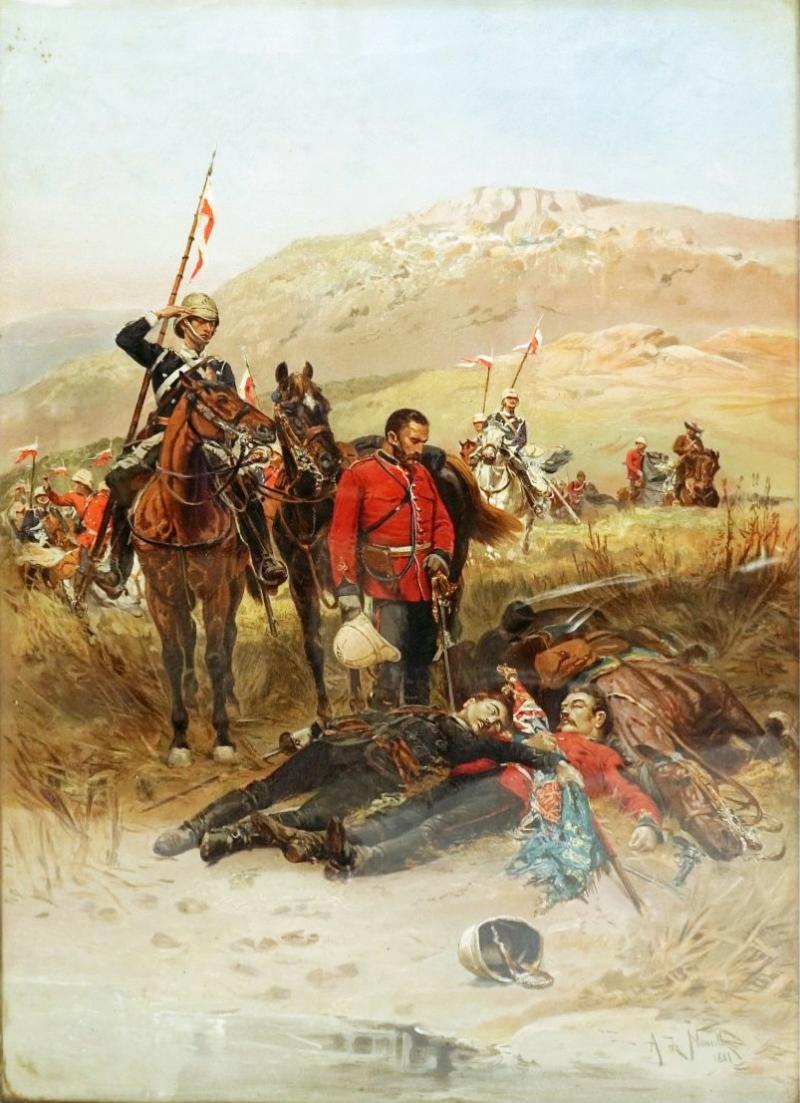
The regiment was sent to Natal Colony for service in the Anglo-Zulu War and fought at the Battle of Ulundi under Sir Drury Curzon Drury-Lowe in July 1879. The regiment was deployed inside a large British infantry square during the attack by the Zulu Army, which had surrounded the British. When the attack appeared to be wavering, the regiment was ordered to advance: their charge routed the warriors with heavy loss and proved to be decisive. The regiment returned to India the same year, remaining there until about 1890 when they returned to England.
Second Boer War
In February 1900 a contingent from the regiment, comprising Lieutenant-Colonel E. F. Herbert and 500 troops, was deployed to South Africa for service in the Second Boer War, and arrived to Cape Town on the SS Victorian early the next month. The contingent missed the large pitched battles, but still saw action during the war. In 1900, Sergeant Brian Lawrence won the regiment's fifth and final Victoria Cross at Essenbosch Farm. The contingent's most significant action was at the Battle of Elands River (Modderfontein) in September 1901. C Squadron was attacked by a unit of Boers under the command of Jan Smuts; the Lancers mistakenly assumed the unit was friendly because of their attire. The Boers immediately opened fire, attacking from both the front and the rear. The Lancers suffered further casualties at a closed gate that slowed them down. Only Captain Sandeman, the squadron commander, and Lieutenant Lord Vivian survived. The regiment suffered 29 killed and 41 wounded before surrendering, while Boer losses were just one killed and six wounded.
They stayed in South Africa throughout the war, which ended June 1902 with the Peace of Vereeniging. Four months later, 540 officers and men left Cape Town on the SS German in late September 1902, and arrived at Southampton in late October, when they were posted to Edinburgh.
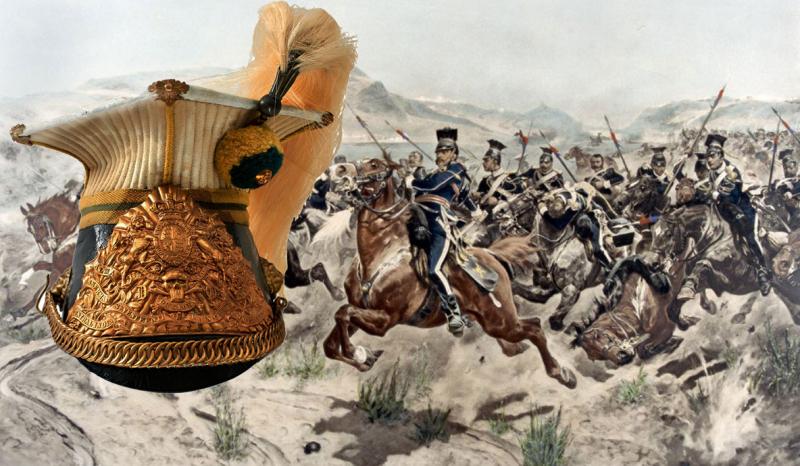
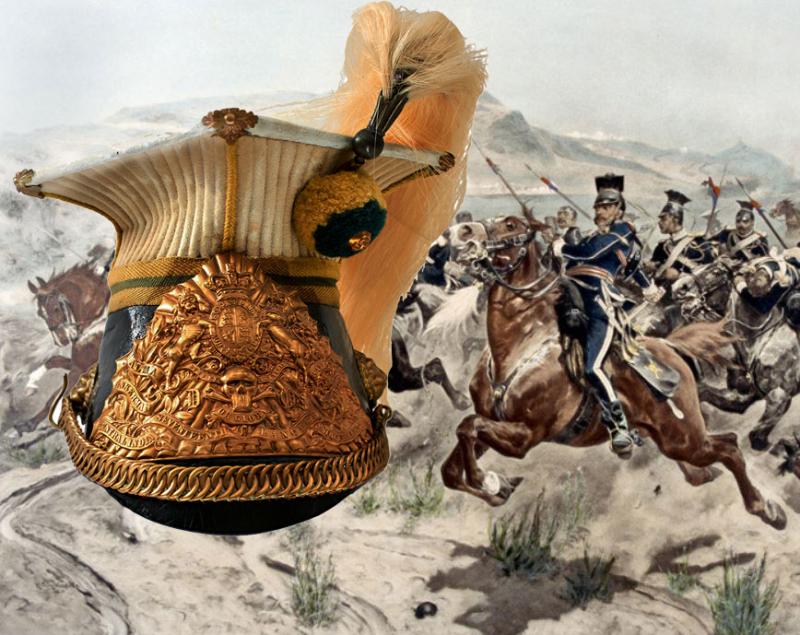
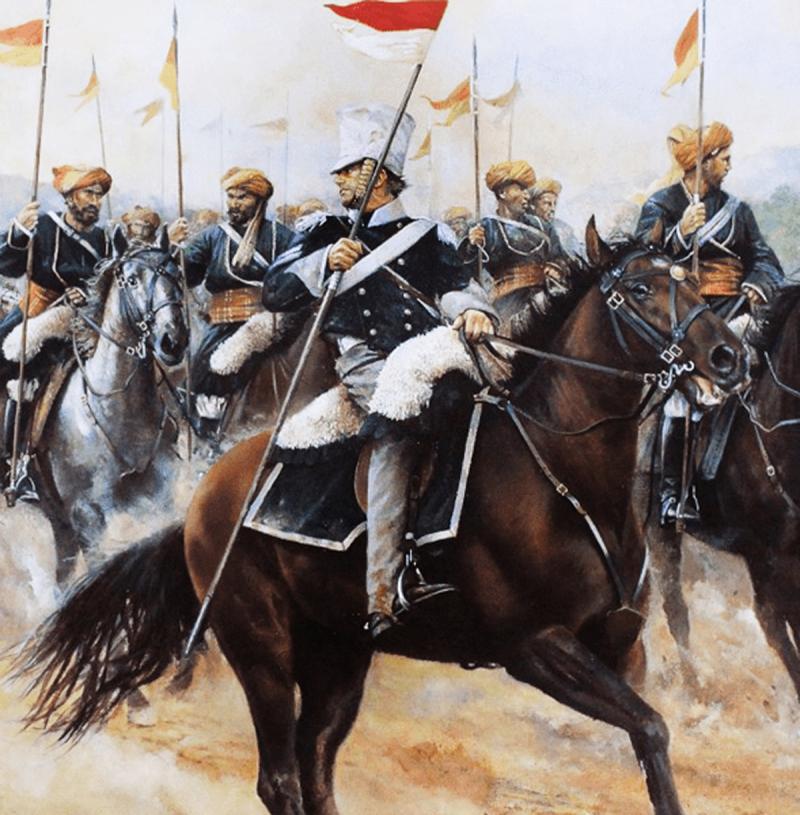
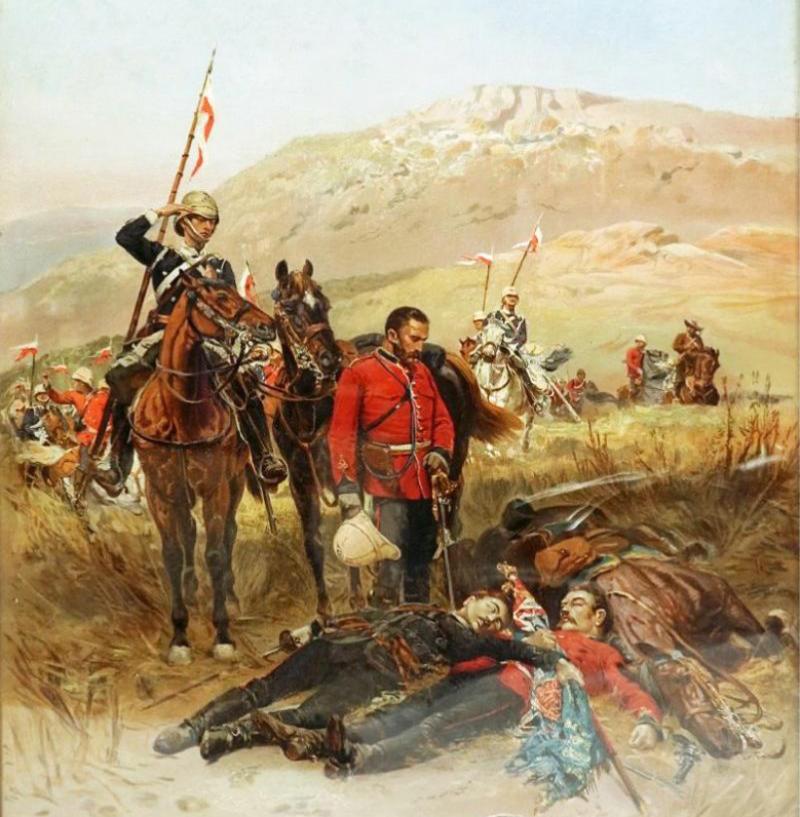
Painting in the gallery of the 17th Lancers in the Charge of the Light Brigade in this case the lancers wear the 'foul weather' covered helmet version. And another painting of the 17th Lancers in India, this time the cap is covered in the dessert cover, and the third painting of the 17th Lancers in the Zulu War wearing the regulation pith helmet
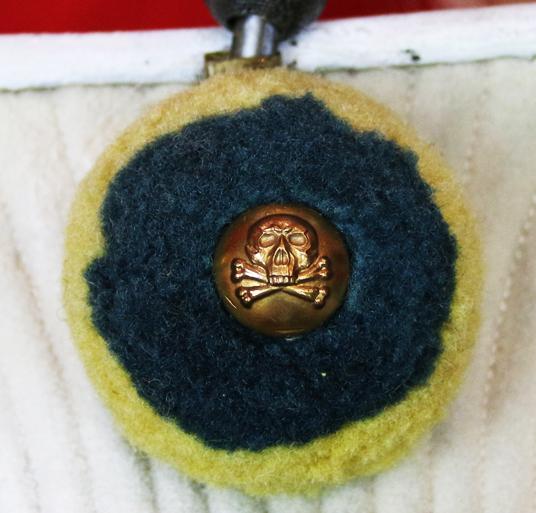
The condition is good for age with average wear to the leather skull and old staining to the yellow striped band, above the helmet plate, helmet plate refitted for battle honour additions.
Code: 26188
2995.00 GBP