
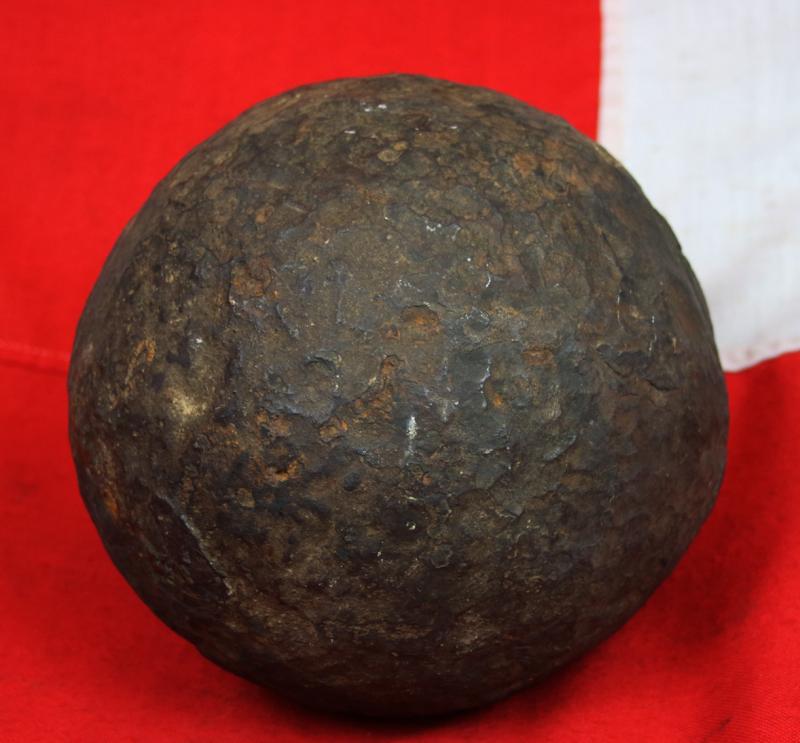
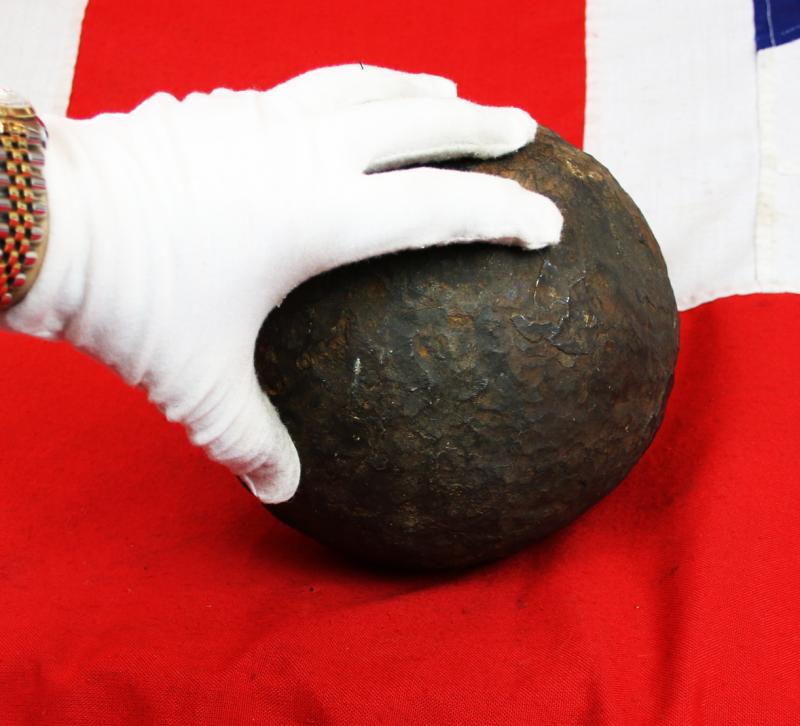
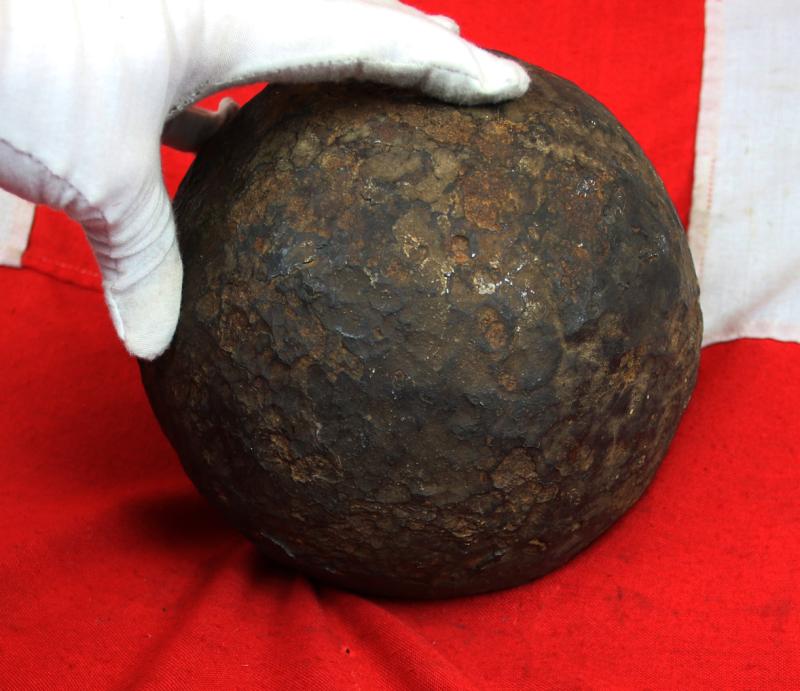
English Civil War Heavy Siege Gun, a 'Whole' Cannon of 7 inches. Ball 50lbs x 7 Inches. Recovered from the Siege of Chester Castle Site
50-pounder cannon was at the extreme heavy end of artillery used in this period, likely restricted to siege work rather than field battles due to transport limitations.
Charles I of England (r. 1625-1649) considered himself an absolute monarch with absolute power and a divine right to rule, but his unwillingness to compromise with Parliament, particularly over money, led to a civil war from 1642 to 1651. Fought between the 'Roundheads' (Parliamentarians) and 'Cavaliers' (Royalists) in over 600 battles and sieges, the war was a bloody and protracted conflict.
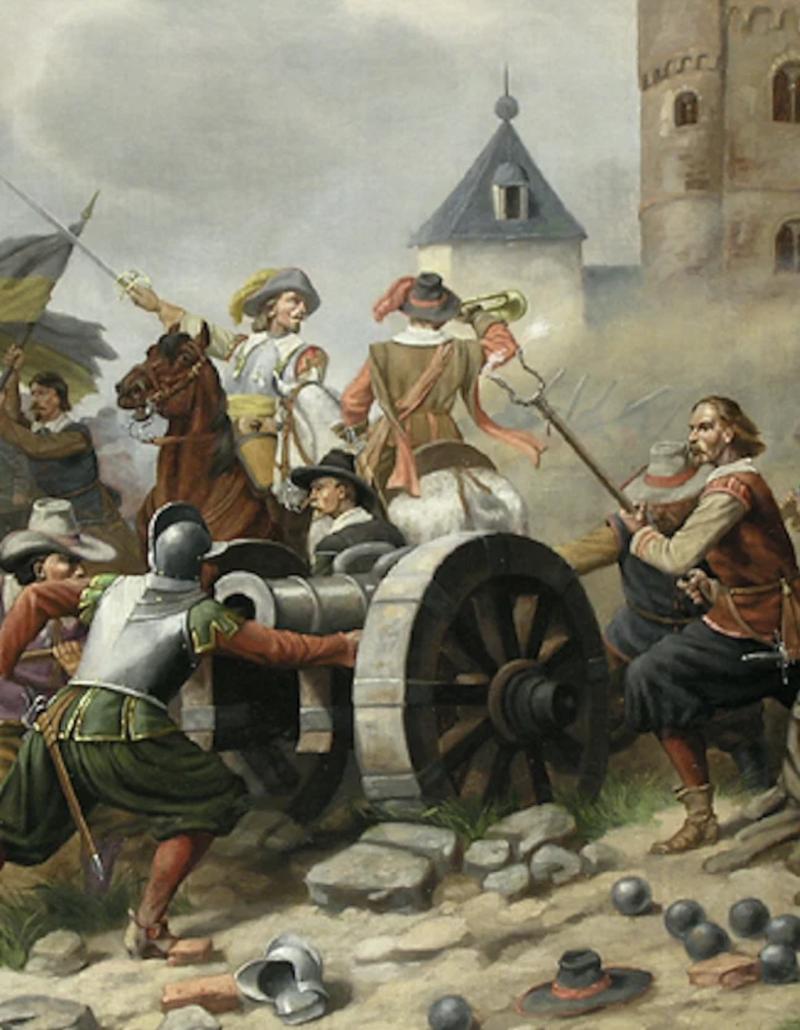
Both armies had artillery units, but the number of cannons at any given battle or siege varied depending on availability, location, and the losses or captures of artillery in previous engagements. A general commanded an artillery train while groups of cannons – a battery – came under the command of a senior officer. Each individual gun team was led by the gunner who organised his various assistants. The Parliamentarian New Model Army began with 56 cannons, but the force expanded over time, especially with additions captured from the enemy. The Royalists, however, struggled to keep pace as the necessary finances became more difficult to raise as the war went in Parliament's favour.
The gun crew consisted of at least the following: a gunner who aimed the piece, the gunner's mate who loaded it, and an assistant. A specialist artillery engineer would have first calculated the correct range and trajectory using various instruments like scales, quadrants, and rulers to measure the angle of elevation of the barrel. His instruments would provide figures that could be compared to prepared charts, but really nothing replaced practical experience with a specific cannon.
For each new shot (at least for larger cannons), the crew had to first cool down the barrel using a blanket of thin leather or sheepskin soaked in water. This was to ensure the new charge of powder did not prematurely explode. Another precaution between shots was to clear the barrel and touchhole of any blockages, residue spent powder or burning embers. When ready, the required measure of gunpowder was pushed down the barrel, blocked in place with wadding such as hay or oakum, and the cannonball gently pushed in. Another quantity of wadding was then added. A rod was next used to ram everything tightly to the bottom of the barrel. If the charge was not firmly packed then the explosive energy was lost, which reduced the range of the shot. A poorly packed charge could even blow up the cannon itself. The gunpowder was then lit through the touchhole in the top of the cannon using a slow match attached to the end of a long pole (linstock) for safety. The match lit fine-grained priming powder, which in turn set off the main powder charge.
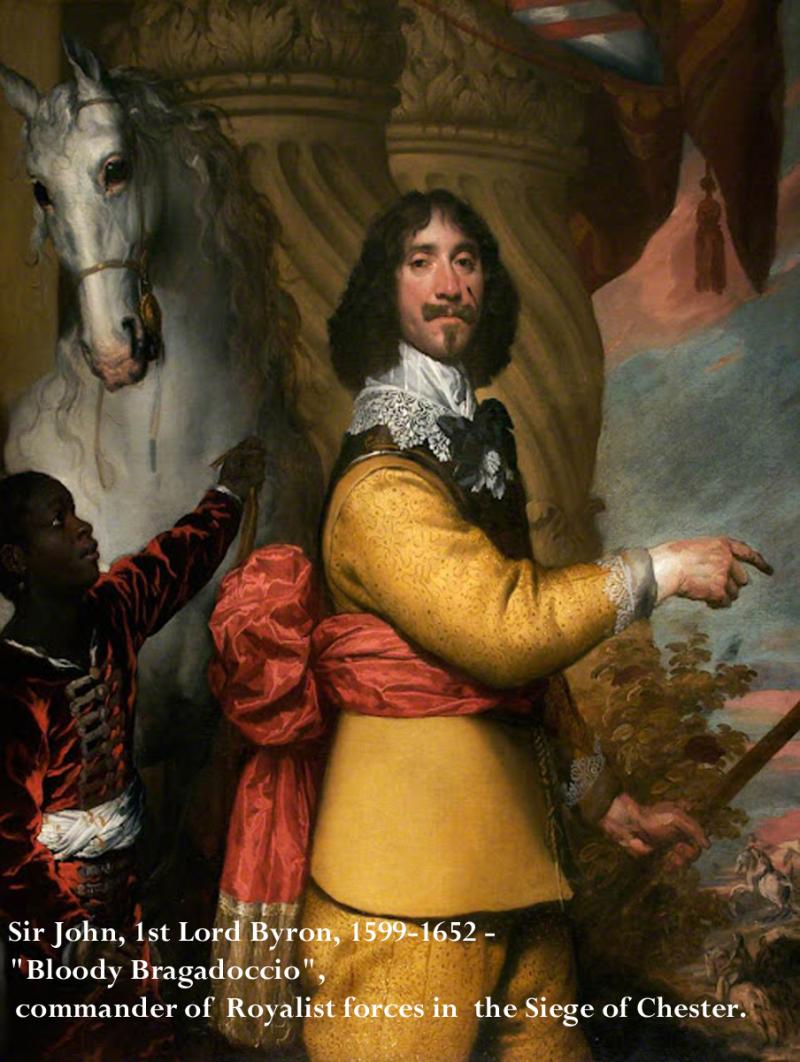
John Byron, 1st Baron Byron (1599–1652) was a staunch Royalist soldier and politician during the English Civil War, known for his cavalry leadership and unwavering loyalty to Charles I. Created a baron in 1643, he commanded forces in Cheshire and Lancashire, defended Chester, and later served in the royal court in exile, dying in Paris.
At the outset of the English Civil War, Chester was held by forces loyal to King Charles. The city was especially important to the Royalists as its location on the River Dee and proximity to the Irish Sea made it an important gateway to both Ireland and North Wales. The central city was surrounded partially by the river and protected by strong city walls dating back to the times of the Romans. When the civil war broke out, the Royalists further strengthened the city walls and added a ring of earthwork defences extending out and around portions of the city to the north and east
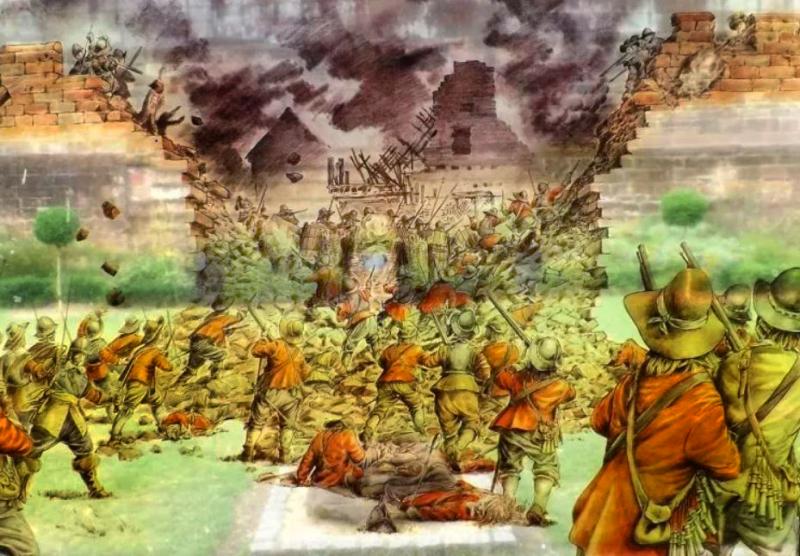
The siege of Chester occurred over a 16-month period between September 1644 and February 1646 during the First English Civil War. In the engagement, Sir William Brereton and the Parliamentarians were ultimately successful in taking possession of the city and Royalist garrison commanded by Lord Byron.
Although the siege spanned nearly one and a half years, the degree to which the city was confined varied in intensity. Throughout the 16-month time period, conflicts continued to occur between the Royalists and the Parliamentarians in Cheshire and during the spring and summer of 1645, the Royalists were successful in causing the Parliamentarians to temporarily lift the siege. Ultimately, however, the Parliamentarians enforced a total blockade and captured the city.
Ref; Mark Cartwright
https://www.worldhistory.org/article/1931/artillery-in-the-english-civil-wars/
Code: 26159
495.00 GBP