
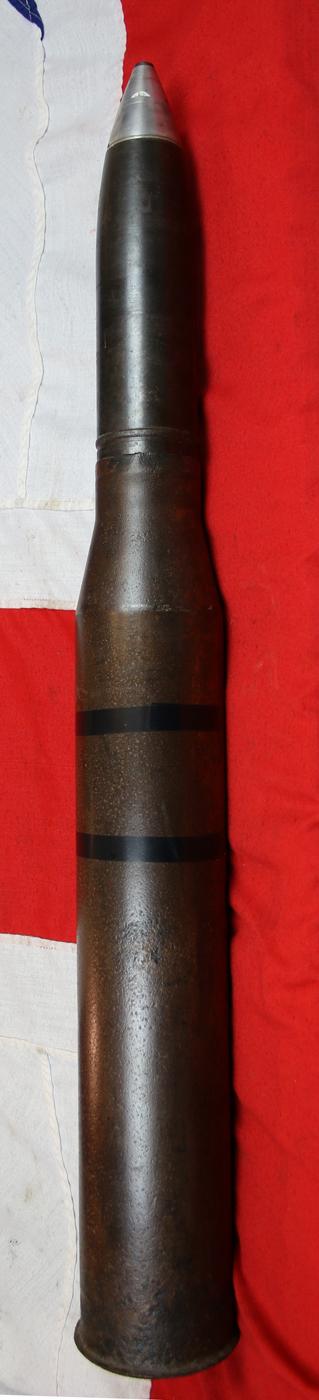
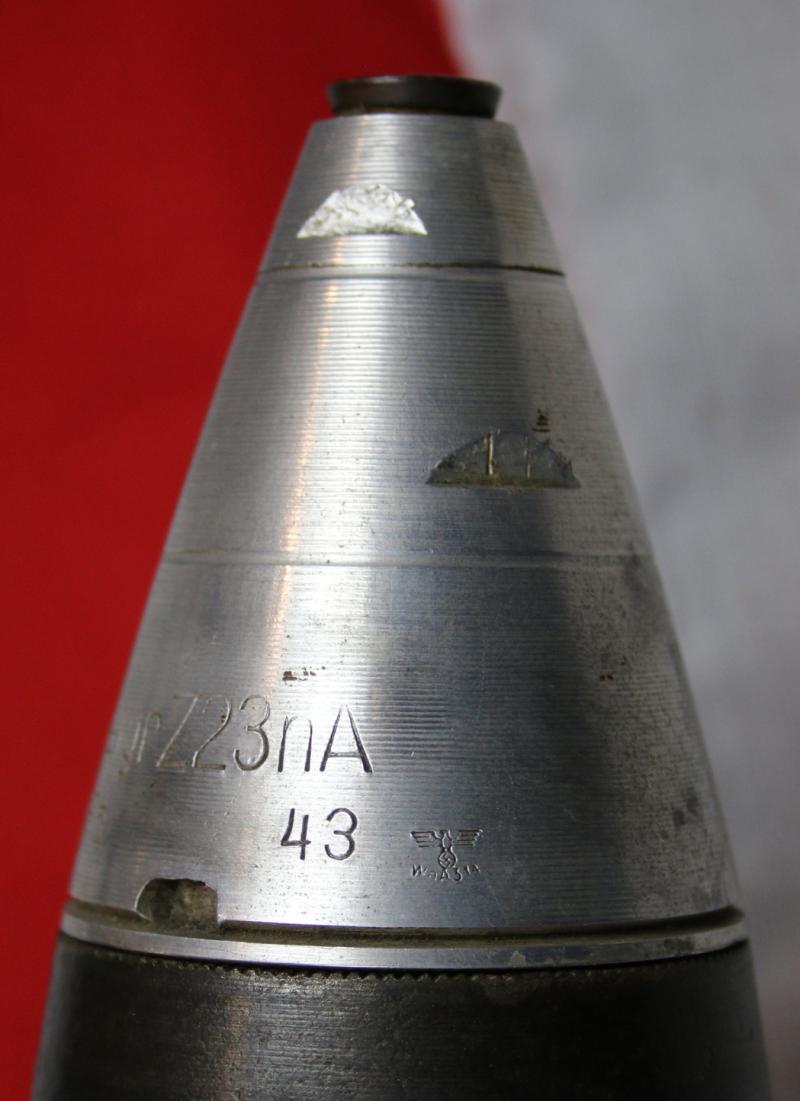
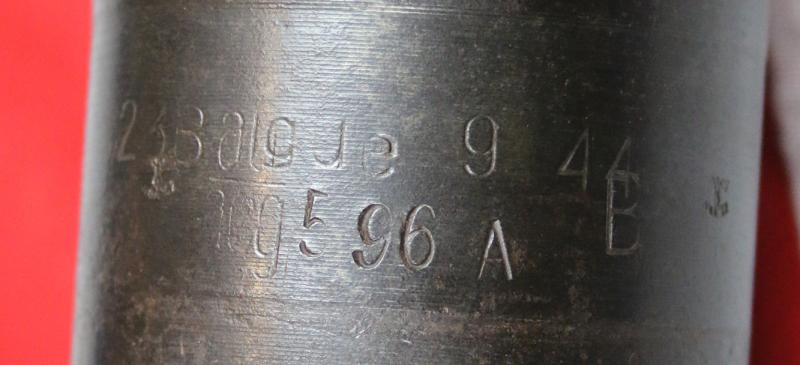
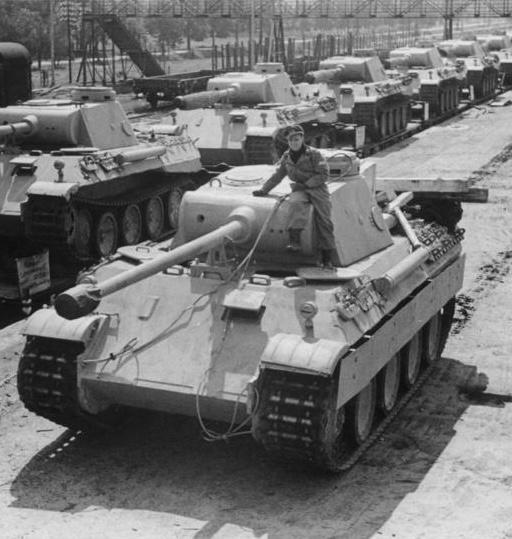
Really, Really Rare, Original German 75mm Tank Shell Case, WW2 As Used by the Infamous Panther Tank, Officially the Panzerkampfwagen V Panther. With Impact Fuse, And Electric Tank Primer. Fitted With 75mm Shell Head, High Explosive, WW2 IssueDated 1944
A fabulous display and conversation piece
On 27 February 1944 it was redesignated to just PzKpfw Panther, as Hitler ordered that the Roman numeral "V" be deleted.citation needed In contemporary English-language reports it is sometimes referred to as the "Mark V".
The Panther was intended to counter the Soviet T-34 medium tank and to replace the Panzer III and Panzer IV. Nevertheless, it served alongside the Panzer IV and the heavier Tiger I until the end of the war. The Panther was a compromise. While having essentially the same Maybach V12 petrol (690 hp) engine as the Tiger I, it had better gun penetration, was lighter and faster, and could traverse rough terrain better than the Tiger I. The trade-off was weaker side armour, which made it vulnerable to flanking fire, and a weaker high explosive shell. The Panther proved to be effective in open country and long-range engagements. Although it had excellent firepower, protection and mobility, its reliability was less impressive. The Panther was far cheaper to produce than the Tiger I. Key elements of the Panther design, such as its armour, transmission, and final drive, were simplifications made to improve production rates and address raw material shortages. Despite this, the overall design has still been described by some as "overengineered".
The Panther was rushed into combat at the Battle of Kursk in the summer of 1943 despite numerous unresolved technical problems, leading to high losses due to mechanical failure. Most design flaws were rectified by late 1943 and early 1944, though the bombing of production plants, increasing shortages of high-quality alloys for critical components, shortage of fuel and training space, and the declining quality of crews all impacted the tank's effectiveness. Though officially classified as a medium tank, at 44.8 metric tons the Panther was closer in weight to contemporary foreign heavy tanks. The Panther's weight caused logistical problems, such as an inability to cross certain bridges, otherwise the tank had a very high power-to-weight ratio which made it highly mobile.
The naming of Panther production variants did not, unlike most German tanks, follow alphabetical order: the initial variant, Panther "D" (Ausf. D), was followed by "A" and "G" variants.
The critical detail of the 88mm round was that it didn’t reach the velocity of the 75mm L71 gun on the Panther. The 88mm round weighed 22 pounds, reached 2600 feet per second and could penetrate 83mm of hardened steel at 2000 meters. The 75mm L71 round was 16 pounds, reached 3070 feet per second and could penetrate 89mm of hardened steel at 2000 meters. Both could easily pop the top off any Allied tank out to 1500–2000 meters. But the heavier 88mm round was slower and had a comparative trajectory like the proverbial rainbow. Even though the 75mm gun on the Panther tank fired a lighter shot, it had a flatter trajectory and didn’t overload the already strained Panther drivetrain with the excessive weight of the 88mm piece.
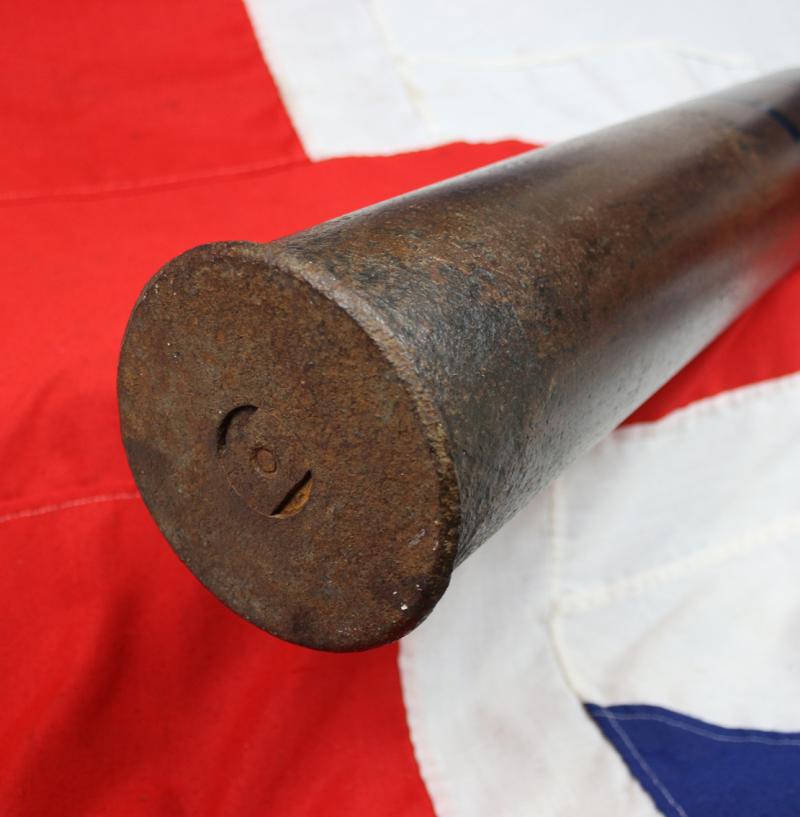
The bottom of the shell case is surface corroded but you can still see the electric primer fitting. The shell head is an original 75mm WW2 German example, but not the original panther type.
37.5 inches high.
Inert, safe and empty.
Code: 26137