
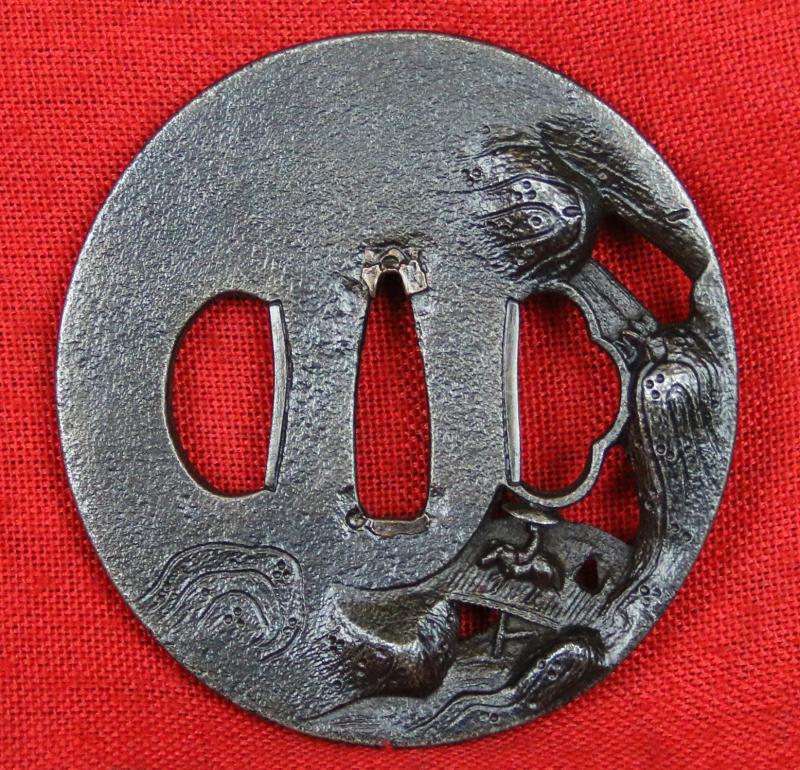
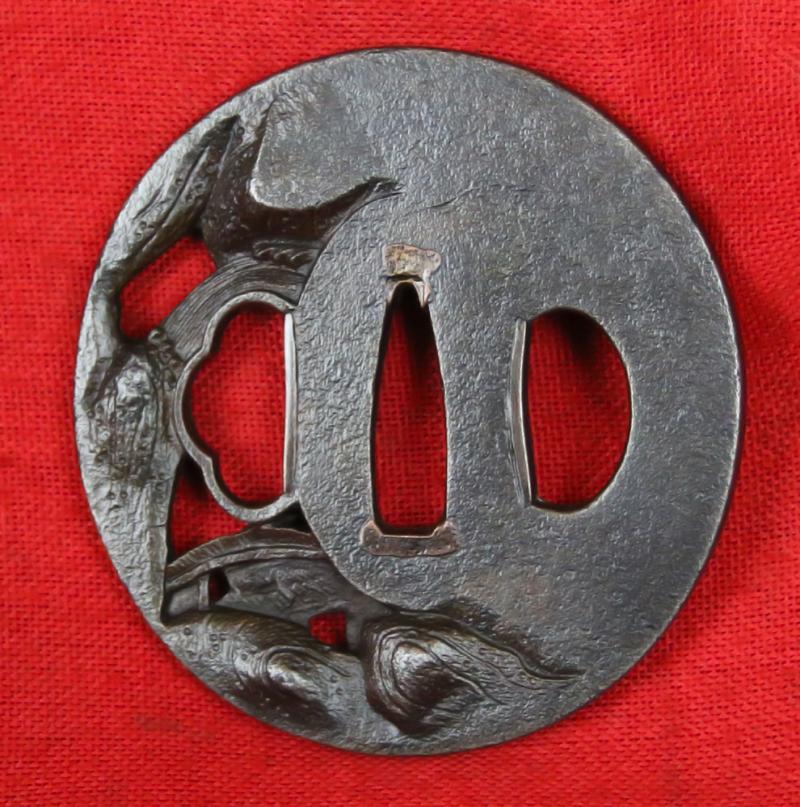
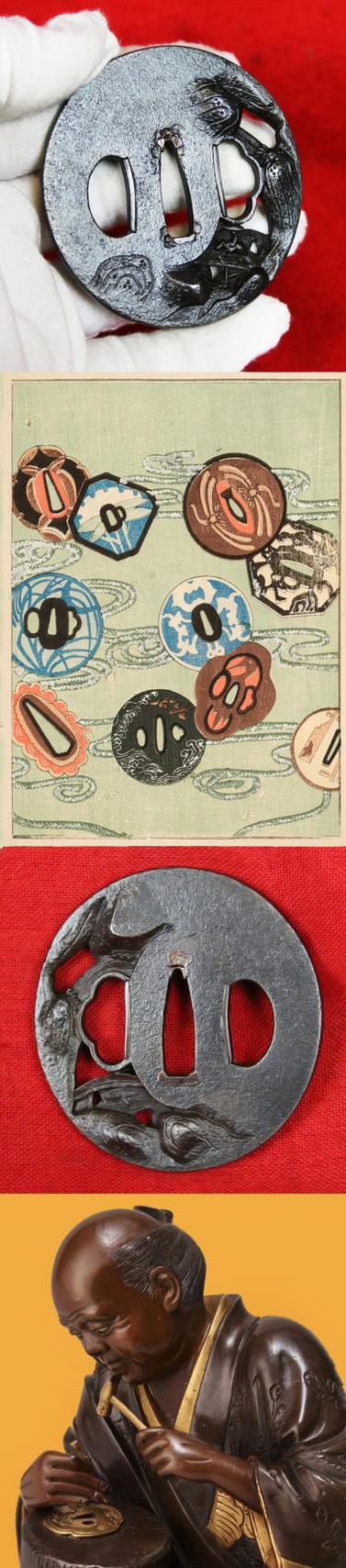
A Fine & Beautiful Edo Period Iron Tsuba in Nikubori Jisukashi Of Waterfalls Rocks and River with A wooden Bridge Being Traversed by a Figure On Horseback Carrying a Parasol
The tsuba was possibly created by Yoshiharu (吉春), of the late Edo period .
He was living in the Hagi (萩) domain (another name of the Choshu domain) in Nagato no Kuni (長門国,
It is engraved with the Nikubori Jisukashi. Nikubori Jisukashi is a Japanese tsuba (sword guard) carving technique, translating to "relief-carved openwork" (肉彫地透). It combines thick, high-relief (nikubori) sculptural carving with openwork (sukashi) techniques on the iron plate (ji). Primarily used during the Edo period by schools like Shoami, this style creates a three-dimensional effect, making the motif stand out from the ground, often featuring detailed, rounded figures rather than simple silhouettes.
Technique: "Niku" (肉) refers to meat/flesh, implying thickness or rounding of the metal, while "Ji-sukashi" (地透) means openwork on the ground plate.
Code: 26131
545.00 GBP