


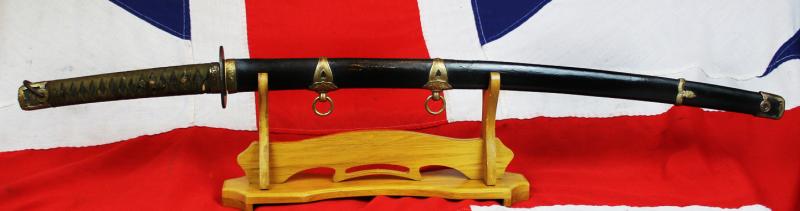
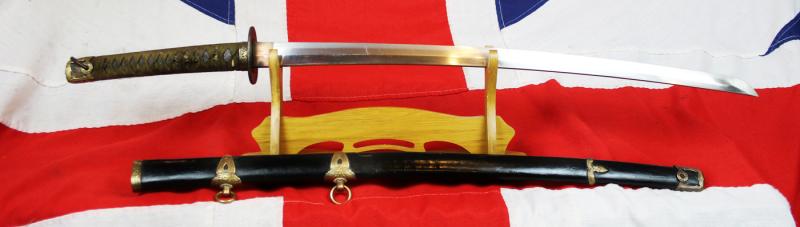
This Is Likely The Best Value Original Kai Gunto Japanese WW2 Naval Officer's Sword Available Anywhere. All the Traditional Fittings, Including The Signed Blade, Are In Nice Clean Condition!
Act fast!!! this intriguing sword will likely be snapped up at this price by the first interested collector that sees it for sale
As England’s favourite Military Antiques & Collectables Gallery, and likely the worlds leading specialist original Japanese Samurai arms and armour dealers outside of Japan {and probably within it} we acquire collections, of all kinds, and add them to our website, every, single day.
This week, it is fine Japanese swords, and as a very special thank you to our numerous WW2 collectors this little beauty we are delighted to offer at likely below our cost.
Purchased directly from a collector, this is a very nice wartime production original Japanese Naval Officer’s Katana in the Pattern 1937 Kai-Gunto setting. A Kai-Guntō (海軍刀, naval sword) is a weapon and symbol of rank used by the Imperial Japanese Navy during the WWII Period. This is a very nice example, and shows fair use, with simply commensurate wear for age.
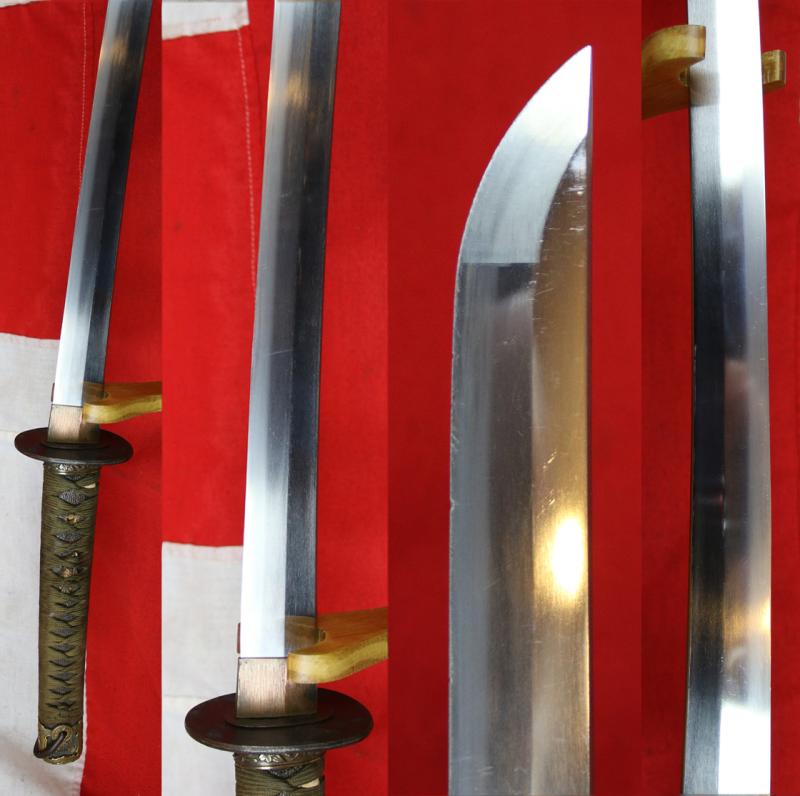
The blade is nice condition with some very minor scuffing and small edge marks, and it is still sharp
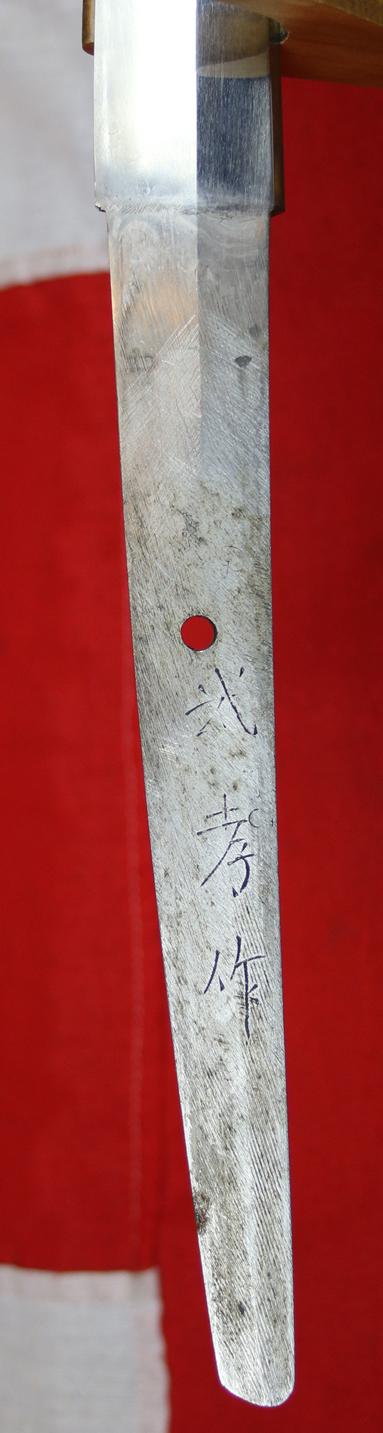
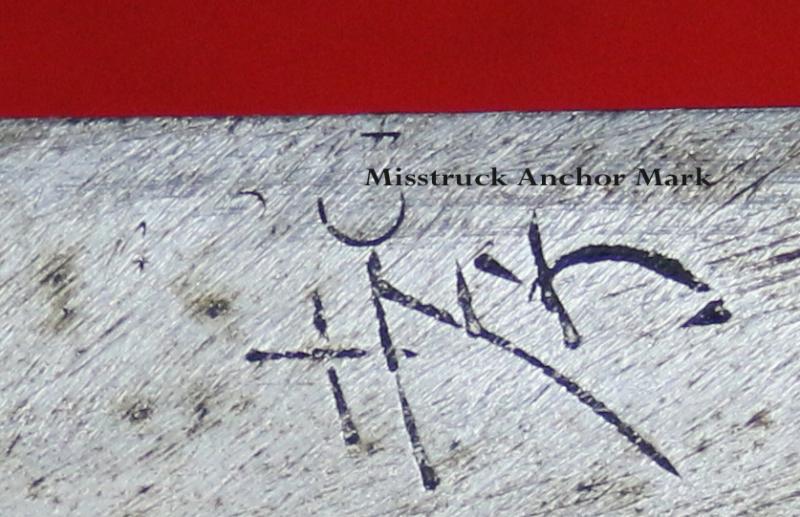
Blade length is 27.25 inches and overall length 39 inches. It has a super blade, with one mounting hole in the standard tang, which has an asymmetrically rounded (haagari) tang tip. The tang itself is marked a partially visible ( obviously lightly struck) Naval anchor stamp, possibly indicating manufacture at Toyokawa Naval Arsenal (豊川海軍工廠, Toyokawa kaigun kōshō). However, it also bears a signature mei, {probably Takekata saku, Takekata made this} something we usually don't see on these blades.
The blade retains most of the original factory finish. With the near total absence of rust, even on the tang, it is possible this is a typical naval officer’s stainless steel blade, Japanese Kai-Gunto naval officers swords are somewhat rare, given that they usually went down with the ships that suffered badly from the continued well deserved assaults from the allied navies, though mostly American. This particular example has the typical WW2 pattern fittings
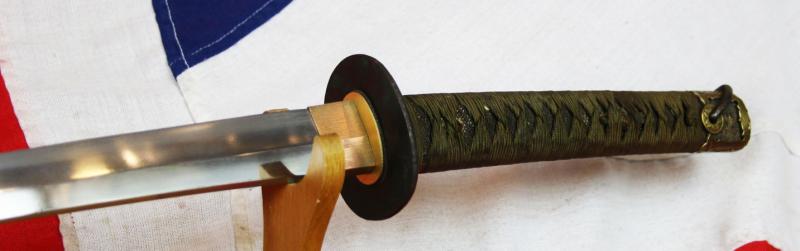
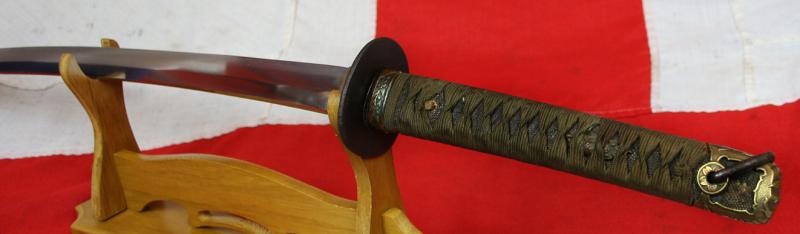
It has a typical {numbered naval oval tsuba, The tsuka (handle) has two menuki (grip decorations), and kabuto-gane (pommel end cap), with the wooden securing peg still present. Good tsuka-Ito {hilt binding} over fishskin, with traditional Showa cherry-blossom decorative collar.
Condition of the blade, scabbard and fittings is fine, indicating fair normal use. Fortunately these swords were used on board ship, so the army version was far more likely to bear considerable wear, through considerable marching and combat through jungle warfare etc. There also is some usual oxidation and wear on the various metal fittings. As typical of the pattern, cherry blossom motifs appear on many of the koshirae. The handle is good to the blade, and secure.
The wooden scabbard is coloured with black lacquer, and has gilt brass fittings, though the gilding is now faded, and all of the fittings are sound
Two hanging loops are present, and the condition is good, with a few surface marks to the lacquer and small areas of contemporary re-touching as usual.
Really a super example of an original Imperial Japanese Navy Officer’s Kai-Gunto, in clean condition with clear signature. These are getting jolly hard to find in any condition.
It has been over one thousand years ago that the art of making swords appeared in Japan. The swordsmiths of the time may not have known it but they were creating a legendary sword. The Samurai sword has seen combat in many battlefields. From the early days of the Samurai warrior to the fierce battles in the South Pacific during WWII.
Each hand-made traditional Samurai sword was unique because it was forged using the finest skills known to man. A tremendous amount of work was dedicated to creating these pieces. They were an instrument of war as much as a beautiful artifact to adorn any decor.
The Samurai sword has grown to be one of the most highly desired military antiques of all time.
As we offer this interesting piece at this very special price, it cannot qualify for layaway or px. It is simply ‘first come, first served’ for outright purchase, for its very lucky next owner!
The 1937 Pattern Japanese Naval Sword, known as the Kai-Guntō (海軍刀, Sea Military Sword), was formally enacted in October 1937 as the official sidearm for Imperial Japanese Navy officers. These mounts were designed to be more practical for combat than previous, more delicate dress swords, yet they retained traditional elements and were often fitted with high-quality blades.
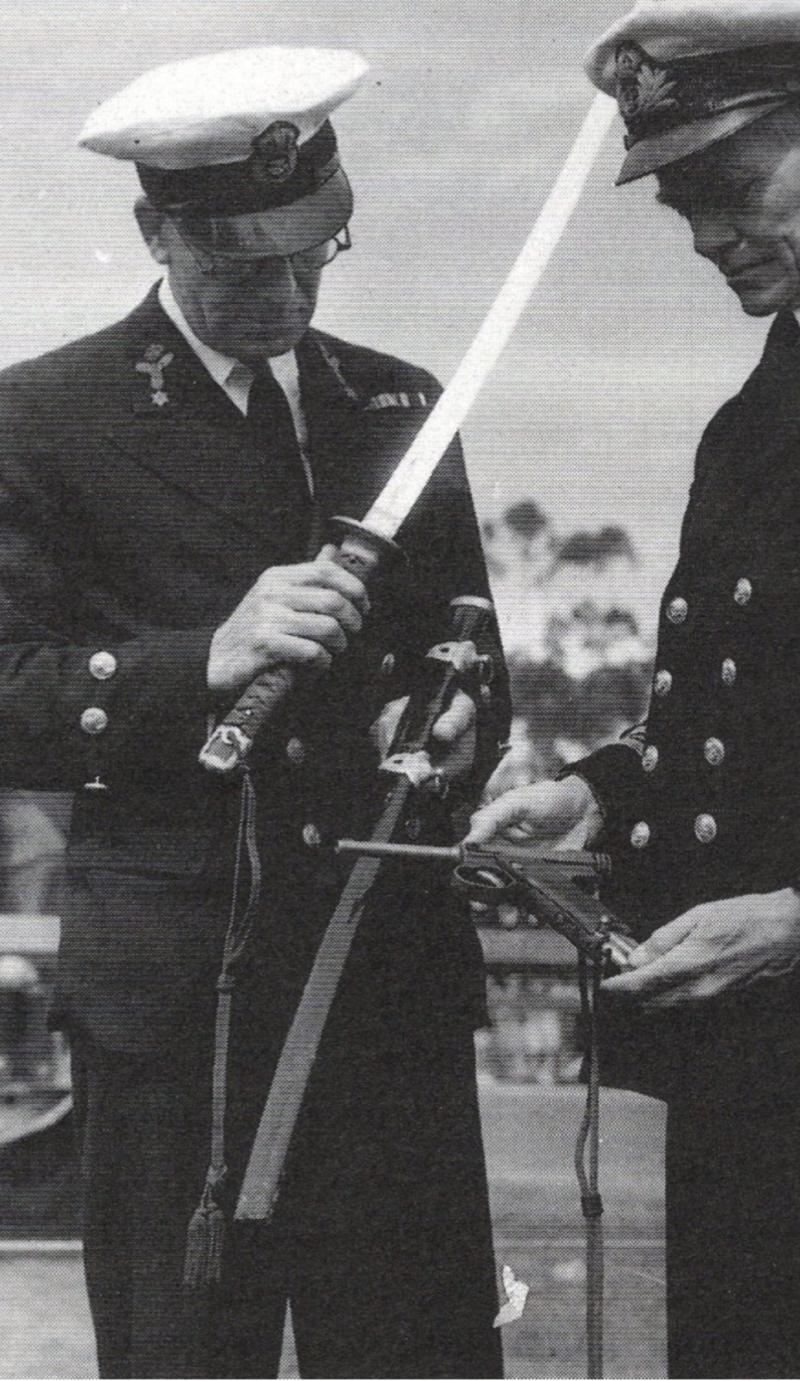
Photo of a Japanese Naval Officer’s sword type examined by commonwealth naval officers after capture.
Code: 26117