
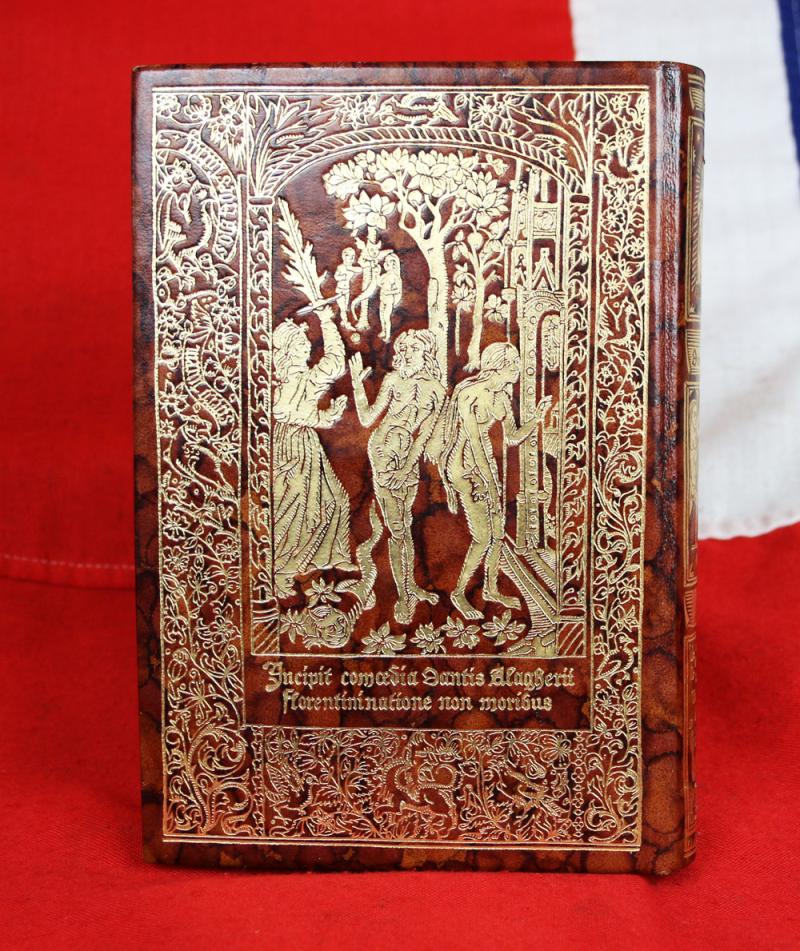
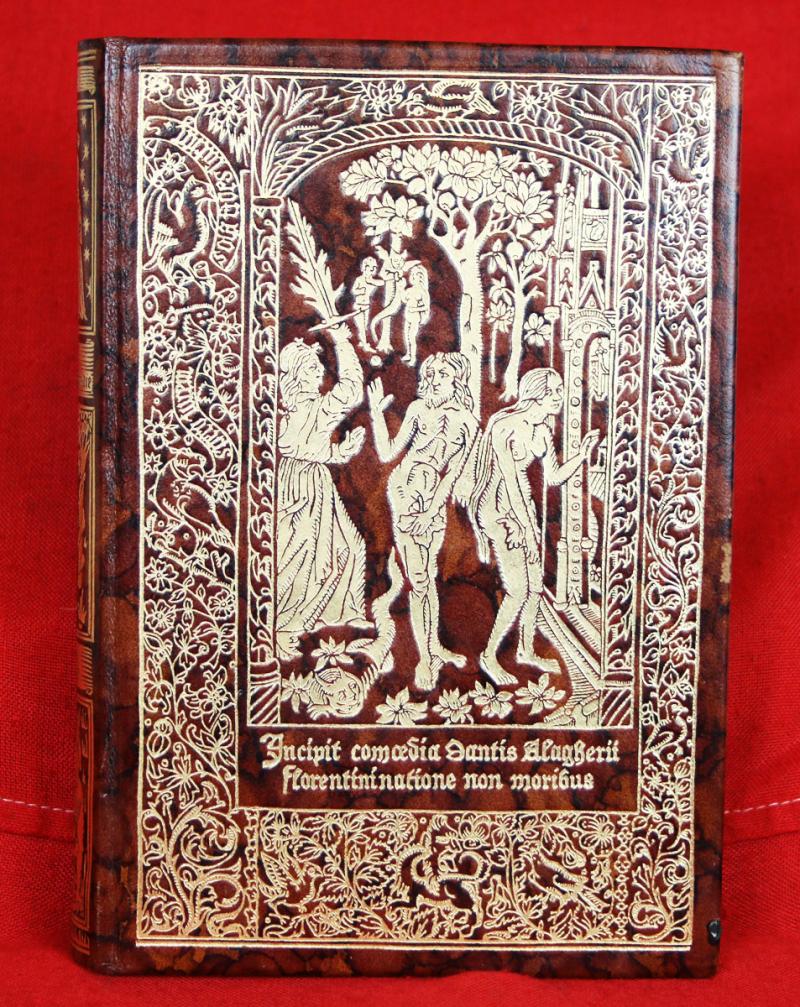
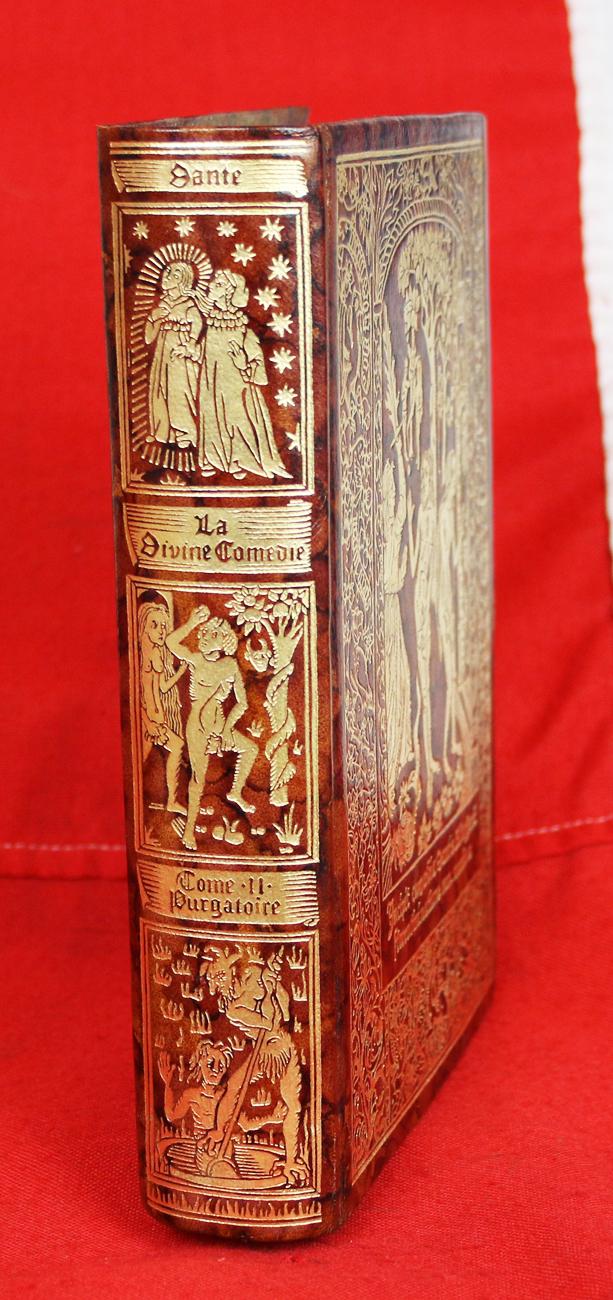
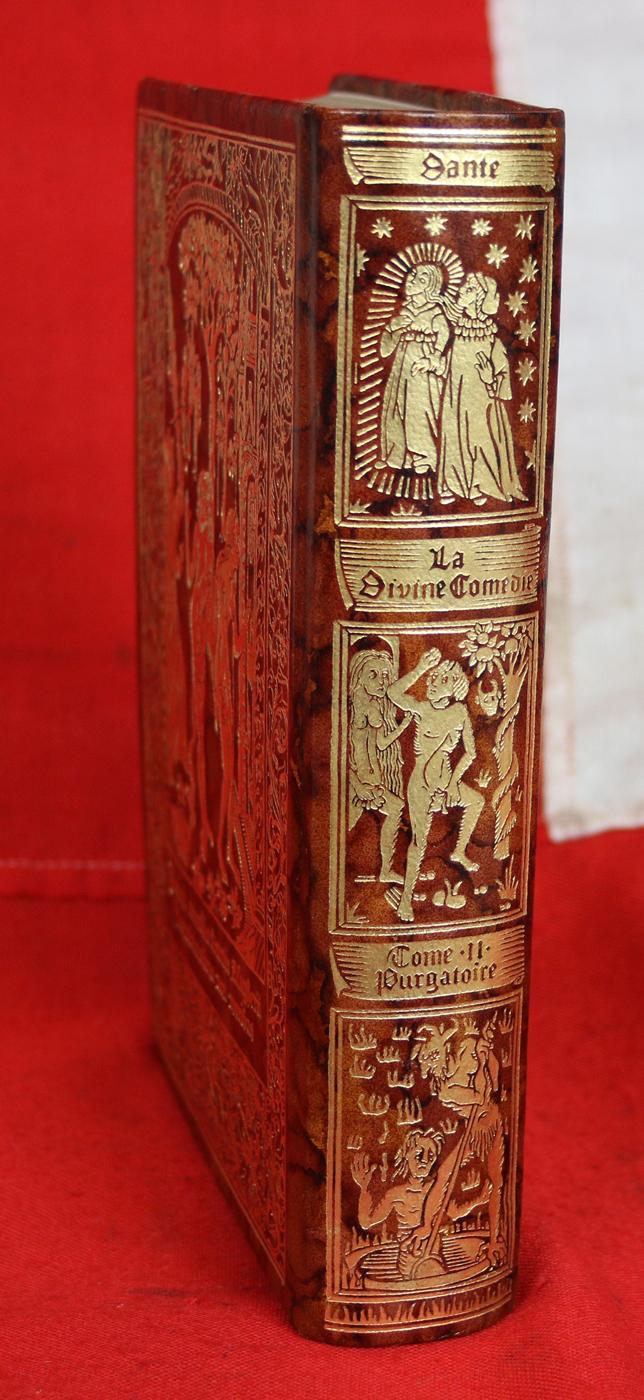
Superbly Bound, Leather & Tooled "Quattrocento" Style, In Gilt. A Richly Bound Special Parisien Reprint of 1971, of Dante Alighieri’s 14th Century 'La Divine Comédie',{ Divina Commedia } Purgatoire {Purgatory, Purgatorio}. Illustrations by Botticelli
Dante Alighieri’s 'Purgatory' from his masterpiece 'La Divine Comédie'. The perfect read while waiting to clear customs at Charles De Gaulle Airport. Hopefully, you may even get through the queue before the end
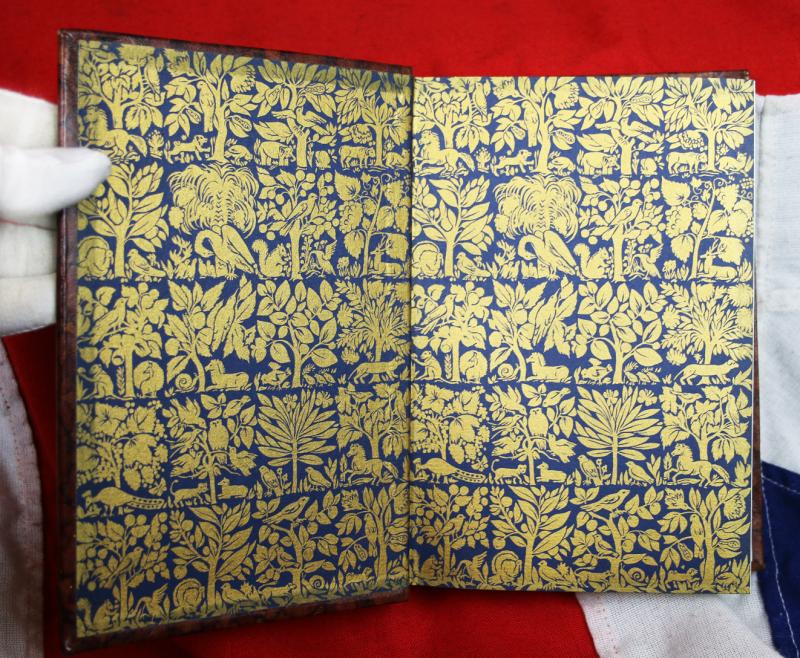
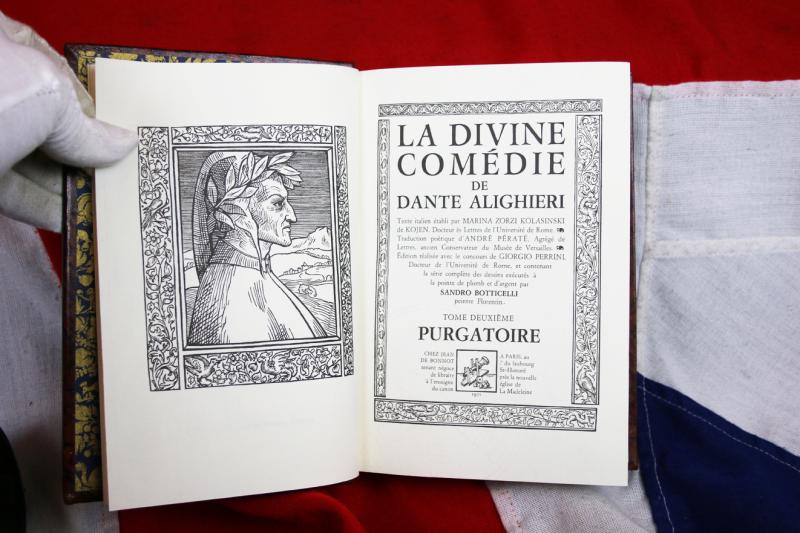
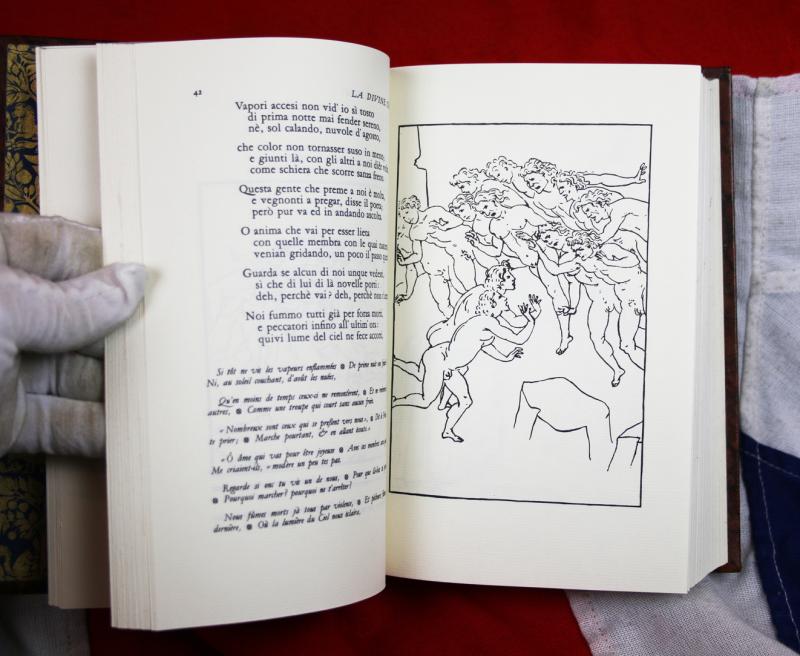
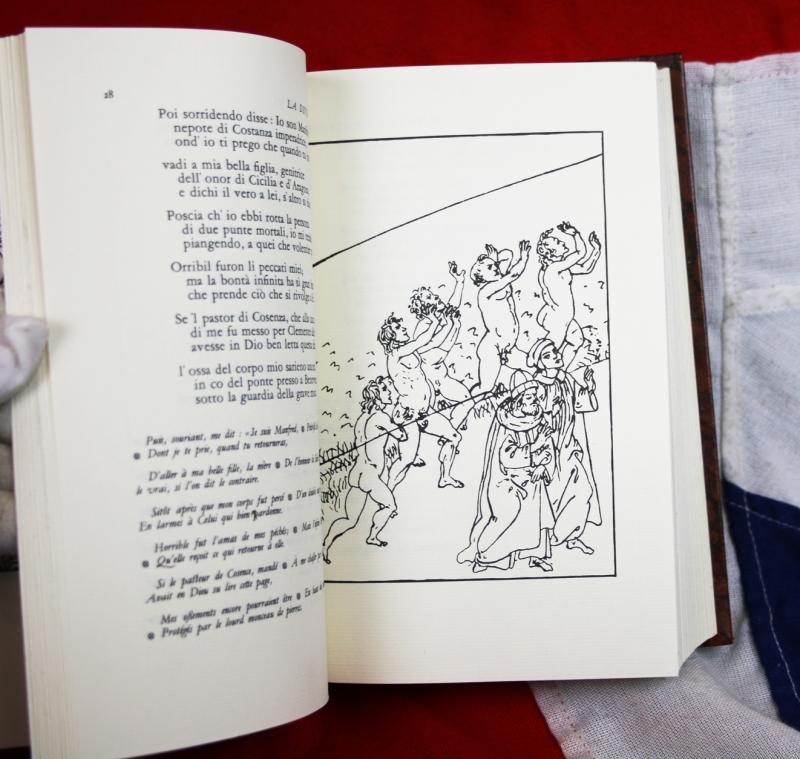
A bilingual French-Italian edition of Dante Alighieri’s La Divine Comédie, published by the Parisian publisher Jean de Bonnot in 1971. It features Sandro Botticelli's legendary illustrations and bound in "Quattrocento" style, richly gold decorated full leather.
Parallel Italian and French translations (by André Pératé, with the Italian text established by Marina Zorzi Kolasinski de Kojen) Contains reproductions of Sandro Botticelli's celebrated lead and silver-point drawings. Features publisher's full tawny or marbled leather (plein cuir), with gold tooling in the "Quattrocento" style on the spines and covers, gilt top edges, and an attached ribbon bookmark.
Dante Alighieri's Epic Poem written between 1308 and 1321, this narrative poem is considered the cornerstone of Italian literature and a masterpiece of Western civilization.
It follows Dante himself (guided by the Roman poet Virgil, and later his muse Beatrice) through the three realms of the afterlife:
Inferno (Hell),
Purgatorio (Purgatory),
and Paradiso (Paradise).
The poem features 100 cantos in total and is known for its intricate numerical and symbolic structures, deeply intertwined with medieval European philosophy, theology, and politics
It has heavily shaped modern perceptions of the Christian afterlife and inspired generations of artists, sculptors, and writers.
The Divine Comedy { Divina Commedia } is an Italian narrative poem by Dante Alighieri, begun c. 1308 and completed c. 1321, shortly before the author's death. It is widely considered the pre-eminent work in Italian literature and one of the greatest works of Western literature. The poem's imaginative vision of the afterlife is representative of the medieval worldview as it existed in the Western Church by the 14th century. It helped establish the Tuscan language, in which it is written, as the standardized Italian language.
The poem explores the condition of the soul following death and portrays a vision of divine justice, in which individuals receive appropriate punishment or reward based on their actions. It describes Dante's travels through Hell, Purgatory, and Heaven. Allegorically, the poem represents the soul's journey towards God, beginning with the recognition and rejection of sin (Inferno), followed by the penitent Christian life (Purgatorio), which is then followed by the soul's ascent to God (Paradiso). Dante draws on medieval Catholic theology and philosophy, especially Thomistic philosophy derived from the Summa Theologica of Thomas Aquinas.
Code: 26109
65.00 GBP