
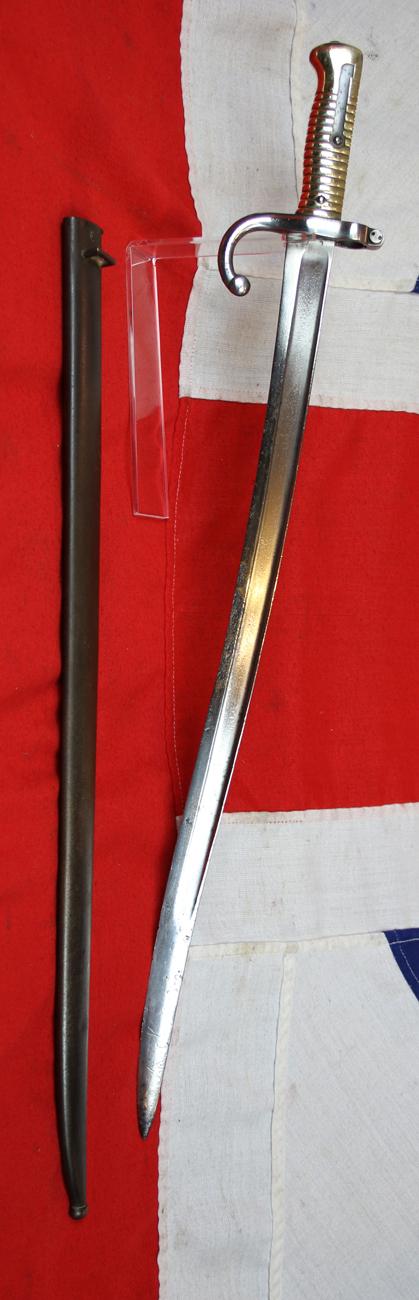
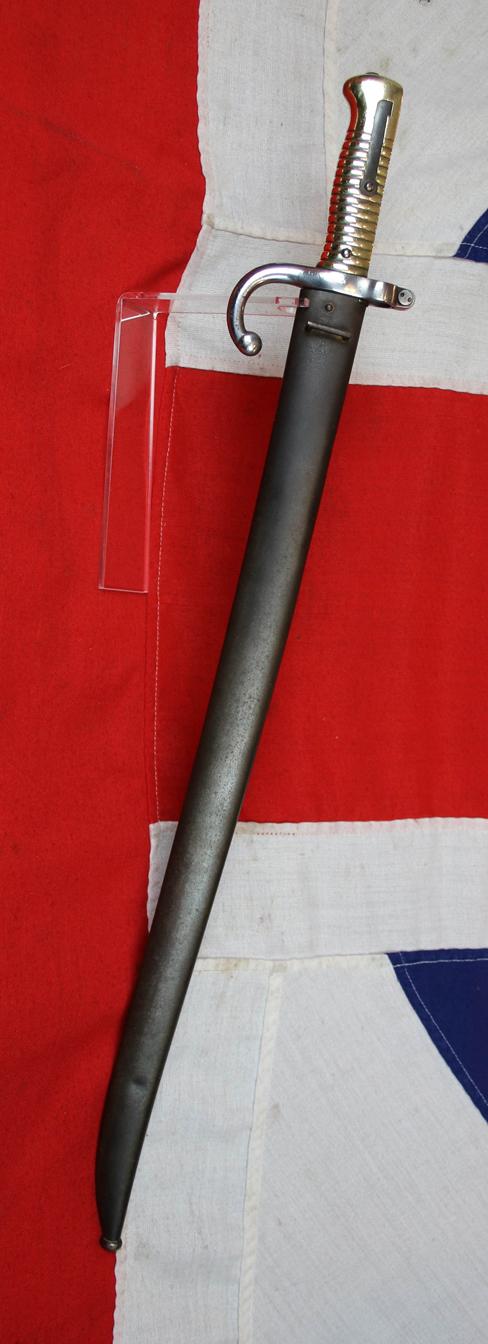

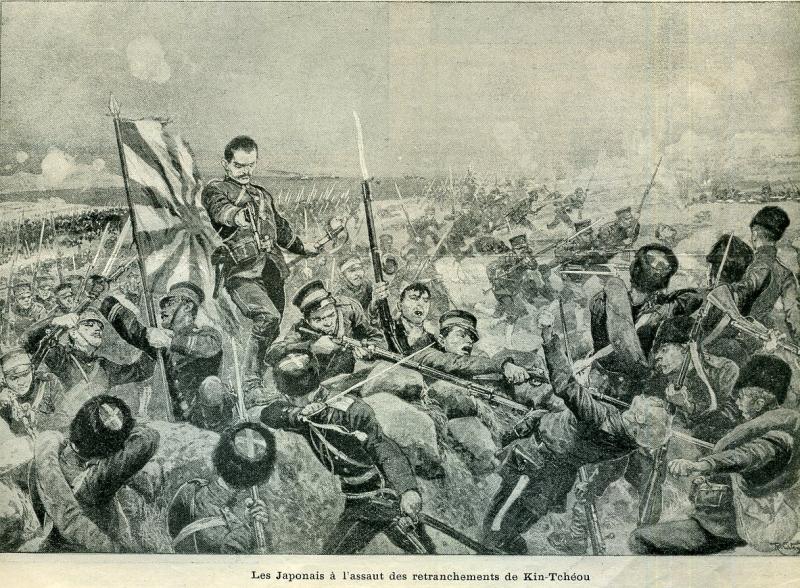
A Superb Later 19th Century French Chassepot M1866 Sword Bayonet, Post Franco Prussian War Issue, Manufactured at the Armoury of St Etienne. Japanese Purchase Import Used In The Japanese Russian War 8 February 1904 – 5 September 1905
Stunning example, with very good steel and brass, manufactured at the French arsenal at St Etienne to mount upon the service issue Chassepot rifle. Acquired by us from an exclusive high quality and rare service use bayonet collection, and this bayonet was bought by the collector in Japan as one of the rare survivors after service in the Russian- Japanese War, {as well as his Enfield Yataghan bayonets bought by Japan from America after the Civil War}. Although by the time of the war the Japanese generally used the type 22 Murata, some naval land troops were still in service with the 1880's French Chassepot-Murata conversions with Chassepot bayonets.
The Russo-Japanese War (8 February 1904 – 5 September 1905) was fought between the Russian Empire and the Empire of Japan over rival imperial ambitions in Manchuria and the Korean Empire. The major land battles of the war were fought on the Liaodong Peninsula and near Mukden in Southern Manchuria, with naval battles taking place in the Yellow Sea and the Sea of Japan.
Its inventor was, Antoine Alphonse Chassepot, and it became the French service weapon in 1866. It was first used at the battlefield at Mentana, November 1867, where it inflicted severe losses on Garibaldi's troops. The event was reported at the French Parliament: "Les Chassepots ont fait merveille!", {The Chassepots did marvelous execution !} In the Franco-Prussian War (1870-1871) it proved greatly superior to the German Dreyse needle gun, outranging it by 2 to 1. Although it was a smaller caliber but the chassepot ammunition had more gunpowder and thus faster muzzle velocity. The Chassepots were responsible for most of the Prussian and other German casualties during the conflict. This is the most widely copied of all the sword bayonets. Many countries - including the United States, Egypt, Belgium, and Argentina - have manufactured or used very similar bayonets. The French model was designed to fit on the French Model 1866 Chassepot Rifled Infantry Musket (the musket was revolutionary in itself). It was manufactured from 1866 to about 1874 and was replaced by the French Model 1874 "Gras" Bayonet.
The bayonets are brass-hilted The crossguard is iron (steel) and has a screw-type tightening arrangement on the muzzle-ring. The lower quillon is a hooked "blade-breaker" type.
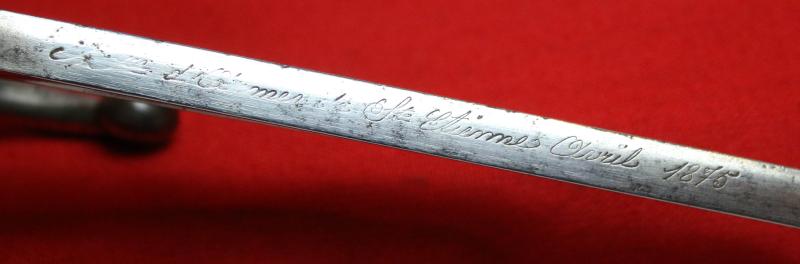
The blade is steel, single-edged, fullered (both sides), with a re-curved or "yataghan-shape." The blades marked on the back-edge (opposite the cutting edge) with the arsenal, month, and year of manufacture; this is done in engraved cursive fashion
Arsenals encountered may be such as Chatellerault, Mutzig, St. Etienne, Paris-Oudry, Tulle, and perhaps Steyr (not confirmed on the 1866). The French wars during the life-span of this bayonet were: French Intervention in Mexico (1861-1867);
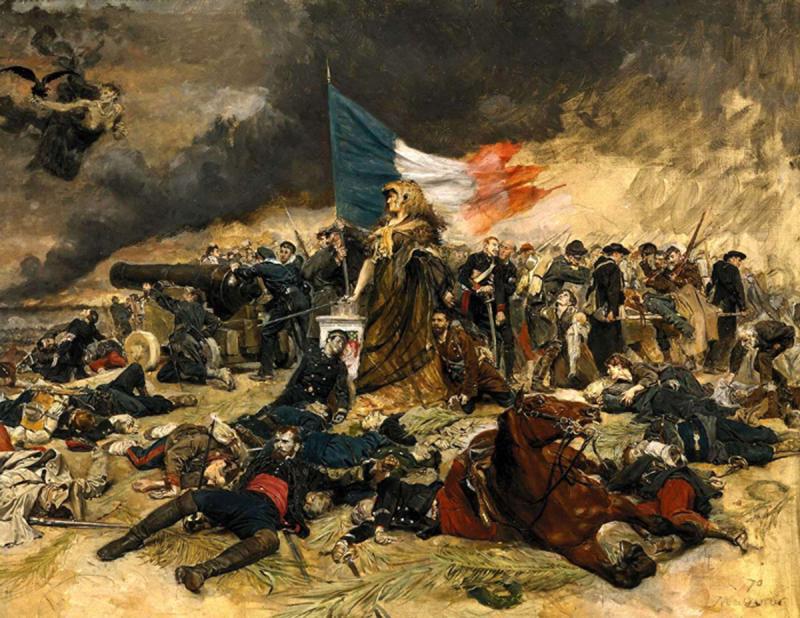
Franco-Prussian War (July 19, 1870 - May 10, 1871)
French Indo-China (1873-1874, 1882-1883);
Sino-French War (1883-1885);
Madagascar Wars (1883-1885, 1895);
1st Mandingo-French War (1883-1886);
1st Dahomeyan-French War (1889-1990);
2nd Dahomeyan-French War (1892-1894);
Franco-Siamese War of (1893)
2nd Mandingo-French War (1894-1895);
Conquest of Chad (1897-1914);
3rd Mandingo-French War (1898);
Japanese Russian War ( 8 February 1904 – 5 September 1905)
Moroccan War (1907-1912);
The Wadai War (1909-1911);
World War I (early).
These bayonets were widely copied and used by many countries - including the United States, Belgium, and Germany. Many of the actual French-marked bayonets can be found with German manufactured blades. It is believed some of these were used during the American Civil War when many European arsenals were emptied of their surplus arms.
These bayonets are the French Model 1866 "Chassepot" Bayonet.
The crossguard are iron (steel) and with a "cock's comb" muzzle-ring finial. The lower quillon is a hooked "blade-breaker" type.
The blade is steel, single-edged, fullered (both sides), with a re-curved or "yataghan-shape." One blade is marked on the back-edge (opposite the cutting edge) with the arsenal, month, and year of manufacture; this is done in engraved cursive fashion.
France sold large quantities of Chassepot rifles to Japan during the late 19th century, which Japan used alongside other imported arms, eventually leading to their conversion and adaptation into the indigenous Murata rifle, Japan's first domestically produced standard infantry rifle. Japan acquired Chassepots as part of broader efforts to modernize its military after opening from isolation, initially using them with their needle-fire system before converting them for metallic cartridges
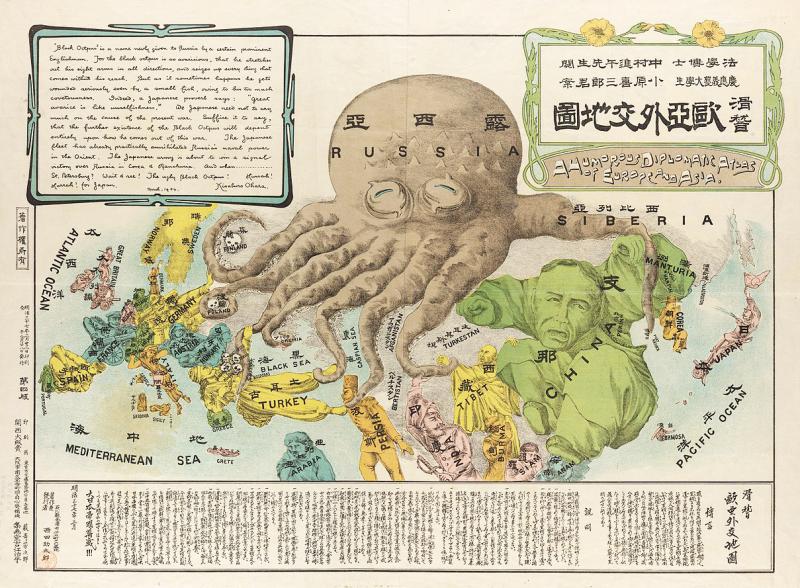
Picture in the gallery {photo 7} of an anti-Russian satirical map that was produced by a Japanese student at Keio University during the Russo–Japanese War. It follows the design used for a similar map first published in 1877.
Code: 26092
290.00 GBP