
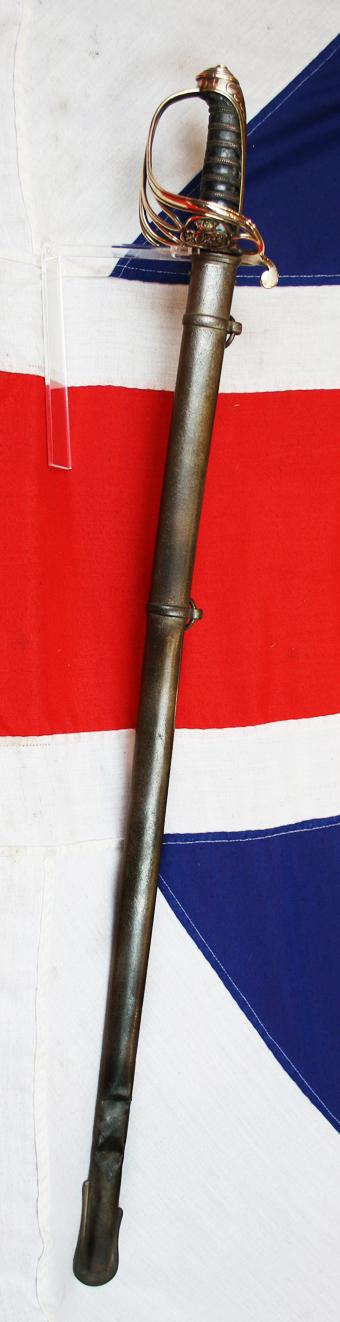
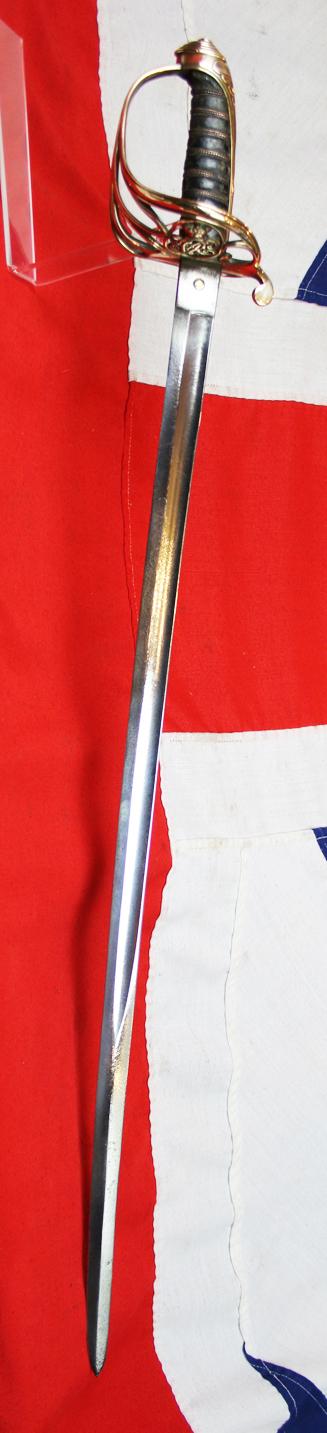
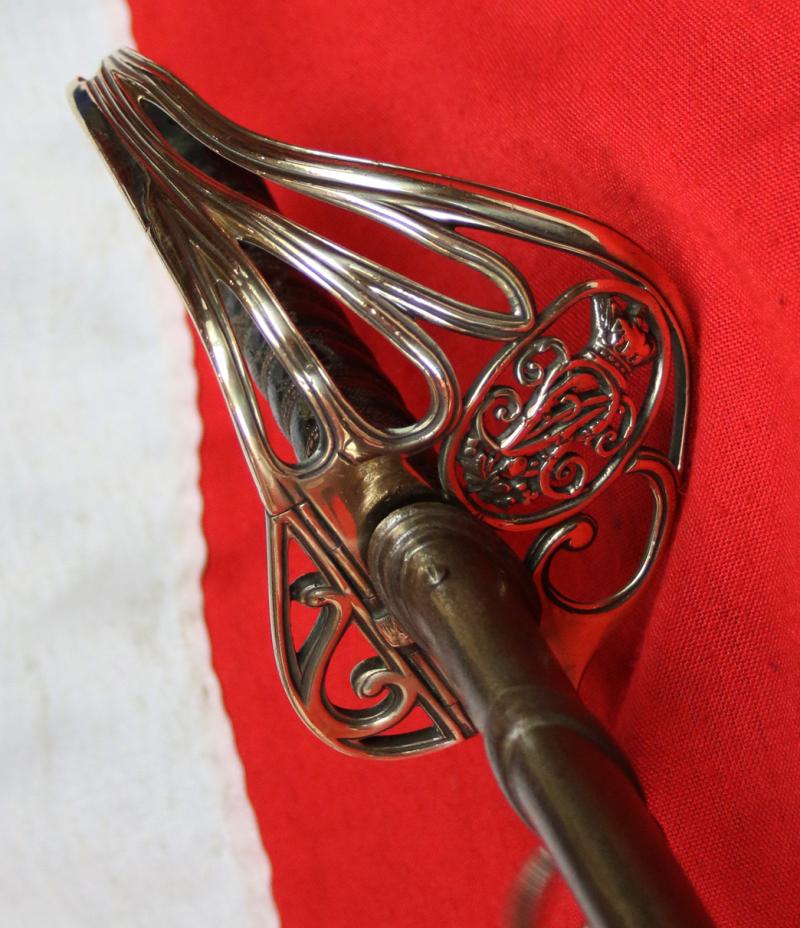
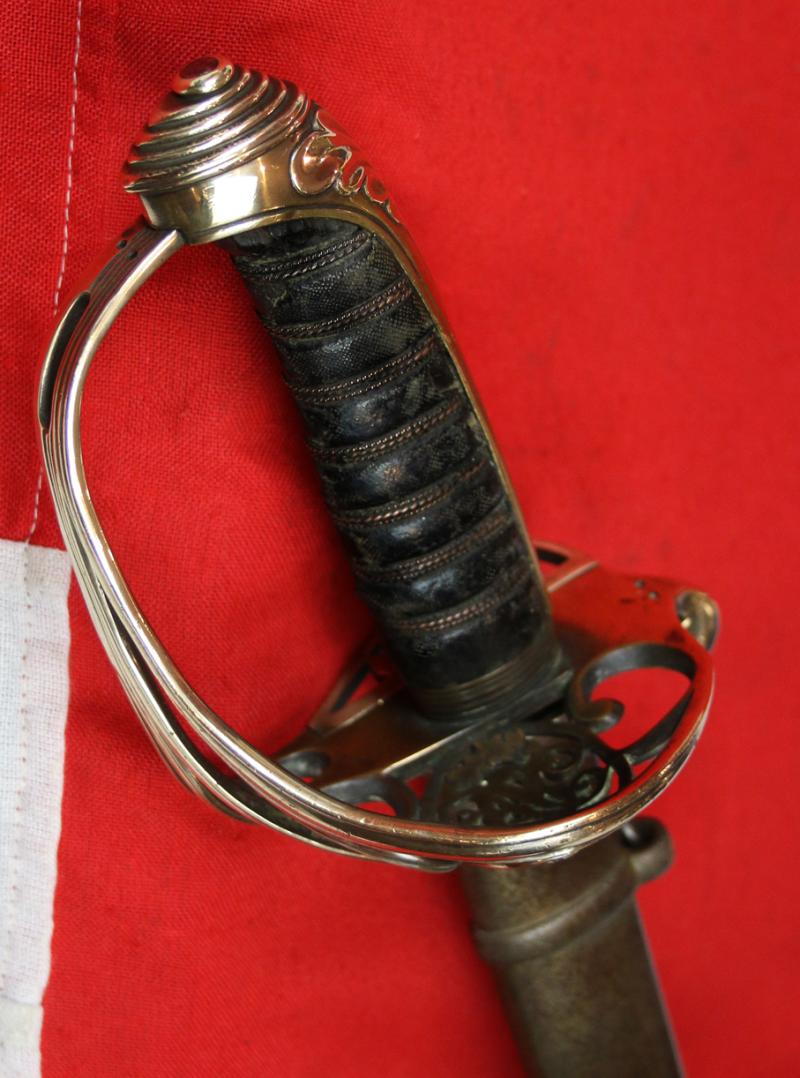
A Crimean & Zulu War Original 1821/45 Pattern Victorian Wilkinson Infantry Officer’s Deluxe Grade Combat Sword. Traditional Gothic Style Pierced Half Basket Hilt With Queen Victoria’s Cypher. Exactly As Worn By Lt Bromhead. Of a 57th Regt. Of Foot Officer
Commissioned from Wilkinson sword in late 1854, delivered in early 1855, for an officer of the 57th Foot, the West Middlesex Regiment, Lt. Alexander F. A. Slade, while serving in the Crimean War, at Sebastopol, then, much later it was further used in the regiment in the Zulu War, in the Battle of Gingindlovu. Lt Slade later became a Captain {by purchase} in 1859, while then serving in India. We acquired the sword with a complete set of Kinglake, A.W., “The Invasion of the Crimea: Its Origin, and an Account of its Progress to the Death of Lord Raglan”. Including Ist Editions. See them for sale in the book section.
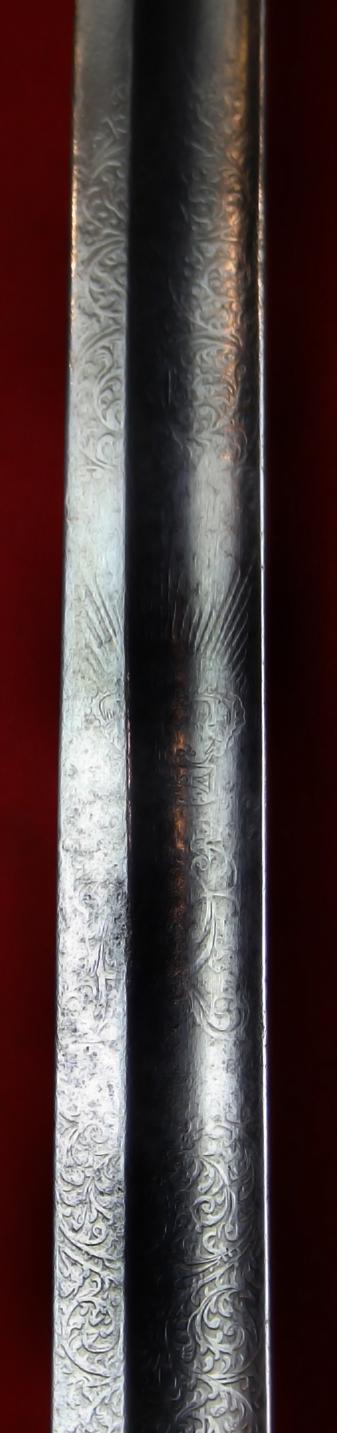
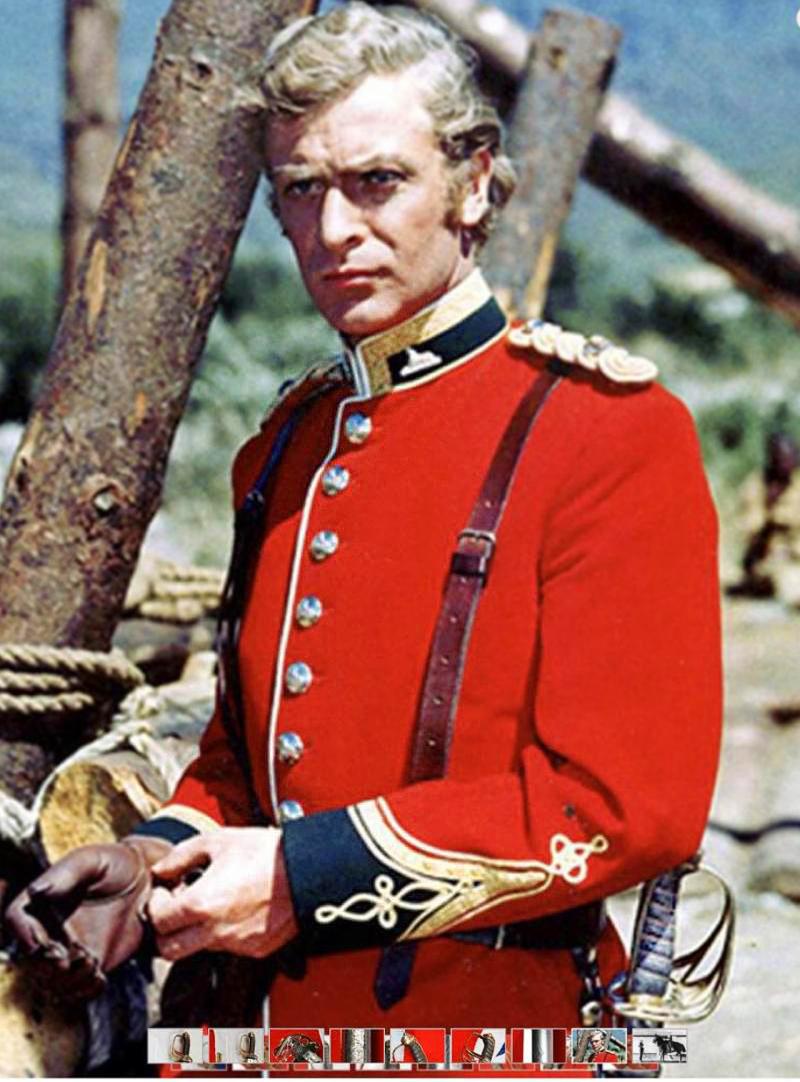
Exactly the same form of sword used by Lt Bromhead in the Zulu war, as was portrayed and carried in the film 'Zulu' by Sir Michael Caine. A fully etched blade, bearing the cypher and crest of H.M. Queen Victoria, traditional Gothic pieced half basket hilt, combined combat-dress steel scabbard. Combat weight, fully etched VR Crown blade with Wilkinson monogramme
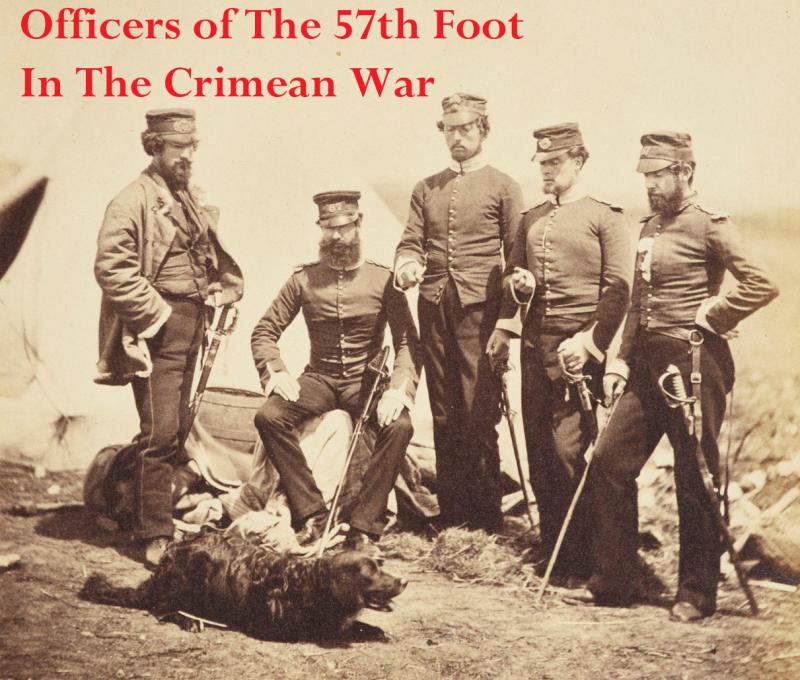
In the gallery is photograph of a group of five officers from the 57th Regiment. The officers are arranged in a line, with one man seated and the rest standing. All are wearing military uniform and are carrying the very same swords. A dog lies on the ground in front of them and there is a tent behind. It is perfectly possible Lt. Slade is one of the officer's within the photo.
The 57th Regiment served during the Crimean War, and whilst there were photographed on a number of occasions by Roger Fenton {see photo}.
The 57th (West Middlesex) Regiment of Foot: Participated in major Crimean battles (Alma, Inkerman, Sevastopol) and also served in the Zulu War.
Arrival: The 57th landed in Natal in March 1879, joining the effort to relieve the besieged garrison at Eshowe.
Battle of Gingindlovu (April 2, 1879): They formed part of the relief force, holding the laager's right flank and repelling attacks, earning commendation from Lord Chelmsford for their steadiness under intense fire.
Second Invasion: Afterward, they marched with Crealock's Division, advancing along the coast, burning Zulu homesteads, and forming part of the force that occupied Ulundi.
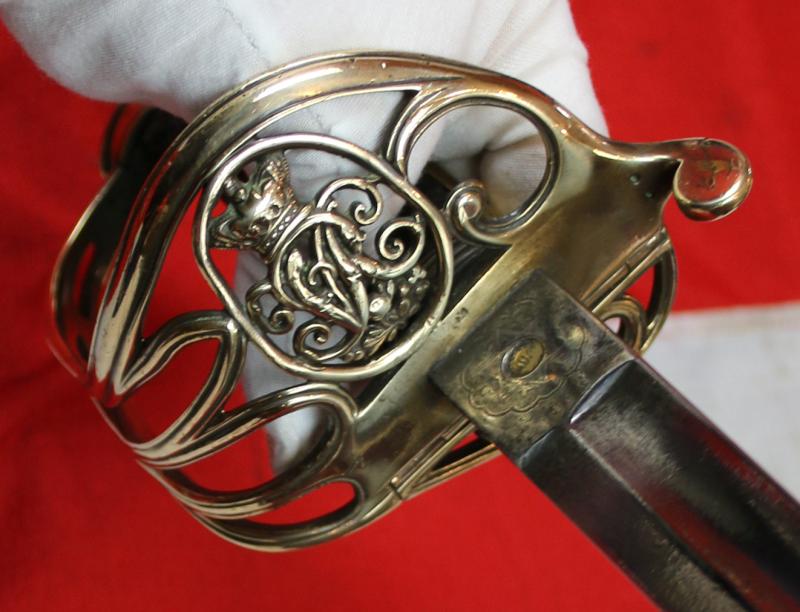
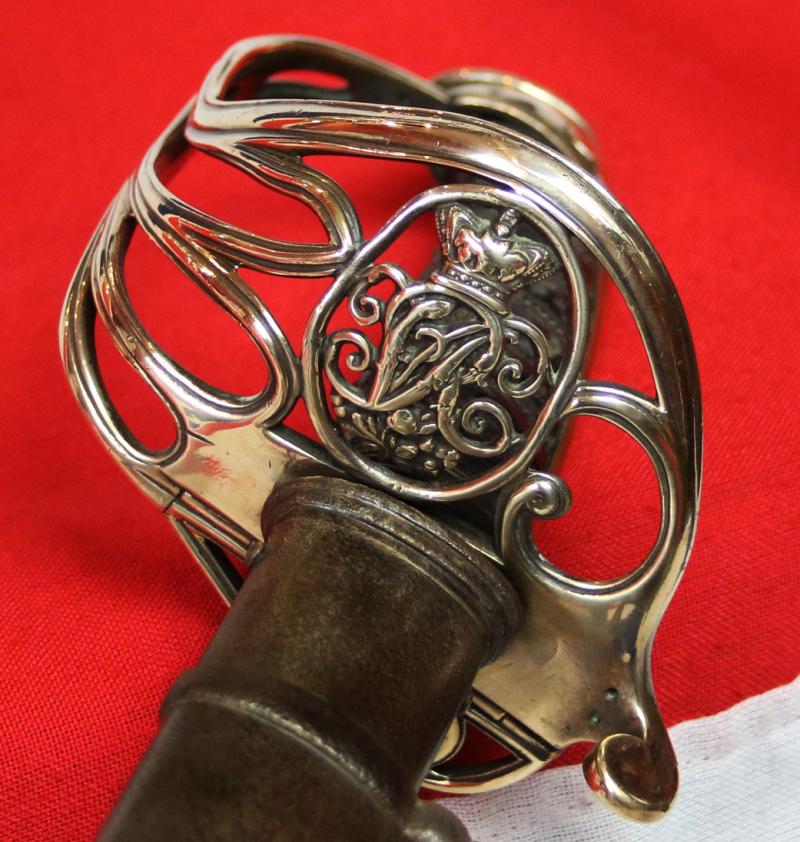
Traditional gilt hilt of Gothic form, pierced with Queen Victoria's cypher
Photo in the gallery from the film "Zulu" and Michael Caine as Bromhead with his sword for information only not included.
The 1822/45 pattern of sword has a Gothic hilt and Queen Victoria's cypher within the pierced oval centre. This sabre would have seen service by an officer at the very cusp of England's Glory of Empire. A sabre fit to represent the age and used throughout the Zulu War and numerous other great and famous conflicts of the Victorian era. The 1822 pattern infantry with it's elegant pierced Gothic style hilt, and the graceful monogram of Queen Victoria make it one of the most attractive patterns of sword ever used by British Army officers, and it was a pattern that saw service for almost 80 years. The blade is by Henry Wilkinson, who developed in 1845 pattern blade. Many swords of British officers were continually used for many decades, until the 1890's in fact, as swords were quite often passed on from father to son, down the generations, in many military families. During the period of this sword's use, two of most famous pair of engagements in the British army's history, during the last quarter of the 19th century, happened over two consecutive days. Curiously, it is fair to say that these two engagements, by the 24th Foot, against the mighty Zulu Impi, are iconic examples of how successful or unsuccessful leadership can result, in either the very best conclusion, or the very worst. And amazingly, within only one day of each other. The 1879 Zulu War, for the 24th Foot, will, for many, only mean two significant events, Isandlhwana and Rorke's Drift. This is the brief story of the 24th Foot in South Africa; In 1875 the 1st Battalion arrived in Southern Africa and subsequently saw service, along with the 2nd Battalion, in the 9th Xhosa War in 1878. In 1879 both battalions took part in the Zulu War, begun after a British invasion of Zululand, ruled by Cetshwayo. The 24th Foot took part in the crossing of the Buffalo River on 11 January, entering Zululand. The first engagement (and the most disastrous for the British) came at Isandhlwana. The British had pitched camp at Isandhlwana and not established any fortifications due to the sheer size of the force, the hard ground and a shortage of entrenching tools. The 24th Foot provided most of the British force and when the overall commander, Lord Chelmsford, split his forces on 22 January to search for the Zulus, the 1st Battalion (5 companies) and a company of the 2nd Battalion were left behind to guard the camp, under the command of Lieutenant-Colonel Henry Pulleine (CO of the 1/24th Foot).
The Zulus, 22,000 strong, attacked the camp and their sheer numbers overwhelmed the British. As the officers paced their men far too far apart to face the coming onslaught. During the battle Lieutenant-Colonel Pulleine ordered Lieutenants Coghill and Melvill to save the Queen's Colour—the Regimental Colour was located at Helpmakaar with G Company. The two Lieutenants attempted to escape by crossing the Buffalo River where the Colour fell and was lost downstream, later being recovered. Both officers were killed. At this time the Victoria Cross (VC) was not awarded posthumously. This changed in the early 1900s when both Lieutenants were awarded posthumous Victoria Crosses for their bravery. The 2nd Battalion lost both its Colours at Isandhlwana though parts of the Colours—the crown, the pike and a colour case—were retrieved and trooped when the battalion was presented with new Colours in 1880.
The 24th had performed with distinction during the battle. The last survivors made their way to the foot of a mountain where they fought until they expended all their ammunition and were killed. The 24th Foot suffered 540 dead, including the 1st Battalion's commanding officer.
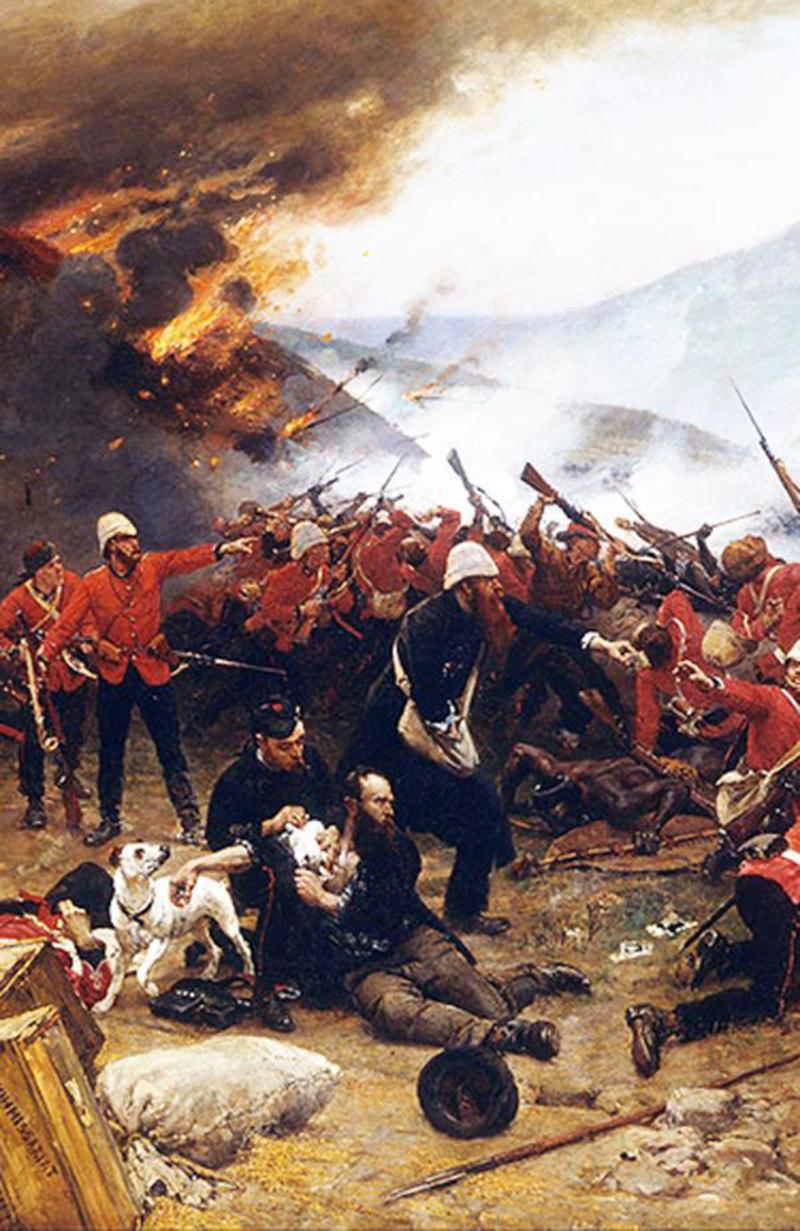
After the battle, some 4,000 to 5,000 Zulus headed for Rorke's Drift, a small missionary post garrisoned by a company of the 2/24th Foot, native levies and others under the command of Lieutenant Chard, Royal Engineers, the most senior officer of the 24th present being Lieutenant Gonville Bromhead. Two Boer cavalry officers, Lieutenants Adendorff and Vane, arrived to inform the garrison of the defeat at Isandhlwana. The Acting Assistant Commissary James Langley Dalton persuaded Bromhead and Chard to stay and the small garrison frantically prepared rudimentary fortifications.
The Zulus first attacked at 4:30 pm. Throughout the day the garrison was attacked from all sides, including rifle fire from the heights above the garrison, and bitter hand-to-hand fighting often ensued. At one point the Zulus entered the hospital, which was stoutly defended by the wounded inside until it was set alight and eventually burnt down. The battle raged on into the early hours of 23 January but by dawn the Zulu Army had withdrawn. Lord Chelmsford and a column of British troops arrived soon afterwards. The garrison had suffered 15 killed during the battle (two died later) and 11 defenders were awarded the Victoria Cross for their distinguished defense of the post, 7 going to soldiers of the 24th Foot.
The stand at Rorke's Drift was immortalised in the 1964 movie Zulu, and Michael Caine is carrying this very same pattern of sword.
Overall in nice condition, triple wire bound sharkskin grip, steel combat scabbard with light surface old russetting and two small combat dents at the bottom near the shoe. Blade nicely royal etched with old polished out bright surface russetting.
Code: 26087