
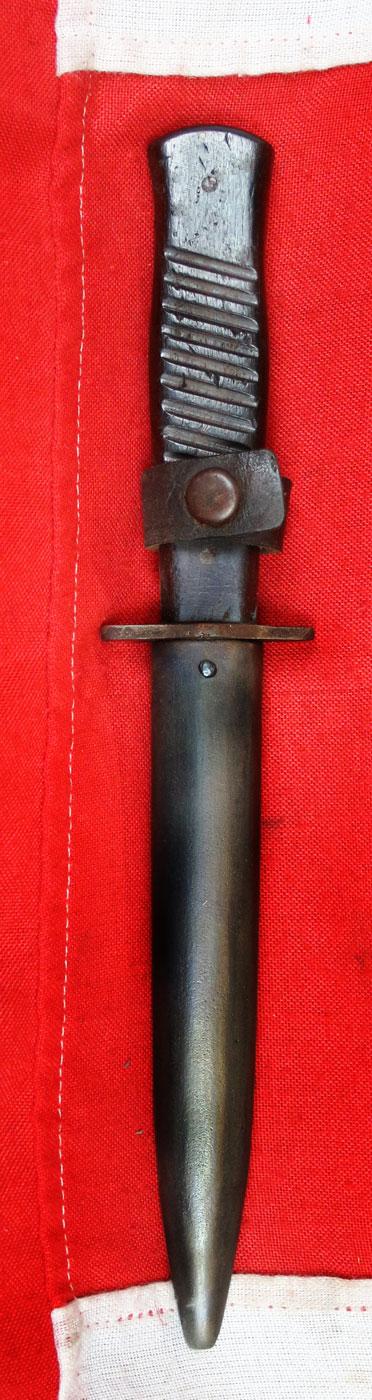
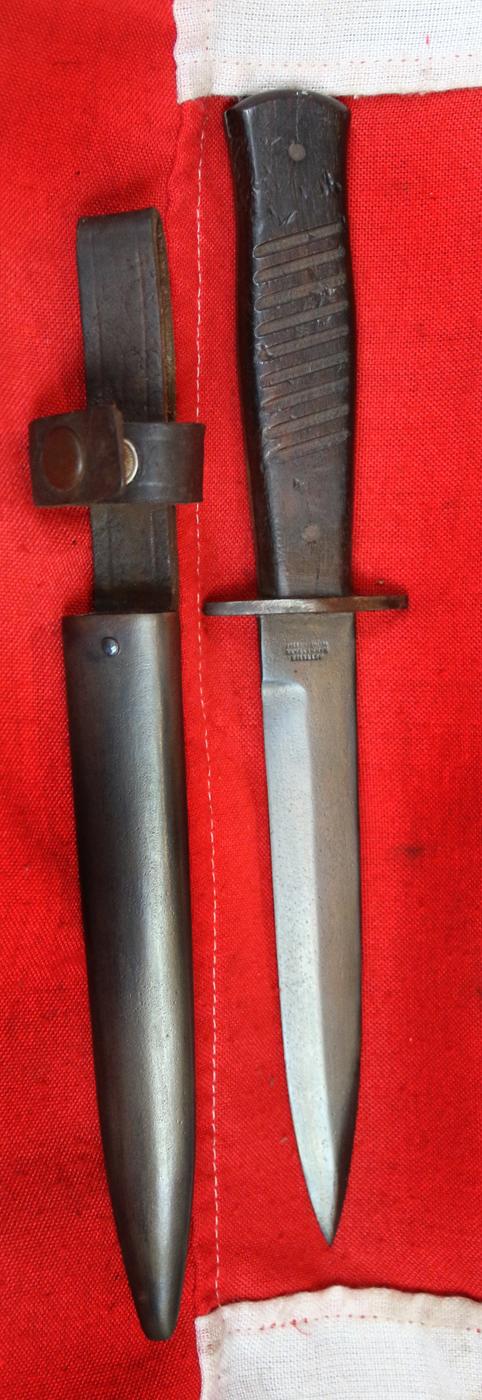
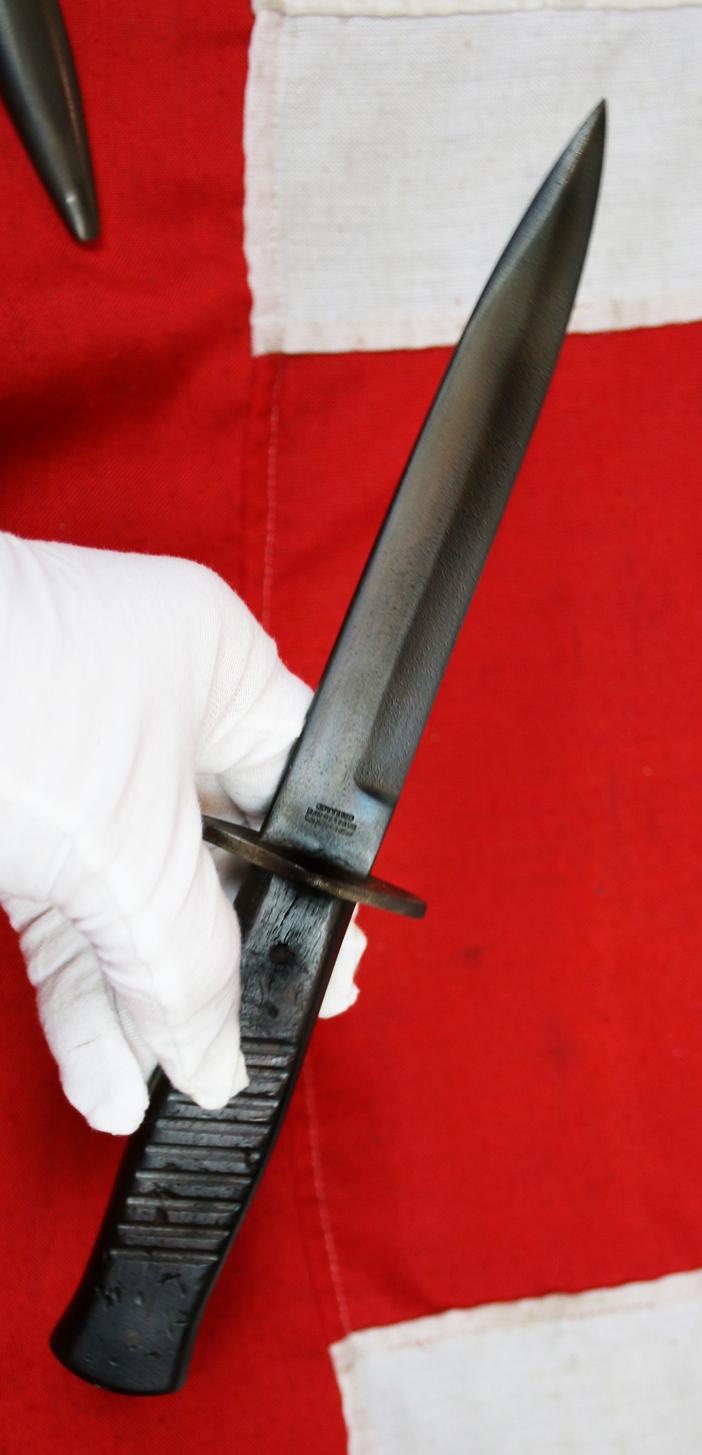
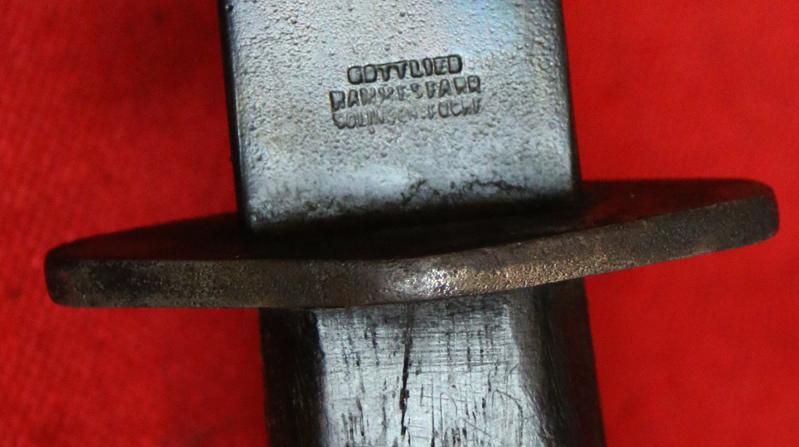
A Superb WW1 Imperial German Trench Knife Nahkampfmesser Gotlieb of Hammesfahr. Made By “Gottlieb Hammesfahr, Solingen-Foche" Blade Reverse Bears a Small Crowned Inspection Stamp. Souvenir From The Battle of The Somme
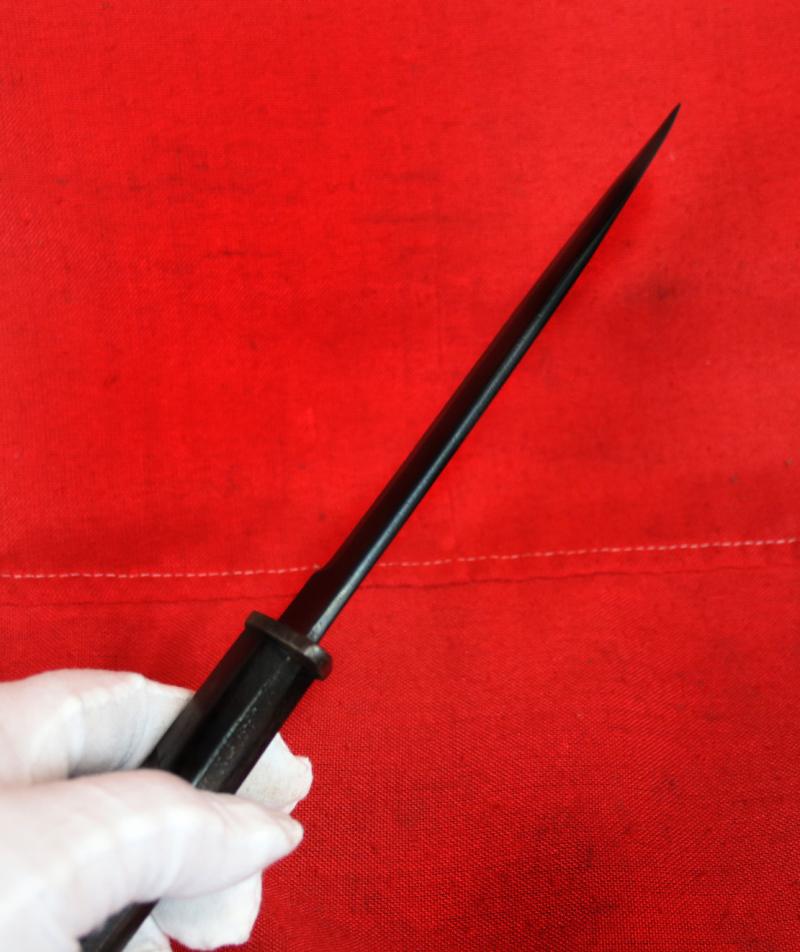
The hilt is fitted with ribbed {9 ribs} wooden grips, secured by steel rivets, with a steel crossguard. slightly rounded flat steel scabbard with rivietted leather belt frog and retaining button to the small grip strap. Single edged blackened steel blade with small return false edge at the tip. Maker marked and with imperial proof stamp.
Acquired with two officer's deluxe versions also from the Somme {sold separately}
Fine old blackened finish to all metal parts.
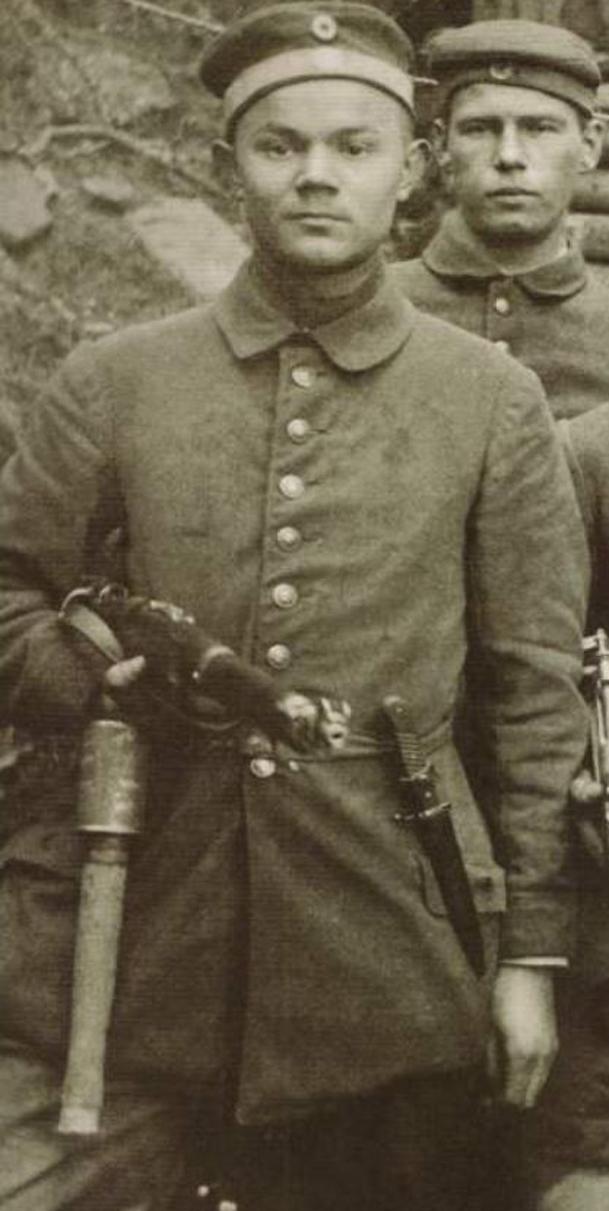
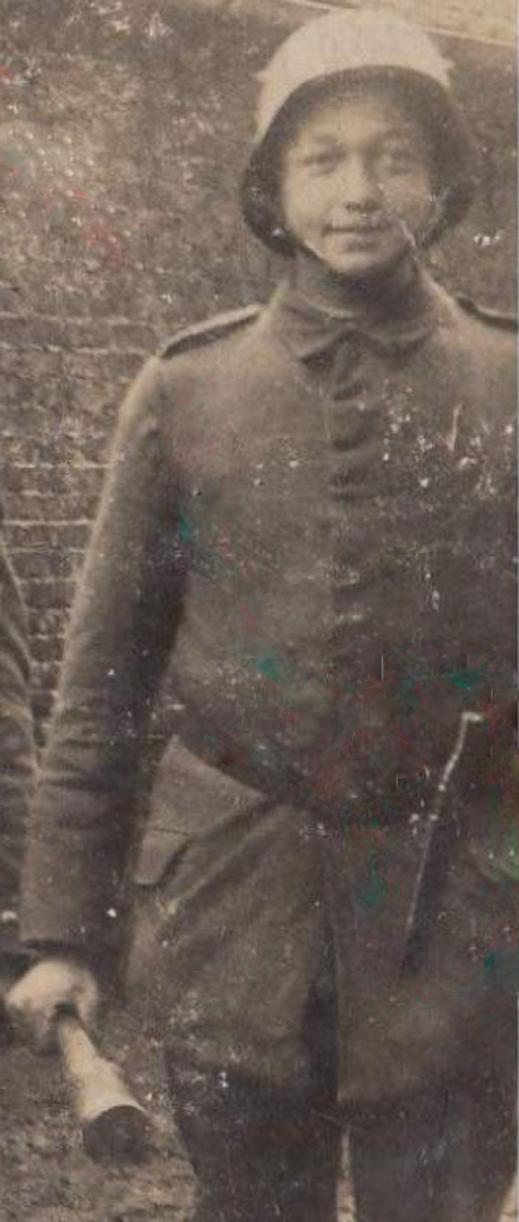
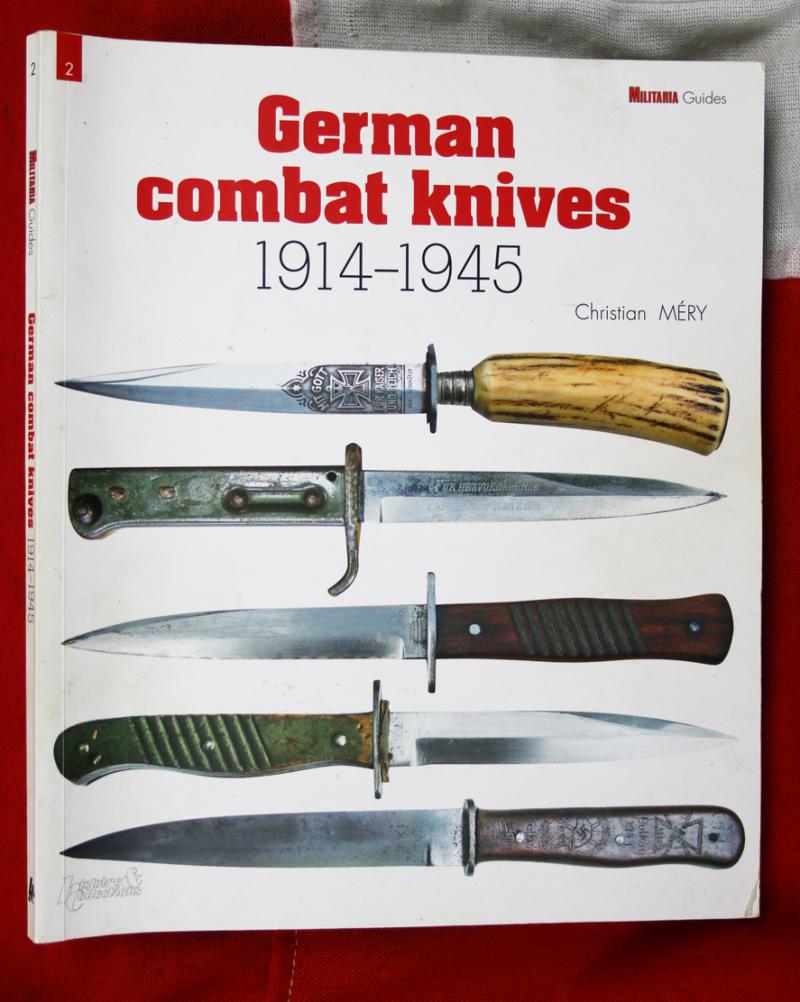
The German WW1 trench knife, or Nahkampfmesser, was a sturdy, general-purpose combat dagger issued to soldiers for close-quarters fighting, featuring typical slab wooden grips with grooves, a steel crossguard, and a metal scabbard with a leather hanger, though variations existed, including officer's daggers and converted barbed wire stakes, with manufacturers like Ernst Busch, Gotlieb and Clemen & Jung producing them.
Often single-edged with a false edge, around 6 inches long, though double-edged versions were also used. Typically wooden with distinctive diagonal grooves (often nine) for better purchase, secured by rivets.
A simple steel crossguard and pommel, providing balance and hand protection.
A flat, or rounded steel scabbard with a leather frog (hanger) for belt attachment, sometimes with a press stud.
Solingen-based companies like Ernst Busch and Clemen & Jung were major producers, Gotlieb a much rare maker, often marked with their names and an Imperial Crown.
The most functional type was a robust, utilitarian knife for infantry.
However, Officer's daggers were more elaborate, privately purchased versions, with staghorn or deerhoof grips, nickel fittings
Soldiers sometimes adapted steel barbed-wire stakes into crude stabbing weapons after encountering French "nail" grenades.
These knives filled the need for a reliable hand weapon in the brutal close-quarters combat of trench raiding, where reloading a rifle was difficult, alongside tools like trench clubs and entrenching tools
Traces to old, light, surface russetting on the blade.
Trench warfare is a type of land warfare using occupied lines largely comprising military trenches, in which combatants are well-protected from the enemy's small arms fire and are substantially sheltered from artillery. It became archetypically associated with World War I (1914–1918), when the Race to the Sea rapidly expanded trench use on the Western Front starting in September 1914.1
Trench warfare proliferated when a revolution in firepower was not matched by similar advances in mobility, resulting in a grueling form of warfare in which the defender held the advantage. On the Western Front in 1914–1918, both sides constructed elaborate trench, underground, and dugout systems opposing each other along a front, protected from assault by barbed wire. The area between opposing trench lines (known as "no man's land") was fully exposed to artillery fire from both sides. Attacks, even if successful, often sustained severe casualties.
The development of armoured warfare and combined arms tactics permitted static lines to be bypassed and defeated, leading to the decline of trench warfare after the war. Following World War I, "trench warfare" became a byword for stalemate, attrition, sieges, and futility in conflict
Code: 26078