
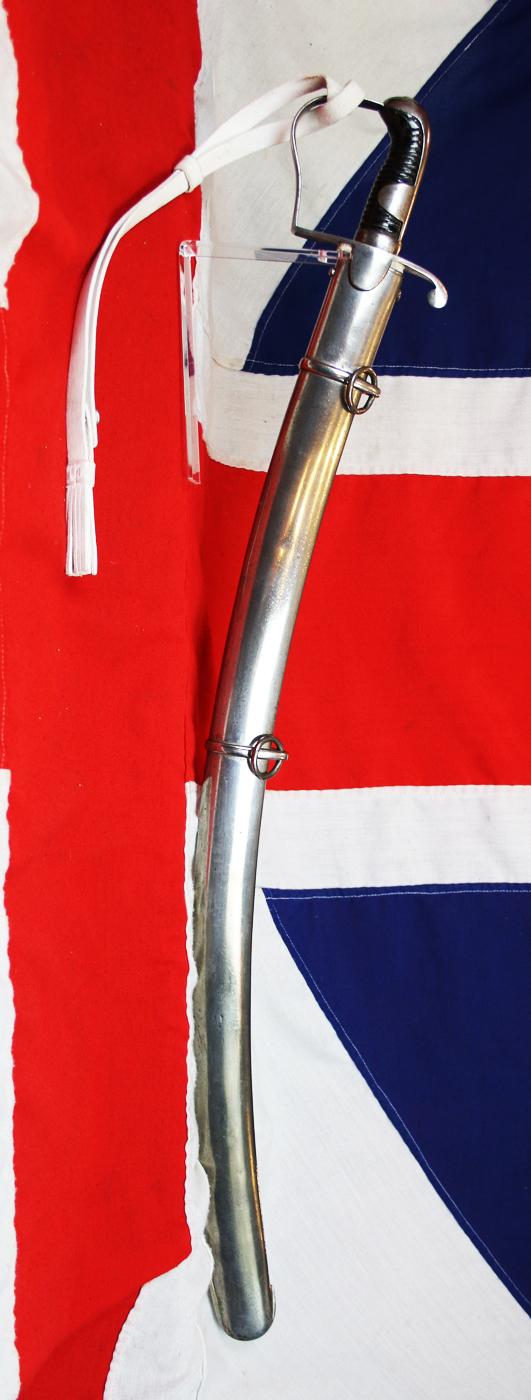
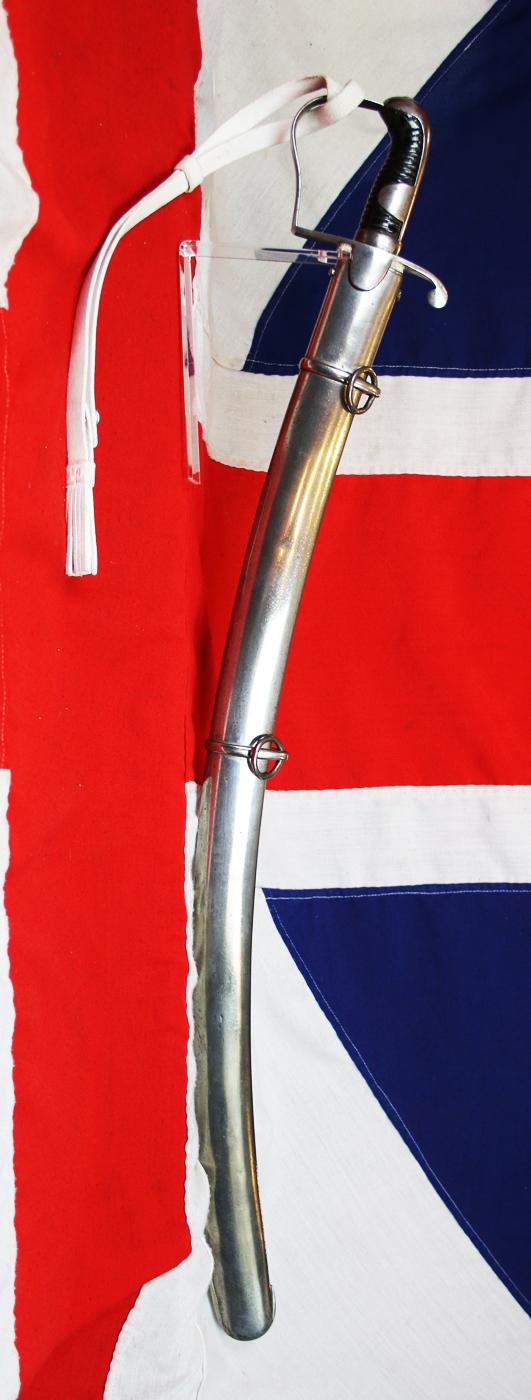
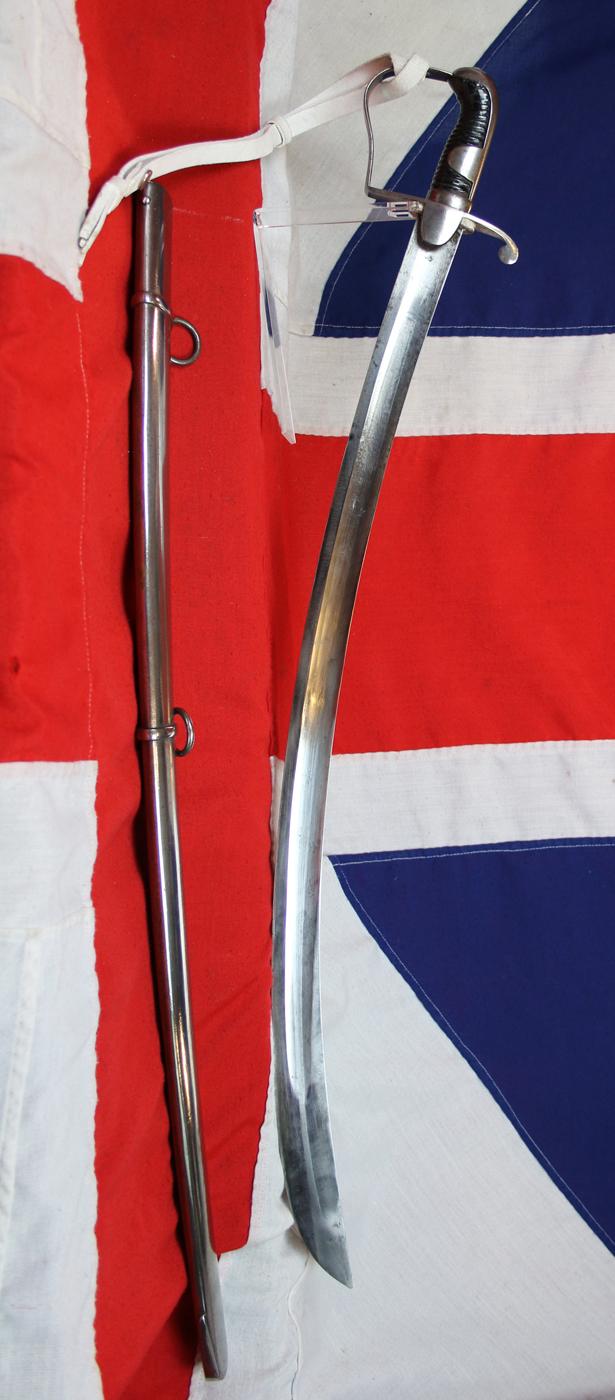
A Fabulous, Museum Grade, Front Line Rank Issue, Napoleonic Wars and Waterloo 1796 Light Dragoon Trooper's Sabre. Ordnance Approved Stamped Blade With Maker Stamp of James Wooley, His Earliest Mark Circa 1796
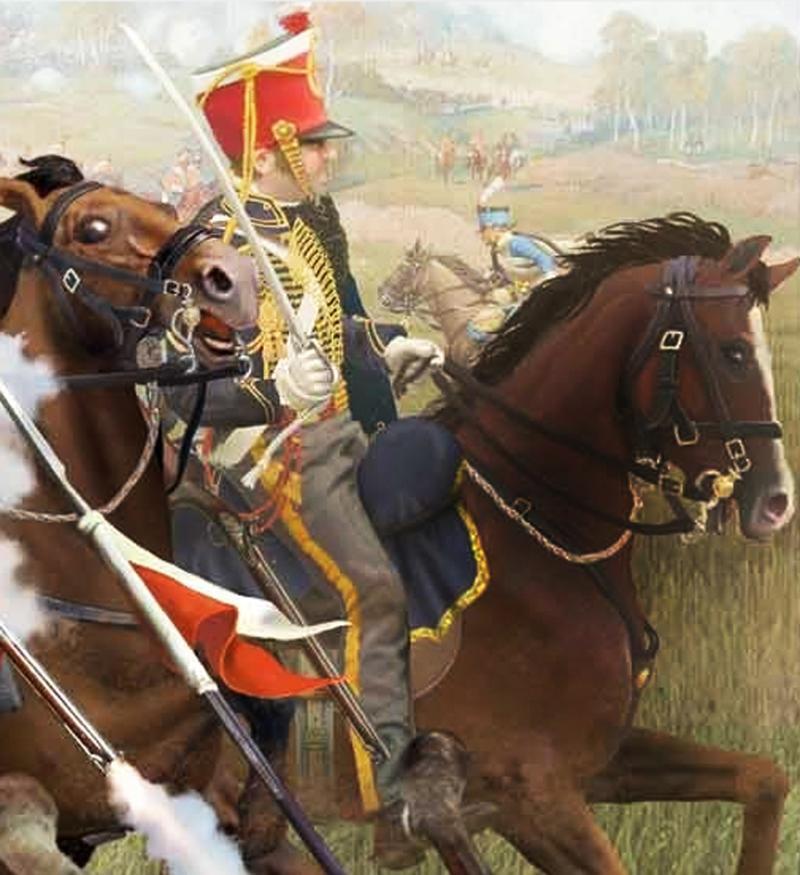
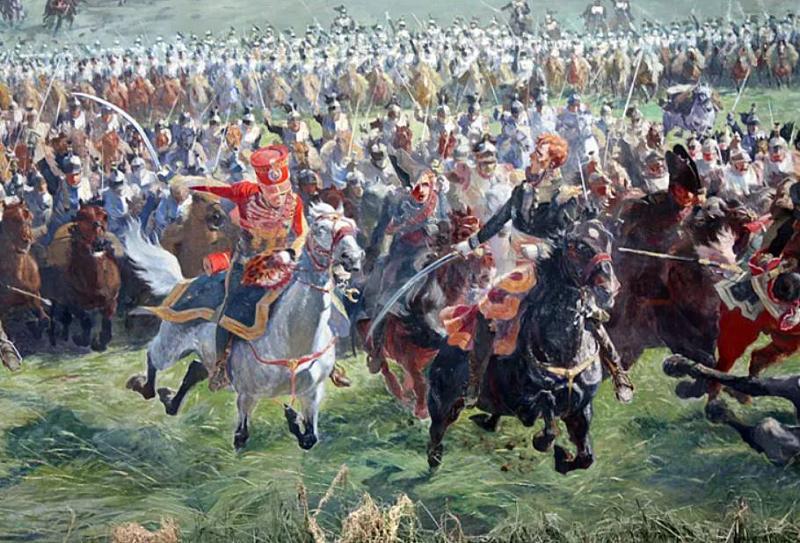
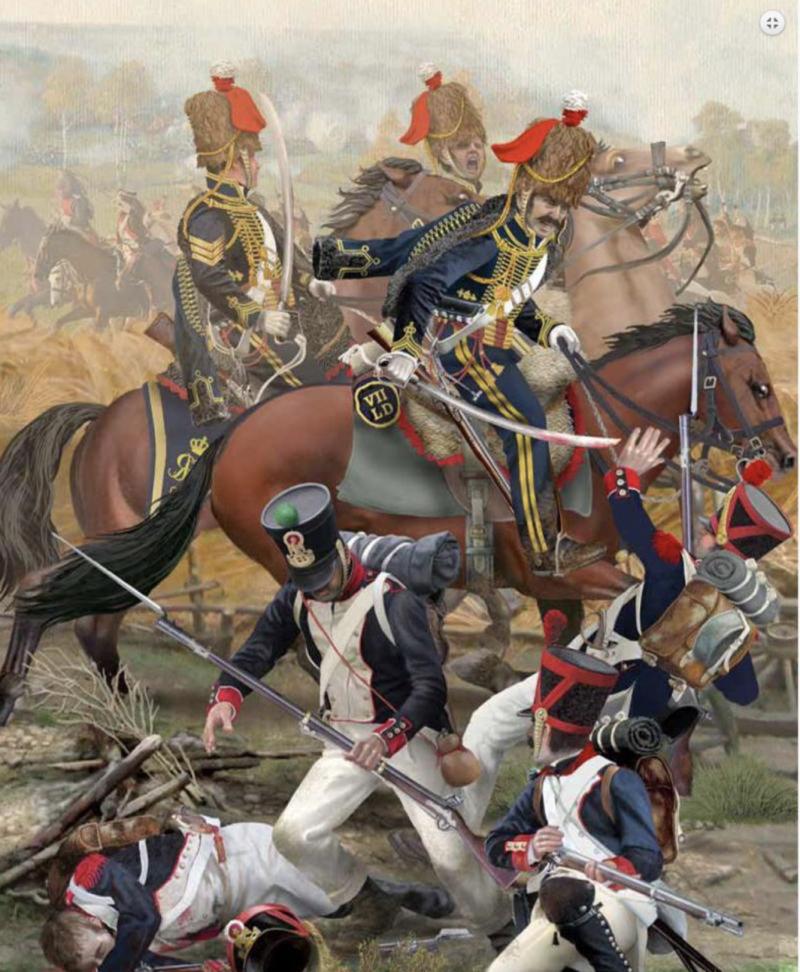
An absolutely faultless, historical, British combat sabre of the elite light dragoons that would have been used by a trooper or nco of the light cavalry during the entire Napoleonic Wars, in the Peninsular Campaign and ending at Quatre Bras and the Battle of Waterloo.
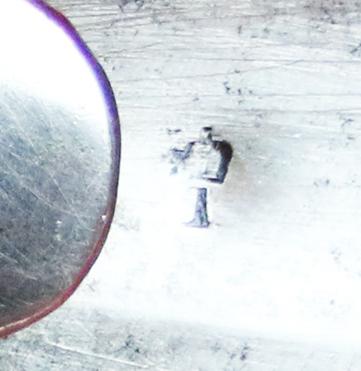
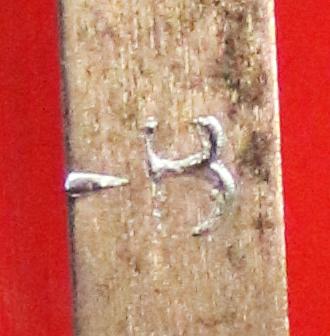
With, two, original and very rarely seen, point of balance stamps to the back strap of the blade.
Part of one of the finest collections of near mint British swords we have ever seen and just acquired. From a collector that clearly filtered his collection to keep only the very best condition examples he could find.
As good as, if not better, than anything you will find at the Tower of London Armoury Collection, or, the National Army Museum Collection in Chelsea.
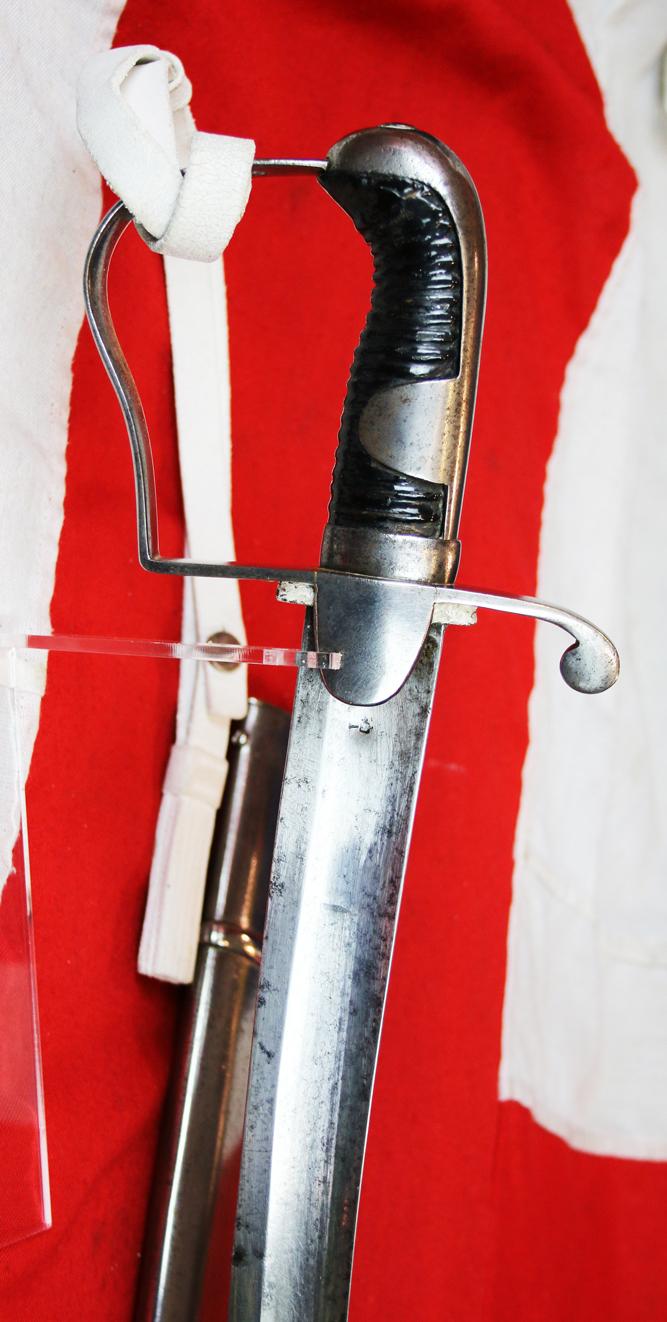
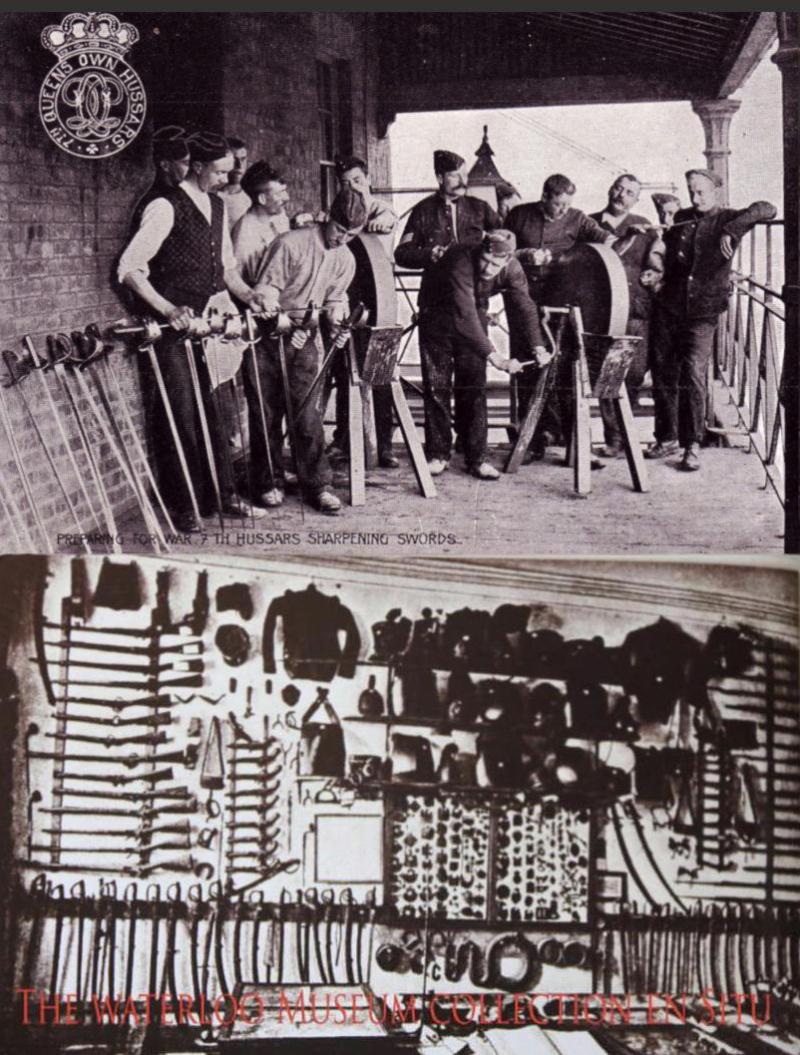
The scabbard is superbly bright and completely dent free, the hilt is as near to mint that a combat used sword ever could be, the leather bound grip still superbly bright lacquered, the blade excellent with the clear, regimental armourer's hand sharpened-by-wheel edge. We show an original, but of course later, Victorian photo in the gallery of blades being sharpened before combat by the British cavalry regimental armourer.
Complete with later, whitened, leather buff-hide sword knot. The maker mark of Wooley & Co was changed in 1800 to Wooley and Deakin.
The stamps found on the spine of some authentic British 1796 light dragoon (light cavalry) sword blades are "B" markings, which indicate the point of balance.
These "B" stamps were part of the manufacturing and quality control process used by some sword makers, such as Woolley & Co.
Quality Control: The marks ensured the blade was correctly shaped and balanced according to required specifications.
Multiple Marks: Some swords, like this sword, have two "B" marks:
One mark typically indicates the balance point of the bare blade.
The second mark indicates the balance point of the fully assembled and hilted sword.
Location: The marks are can found {although very rarely, stamped on the spine (back edge) of the blade, often near the hilt area.
The mounted swordsmanship training of the British emphasised the cut, at the face for maiming or killing, or at the arms to disable. This left masses of mutilated or disabled troops; the French, in contrast, favoured the thrust, which gave cleaner kills. A cut with the 1796 LC sabre was, however, perfectly capable of killing outright, as was recorded by George Farmer of the 11th Regiment of Light Dragoons, who was involved in a skirmish on the Guadiana River in 1811, during the Peninsular War:
"Just then a French officer stooping over the body of one of his countrymen, who dropped the instant on his horse's neck, delivered a thrust at poor Harry Wilson's body; and delivered it effectually. I firmly believe that Wilson died on the instant yet, though he felt the sword in its progress, he, with characteristic self-command, kept his eye on the enemy in his front; and, raising himself in his stirrups, let fall upon the Frenchman's head such a blow, that brass and skull parted before it, and the man's head was cloven asunder to the chin. It was the most tremendous blow I ever beheld struck; and both he who gave, and his opponent who received it, dropped dead together. The brass helmet was afterwards examined by order of a French officer, who, as well as myself, was astonished at the exploit; and the cut was found to be as clean as if the sword had gone through a turnip, not so much as a dint being left on either side of it" The blade is remembered today as one of the best of its time and has been described as the finest cutting sword ever manufactured in quantity. This sword still has its original wooden liner in the scabbard present.
The last photo in the gallery shows a photograph of one section of the collection in the museum of Waterloo, taken in around 1900, showing all the weapons of Waterloo en situ, including all the protagonists {British, French, Prussian and Belgian muskets, swords, pistols, armour uniforms, etc}. The museum was founded and owned by a veteran of the 7th Hussars that fought at Waterloo.
An extract from an 1862 publication;
A VOICE FROM
WATERLOO
A HISTORY OF THE BATTLE
FOUGHT ON THE 18TH JUNE 1815
WITH A SELECTION FROM THE WELLINGTON DISPATCHES, GENERAL ORDERS
AND LETTERS RELATING TO THE BATTLE.
ILLUSTRATED WITH ENGRAVINGS, PORTRAITS AND PLANS.
BY
SERGEANT-MAJOR EDWARD COTTON
(LATE 7TH HUSSARS).
“Facts are stubborn things.”
SIXTH EDITION, REVISED AND ENLARGED.
HOTEL DU MUSÉE,
AT THE FOOT OF THE LION MOUNT.
This Hotel, kept by a niece of the late Sergeant-Major Cotton, is situated in the very centre of the field of Waterloo, and is strongly recommended to visitors on account of its proximity to the scenes of interest connected with the great battle, and also for the excellent accomodation and comfort it offers at moderate charges.—See Bradshaw’s continental Guide.
Available from the Project Gutenberg.
Every single item from The Lanes Armoury is accompanied by our unique Certificate of Authenticity. Part of our continued dedication to maintain the standards forged by us over the past 100 years of trading
Code: 26041