
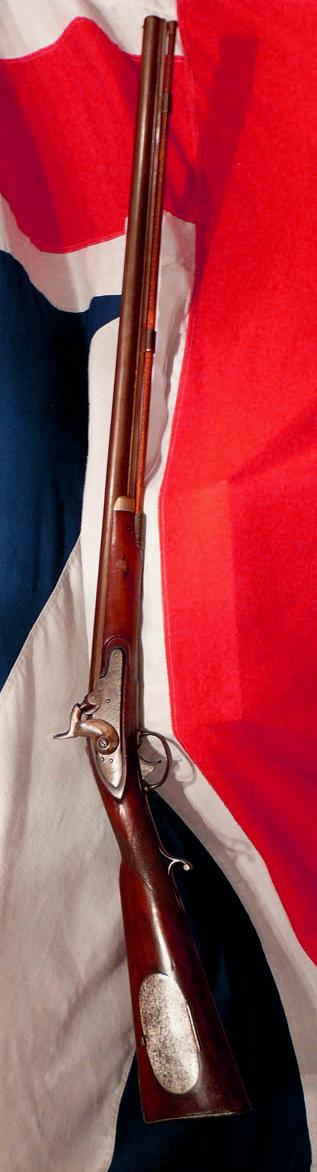
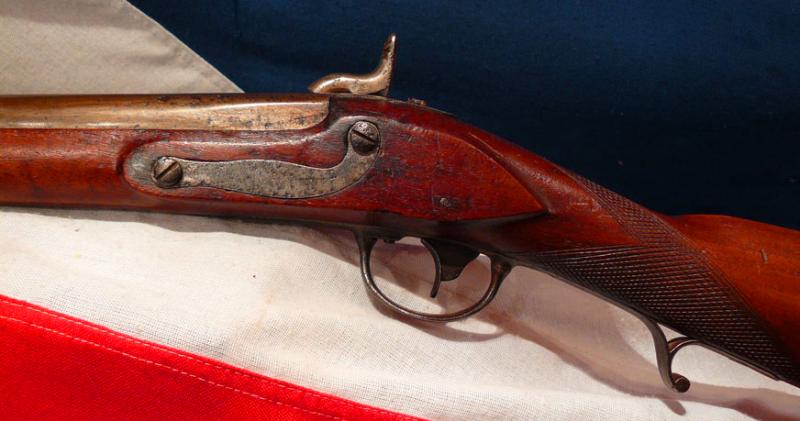
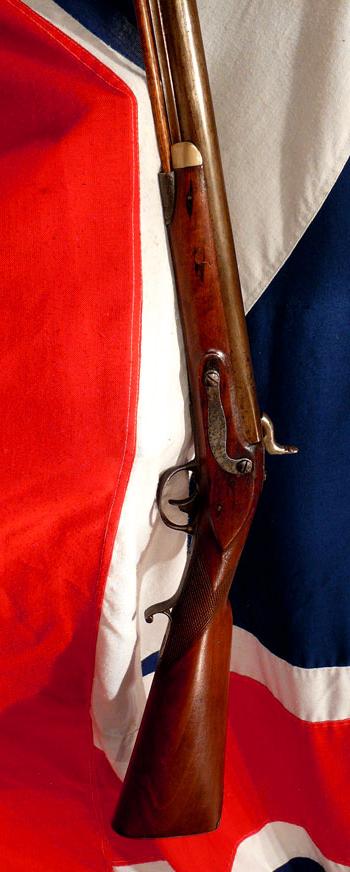
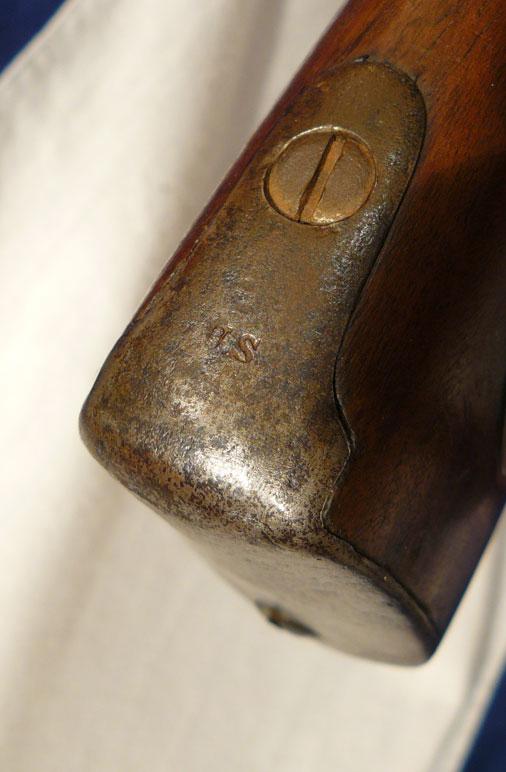
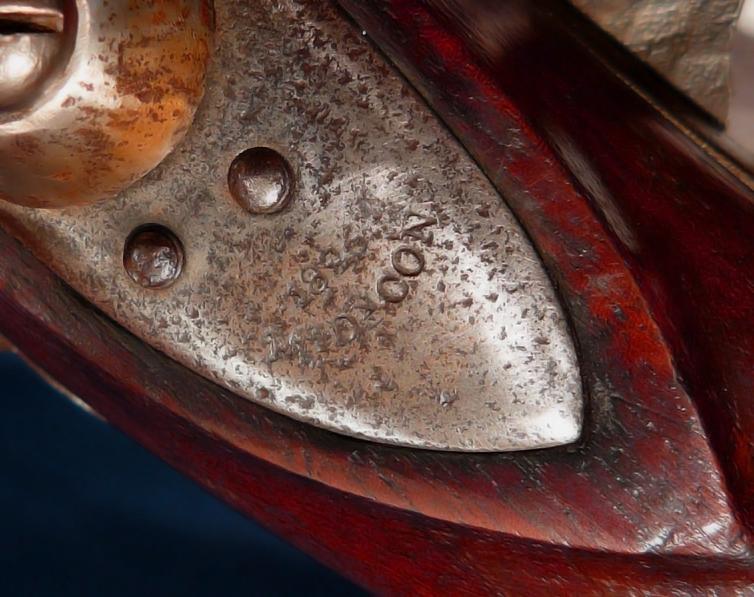
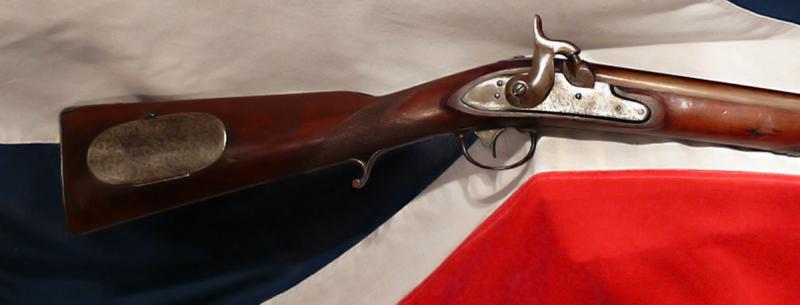
A Scarce US Civil War Service 1817 Model US Army Rifle, Dated 1826, Percussion Conversion For American The Civil War
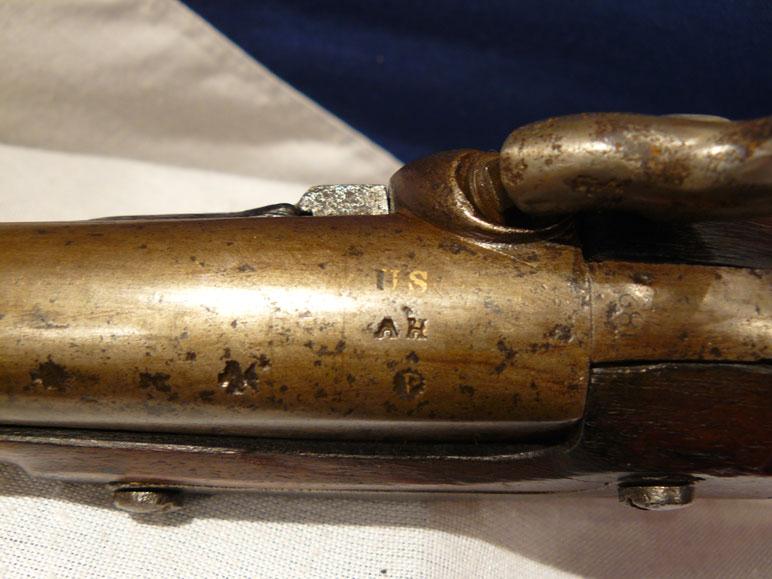
Made in Middleton Connecticut by either Simeon North or Robert Johnson. The breech is marked in three lines with US / AH / (circle) P. The P proof mark is in a depressed rosette. The inspector initials AH are those of Asabel Hubbard who was a Springfield Armory armourer and contract arms inspector.
The M1817 nicknamed the 'common rifle' in order to distinguish it from the Hall rifle was a flintlock muzzle-loaded weapon issued due to the US Dept. of Ordnance's order of 1814, produced by Henry Deringer and used from 1820s to 1840s at the American frontier, and after conversion to percussion, in the American Civil War in the 1860's.
This type of rifle-musket was used in the Civil War with service in the 2nd Mississippi Infantry, CS. A seldom seen, good looking longarm to fit any military collection, with shortened fore-stock wood, smooth bored.
Under contract with the government, Henry Deringer converted some 13,000 such flintlocks to percussion, muzzleloader rifles with the ‘drum’ or ‘French’ style system.
Unlike the half-octagon barreled Model 1814 Rifle that preceded it, it had a barrel that was round for most of its length. The barrel was rifled for .54 calibre bullets. For rifling it had seven grooves. Like the Model 1814, it had a distinctive large iron oval patchbox in the buttstock.
Code: 26036
1345.00 GBP