

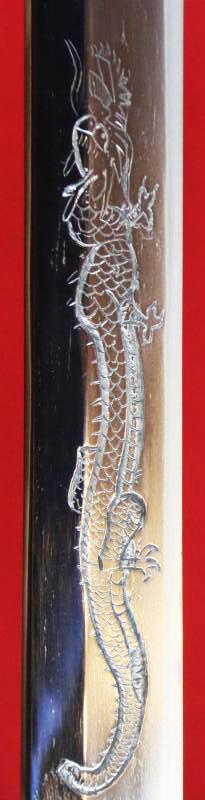

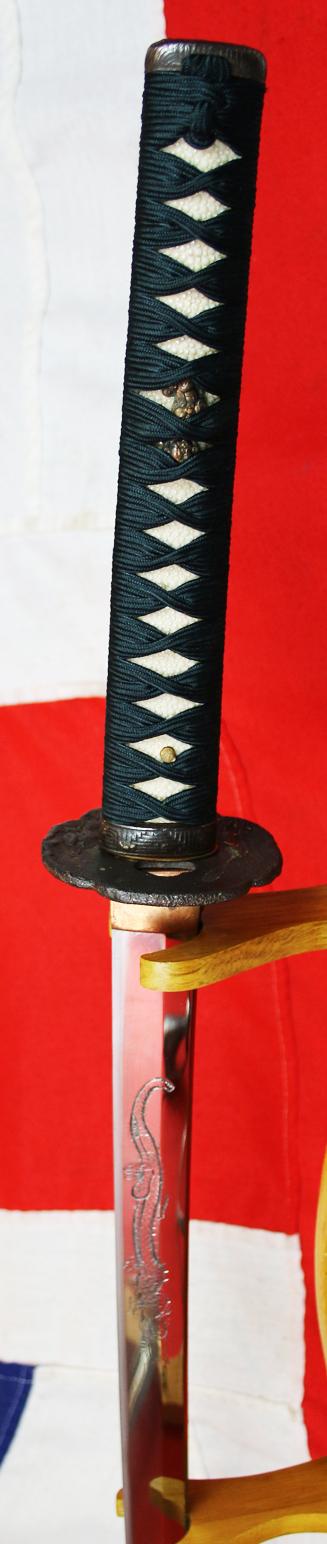

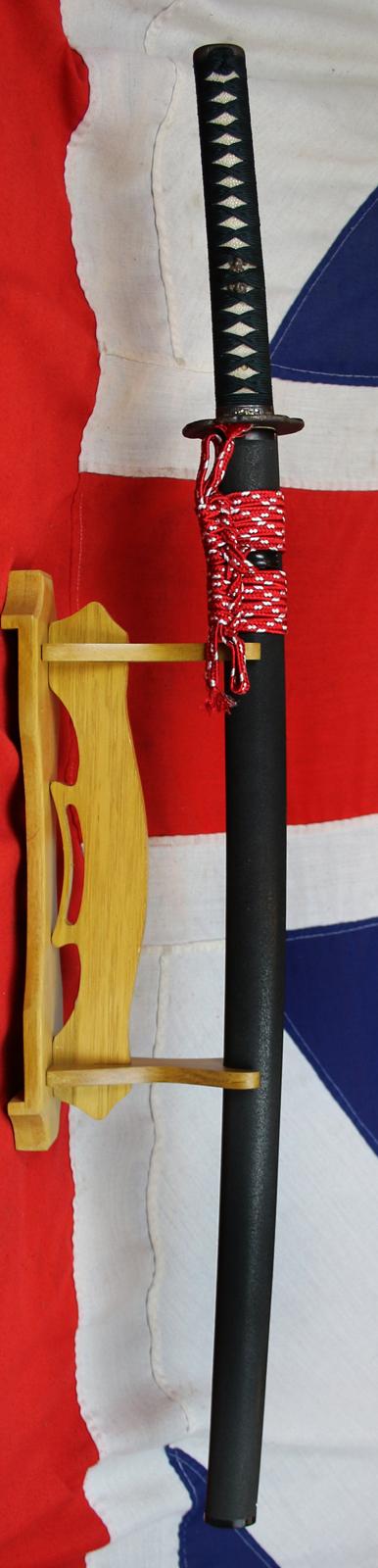
A Stunning, Antique, Edo Period Circa 1660 'Dragon Horimono' Shinto Horseman's Katana. With A Carved Horimono Blade of a Dragon. With a Superb Suguha Hamon That Transforms With Choji Elements At The Top Section
A very impressive, beautiful and substantial original katana of a horseman samurai, that has both incredible beauty, yet conveys a considerable sense of power through its length and heft. From the Shinto period likely from 1640 to around 1680-1700. All the koshirae and the blade are in super condition for age.
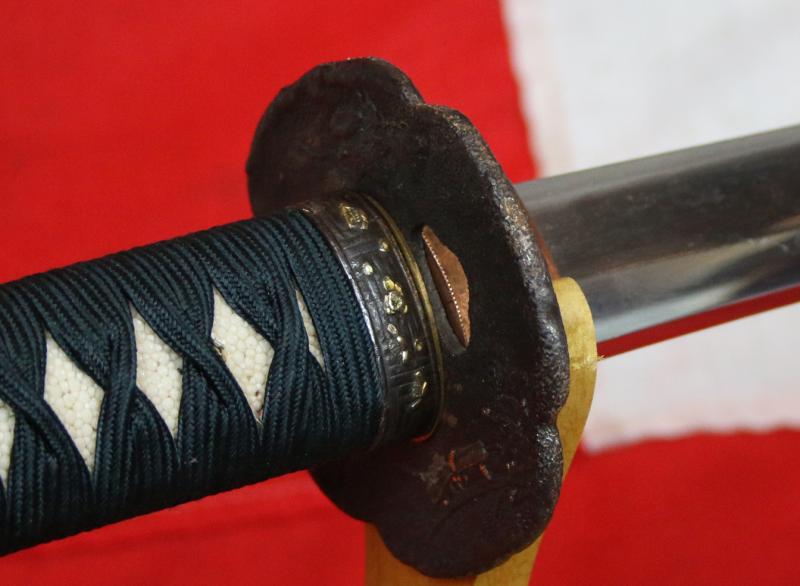
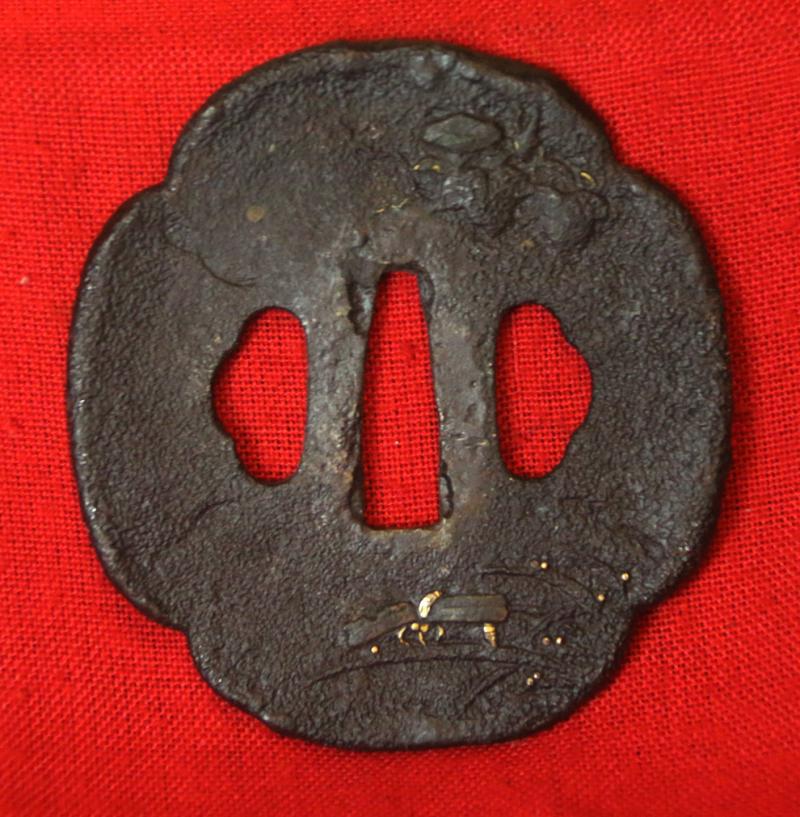
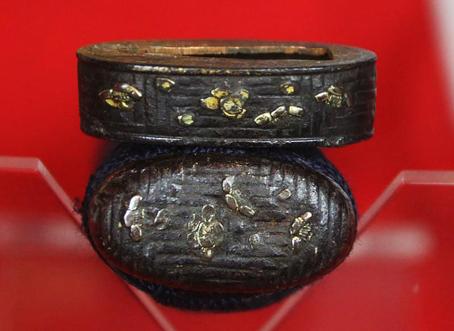
A large iron plate mokko tsuba with mimi, decorated with a village scene with gold highlights. the fuchi kashira are matching with a rattan screen pattern showing gold decorated blooms. a superb black isheme stone finish saya, and finest black tsukaito binding wrapped over fine menuki, and traditional samegawa {giant rayskin}.
Horimono, a type of carving, often adds other decorative Horimono to the blade in addition to grooves. The properties of horimono are usually traditional images, such as swords, dragons, deities, Buddhist patterns, bonji, Chinese characters, and so on.Among the blades of the Koto period of sword manufacture (1600), many of the carvings display religious meaning: Bonji (sanskrit), Su-ken, Fudo Myo-o,Kurikara, Sanko-tsuki-ken, Goma-bashi, Hachiman-daibosatsu, Namu-myoho-renge-kyo, and Sanjuban-shin.In the Shinto period of swordmaking (1600), the carvings become more decorative with depictions of cranes and turtles, ascending and descending dragons, shochikubai (pine, bamboo and plum), and the deity of wealth, Daikoku.These images are carved with hammers hitting small chisels of various sizes. The internal surface of horimono is ground smoothly and finely, and polished during the polishing process. Making horimono is both difficult and time-consuming; Swordsmiths mostly carve grooves and simple Sanskrit characters themselves, while the more magnificent horimono is made by specialized craftsmen. After deciding which image to use, carefully draw a detailed pattern with a brush at the position to be carved, and then complete the horimono. The ideal horimono has a moderate proportion, the size matches the word to be carved, and is engraved in the appropriate position
The decorative horimono were introduced during the Edo period on the katanas and are generally larger than the votive ones. They often depict a dragon, taking up traditional iconography but using superfine techniques to embellish the blade.
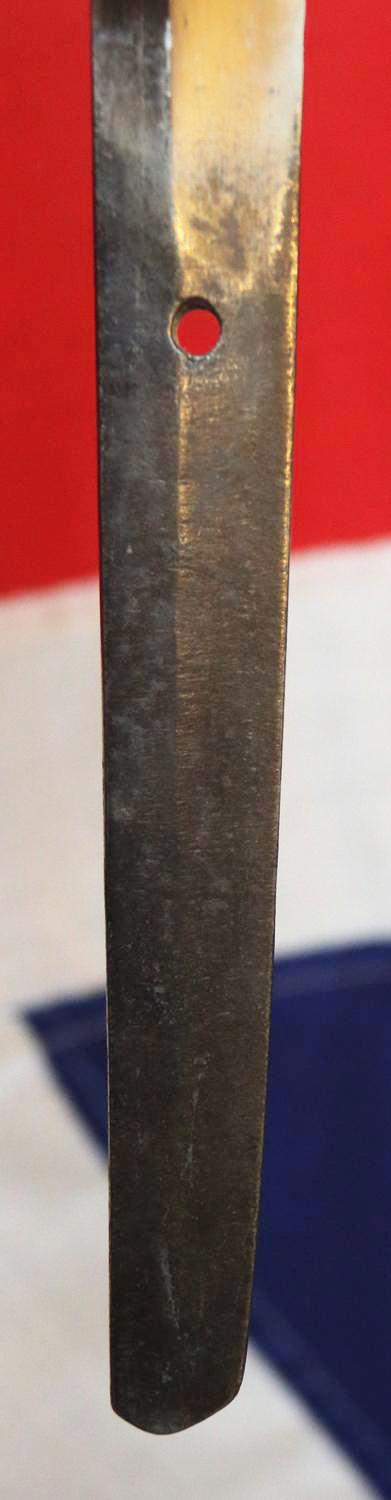
The blade is in super condition for age with just a few very small thin natural age surface marks. See photo 3, on the far right hand blade picture in the photo group
Code: 26029
7450.00 GBP