


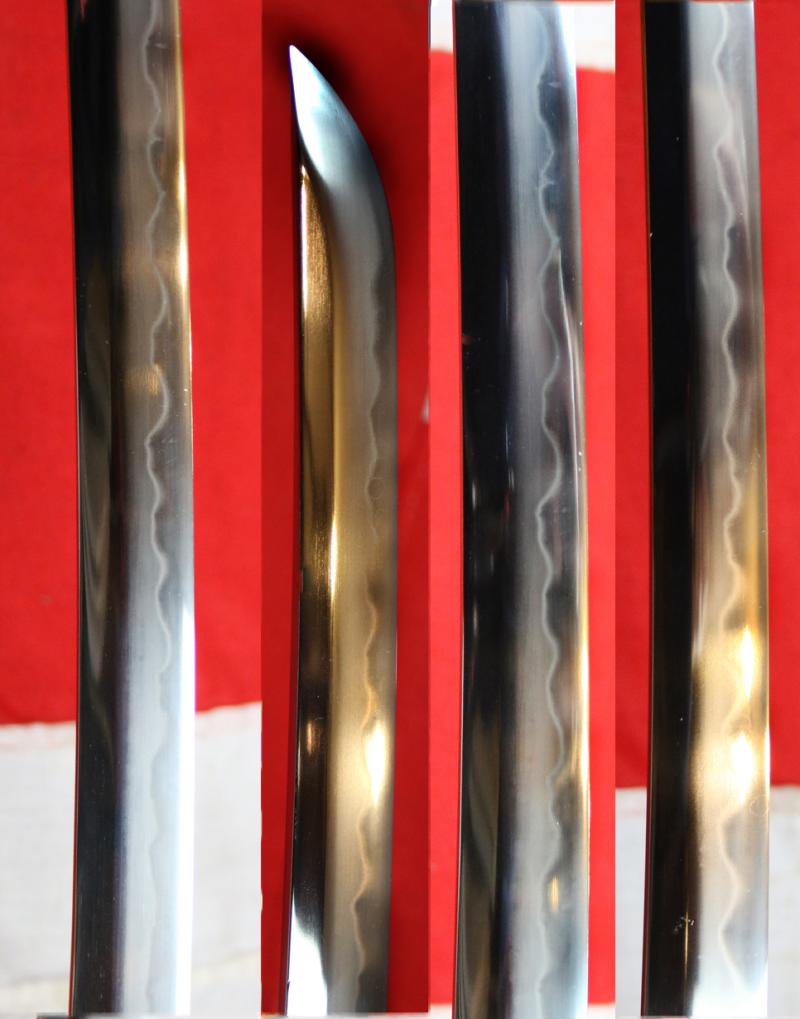
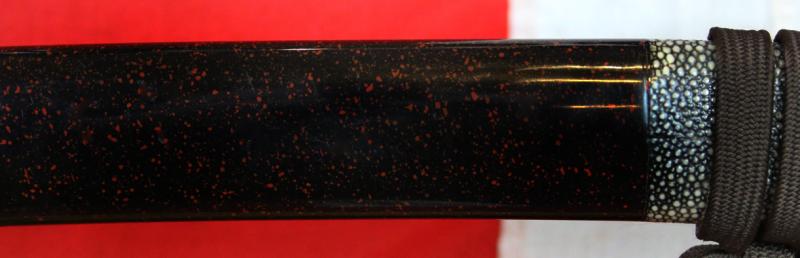
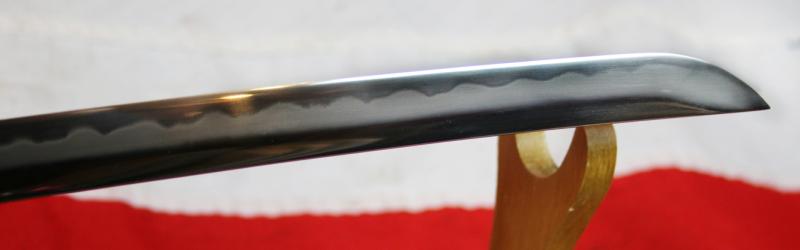
Beautiful Signed, Takeda Clan Mon Katana, With a Stunning Notare Midare Hamon. Traditionally Samurai Mounted Katana in Fine Polish, By Seki Yoshimitsu. Edo Period Shakudo Tsuba. Samegawa Saya With Flecked Lacquer. An Incredible Bargain For A Collector
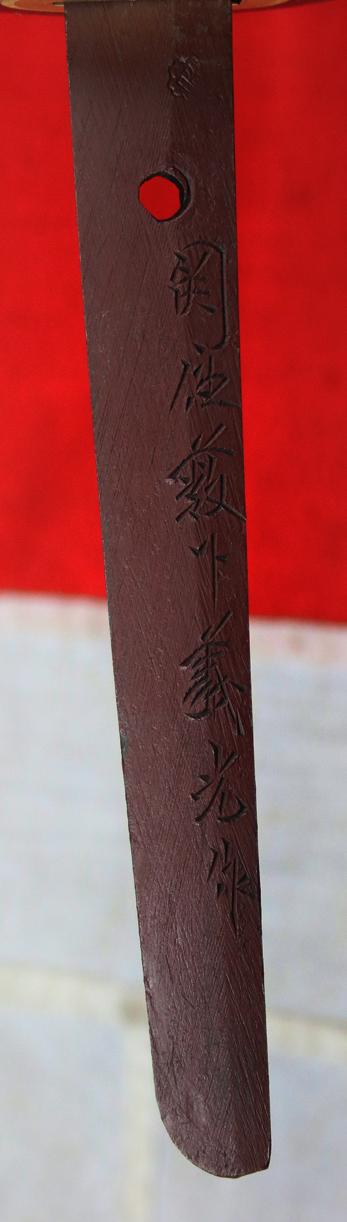
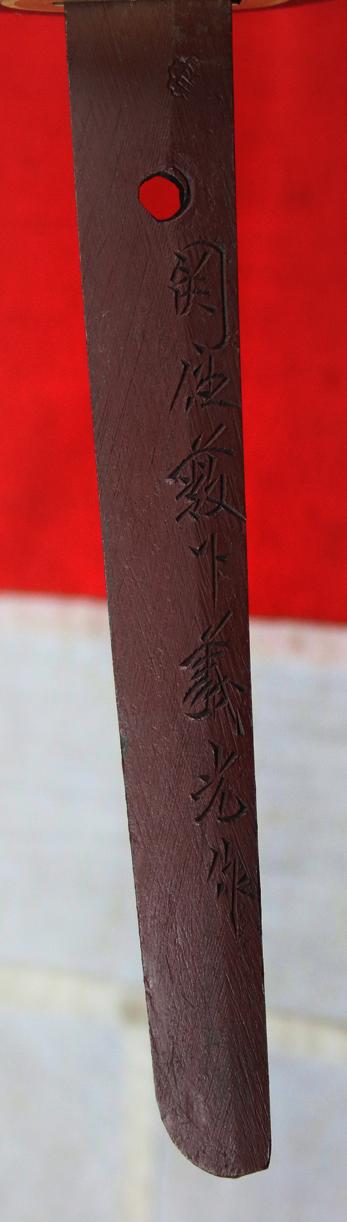
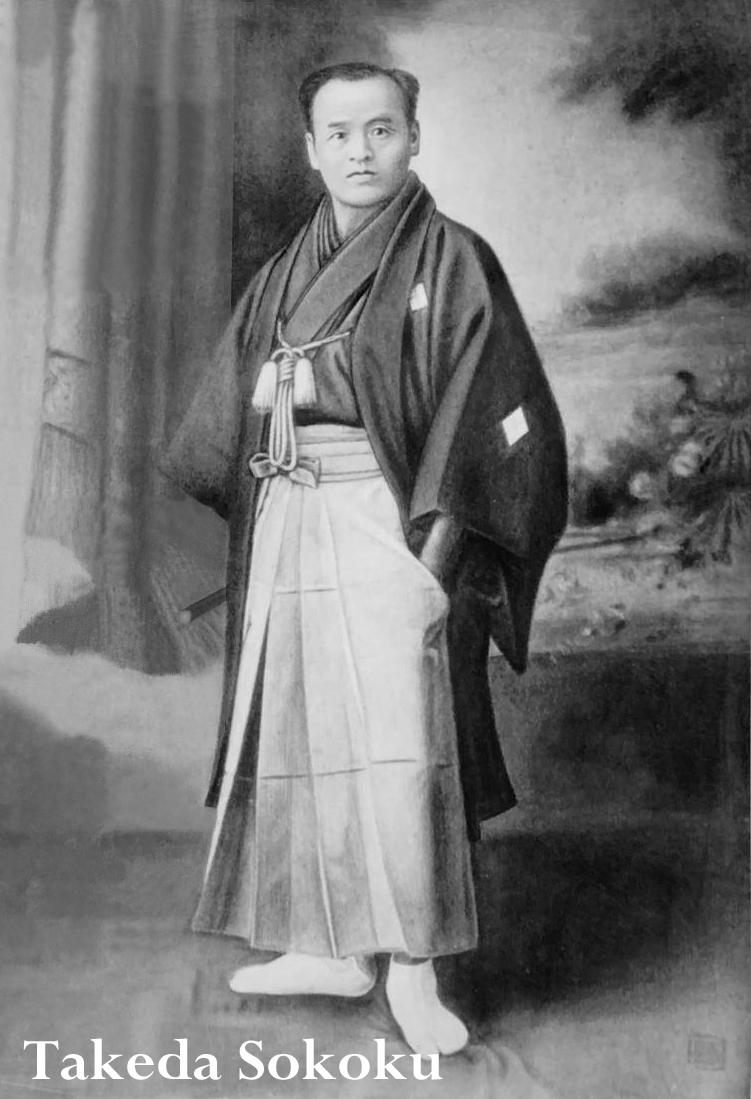
A very good 1930’s Japanese sword, signed by {Noshu} Seki ju Yoshimitsu, likely a sword of Takeda Sōkaku, the 20th century Takeda clan leader, and renown martial artist, until his death in 1943. The blade in superb polish showing a very fine notare midare hamon with great activity, and, in superb condition, the habaki {blade collar} is it's deluxe, traditional, hand made example, gold coated, from the 1930's. In just a very few years this will be not only what it is currently today, an original Japanese sword, but, also, an antique samurai sword
This katana is really beautiful, and extraordinarily inexpensive, thus we will be very surprised if it remains available for very long.
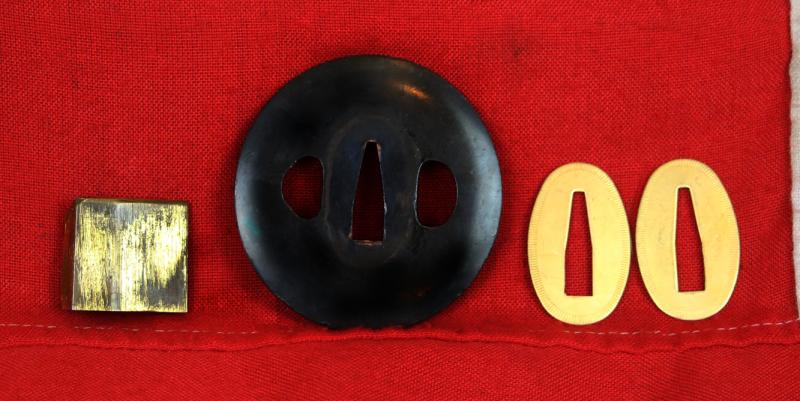
This sword is beautifully mounted, in the traditional samurai katana manner, with Takeda clan antique and vintage fittings. The Edo period shakudo tsuba is a particularly nice example. A simple style but sophisticated in its simplicity. Its traditional lacquer saya is also most attractive, with its giant rayskin top section decor, and the saya is showing very fine workmanship.
The tsuka-ito {hilt binding} is in stunning black, with chrysanthemum Hirohito menuki, over traditional samegawa, and the fuchi kashira are beautiful antique silver, with the shakudo clan mon, of the Takeda-bishi 武田菱, of the highly esteemed Takeda clan.
The Takeda clan, a prestigious branch of the Minamoto clan (Seiwa Genji), used a clan mon (kamon) known as the Takeda-bishi (武田菱, Takeda Diamond), featuring four diamond shapes arranged in a larger diamond pattern. Based in Kai Province, this aristocratic samurai clan was one of the most powerful during the Sengoku period, led most famously by Takeda Shingen.
The emblem consists of four diamonds (菱, hishi) grouped to form a larger diamond or square.
Variations: While the core "four diamonds" (四つ割菱, Yotsubaribishi) remained consistent, the spacing between the diamonds sometimes varied, with the Takeda-bishi traditionally referring to a design with narrow gaps between the diamonds.
Symbolism: The crest is said to be derived from the armored "Tatenashi" suit worn by Minamoto no Yoshimitsu, the ancestor of the Takeda, or designed to represent the character "Ta" (田) in Takeda.
4 Elements (Furinkazan): Takeda Shingen famously used a battle standard representing the four elements—Wind, Forest, Fire, and Mountain—derived from Sun Tzu's The Art of War, which is often associated with the Takeda clan's spirit.
The Takeda were descendants of Emperor Seiwa (850–880) and a branch of the Minamoto clan, with Minamoto no Yoshikiyo (1075–1149) being the first to use the name Takeda.
The Takeda clan, particularly under Takeda Shingen, were known for their elite cavalry, and this four-diamond crest was widely recognized across Japan.
In the 1930s, the Takeda clan, a famous branch of the Minamoto clan (specifically the Seiwa Genji line), maintained its legacy and was represented by the martial artist Takeda Sōkaku (1859–1943), who was actively teaching Daitō-ryū Aiki-jūjutsu to elite members of Japanese society, including police and military officers. The clan mon upon the tsuka of this sword may indicate this once belonged to Takeda Sōkaku or his son Tokumune. Both clan leaders of the Takeda, and masters of the martial arts.
Tokimune Takeda (武田 時宗 Takeda Tokimune, 1916–1993), became the head-master of the art following Sokaku's death in 1943. Tokimune taught what he called "Daitō-ryū Aikibudō" (大東流合気武道), an art that included the sword techniques of the Ono-ha Ittō-ryū along with the traditional techniques of Daitō-ryū Aiki-jūjutsu.
Ono-ha Ittō-ryū (小野派一刀流) is a prestigious 16th-century Japanese kenjutsu (swordsmanship) school founded by Ono Jiroemon Tadaaki, based on the teachings of Itō Ittōsai. As the "one sword" school, it emphasizes defeating opponents with a single, precise cut, significantly influencing modern Kendo and traditional martial arts.
The nakago is clearly signed with Emperor Hirohito's period stamp {he the last divine emperor} and coloured rich red with some old preservative around 80 years ago. It could certainly be removed, but it has done a good job so far, and it assists in seeing the signature.
For those that have interest in original Japanese swords, this is a perfect way to have a superbly made original hand made sword that it mounted in original Japanese fittings of the early samurai form of katana.
** Authentic, currently, modern hand-made nihonto (Japanese sword blades) from licensed swordsmiths in Japan today, typically start around $10,000–$25,000 for a katana, with prices often exceeding $60,000 for renowned top-tier sword masters or customized commissions.
These blades, forged from tamahagane steel, require 12+ months to create due to strict legal limits on production, with some high-end, custom pieces from master smiths such as Yoshindo Yoshihara exceeding $10,000 for smaller tanto blades.
A brand new, katana blade from a reputable but lower ranked smith usually starts around $7,500–$10,000.
One of the greatest joys of sword collecting is the opportunity to learn about the history and culture of different civilisations. Swords have been used by warriors for millennia, and each culture has developed its own unique sword designs and traditions. By studying swords, collectors can gain a deeper understanding of the people who made and used them.
Another joy of sword collecting is the sheer variety of swords that are available. There are swords in our gallery from all over the world and from every period of history. Collectors can choose to specialize in a particular type of sword, such as Japanese katanas or medieval longswords, or they can collect a variety of swords from different cultures and time periods. No matter what your reasons for collecting swords, it is a hobby that can provide many years of enjoyment. Swords are beautiful, fascinating, and historically significant objects.
Every item is accompanied with our unique, Certificate of Authenticity. Of course any certificate of authenticity, given by even the best specialist dealers, in any field, all around the world, is simply a piece of paper,…however, ours is backed up with the fact we are the largest dealers of our kind in the world, with over 100 years and four generation’s of professional trading experience behind us.
The world of antique and vintage sword collecting is a fascinating journey into the past, offering a unique lens through which to view history and culture. More than mere weapons, these artifacts serve as tangible connections to the societies and ancient times where they originated. Each blade tells a story, not just of the battles it may have seen but of the craftsmanship, artistic trends, and technological advancement of its time.
The swords mountings can be equally telling. Engravings and decorative elements may enhance the sword’s beauty and hint at its historical context. The materials used for them can reveal the sword’s age
Collecting antique swords, arms and armour is not merely an acquisition of objects; it’s an engagement with the historical and cultural significance that these pieces embody. As collectors, we become custodians of history, preserving these heritage symbols for future generations to study and appreciate.
We are now, likely the oldest, and still thriving, arms armour and militaria stores in the UK, Europe and probably the rest of the world too. We know of no other store of our kind that is still operating under the control its fourth successive generation of family traders
As once told to us by an esteemed regular visitor to us here in our gallery, Victor Harris, in order to study and discuss our extensive collection, and he used the same words that are repeated in his book below;
“In these textures lies an extraordinary and unique feature of the sword - the steel itself possesses an intrinsic beauty. The Japanese sword has been appreciated as an art object since its perfection some time during the tenth century AD. Fine swords have been more highly prized than lands or riches, those of superior quality being handed down from generation to generation. In fact, many well-documented swords, whose blades are signed by their makers, survive from nearly a thousand years ago. Recognizable features of the blades of hundreds of schools of sword-making have been punctiliously recorded, and the study of the sword is a guide to the flow of Japanese history.”
Victor Harris
Curator, Assistant Keeper and then Keeper (1998-2003) of the Department of Japanese Antiquities at the British Museum. He studied from 1968-71 under Sato Kenzan, Tokyo National Museum and Society for the Preservation of Japanese Swords
Code: 26016