

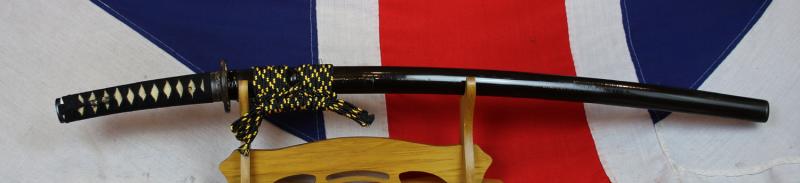
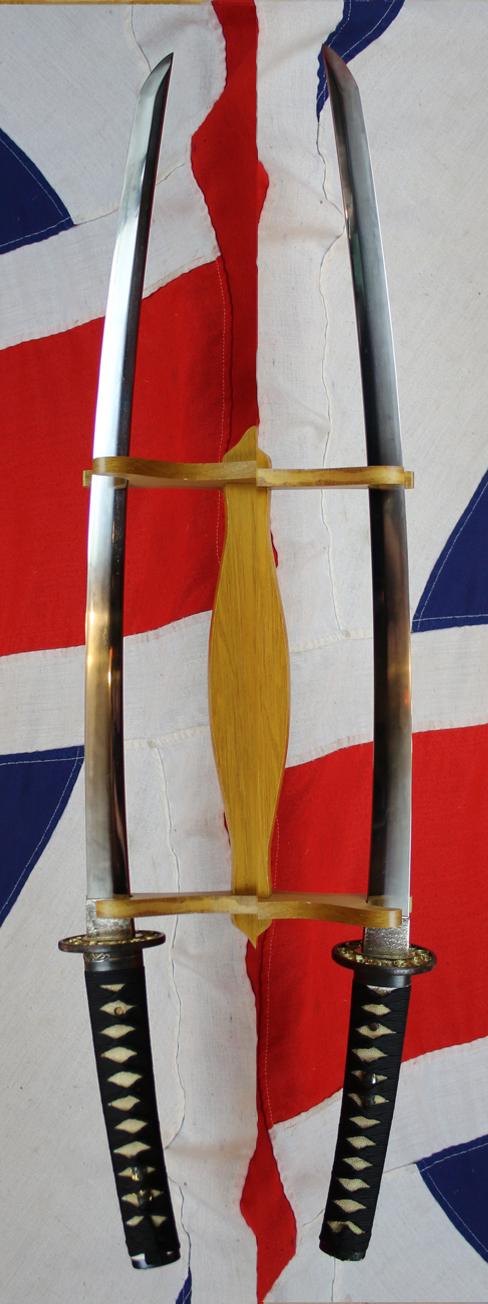
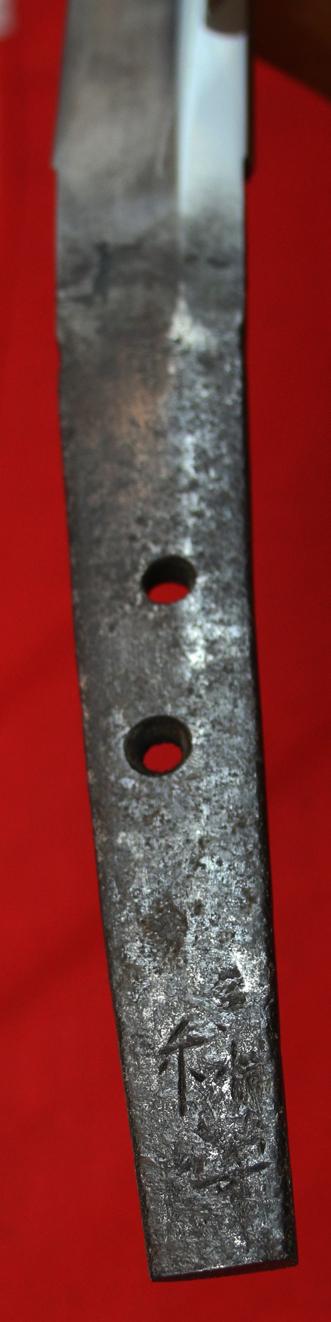
A Beautiful, Handsome & Most Elegant Samurai Katana Signed Toshinaga, That Is Both The Smith’s Name & Represents to Long Life, Around 600 Plus Years Old. Late Nanboku-chō period (南北朝時代, Nanboku-chō jidai) & Leading into the Sengoku Jidai, Warring States
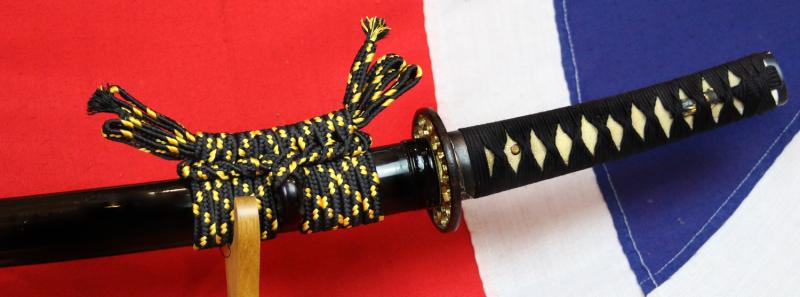
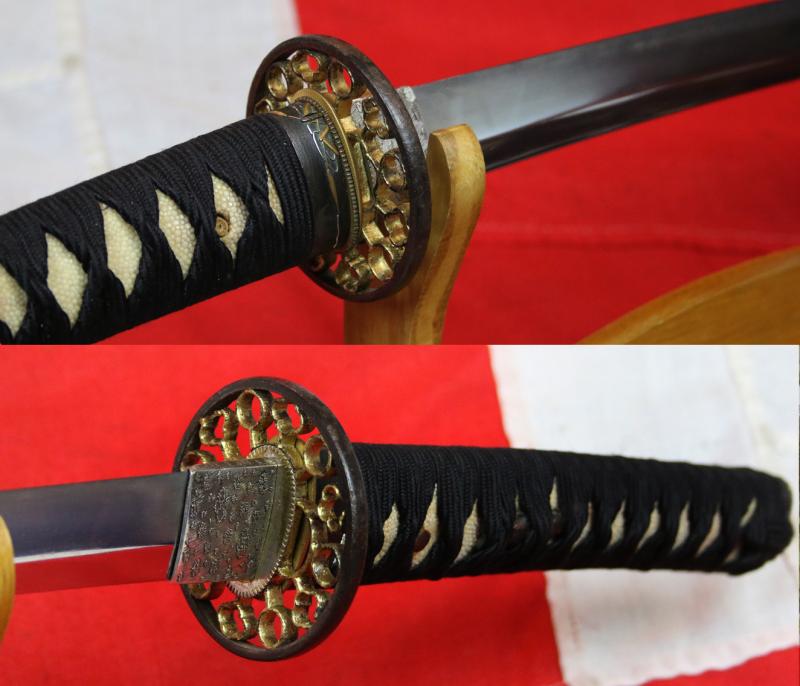
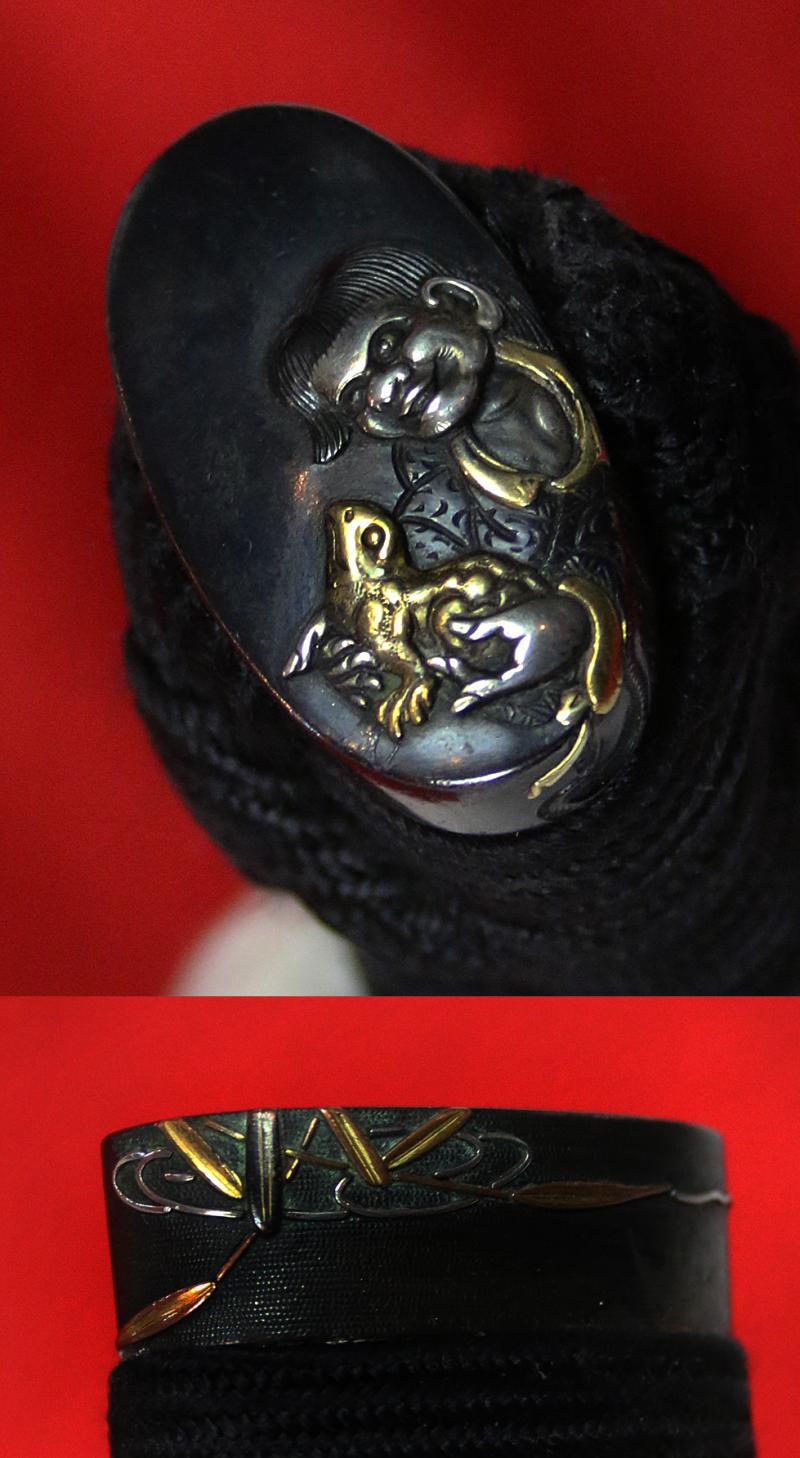
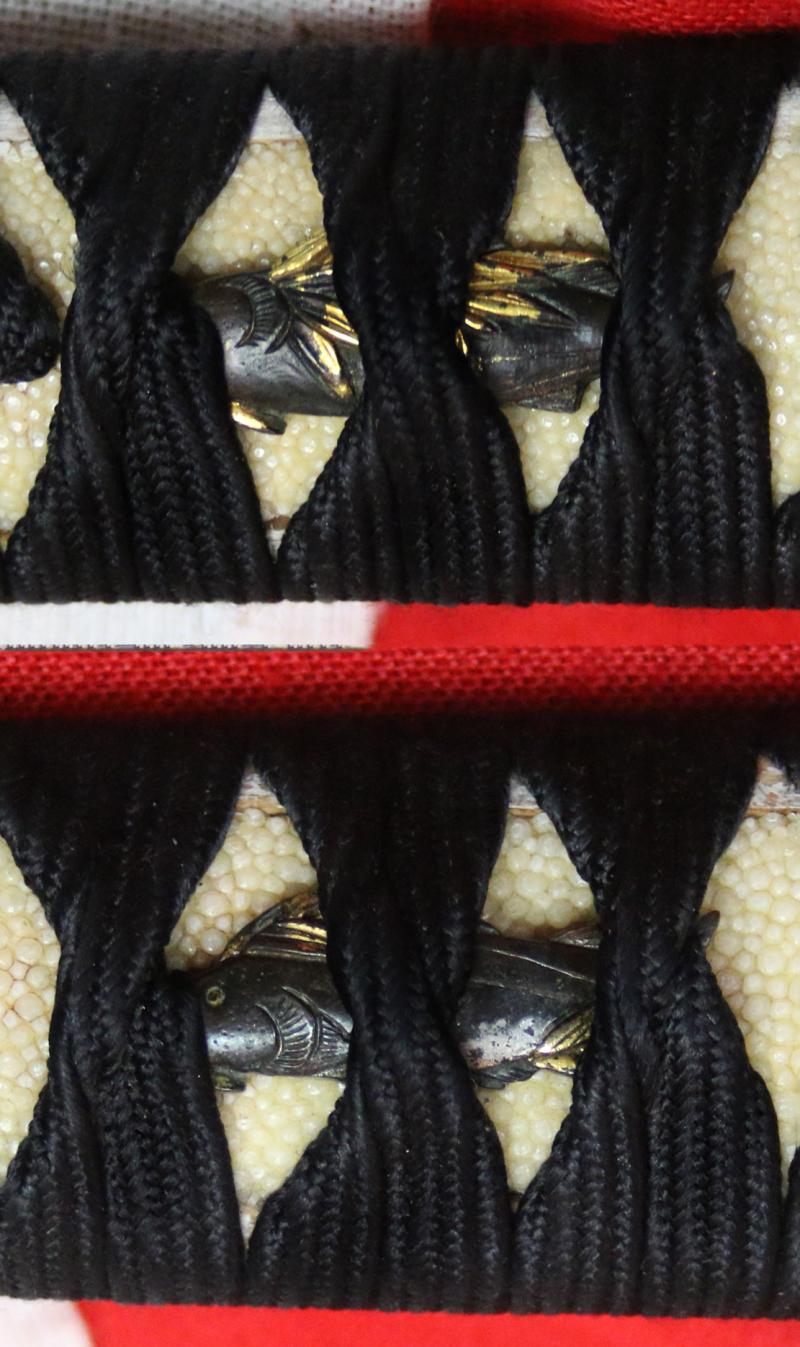
Koto blade with all original Edo period koshirae {fittings and mounts} two mekugi-ana in the nakago of the blade, signed Toshinaga, beautiful tsuka with shakudo, gold and silver fuchi-kashira, the kashira, decorated with a figure with a silver face and hands, on a shakudo ground, holding a gold amphibian, of shakudo, and a nanako ground shakudo fuchi decorated with gold and patinated copper bullrushes, over silver water lines, and gilt shakudo fish menuki. Silver habaki of very fine quality with fine engraved decoration
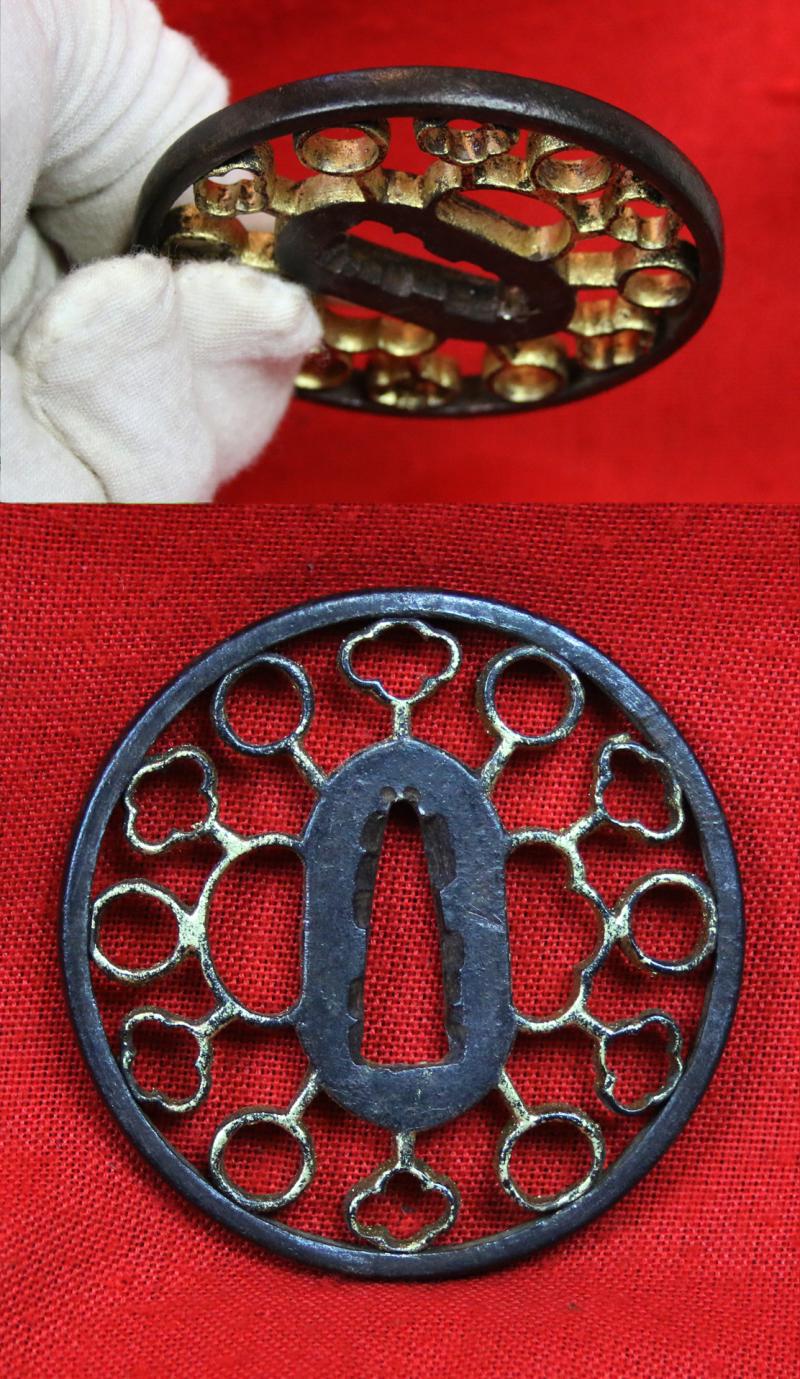
It is mounted with an old circular Awari iron sukashi tsuba, with gold onlaid within its design, and an original Edo black urushi lacquered saya.
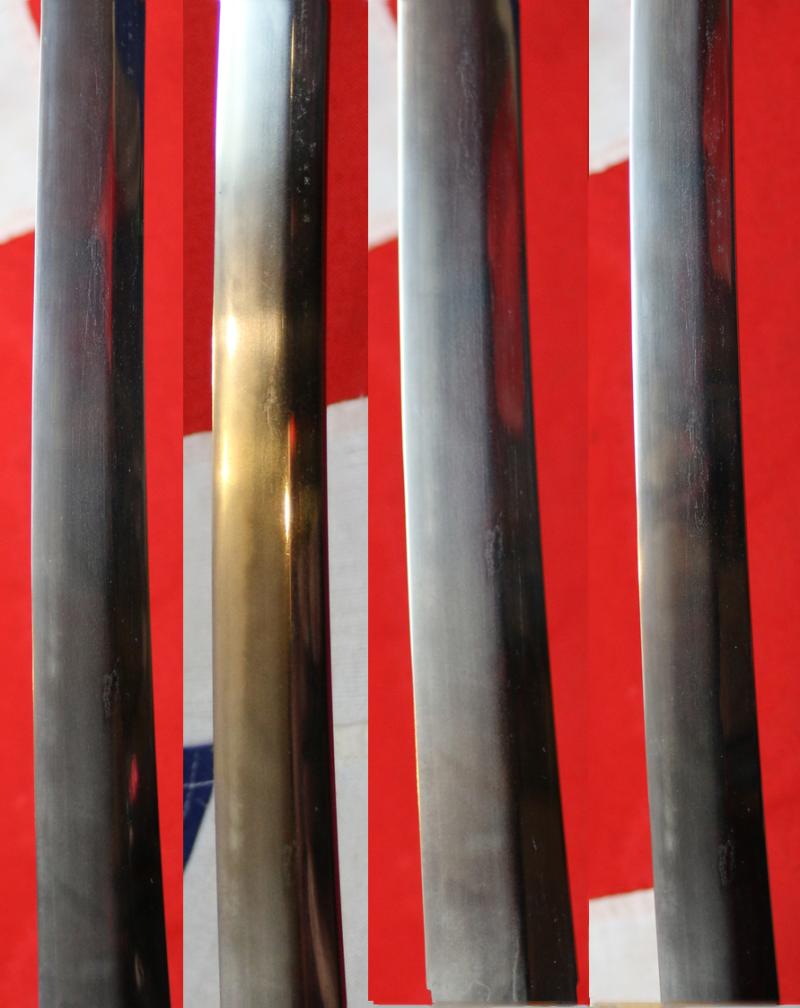
Fine Koto blade in super condition for age, showing an elegant notare hamon, and flowing grain hada.
The name "Toshinaga" (歳長) or "Jumyo" (寿命, also meaning long life) made these swords highly desirable for samurai not only for combat but combined as celebratory ceremonial ‘art swords’. Over the next two centuries {in the Shinto period} the Toshinaga school became synominous with very fine and desirable swords. In the Koto period, the era from whence this sword came, it was the earliest days of the line of Toshinaga smiths. And the Toshinaga of`Bizen, for example, created swords, often without traditional Bizen features, so they are not easily identifiable as Bizen tradition swords. The principles of samurai bushido was frequently ridden with elements of superstition, some smiths for example were associated with bad luck, but Toshinaga had the opposite, due to its joint meaning, as the words representing long life, thus it imbued its owner with very good fortune, positive superstition, or as some might say today, good karma.
The Nanboku-chō era (1336–1392) in Japan was a tumultuous period of civil war between the Northern and Southern Imperial Courts, driven by rival claims to the throne after the Kamakura shogunate's fall, featuring significant shifts in warfare, art (increasing realism and warrior focus), and the rise of the Ashikaga shogunate, with key developments like extremely long swords no dachi also known as tachi, and guerrilla tactics amidst constant strife, culminating in the nominal reunification but underlying power struggles.
Key Aspects of Nanboku-chō Warfare & Era were the dual Imperial Courts: The imperial family split into a Northern Court (backed by Ashikaga) and a Southern Court (led by Emperor Go-Daigo and based in Yoshino).
The conflict facilitated the fall of the Kamakura Shogunate and the establishment of the Ashikaga (Muromachi) Shogunate, with Ashikaga Takauji emerging as a dominant figure.
The prolonged conflict saw the use of guerrilla warfare. Castles were built using suitable terrain, and ideal to survive sieges.
There was a move away from Heian-era courtly aesthetics towards more direct, virile, and realistic art reflecting the warrior class's values.
The era ended in 1392 when the Southern Court formally renounced its claim for the North, though this resolution left lingering questions of legitimacy.
Legacy: The period laid groundwork for the turbulent Muromachi era and the subsequent Sengoku period, shaping Japanese political identity and military. This led into the Ōnin War (1467–1477): A devastating civil war that shattered central authority and ushered in the Sengoku Jidai (Warring States).
There are many reasons why people enjoy collecting swords. Some people are drawn to the beauty and craftsmanship of swords, while others appreciate their historical and cultural significance. Swords can also be a symbol of power and strength, and some collectors find enjoyment in the challenge of acquiring rare or valuable swords.
One of the greatest joys of sword collecting is the opportunity to learn about the history and culture of different civilisations. Swords have been used by warriors for millennia, and each culture has developed its own unique sword designs and traditions. By studying swords, collectors can gain a deeper understanding of the people who made and used them.
Another joy of sword collecting is the sheer variety of swords that are available, and we are fortunate to have likely one of the most varied and largest selection of original swords, from all nations, in the world. There are swords in our gallery from all over the globe and from every period of history, going back almost 4000 years, Collectors can choose to specialize in a particular type of sword, such as Japanese katanas or medieval swords, or they can collect a variety of swords from different cultures and time periods. No matter what your reasons for collecting swords, it is a hobby that can provide many years of enjoyment. Swords are beautiful, fascinating, and historically significant objects.
The blades polish is beautiful with just the usual minuscule age surface mark, as all antique and ancient swords must always be expected to have at least some age appropriate flaws.
Every single item from The Lanes Armoury is accompanied by our unique Certificate of Authenticity. Part of our continued dedication to maintain the standards forged by us over the past 100 years of trading
Overall in beautiful condition, the only signs of old age wear is on the urushi lacquer on the saya.
Overall 37 inches long, blade length 24 inches long.
Code: 26007
4995.00 GBP