
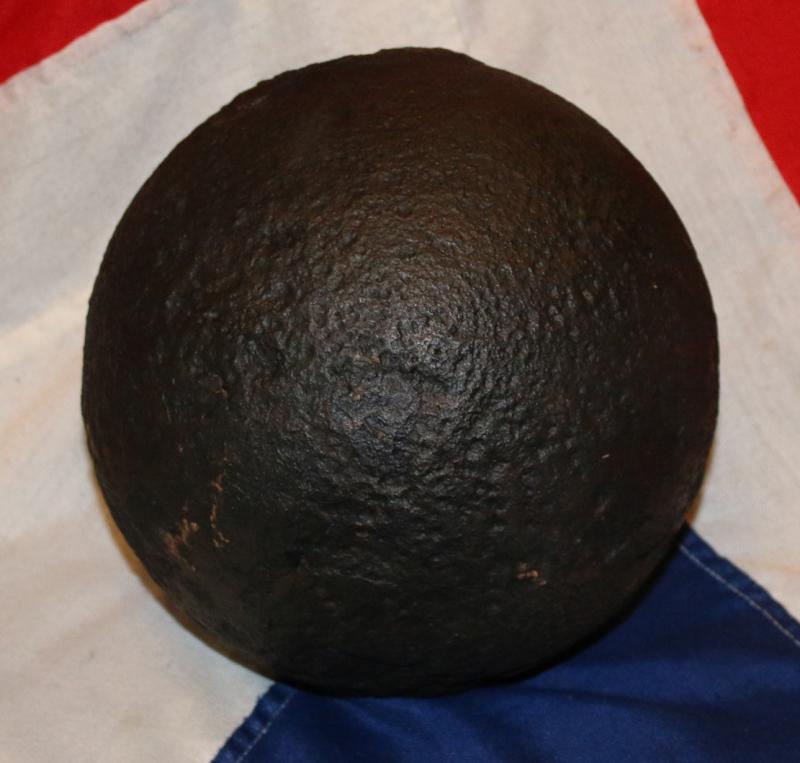
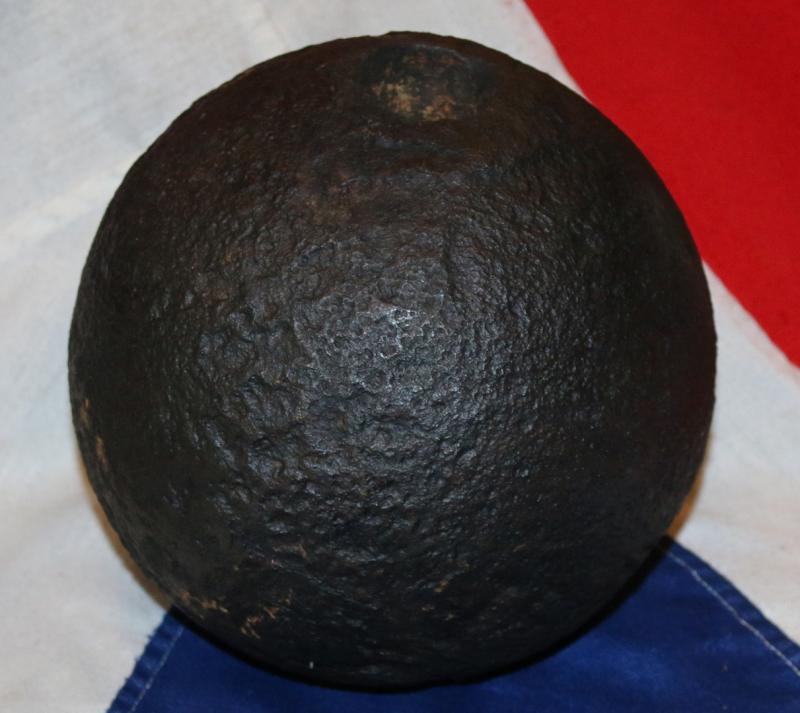
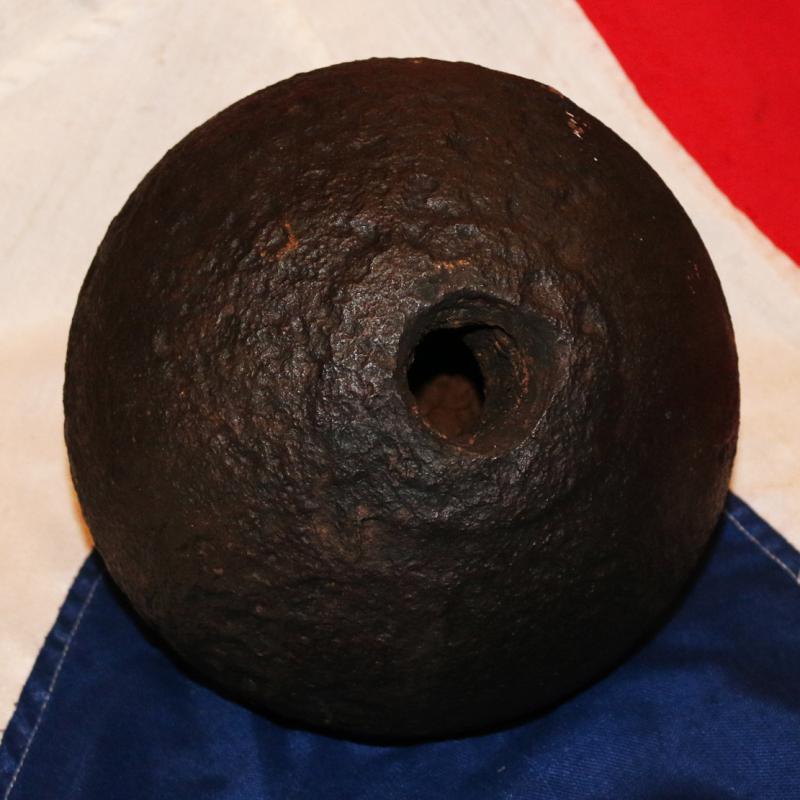
A Superb, Original, Napoleonic Wars, Peninsular Campaign, Siege of Badajoz, 1812, French 8" Explosive Type Howitzer Ball. Used In the Defence of Badajoz. In Fabulous Condition For Age
A large and most impressive hollow iron mortar ball weighing around 30lb. In superb excavated condition, but as it was barely in the usually dry ground {a missfire as it failed to explode} for 15 years or so, it has only basic surface wear. Brought back to England in the 1820's from Badajoz, found during a 'Grand Tour' of Spanish, Napoleonic Wars, Peninsular Campaign battle sites.
The gun crews were composed of 5 men. In 1808, one 6 inch mortar type, with a 3 men crew was added to the list. There was also an 8 inch mortar, outside the Gribeauval system. For these calibres, the bombs could be loaded by one single man and the hooks were not needed.
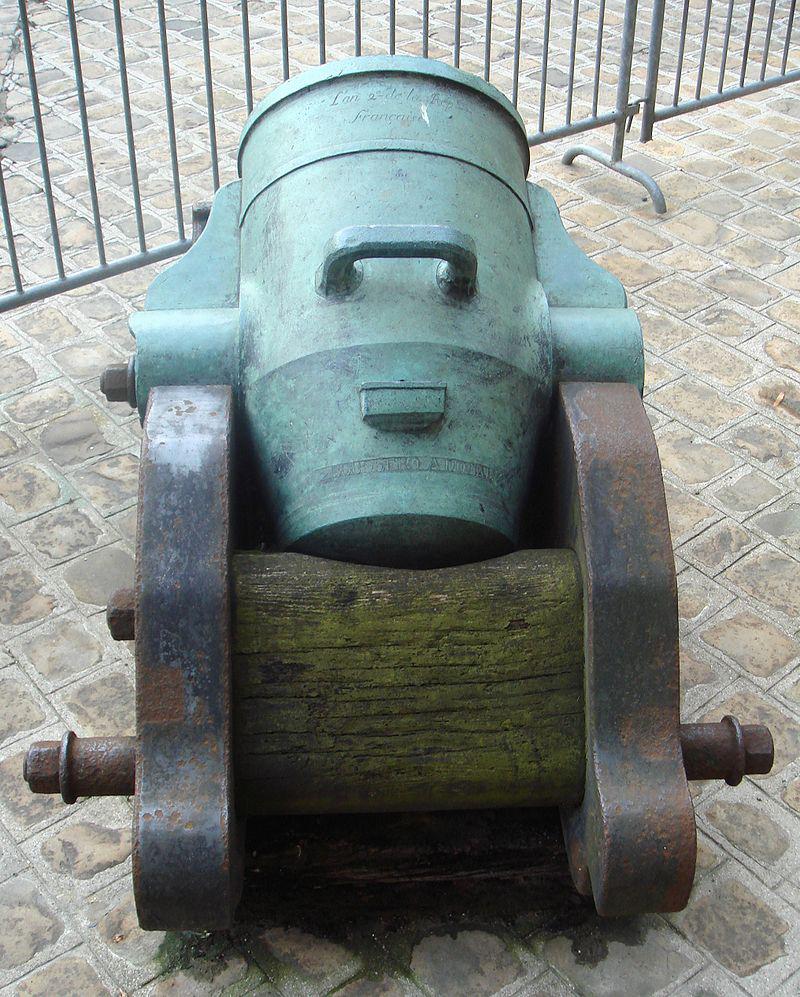
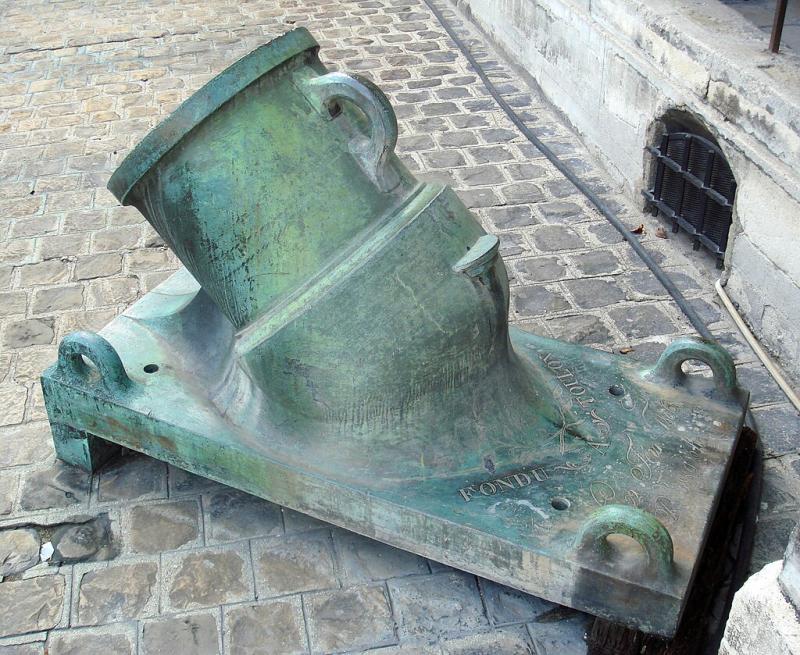
The 8-inch howitzer was classified as a heavier piece used for siege and fortress artillery.
Consequently, the 8-inch howitzer was primarily deployed during the sieges of strongholds and fortified towns during the Napoleonic Wars, both for defensive, and, offensive barrages.
Specific examples of battles or campaigns where French siege artillery, including 8-inch howitzers, would have been used include:
The Siege of Zaragoza (1809)
The Siege of Badajoz (1812), where grenades (also fired from howitzers) were used as a defensive weapon alongside the large 8" Howitzer balls
The Siege of Tarragona (1811)
The Siege of Cadiz (1810-1812), where 9-inch and 11-inch howitzers (a later innovation) were also used
In the field, Napoleon favored mobility and speed, which led to the extensive use of the lighter 4-, 8-, and 12-pounder cannons and the 6-inch howitzer, often employed in "grand batteries" to concentrate devastating fire on specific points of the enemy line. The 8-inch howitzer, being heavier and less mobile, was not suited for regular mobile field warfare and was usually reserved for more static siege operations.
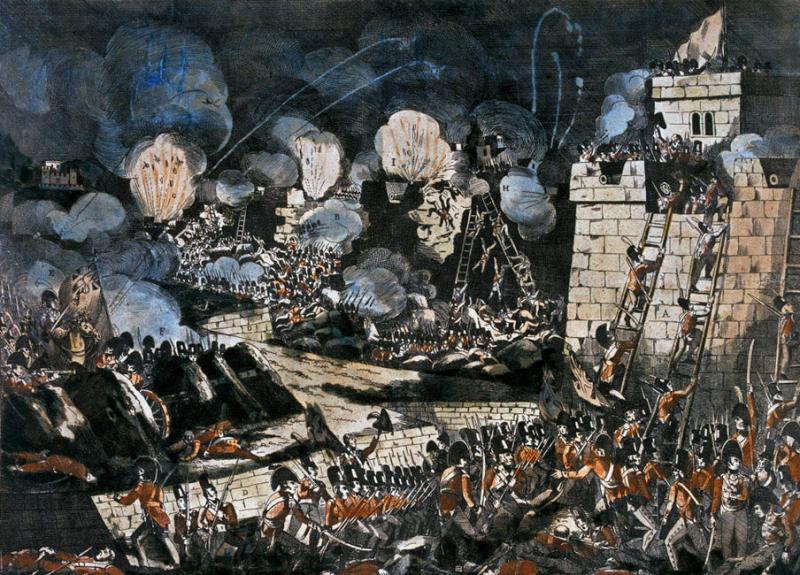
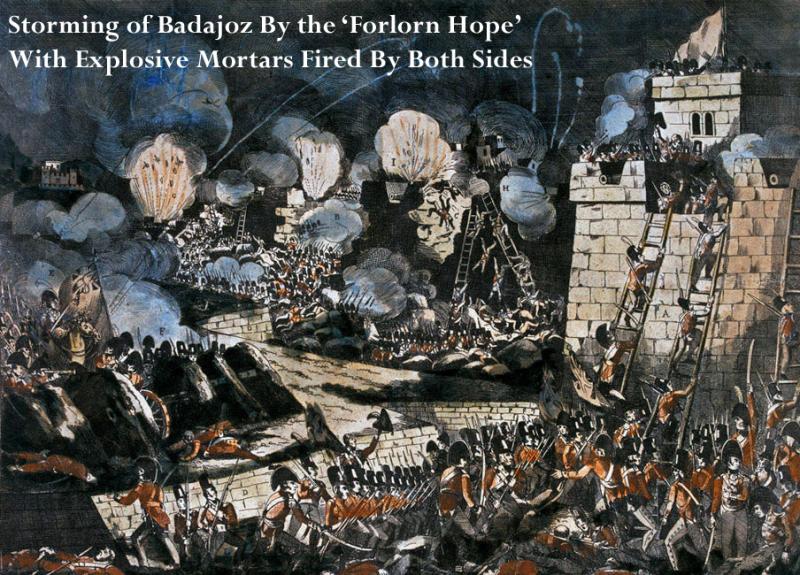
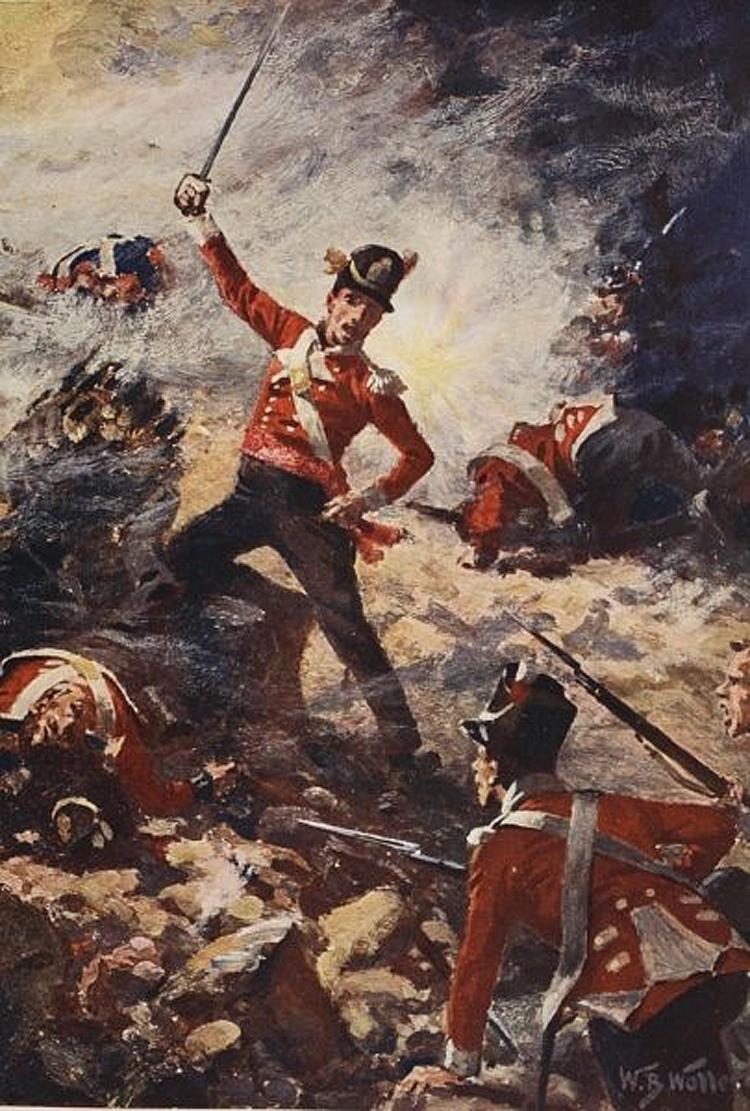
The French garrison at the Siege of Badajoz in 1812 did not make significant use of howitzers in an offensive capacity, but, records indicate they possessed and used howitzers considerably in a defensive role, particularly for firing shells and grapeshot from the ramparts and in sorties against the British and Portuguese infantry assaults. The british assaults were performed by the volunteer men known as the 'Folorn Hope'
A forlorn hope is a band of soldiers or other combatants chosen to take the vanguard in a military operation, such as a suicidal assault through the breach of a defended position, or the first men to climb a scaling ladder against a defended fortification, or a rearguard, to be expended to save a retreating army, where the risk of casualties is high. Such men were volunteers motivated by the promise of reward or promotion, or men under punishment offered pardon for their offenses, if they survived.
:
Defensive Use: The French, under the command of General Philippon, were well-equipped with various types of artillery for the city's defense. They used their guns and these howitzers to inflict heavy casualties on the British and Portuguese besiegers during the construction of siege trenches and during the final assault on the breaches.
Eyewitness accounts from earlier sieges (e.g., May 1811) specifically mention the French bringing a "Royal Howitzer" out to the area of the Picurina hill during a sortie to fire shells into the allied camps, demonstrating their use of this type of ordnance.
By the time of the final British assault in April 1812, the French garrison was running short of ammunition for their heavy guns and howitzers, which forced them to be economical with their fire to save what they had for the final resistance. This would have limited the overall use of howitzers during the latter stages of the siege.
Defenses at Breaches: During the final assault, the French used a variety of measures to defend the breaches, including explosives, harrows, and chevaux de frise, alongside heavy musket and artillery fire from the ramparts and retrenchments.
In essence, French howitzers were a component of the city's overall defensive artillery, used for firing explosive shells and other close-range ammunition against the besiegers' lines and attacking columns.
Colin Campbell leading the 'Forlorn Hope' in the assault, a painting by William Barnes Wollen
I9th century painting of the Siege of Badajoz in the gallery showing very clearly the trajectory and explosive power of the Howitzers used by both the British and French forces at the same time during the assault.
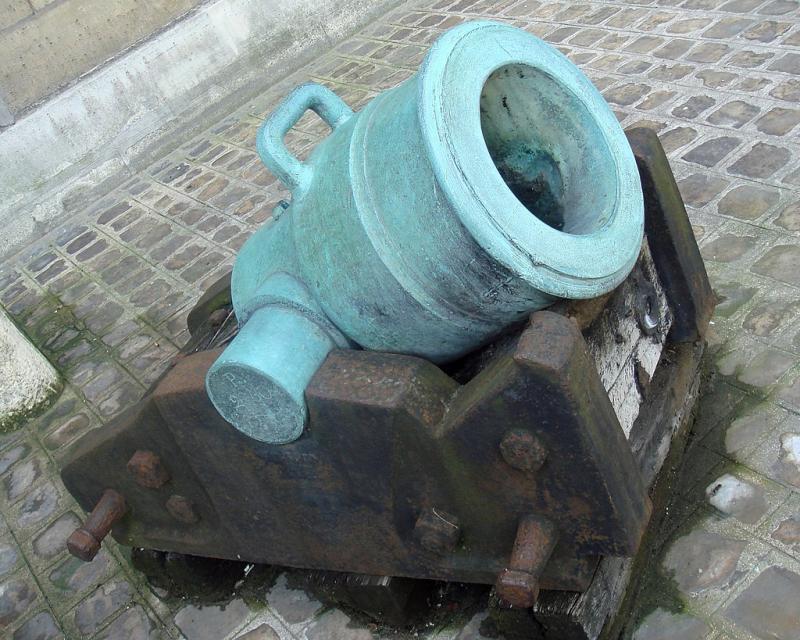
French Bronze Howitzer photos By PHGCOM - Own work, CC BY-SA 3.0, https://commons.wikimedia.org/w/index.php?curid=5283907
The cast iron ball is empty thus perfectly inert and safe.
Code: 25984
1200.00 GBP