
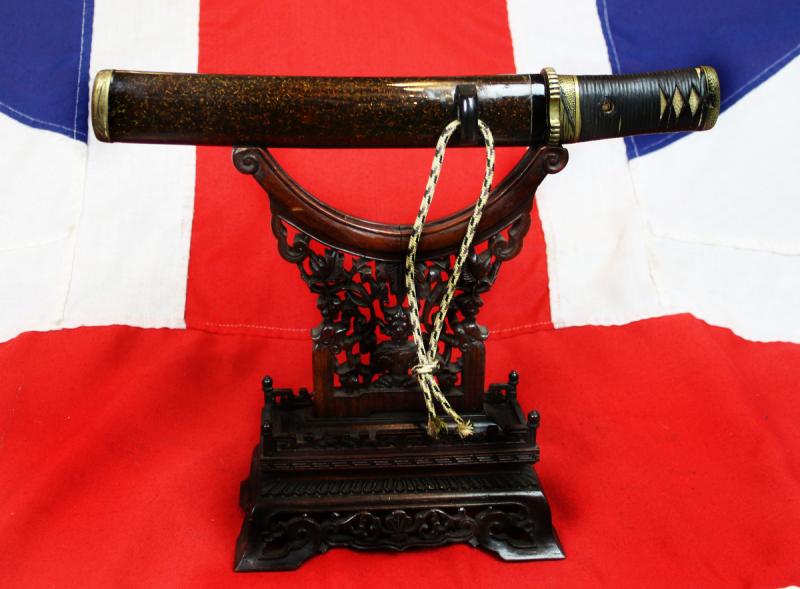

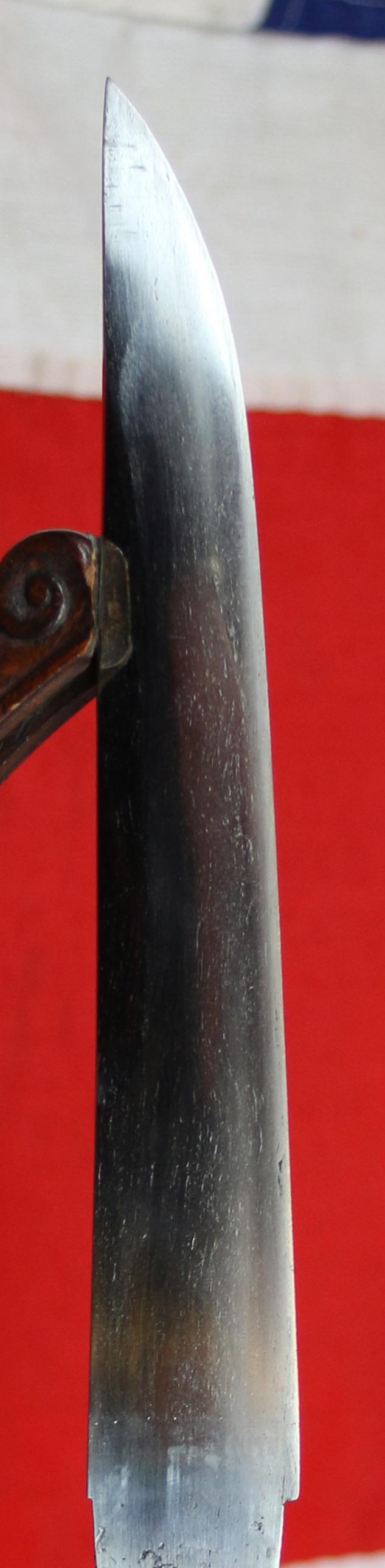
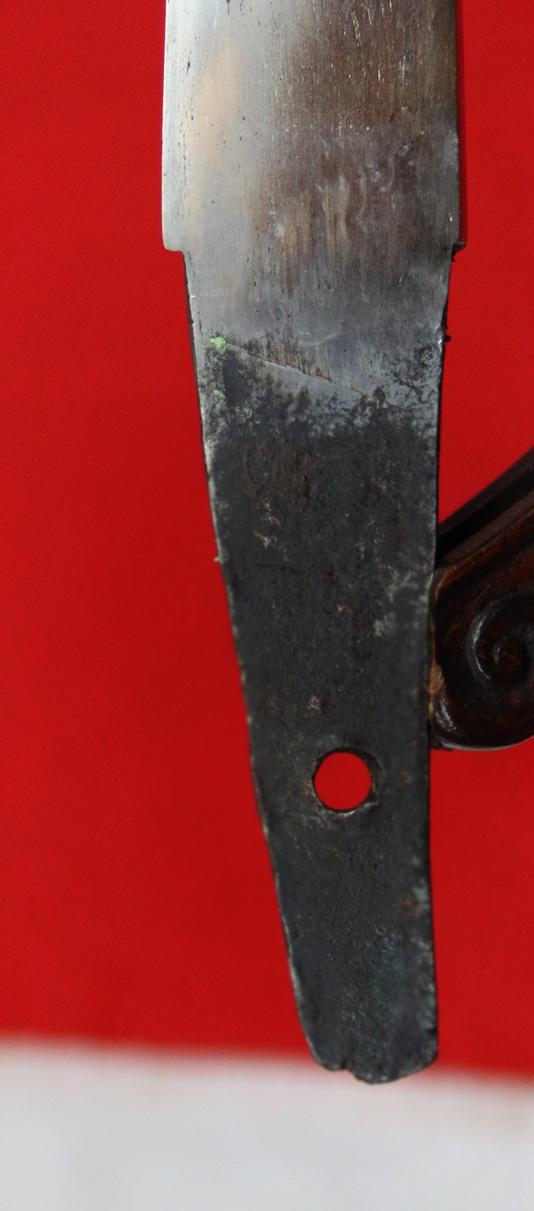


A Superb Antique, Shinto Era, Unokubi (鵜首) Zukuri Blade Tantō, 17th Century. Edo Matsushiro Sinano School Sinchu and Silver Koshirae. Just Arrived From A Premium Grade Collection, Previously Acquired Over Decades
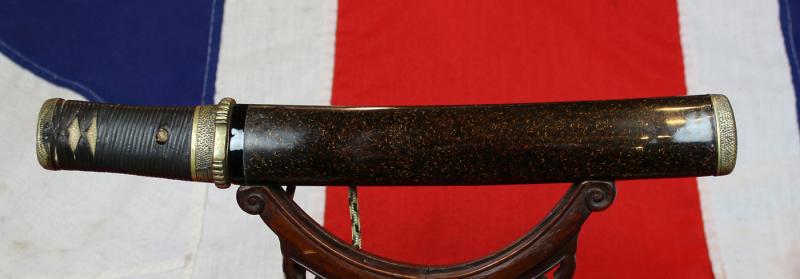
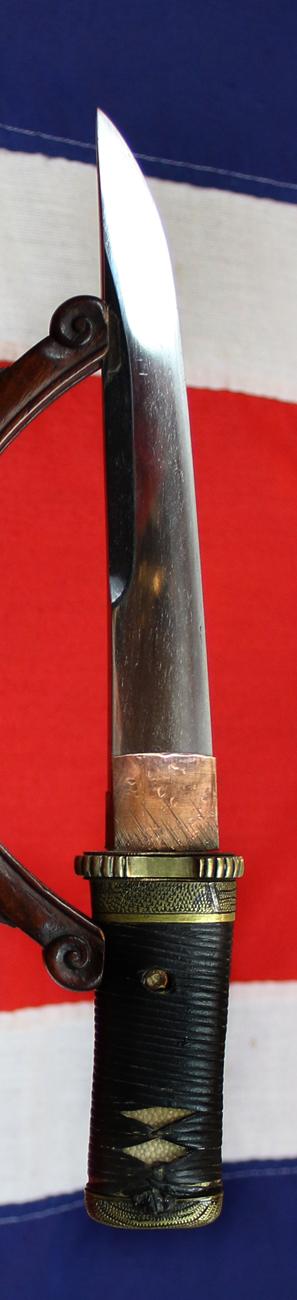
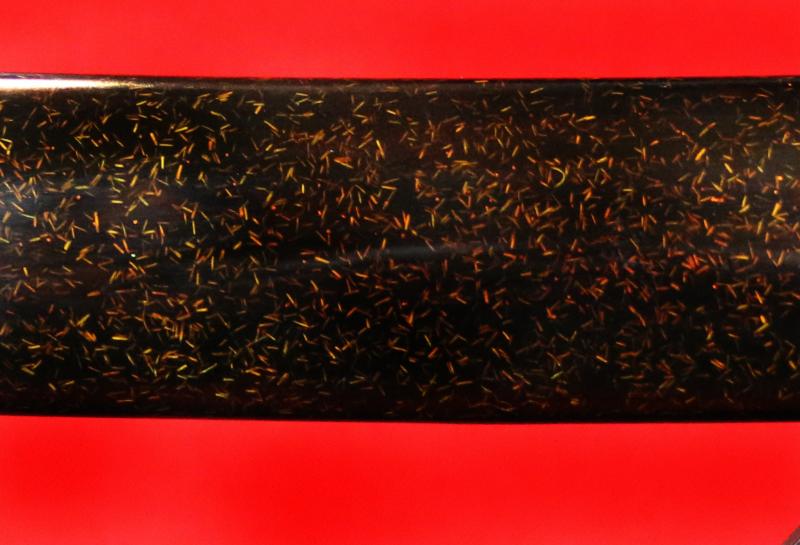
A beautiful little tanto with a fine Shinto blade of rare blade shape, in very clean polish, with just a very few minuscule age surface marks which is remarkable as it is around 400 years old. The tsuka {hilt} is very unusually bound in its original, Edo period, leather tsuka-ito in partial battle-wrap style over traditional white samegawa {giant rayskin}. The saya has stunning and intricately applied pine needle decor beneath clear lacquer and overall this early samurai dagger is incredibly appealing, and would make a fine start to a collection, or a great addition to an already existing one. The superb samurai swords that just arrived {including this one} are numbering around 25 fine pieces, from the Koto to Shinshinto period vary from tachi to katana, chisa katana, wakazashi and tanto And include, two, very fine signed ancestral bladed WW2 mounted officer's swords. One in such fine condition one could imagine it was just surrendered last week, by a Japanese colonel, not 80 years ago!
Unokubi (鵜首) is an uncommon tantō style akin to the kanmuri-otoshi, with a back that grows abruptly thinner around the middle of the blade; however, the unokubi zukuri regains its thickness just before the point. There is normally a short, wide groove {hi} extending to the midway point on the blade, this is a most unusual form of unokubi zukuri blade tanto without a hi.
The fuchigashira and sayagaki and jiri are all matching brass decorated with fulsome designs and silver striping. Fully matching suite of sinchu and contrasting silver line mounts to the tsuka and saya, all from the Edo period Matsushiro Sinano school.
The tanto was invented partway through the Heian period. With the beginning of the Kamakura period, tanto were forged to be more aesthetically pleasing, and hira and uchi-sori tanto becoming the most popular styles. Near the middle of the Kamakura period, more tant? artisans were seen, increasing the abundance of the weapon, and the kanmuri-otoshi style became prevalent in the cities of Kyoto and Yamato. Because of the style introduced by the tachi in the late Kamakura period, tanto began to be forged longer and wider. The introduction of the Hachiman faith became visible in the carvings in the hilts around this time. The hamon (line of temper) is similar to that of the tachi, except for the absence of choji-midare, which is nioi and utsuri. Gunomi-midare and suguha are found to have taken its place.
During the era of the Northern and Southern Courts, the tanto were forged to be up to forty centimetres as opposed to the normal one shaku (about thirty centimetres) length. The blades became thinner between the uri and the omote, and wider between the ha and mune. At this point in time, two styles of hamon were prevalent: the older style, which was subtle and artistic, and the newer, more popular style. With the beginning of the Muromachi period, constant fighting caused the greater production of blades. Blades that were custom-forged still were of exceptional quality. As the end of the period neared, the average blade narrowed and the curvature shallowed
Blade length 7 1/2 inches long tsuba to tip, overall in saya 12 3/4 inches
It will come complete, with our compliments, with a most decorative damask storage bag, a pair of white handling gloves and a white microfibre cleaning cloth.
Code: 25975