
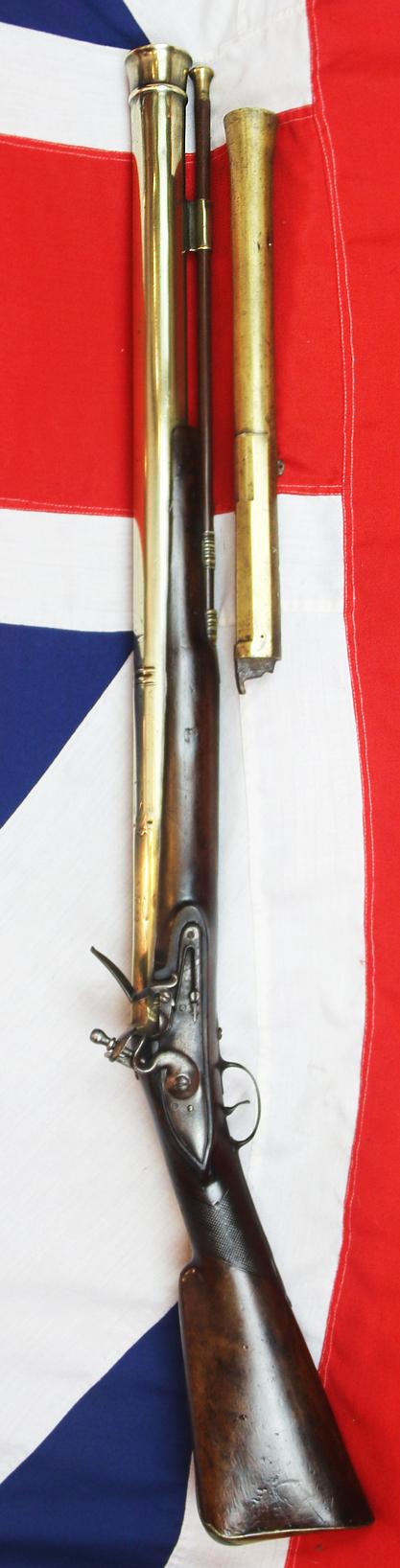



17th to 18th Century, A Truly Wondrous, Royal Naval, Brass Barrelled, Hand-Cannon Blunderbuss, a Ship’s Gun For Use As An Anti-Pirate Weapon or to Repel an Enemy Ship's Boarding Party, a Behemouth of Enormous Proportions
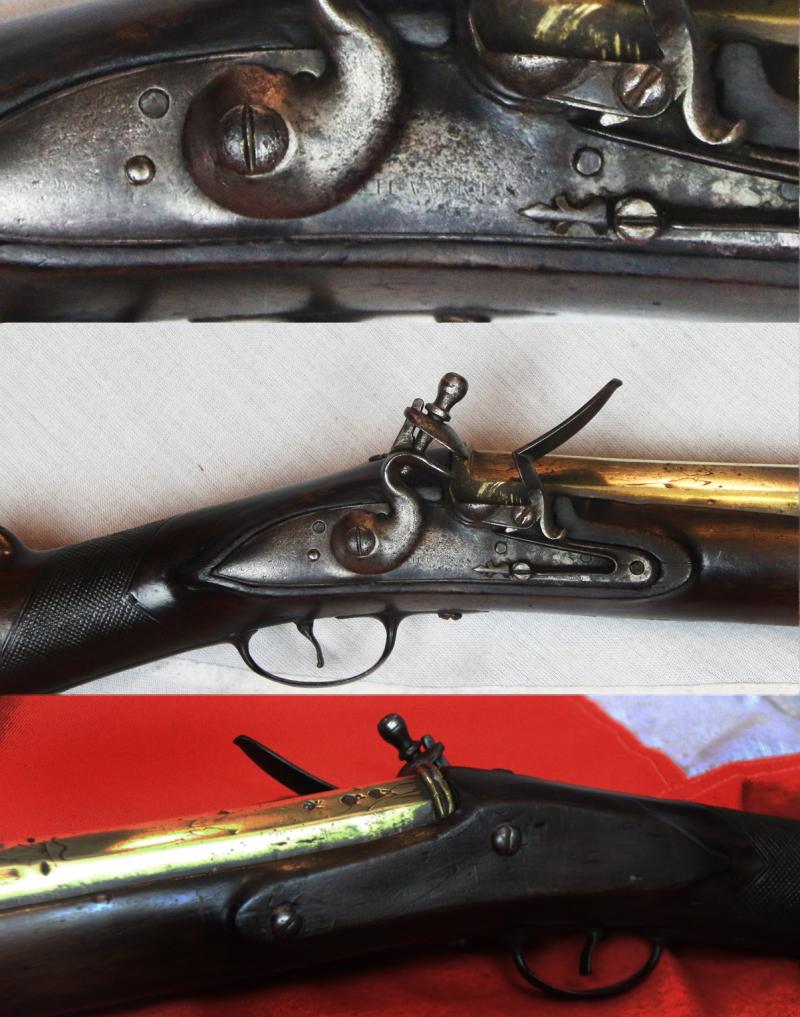
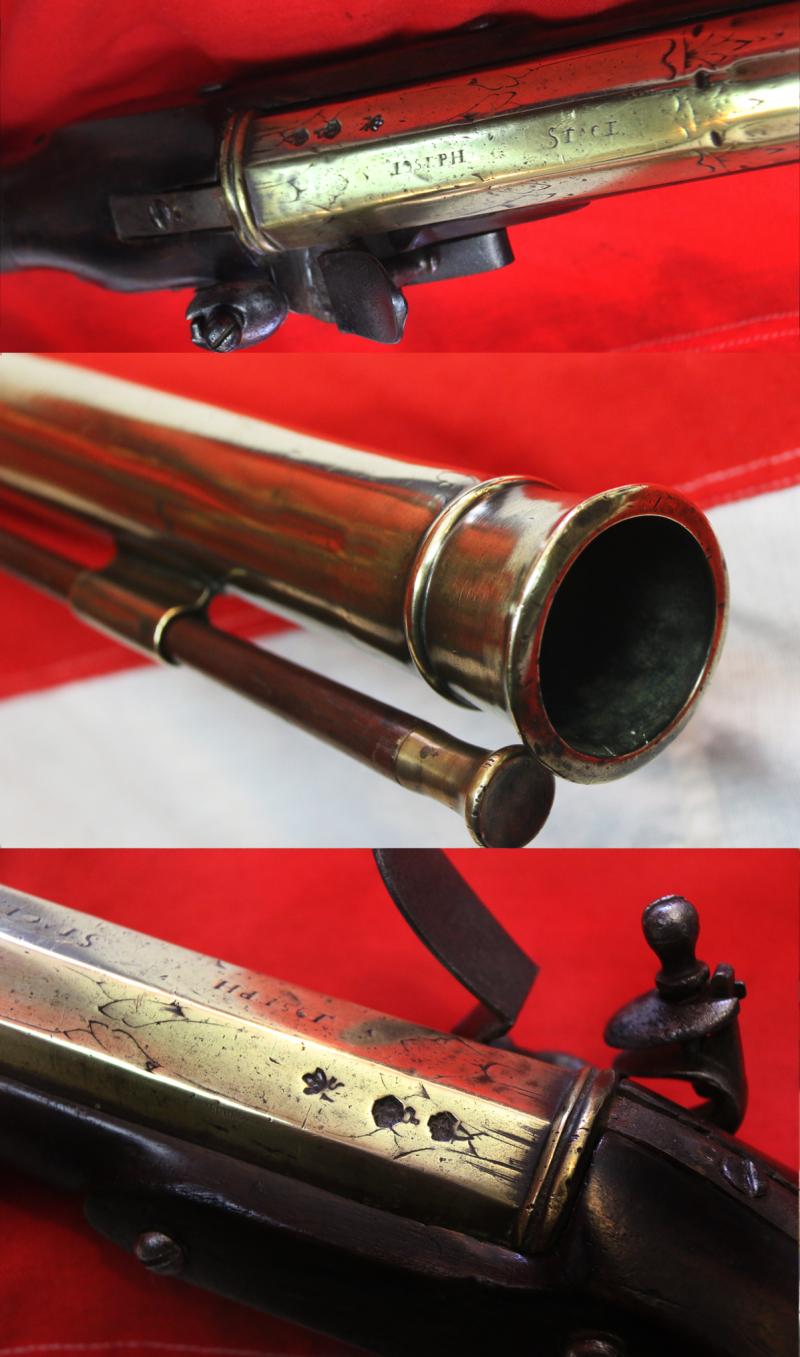
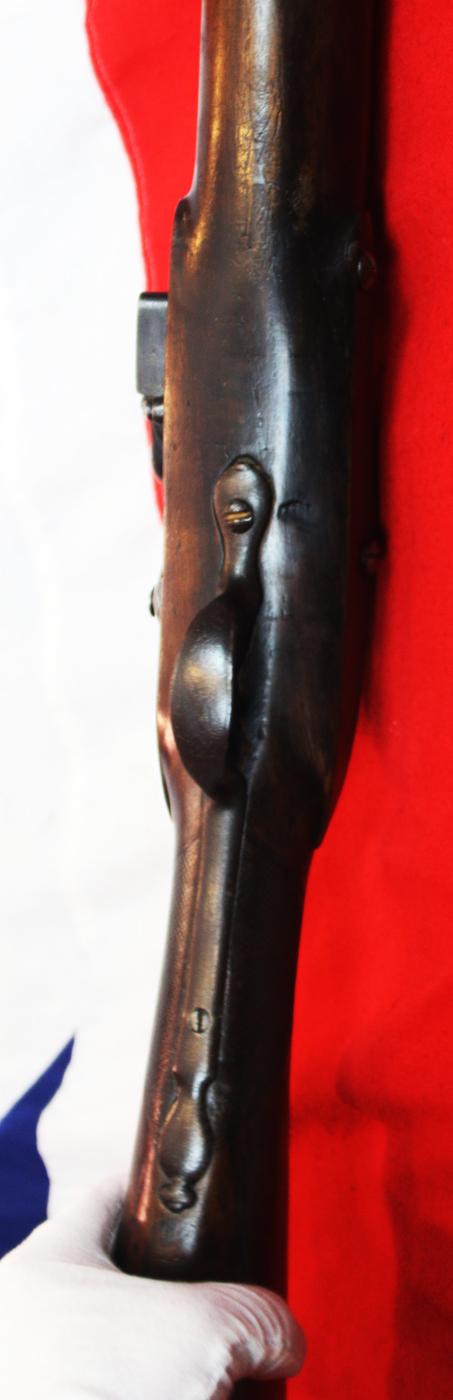
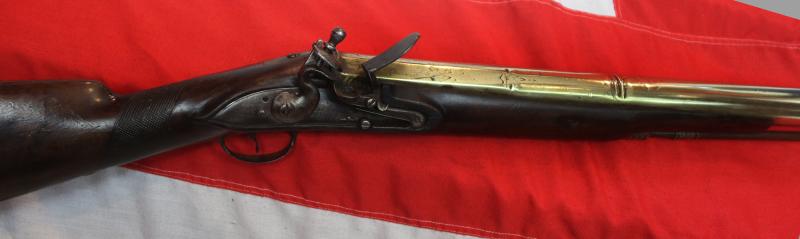
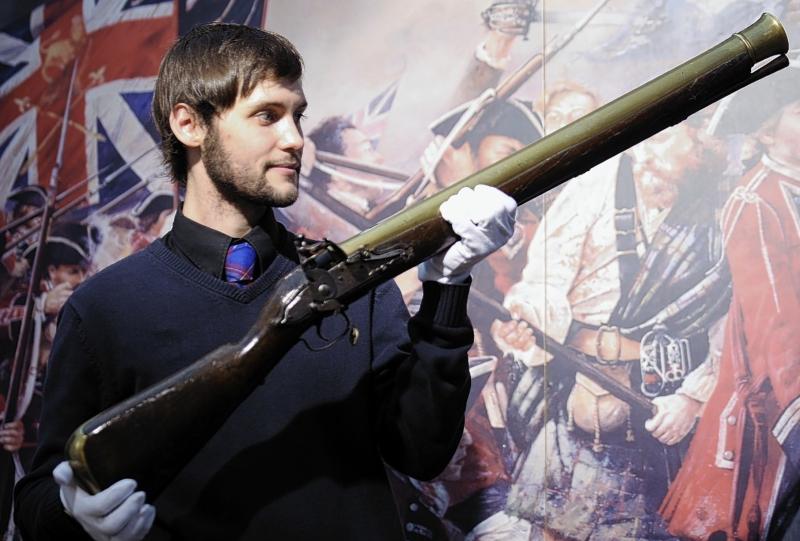
A huge brass cannon barrel, 78cm long, and the gun is 125 cm long overall, with fine proofs and makers proof mark. Finest walnut stock with all brass furniture, fine, good size lock made by the famed John Hawkins of London, George Washington's favourite gunsmith. And his pair of pistols, made by John Hawkins of London, a gunsmith from 1675 to 1714, {whereupon his business was continued by his son also John} Washington used until the end of the Revolutionary War, they are considered national treasures, and now reside in in the second floor West Point museum. They were gifted to Washington in April 1778 by Thomas Turner
Overall in truly fabulous condition, with the very best of natural age patina over it's whole form. The Naval Hand Cannon was effectively midway between a standard Naval Blunderbuss and a Naval Swivel Cannon.
With the sound of 'Beat to Quarters’ ringing out aboard ship this would be just about the largest hand to shoulder-cannon weapon an individual seaman can fire before it becomes just too powerful to manage, however, it could, and would, also be mounted on the ship's rail, with a detachable swivel, should the need arise.
In naval service, the phrase 'beat to quarters' indicated a particular kind of drum roll that ordered sailors to their posts for combat, where some would load and prepare to fire the ship's guns, and others would arm with muskets and ascend the rigging as sharpshooters.
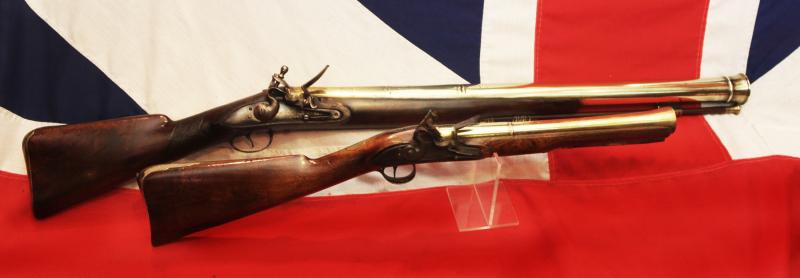
An ironic fact about the Royal Naval ship's blunderbuss had a catastrophic ending for England's greatest seafaring hero. It can be argued, that due to Admiral Nelson's fear of the chance of a Blunderbuss discharge causing fire in his flagship's rigging, he might not have tragically died at Trafalgar. For it was due to this fear of fire, that he personally discouraged their use in this close quarter action on HMS Victory, even though their use for this was standard procedure aboard all other ships-of-the-line in the Royal Navy. It was for this very purpose that the Ship's Blunderbuss was used, for the clearance of snipers, from opposing ships rigging, when in those very close quarter actions, and due to there being no permission granted by him, for the use of his blunderbuss in that way, he was tragically shot through the spine and ultimately killed by a French sniper. And thus, the rest, as they say, is history. In theory, it is possible to believe that for the want of his flagship's blunderbuss, England's greatest ever hero might never have died on the day of his greatest victory, and he might even have lived to go on to even greater glory. We photograph it in the gallery alongside a normal unmounted blunderbuss barrel for size comparison, and another regular sized blunderbuss, and thus all due perspective as to its enormity by contrast.
The behemouth barrel is a typical King Charles IInd period naval barrel, made by Joseph Stacey, and the gun would have likely had a dog-lock action. However, according to Howard Blackmore, {asst keeper at the Tower of London} in around 1740 many such guns in service, were recalled to the ordnance, and improved with regular flintlock actions and re-stocking as appropriate.
Before such work by the ordnance the gun would likely have seen such service at the Battle of Cape Passaro, or in the Caribbean on anti pirate patrols.
The British government was taking the problem of piracy seriously. The number of royal ships committed increased from just three or four in the West Indies and none in North American waters in the 1670s to a maximum of 24 ships employing 3,500 men in the 1700's – more men, in fact, than there were pirates.
Jamaica served as headquarters, with six ships, and the rest were stationed in other islands and in the mainland colonies. Naval orders stated that pirate ships were to be hunted down and destroyed and local colonial trade protected from pirate attack.
The Battle of Cape Passaro, also known as Battle of Avola or Battle of Syracuse, was a major naval battle fought on 11 August 1718 between a fleet of the British Royal Navy under Admiral Sir George Byng and a fleet of the Spanish Navy under Rear-Admiral Antonio de Gaztañeta. It was fought off Cape Passaro, in the southern tip of the island of Sicily of which Spain had occupied. Spain and Britain were at peace, but Britain was already committed to supporting the ambitions of the Emperor Charles VI in southern Italy.
The battle was fought without a formal declaration of war but once the Spanish fired on the nearest British ships, this gave Byng his excuse to attack. The British were superior in numbers. The battle was the most significant naval action of the War of the Quadruple Alliance and resulted in a decisive victory for the British fleet, which captured or burned sixteen Spanish ships of line and frigates and several small vessels. Some of the Spanish ships were taken in the main action and some taken or burnt by their crews, who fled to the coast of Sicily. Both Castañeta and Chacón were captured. As a result of the battle the Spanish army in Sicily were thus isolated and cut off from outside help. Four months later the War of the Quadruple Alliance was formally declared.
Out of historical interest, in 1996 off the coast of North Carolina, Blackbeard the Pirate’s ship, the ‘Queen Anne’s Revenge’ was discovered, and brought up from the wreck was an almost identical 1680’s King Charles IInd brass barrel, it was all that remained of Blackbeard’s same type of huge blunderbuss hand-cannon.
And another historic blunderbuss but smaller than ours which was used at the Battle of Culloden, also had a most similar Charles IInd barrel by John Finch, made in 1670, has been saved for the Highlands after the public donated thousands of pounds to a campaign to buy it for £85,000.
See photo 10 in the gallery of the Culloden blunderbuss.
Every single item from The Lanes Armoury is accompanied by our unique Certificate of Authenticity. Part of our continued dedication to maintain the standards forged by us over the past 100 years of our family’s trading, as Britain’s oldest established, and favourite, armoury and gallery
Code: 24985
Price
on
Request