
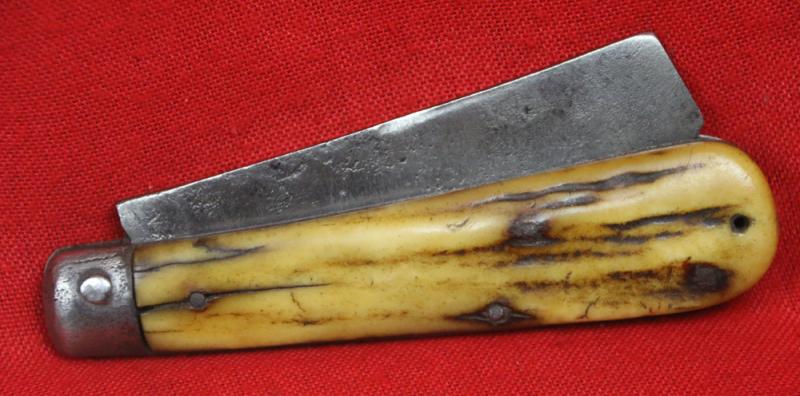
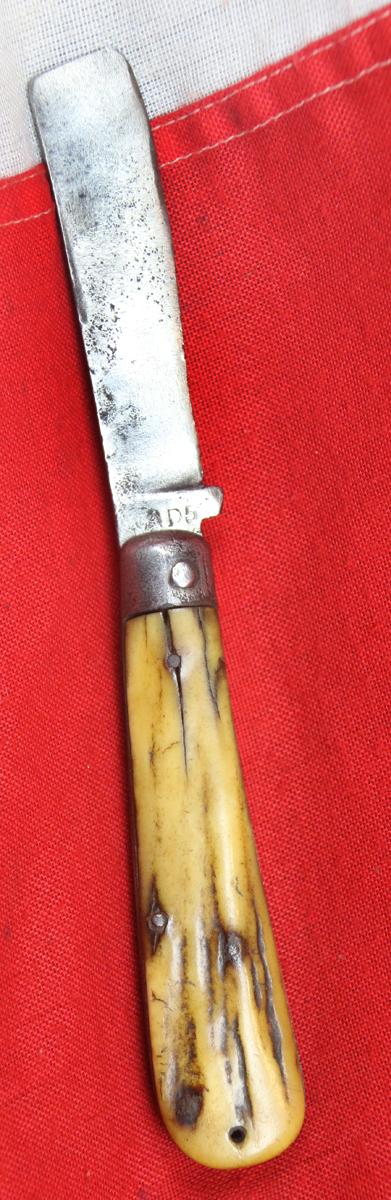
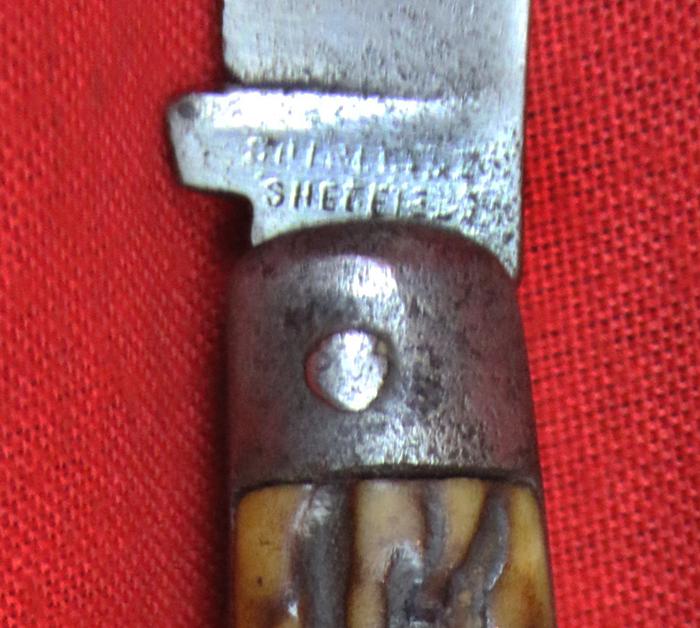
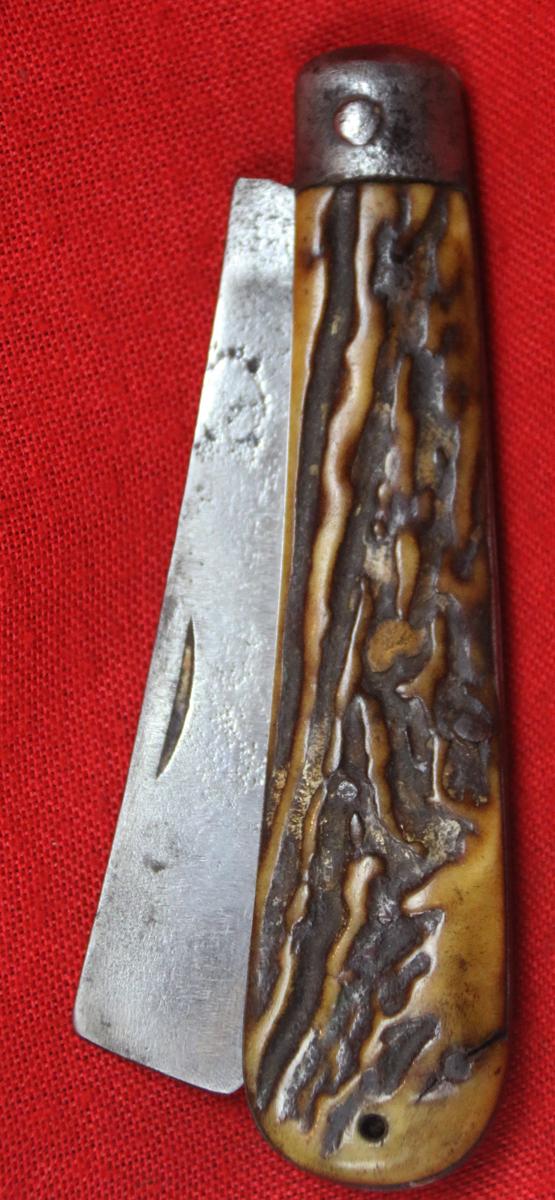
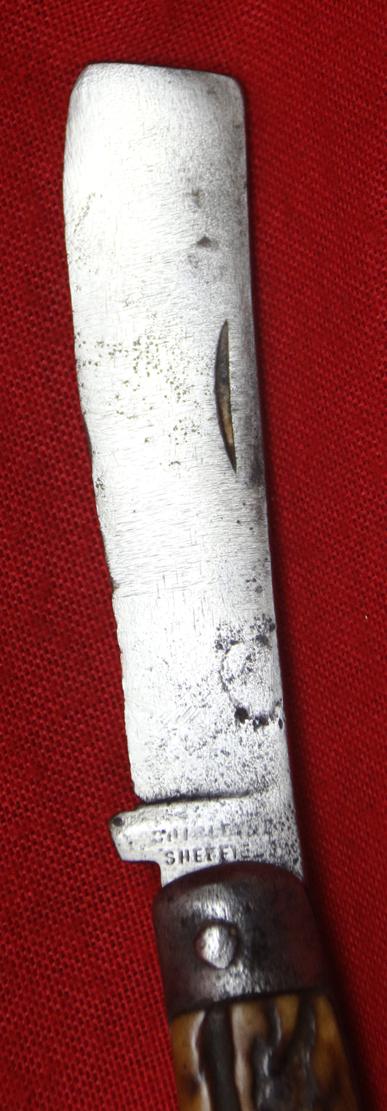
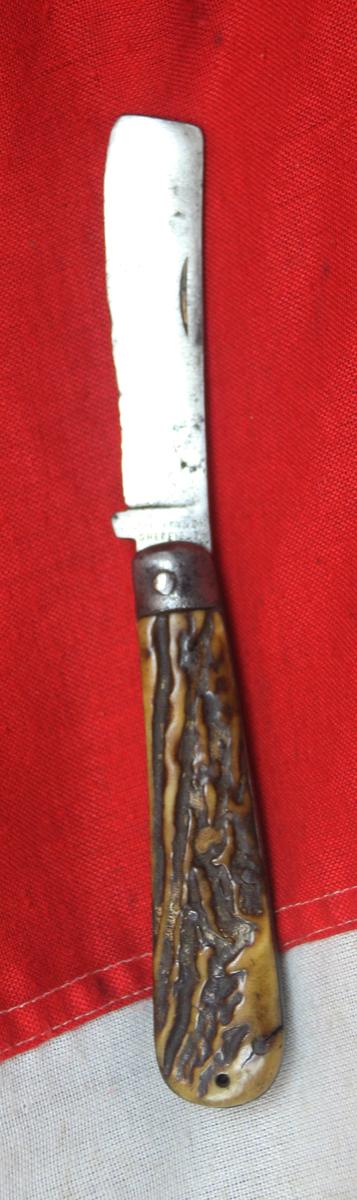
A Rare, Shirley and Co. Sheffield, Antique, American Civil War Era Sailor's Rope Knife
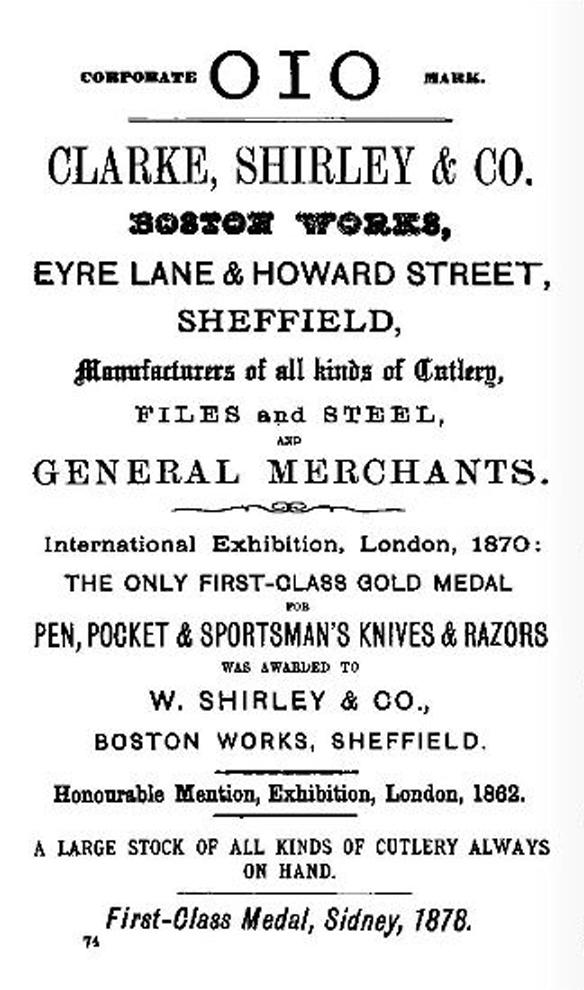
Made in Sheffield, England circa 1847, by Clarke and Co. Cutlers, early makers mark
A very good antique folding clasp knife with sheeps-foot form blade, mid 19th century.
Maker marked, with stag-horn grip plates
A similar knife was found on the wreck of the USS Cairo sunk during the Civil War.
Cutlery means ‘that which cuts’, and can be anything from pocket knives, to scissors, ice skates and scythes. The first reference to cutlery made in Sheffield was in 1297, when the hearth tax records include Robertus le Coteler – Robert the Cutler. In 1340 King Edward III’s possessions in the Tower of London included a Sheffield knife, and Geoffrey Chaucer wrote ‘A Sheffeld thwitle whittle baar he in his hose’ about the Miller in The Reeves Tale. In the fourteenth and fifteenth centuries Sheffield and the surrounding area of Hallamshire were in competition with cutlery-making in Thaxted (Essex), Ashbourne (Derbyshire) and Woodstock (Oxfordshire). The largest manufacturing centre, however, was in London where trade was controlled by the Worshipful Company of Cutlers.
Despite the growth of both Sheffield and the cutlery industry, most manufacturing was concentrated within a square mile of the city centre. This was due to the specialisation of processes within cutlery manufacture, which relied on having other cutlery producers nearby to work with and for.
The largest market for Sheffield cutlers in the early nineteenth century was America. In 1812 6000 people out of the working population of 18,000 were making for the American market, and it was reported a third of all manufactured goods were for export to America. One knife, however, became iconic in early nineteenth century America; the Bowie knife. After 1840 demand increased and Sheffield dominated the market, specialising in Bowies with patriotic decorations on the blade and handle. It was not until the start of the American Civil War in 1861 and the raising of American trade tariffs that Sheffield’s export trade began to contract. American cutlers fully embraced mechanisation and mass production, which allowed them to produce cheaper goods. Competition from European cutlery centres, such as Solingen in Germany, also damaged Sheffield’s trade.
21cm long open, 9.5cm long blade
Code: 24487