
A Very Rare Edo Period O-Tanto, Signed Michitsugu, of Echigo, the Matsunaga Family of Master Sword Smiths. Mounted With a Most Rare Form of Beautiful Koshirae {Sword Fittings} the Like of Which We Have Not Seen Before
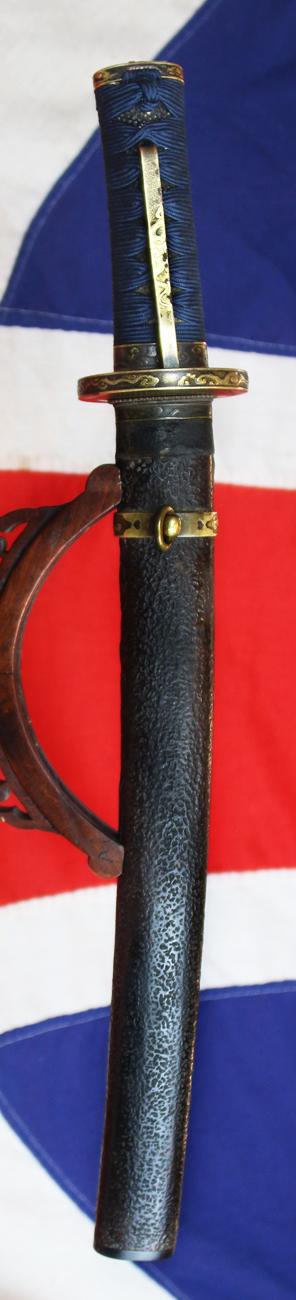
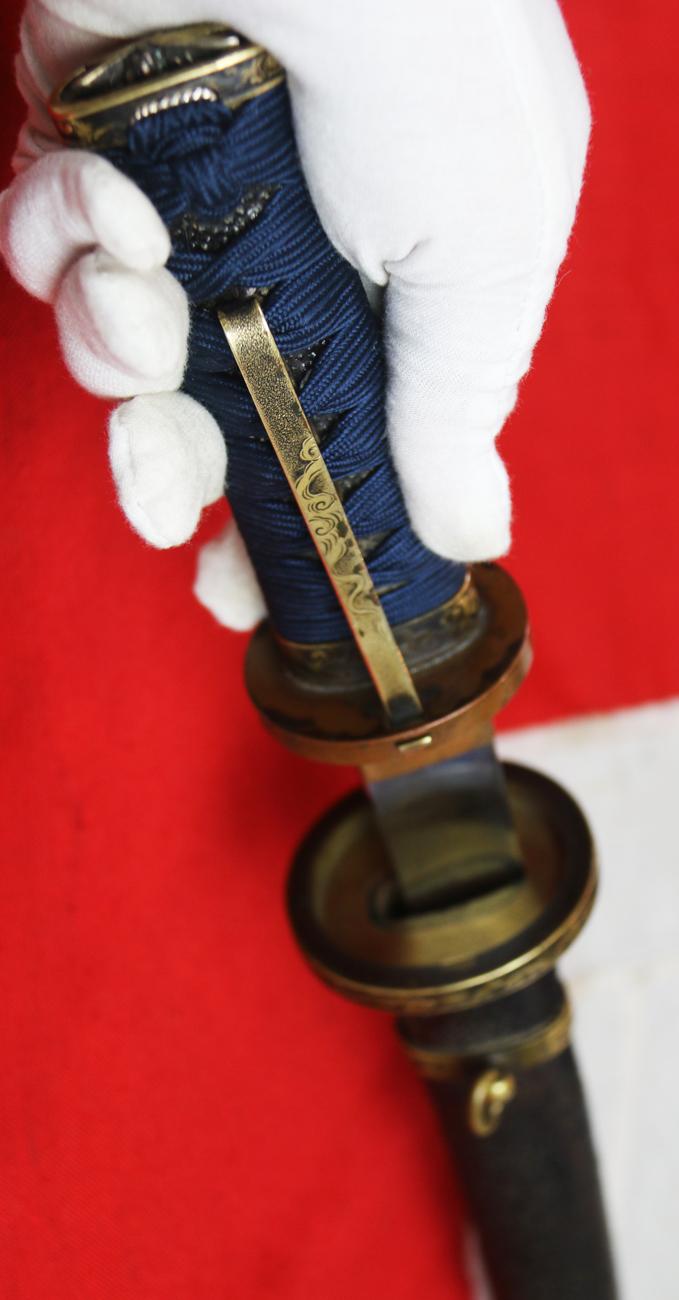
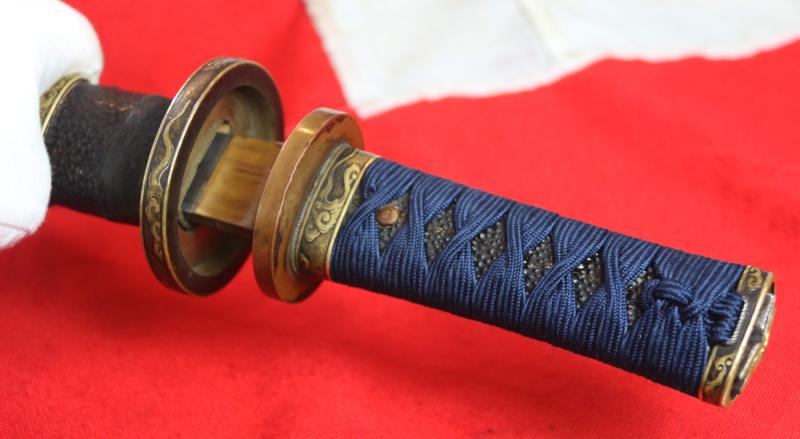
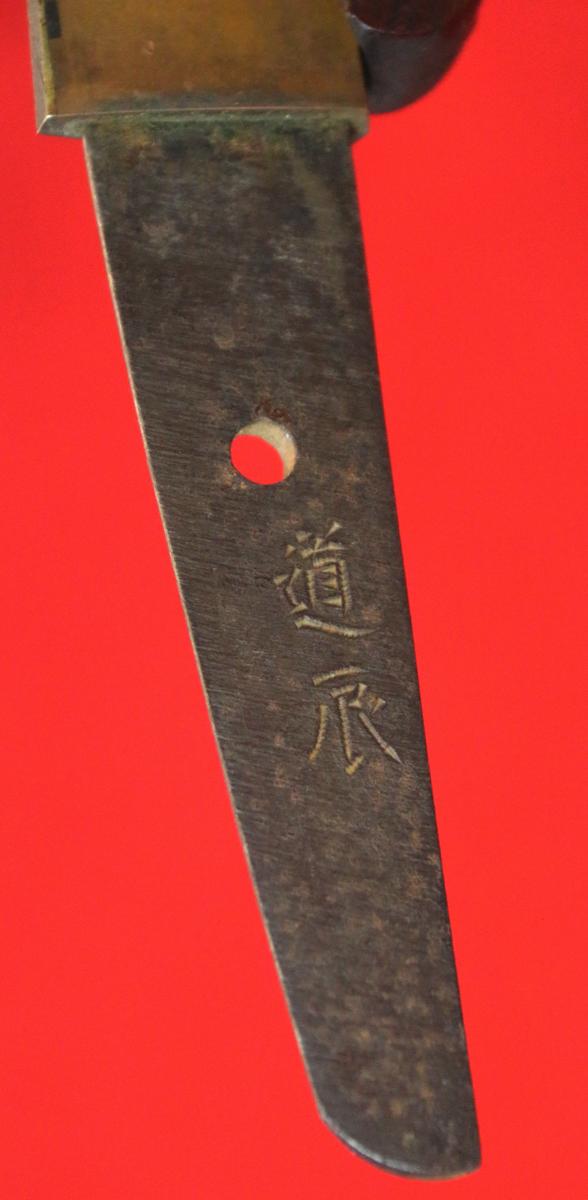
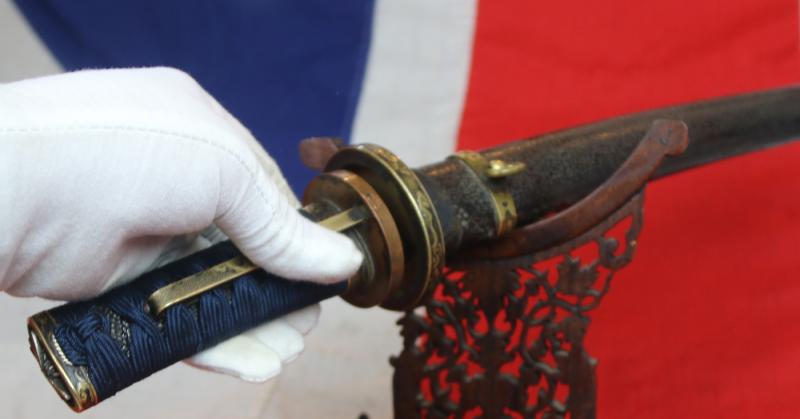
Signed blade, signed, Michitsugu, of Echigo, the Matsunaga family of smiths, and remarkable Edo period mounts of sinchu with a spring clip saya release lock arrangement through the interlocking two part tsuba. There is little known of him as too few of his swords survive today, but what we know of him and his son is most interesting {see below}
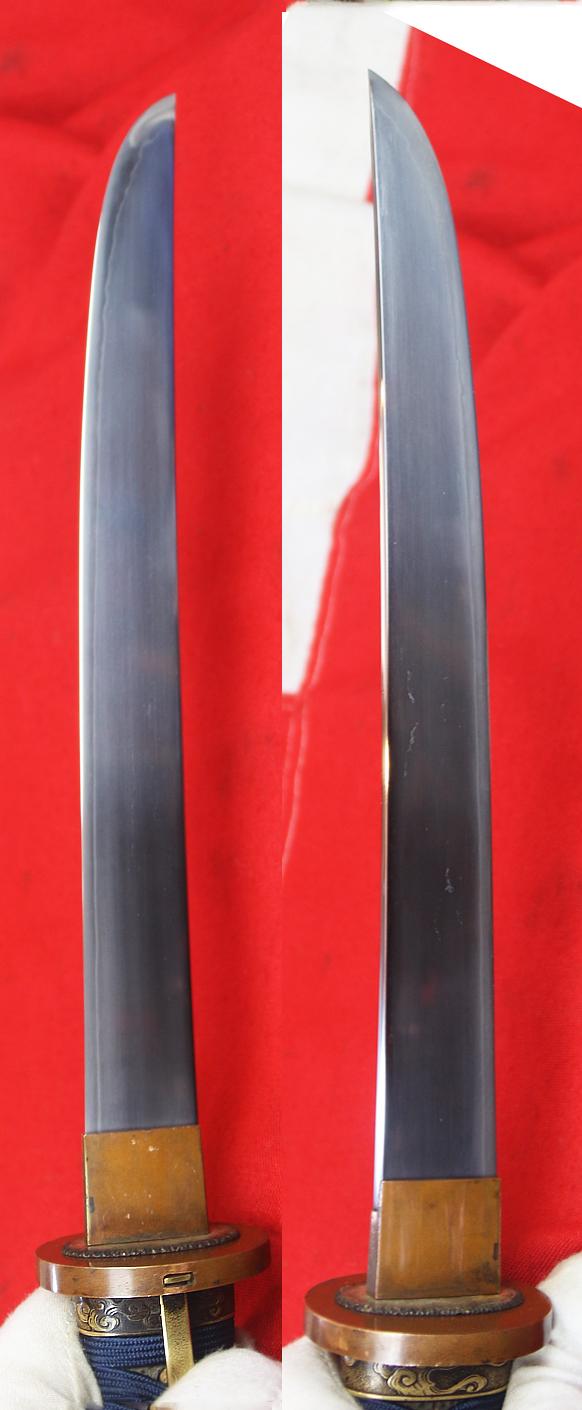
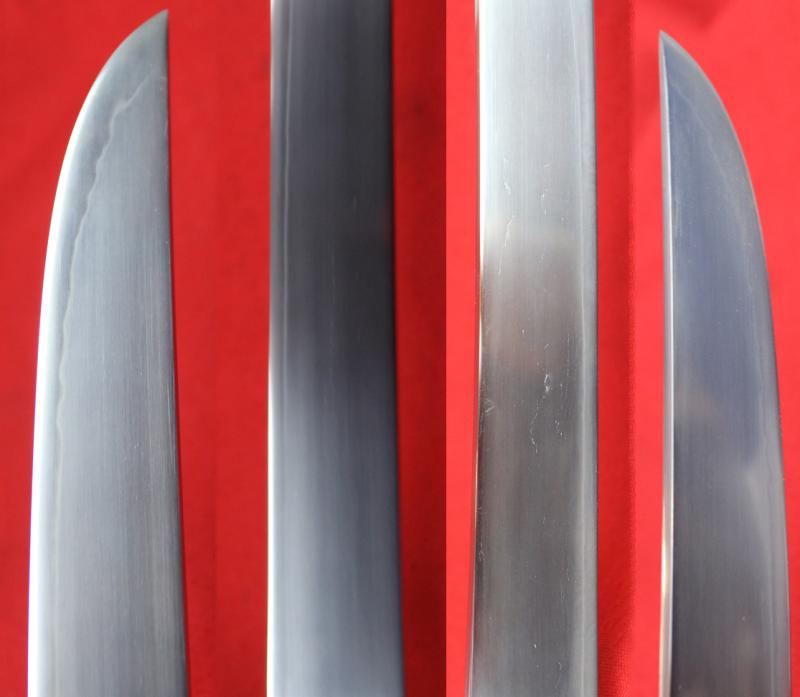
the blade has a superb narrow suguha hamon and in excellent condition.
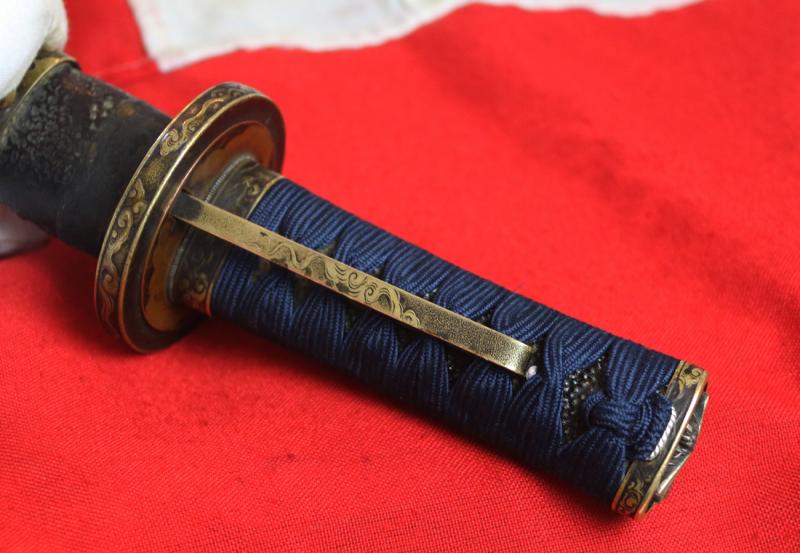
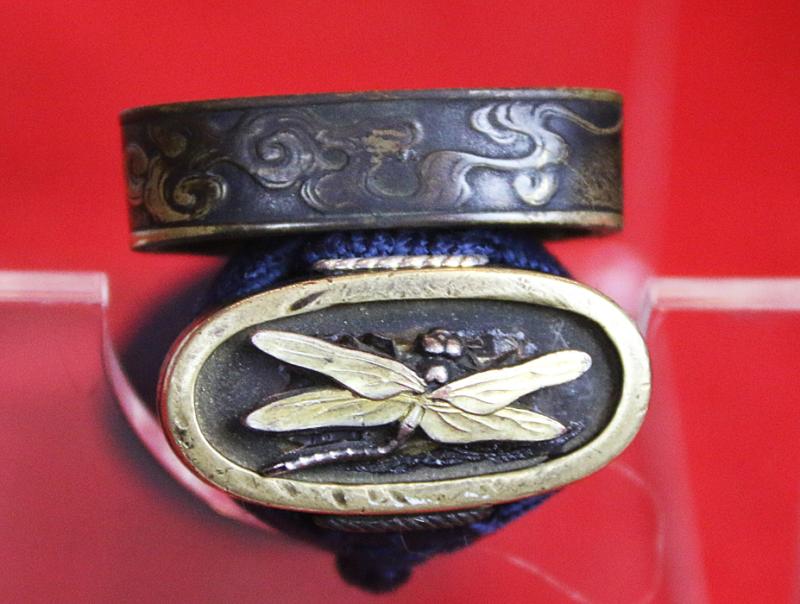
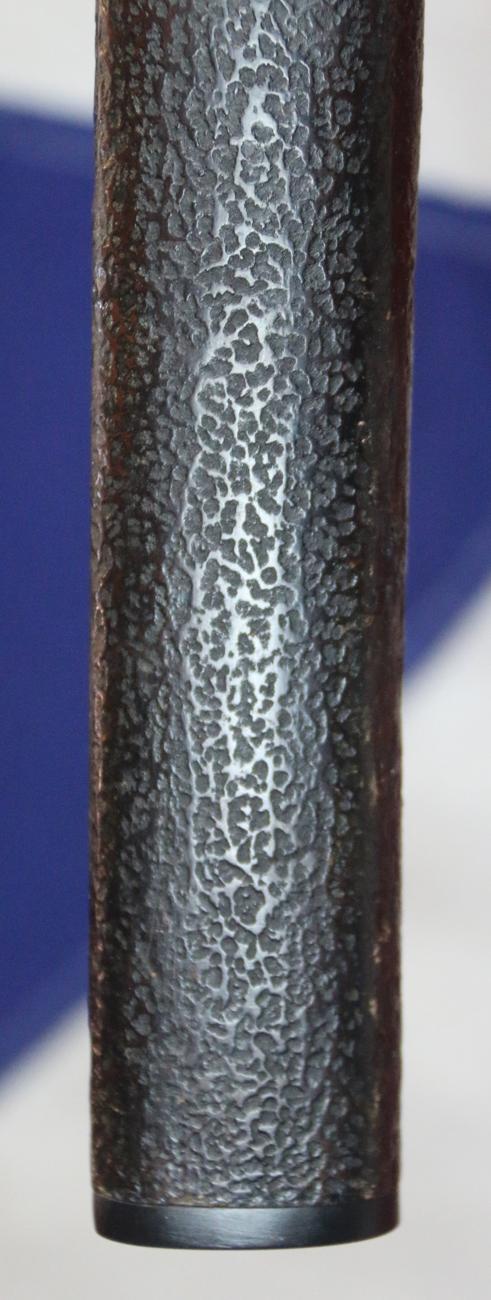
Very fine Edo period ishime style urushi lacquer upon the saya a full matching suite of fittings, a carved buffalo horn sayajiri, and an applied kashira decoration of a takebori dragonfly. A cord ring mount type kurigata. Superb blue silk tsukaito binding over black rayskin.
The sinchu spring clip on the tsuka is very reminiscent of the sinchu frizzen spring on a Japanese tanegeshima matchlock. The superb blade has a fine hamon but light surface scratches which we are having polished out.
We have never before seen a sword fitting that has a two part tsuba that half is fixed the saya permanently and the other part mounted on the on the tsuka in the traditional manner. Where the two part tsuba snugly interlocks and the tsuka is kept locked in position until released by the sinchu spring catch by depressing it by grasping the tsuka.
The ishime lacquer has had a contemporary repair at the surface on an edge below the kurigata sageo mount..
The original Edo period urushi lacquer on the saya is in simply excellent condition and shows most elegant simplicity, it reveals within that simplicity the finest craftsmanship and beauty worthy of a master of the art of urushi decor. Japanese lacquer, or urushi, is a transformative and highly prized material that has been refined for over 7000 years.
Cherished for its infinite versatility, urushi is a distinctive art form that has spread across all facets of Japanese culture from the tea ceremony to the saya scabbards of samurai swords
Japanese artists created their own style and perfected the art of decorated lacquerware during the 8th century. Japanese lacquer skills reached its peak as early as the twelfth century, at the end of the Heian period (794-1185). This skill was passed on from father to son and from master to apprentice.
Some provinces of Japan were famous for their contribution to this art: the province of Edo (later Tokyo), for example, produced the most beautiful lacquered pieces from the 17th to the 18th centuries. Lords and shoguns privately employed lacquerers to produce decorated samurai sword saya and also ceremonial and decorative objects for their homes and palaces.
Matsunaga Ryuminsai Kaneyuki 松永龍眠斉兼行 was the Chief Priest 宮司 at the Suwa Jinja 諏訪神社 of Tomioka 富岡. His side business was making swords and knives. Kaneyuki's original name is Matsunaga Shichiro 松永七郎. He is the eldest son of the Echigo Yoita 越後与板 swordsmith named Matsunaga Michitsugu 松永道次, the smith of our amazing tanto. He learned sword making from his father, and used the art name of Yukitsugu 行次. In Keio 3, he adapted the studio name of Ryuminsai which means Dragon Sleeping Studio. In Keio 4, Shichiro became a pupil of the famous smith Aizu no Furukawa Izumi no Kami Kanesada 会津古川和泉守兼定 who made Hijikata Toshizo's 土方歳三 favourite sword.
Hijikata Toshizō was a Japanese warrior. As Vice-Commander (副長, Fukucho) of the Shinsengumi, he resisted the Meiji Restoration and fought to his end in the Boshin war. Hijikata Toshizo is one of the most famous heroic figures found in recent Japanese history. He was the vice captain of Sinsengunmi 新選組 which was formed to challenge the Meiji Restoration. He was defeated in his challenge and went to Hokkaido to continue his efforts to keep the Samurai spirit alive. He was killed by the government forces eventually. However, Hijikata Toshizo is remembered as a legend among most Japanese people.
In the final conflict of the revolution. Hijikata was killed near the Ippongi Kanmon (一本木関門) while leading his samurai on horseback by a bullet that shattered his lower back. His body was later claimed by Koshiba Chōnosuke and others.
Three days later, a remaining group of surviving Shinsengumi members under the last commander Sōma Kazue had surrendered at Benten Daiba. A week after his death, the Goryōkaku fortress was taken, and the military of the Ezo Republic surrendered to the Meiji government which marked the end of Boshin War.
Code: 24348