
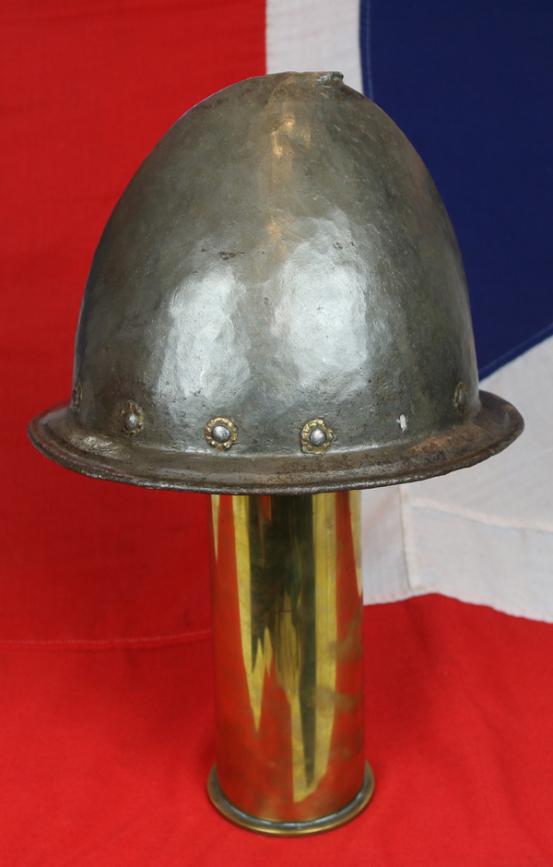
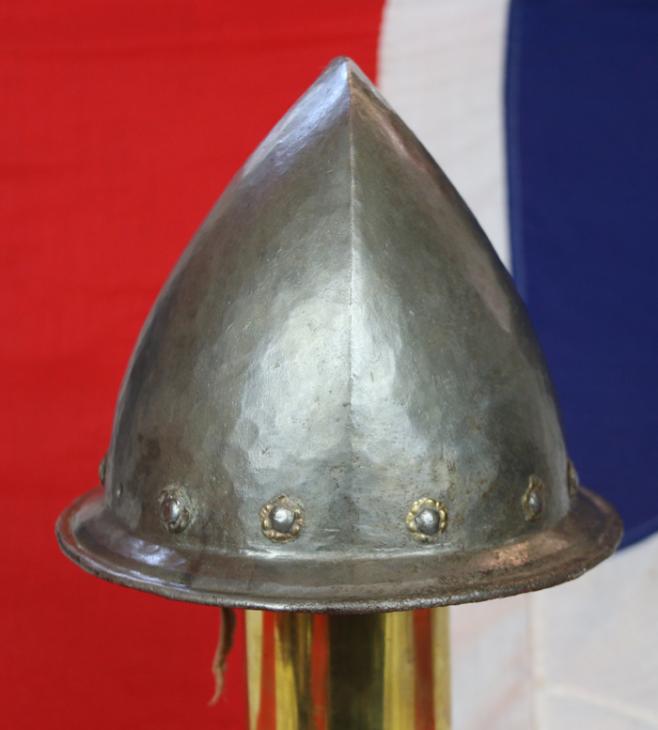
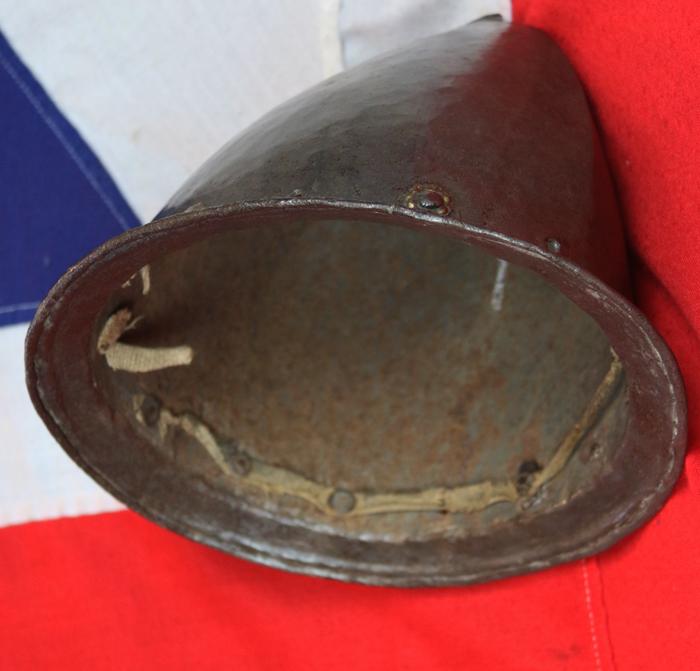
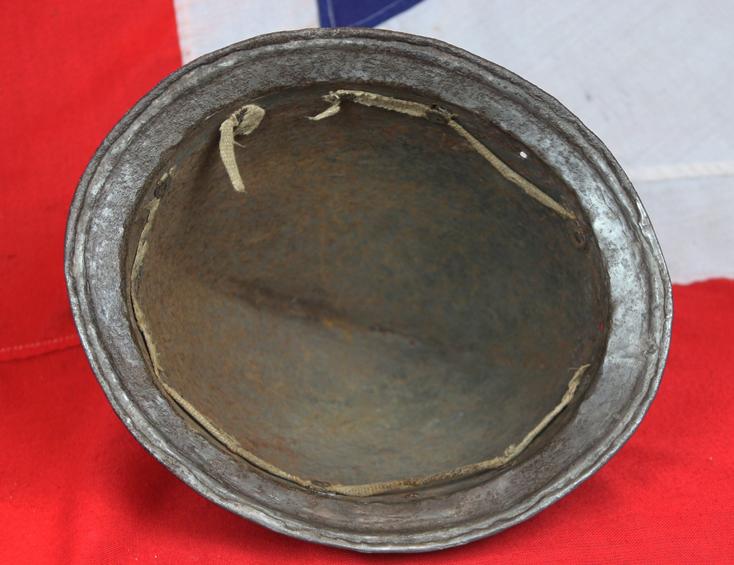
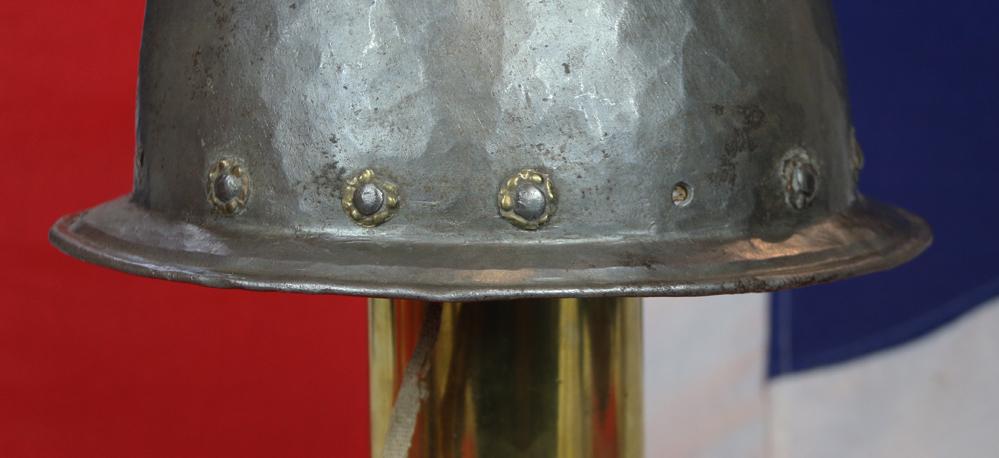
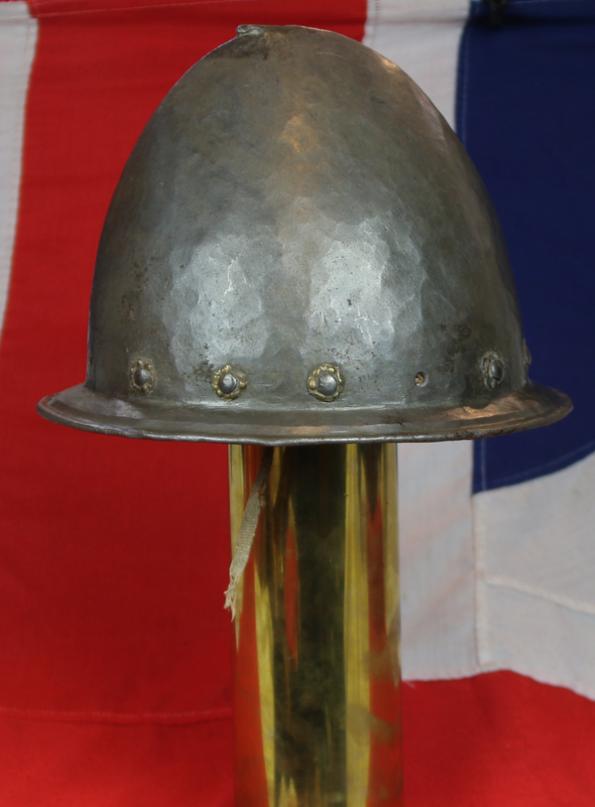
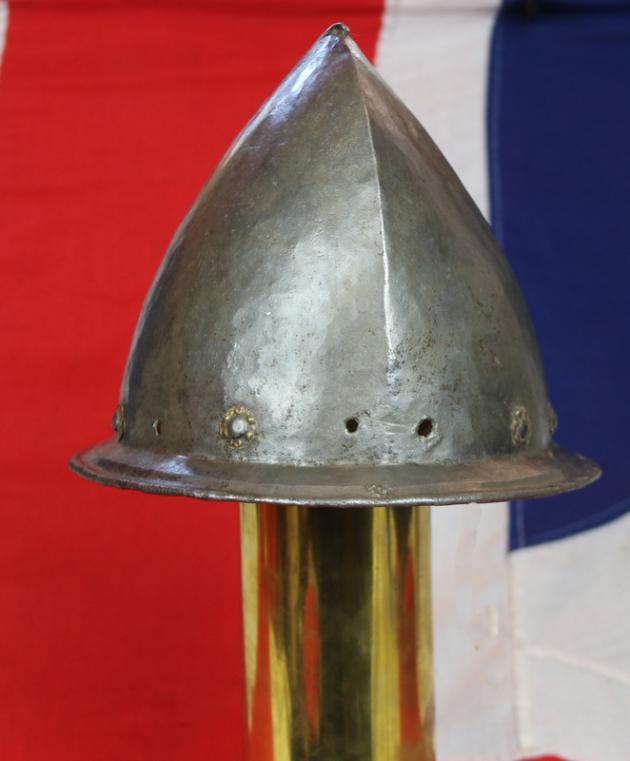
A Fine Original Italian Papal Army Helmet Cabasset c.1570 From The Papal Armoury, Used By The Cannoneers of the Papal Artillery. Also Cabassets Sent To Japan For The Kirishitan Catholic Converts. Acquired From The Papal Armoury, in The Vatican, by Fentons
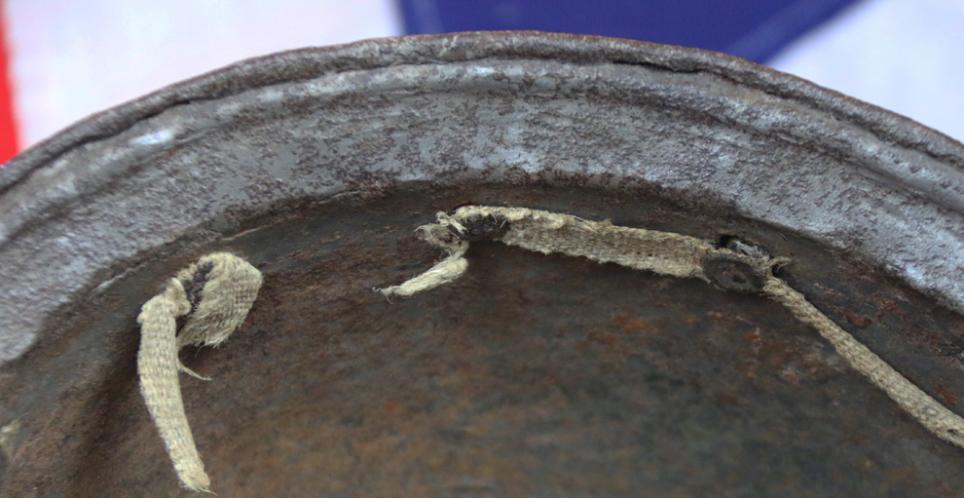
Good Heavy Italian Infantry Helmet Cabasset c.1570, hammered steel raised from a single plate, medial ridge with pear stalk finial, border retains its original brass rosettes (2 missing) each embossed with a ring of 6 stars, stepped flared brim with turned over edge, retaining original linen lining band inside. 19cms tall. Excellent condition.
Provenance, originally from The Papal Armoury at the Vatican and subsequently acquired by London antique arms dealers Fenton & Sons Ltd. In 1919.
Fenton and Sons, Antique Arms and Armour, traded in London from 1894-1927. and supplied, amongst others, the British Museum. Interesting aside, we used to supply them with antique armour, in the 1920's until 1927 when they closed down.
This and a few others were acquired by Fentons in 1919 and were listed in their catalogue. They were all from the Papal Armoury in Rome made for the Barberini family.
The Barberinis supplied the armour and cabassets for the Papal Army in the late 16th century, a period fraught with anarchy and bandits and direct attacks on papal territories by Parma.
The close association led to Maffeo Barberini becoming Pope Urban VIII. His brother Taddeo was made Supreme Commander of the Papal Army. The helmets, including this one, were from the papal armoury and served through the papal wars. It is estimated that about 4500 men served the Papal Army and most would have worn these cabassets, making the original number of the group well over 4000. Other cabassets from the group are now in the Musio Storico Vaticano the Old Papal armoury now in the Vatican Historical Museum in the Lateran Palace, Rome.
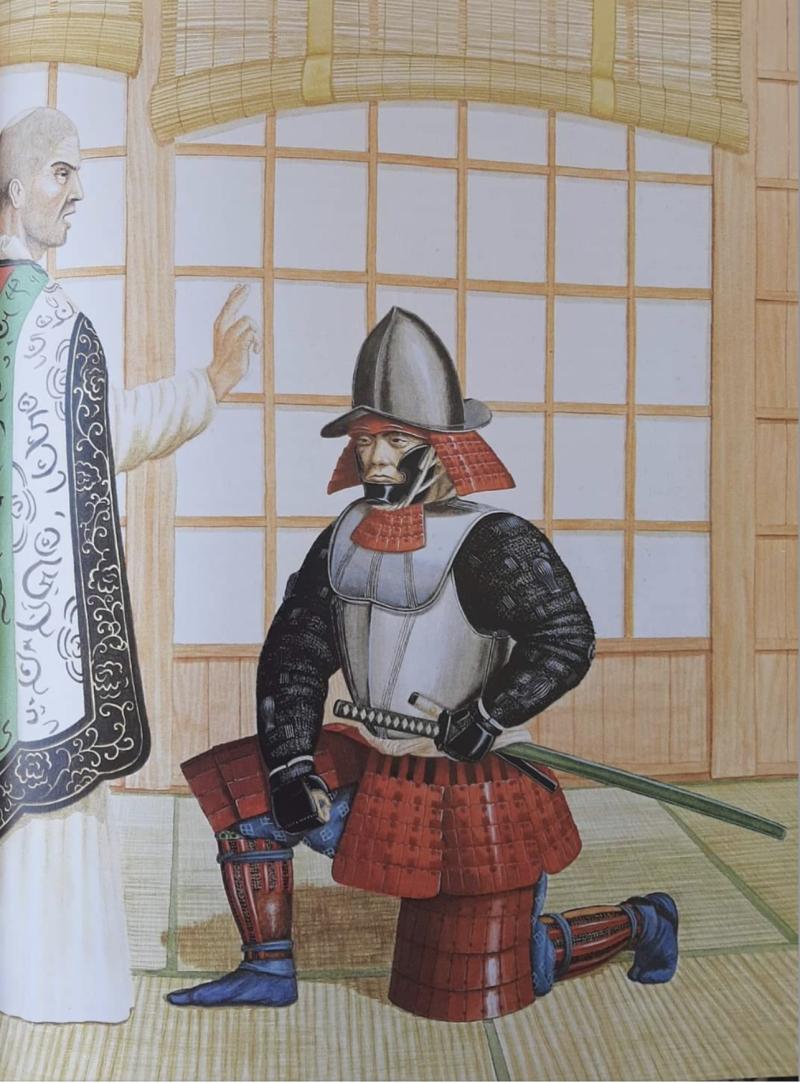
Some cabassets and cuirass’s went to Japan with the bodyguard of the Vatican’s missionary priests on the ‘Black Ships” for the Kirishitan {Catholic} samurai converts. Some were given to the samurai converted clans, others were returned after the missionary priests were ordered to leave Japan in 1587 with their Catholic guard. They were the lucky ones, the many that stayed were martyred in Japan ten years later in 1597. Christianity became a hidden religion, and the samurai that refused to re-covert back to Buddhism and the Shinto cause, that were discovered, were tortured horrifically, some, allegedly, being sawn in half vertically from the groin up. See picture 10 in the gallery depicted a priest blessing a samurai who is adorned in adapted Papal armour {Cabasset and Cuirass}
The Papal Army was the loosely-construed army of volunteers and mercenaries in the service of the Italian Papal States, active from the 8th century until the capture of Rome by Italy in 1870. The Papal States maintained a sizeable military during the Middle Ages, using it to fight against the Holy Roman Empire and its Ghibelline allies.
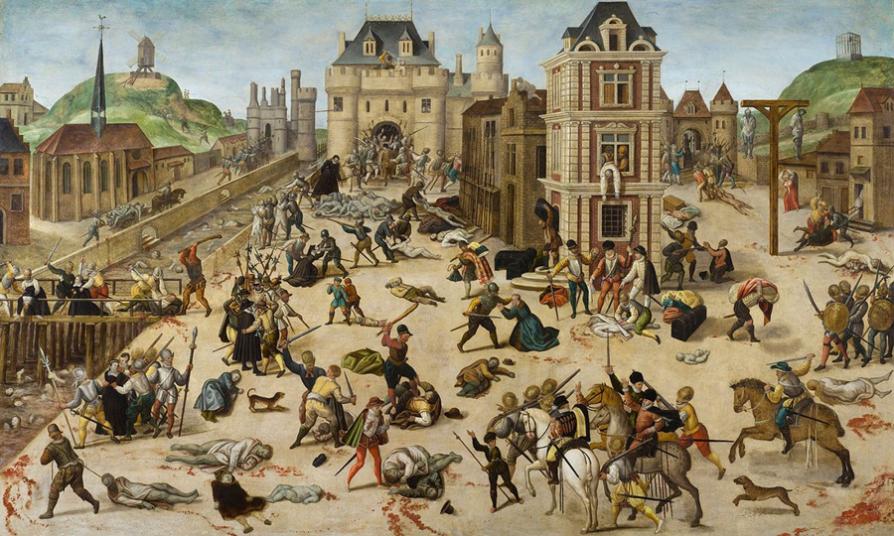
During the 1300s, the Papal States began to employ the services of condottieri, mercenaries who sold their services to the extremely wealthy Catholic Church. These forces would be instrumental to the defence of the Pope during the Italian Wars of the 15th and 16th centuries, with Cesare Borgia leading the Papal Army on a campaign of conquest that added several new city-states and regions to the Papal States' territories. Painting in the gallery of the Massacre of San Bartolome in the Catholic-Protestant Religious Wars, where the French crown aided by Queen Catherine de Medici, mother of the French King, with the Pope's blessing, slaughtered ten of thousands of Huguenots what is considered the second deadliest religious war in European history (surpassed only by the Thirty Years' War, which took eight million European lives) The pope was so delighted with the massacre he ordered a Te Deum to be sung as a special thanksgiving (a practice continued for many years after) and had a medal struck with the motto Ugonottorum strages, (Latin: " slaughter of the Huguenots 1572"
Intriguingly some of the papal armoury was selected to go with the Catholic priests on the ‘Black Ships’ to aid the attempted conversion to Catholicism of the Japanese. In fact in many respects it was very successful, and several clans converted, and the Catholic armour of the Pope’s Army was utilised and made into Japanese versions of kabuto {helmets} and complete yoroi {suits of upper armour} see picture 10 in the gallery.
Oda Nobunaga (1534–82) had taken his first step toward uniting Japan as the first missionaries landed, and as his power increased he encouraged the growing Kirishitan movement as a means of subverting the great political strength of Buddhism. Oppressed peasants welcomed the gospel of salvation, but merchants and trade-conscious daimyos saw Christianity as an important link with valuable European trade. Oda’s successor, Toyotomi Hideyoshi (1537–98), was much cooler toward the alien religion. The Japanese were becoming aware of competition between the Jesuits and the Franciscans and between Spanish and Portuguese trading interests. Toyotomi questioned the reliability of subjects with some allegiance to the foreign power at the Vatican. In 1587 he ordered all foreign missionaries to leave Japan but did not enforce the edict harshly until a decade later, when nine missionaries and 17 native Kirishitan were martyred.
After Toyotomi’s death and the brief regency of his adopted child, the pressures relaxed. However, Tokugawa Ieyasu, who founded the great Tokugawa shogunate (1603–1867), gradually came to see the foreign missionaries as a threat to political stability. By 1614, through his son and successor, Tokugawa Hidetada, he banned Kirishitan and ordered the missionaries expelled. Severe persecution continued for a generation under his son and grandson. Kirishitan were required to renounce their faith on pain of exile or torture. Every family was required to belong to a Buddhist temple, and periodic reports on them were expected from the temple priests.
By 1650 all known Kirishitan had been exiled or executed. Undetected survivors were driven underground into a secret movement that came to be known as Kakure Kirishitan (“Hidden Christians”), existing mainly in western Kyushu island around Nagasaki and Shimabara. To avoid detection they were obliged to practice deceptions such as using images of the Virgin Mary disguised as the popular and merciful Bōsatsu (bodhisattva) Kannon, whose gender is ambiguous and whom carvers often render as female.
The populace at large remained unaware that the Kakure Kirishitan managed to survive for two centuries, and when the prohibition against Roman Catholics began to ease again in the mid-19th century, arriving European priests were told there were no Japanese Christians left. A Roman Catholic church set up in Nagasaki in 1865 was dedicated to the 26 martyrs of 1597, and within the year 20,000 Kakure Kirishitan dropped their disguise and openly professed their Christian faith. They faced some repression during the waning years of the Tokugawa shogunate, but early in the reforms of the emperor Meiji (reigned 1867–1912) the Kirishitan won the right to declare their faith and worship publicly.
Code: 23583
1995.00 GBP