

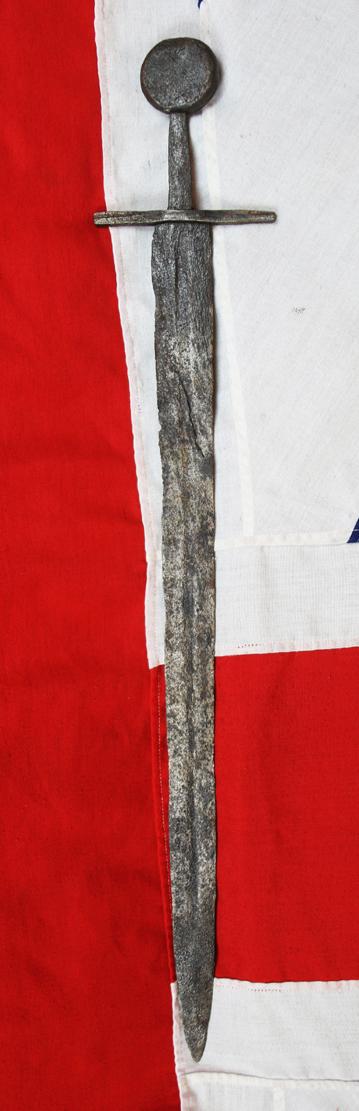
A Most Fine, 12th Century Crusader Knight’s Sword, From the Era Following the Norman Conquests of Britain. Likely Used by a Knight into the Reign of King Richard the Lionheart and His 3rd Crusade
This wonderful Norman period antiquity would make a spectacular centrepiece to any new or long established fine collection, or indeed a magnificent solitary work of historical art, for any type of decor both traditional or contemporary. What a fabulous original ‘statement piece’ for any collection or decor. In the world of collecting there is so little remaining in the world from this highly significant era in European and British history. And to be able to own and display such an iconic original representation from this time is nothing short of a remarkable privilege. A wonderful example piece, from the ancient knightly age. Effectively, from this time of almost a thousand years ago, from a collectors point of view, nothing else significant survives at all, only the odd small coin or very rarely seen, and almost impossible to own, carved statuary.
Anglo-Norman period, a Single-Handed knightly sword, made during the 12th to early13th century, and used in the early Crusades Period by Knights, such as the Knights of Jerusalem, the Knights Templar, and Knights of St John, created from time of English King Stephen, and used into the reigns of King Henry the IInd, and King Richard Ist, the Lionheart., and potentially for the following century The designs in the making of Knightly swords changed, largely due to combat fashion in many cases, during their periods of use, and it is by comparison of the changes of swords designs and features, compared to other swords of accepted and known age in their manufacture, such as from recorded burial sites, tombs of knights or historical battle sites, by using highly respected seminal and scholarly works such as Oakshott’s defined categories, that the dating of such weaponry is acknowledged as most reasonably accurate.
Stephen of Blois, was King of England and reigned from 22 December 1135 till 1154..
He was formerly the Count of Boulogne, from 1125 until 1147, and Duke of Normandy from 1135 until 1144. His reign was marked by the Anarchy, a civil war with his cousin and rival, the Empress Matilda, whose son, Henry II, succeeded Stephen as the first of the Angevin kings of England. The first of the Plantagenets,
Henry the II 1154-1189. Henry of Anjou was a most strong king, and a brilliant soldier, and he thus extended his French lands until he ruled most of France. He laid the foundation of the English Jury System and raised new taxes (scutage) from the landholders to pay for a militia force. Henry is mostly remembered for his quarrel with Thomas Becket, and Becket’s subsequent murder in Canterbury Cathedral on 29th December 1170. His sons turned against him, even his favourite John. A very small portion of his reign was depicted in the film ‘The Lion in Winter’ starring Peter O’Toole and Katherine Hepburn. It was a remarkable depiction of the latter part of his reign which showed with great aplomb the relationship between him, his wife the Queen of Anjou and his sons Geoffrey, John and Richard,played by Anthony Hopkins his eventual successor, King Richard Ist The Lionheart 1189 – 1199
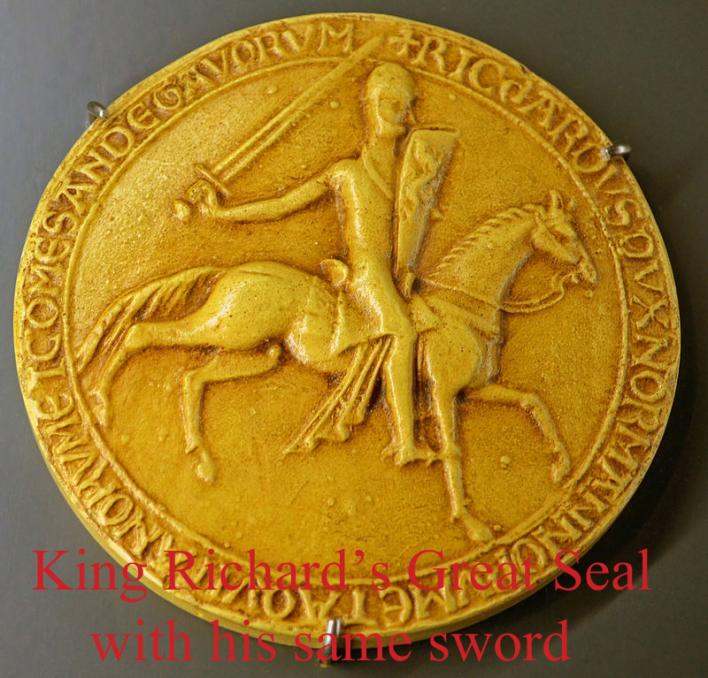
Richard was the third son of Henry II. By the age of 16, he was leading his own army putting down rebellions in France. Although crowned King of England, Richard spent all but 6 months of his reign abroad, preferring to use the taxes from his kingdom to fund his various armies and military ventures. He was the leading Christian commander during the Third Crusade. On his way back from Palestine, Richard was captured and held for ransom. The amount paid for his safe return almost bankrupt the country. Richard died from an arrow-wound, far from the kingdom that he so rarely visited. He had no children.
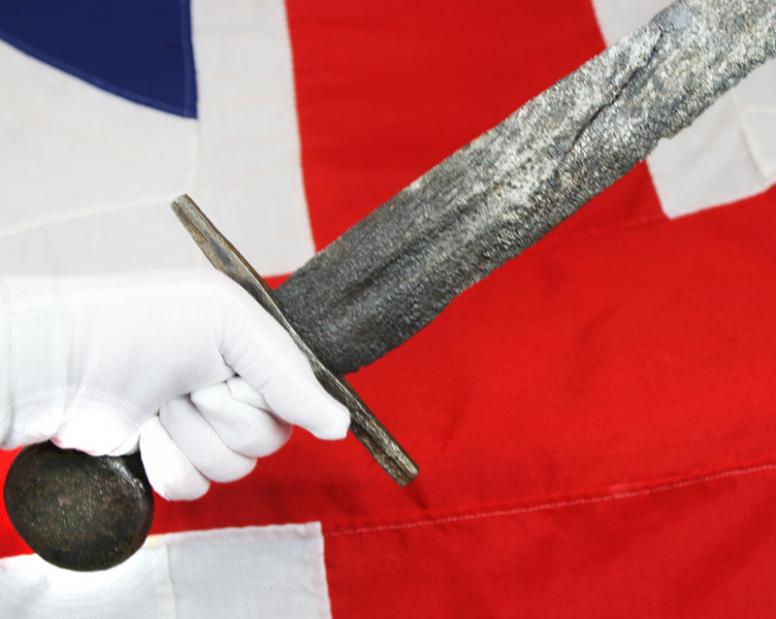
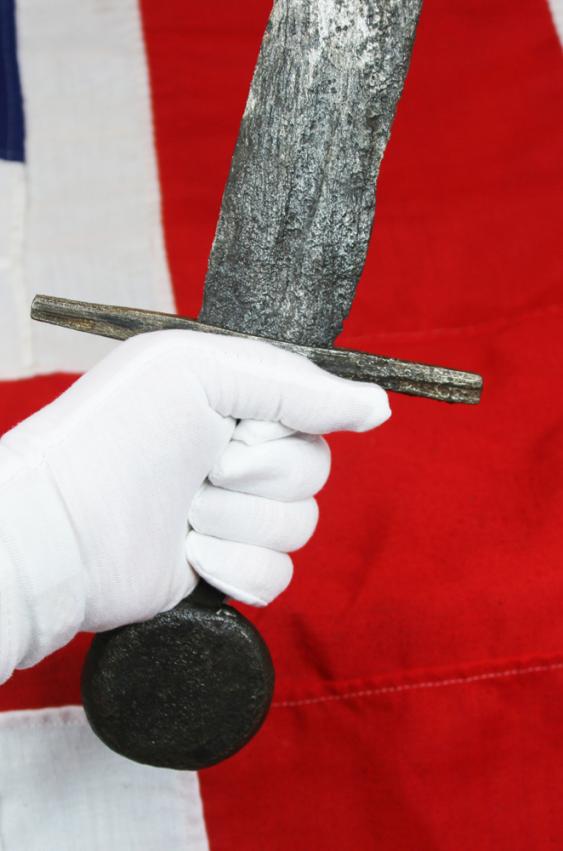
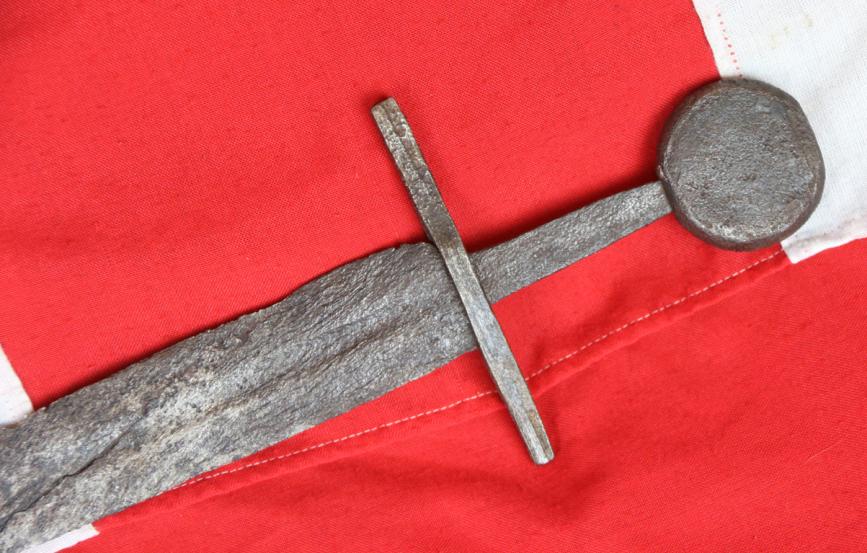
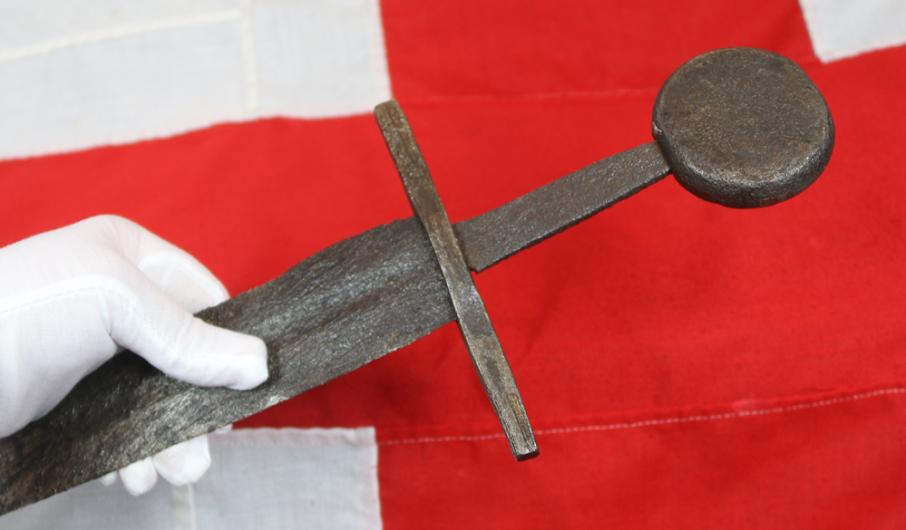
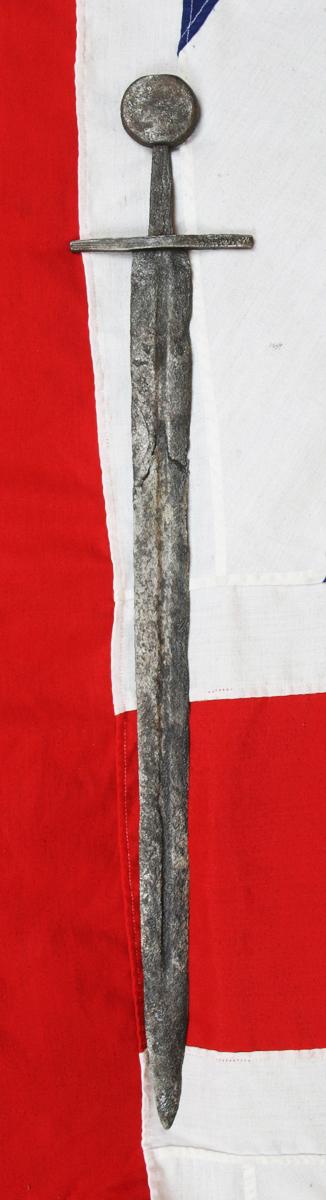
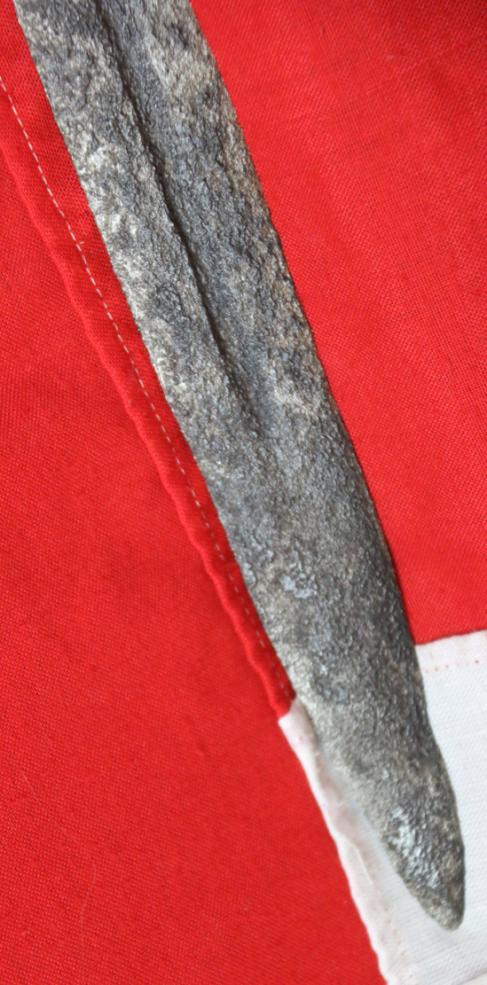
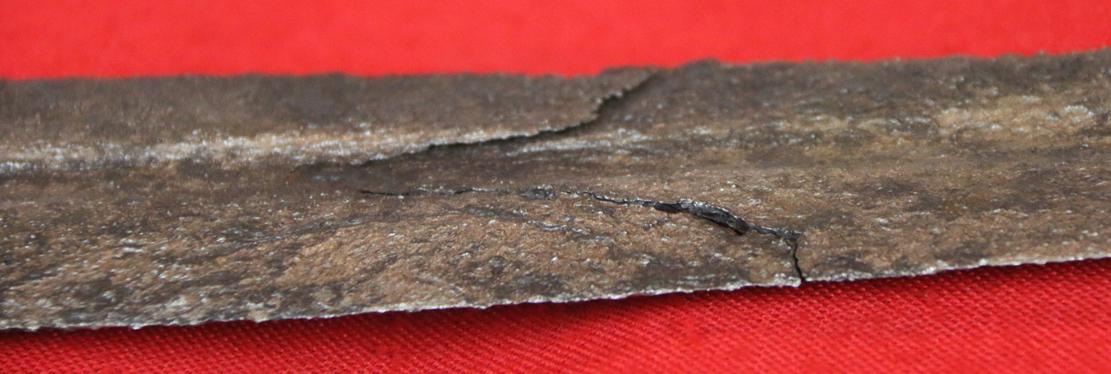
A well-balanced Oakeshott Type XI sword with double-edged blade, shallow fuller and solid tip; straight lower guard, medium tang and disc pommel of type G. 1.1 kg, 88.5cm (35"). Fine condition, surfaced cleaned, slight delamination at the mid section of the blade.
This most fine artefact of the early Crusades era was formerly the property of a private family; previously acquired from a collection formed somewhat before 1990; thence by descent.
For reference;
See Hoffmeyer A.D., From mediaeval sword to Renaissance rapier in Gladius, II (1963), pp. 5-68; Oakeshott, E., The sword in the Age of the Chivalry, Woodbridge, 1964 (1994); Oakeshott, E., Record of the medieval sword, Woodbridge, 1991; the sword belongs to the Type XI of 'war sword', as classified by Oakeshott.
Footnotes
The Type XI was distinguished by Oakeshott by having a slender blade, generally long in proportion to the hilt, with a very narrow fuller running within a few inches of the point. This type has generally been considered to belong to the period of c. 1120-c./1200–1220 AD, but research following the work of Oakeshott has given a much earlier possible date of employment and confirmed that the sword was still used during the fourteenth century. Since so many swords of this typology were discovered in rivers or buried, often due to the corrosion, they present spatulate or rounded points, but this specimen still has the tip of the sword present. Crossguard mobile. Almost every weapon that has survived today from this era is now in a fully russetted condition, as is this one, because only the swords of kings, that have been preserved in national or Royal collections are today still in a relatively good state and condition. However, compared to many currently in the Royal Collection this could be considered fine and above average. This sword will be accompanied by a complimentary wooden display stand. It could also be enhanced by affixing to a rectangular bespoke display panel.
Code: 23238