
A Very Fine Group Four Free Dutch Navy WW2 'Chivalric' Decoration Medals, Submarine Capt. Van Dongen
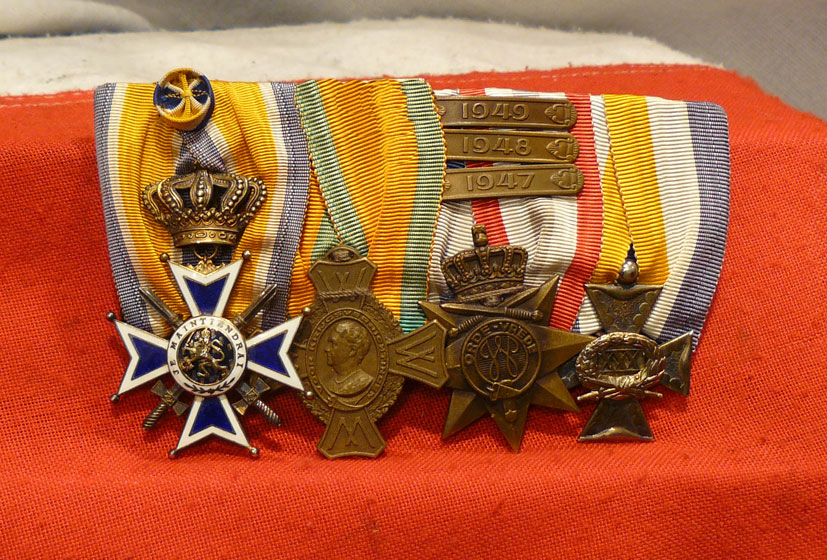
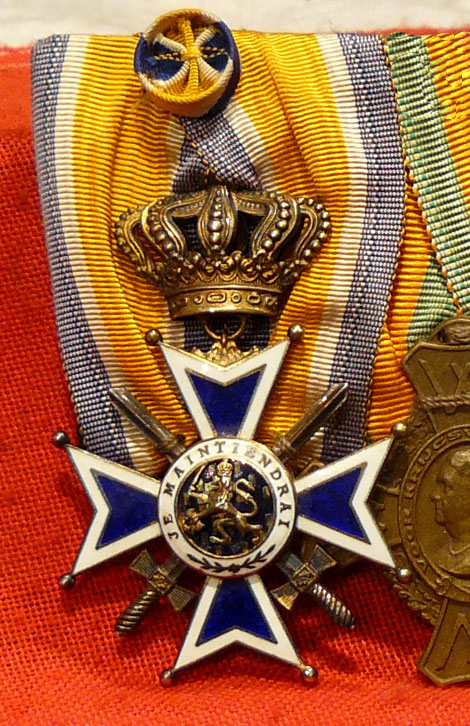
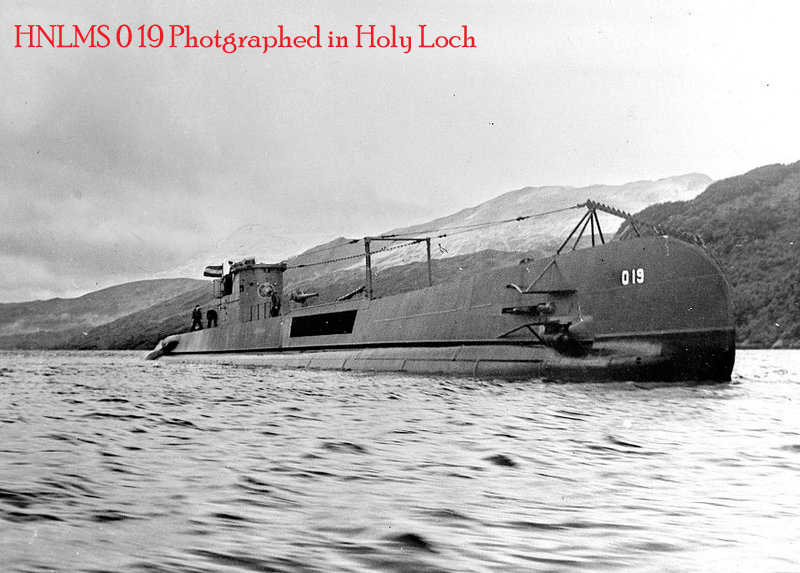
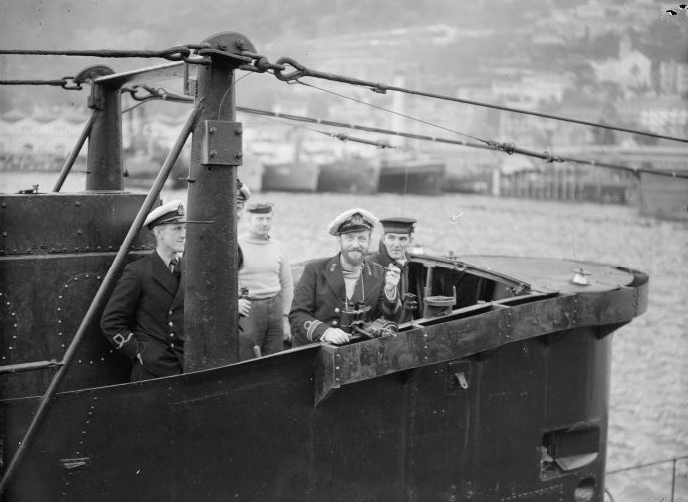
A WW2 'Free Royal Netherlands Naval' high grade medal group, issued to a senior commander combatant who fought during the war against the Axis powers, the Netherlands enemy of occupation, the Germans, and Germany's allies in the South Pacific the Japanese in the submarine service. Awarded to a Commander of a RNN U Boat, the Free Dutch Navy Submarine of WW2 HNLMS O 19 (N 54). Capt. Van Dongen. Luitenant ter zee 1e klasse (Lt.Cdr.) Karel van Dongen, RNN 0 19, 3 Jul 1939 till 31 May 1941. An Order of Orange Nassau 'Officer' group in superb old quality. White enamel and silver gilt Maltese cross with ball-tipped finials and with deep blue enamel inset panels, with laurel wreath between the arms, on swivel crown suspension; the face with a circular central blue enamel and gilt medallion bearing a gilt Netherlands lion within a white enamel ring inscribed in gilt letters JE MAINTIENDRAI (I will maintain); the reverse with a circular central blue enamel medallion bearing the gilt crowned cipher of Queen Wilhelmina, in whose name the Order was founded, within a white enamel ring inscribed in gilt letters GOD ZY MET ONS (God be with us); age-toned; on original ribbon with rosette denoting an award of the officer class. The Order was established by Queen Emma, Dowager Queen, acting as Regent for Queen Wilhelmina, on 4 April 1892 and may be awarded to both Dutch citizens and foreigners for meritorious service to the Dutch throne, state or society. A very good example of high quality.
The second medal is the Dutch WW2 cross,
followed by the Cross for Order and Peace, the Dutch medal for the police actions in the former Netherlands East Indies. This medal originates and issued from 1947. The year clasps are given to an officer who was actually in armed combat with the Indonesian terrorists. Lastly the silver Officers Cross with year marking 'XXX' for 30 years service. On 10 May 1940, the day the Germans invaded the Netherlands, the entire mobilization was proclaimed in the Dutch colony. Most Dutch warships, including the O 19, were used to protect allied merchant ships and to patrol the Indonesian archipelago.
The submarine performed multiple patrols and missions in the Pacific theater of World War II, sinking multiple Japanese vessels, attacking shipping convoys and laying mines.
On 8 July 1945, O 19 was en route to Subic Bay in the Philippines at a speed of 16 knots (30 km/h; 18 mph) when it struck Ladd Reef in the South China Sea. Unable to pull free of the reef, the crew of O 19 were rescued by USS Cod. To prevent enemy capture, O 19 was scuttled by her crew using explosives, torpedoes and gunfire An example of the of the calibre of WW2 serving officers who were awarded such a highly respected decoration was the heroic Canadian born, Royal Air Force fighter pilot ace RUSSEL, F/O Blair Dalzell, DSO, DFC (C1319) -
Officer, Order of Orange-Nassau with Swords (Netherlands)
Awarded as per London Gazette dated 23 January 1948 and
AFRO 81/48 dated 6 February 1948.
Public Records Office Air 2/9293 has recommendation drafted when he was a Wing Commander: In operational command of No.126 Wing, Royal Air Force, stationed at the aerodrome Volkel from September 1944 until February until April 1945, through his excellent work has greatly contributed to the liberation of the Netherlands. During World War II, the Order of Orange-Nassau was bestowed upon both members of the Netherlands military and members of foreign services who had helped liberate the Netherlands from Nazi Germany occupation, and those who helped liberate the former Dutch colonies in the Pacific. In the modern age, the Orange-Nassau is still the most active military and civil decoration of the Netherlands, and ranks after the Order of the Netherlands Lion. The Order is typically awarded each year on the Queen's official birthday (April 30) The Order is also used to honour foreign princes, ministers, dignitaries and diplomats.
The Dutch Navy at the beginning of the war with Germany in May 1940, consisted of 1 coastal defence ship, 5 cruisers, 9 destroyers, 27 submarines, 4 gun boats, 6 minelayers and other smaller vessels. The Dutch Navy fought in many parts of sea like North Sea, Mediterranean and the Pacific sea where the Dutch navy had to defend the Dutch colonies from the Japanese advance.
Dutch naval forces had a contribution of sinking many enemy vessels, including 2 U-boats and also Japanese and even Italian submarines. But they also suffered many losses during the war, especially their submarine arm. They lost the coastal defence ship Soerabaja, the 3 cruisers De Ruyter, Java and Sumatra, 9 destroyers, 11 submarines and other smaller vessels. According to records the Royal Dutch Navy lost 59 warships during WWII 40% Awarded to the Commander of a RNN U Boat, the Free Dutch Navy Submarine of WW2 HNMS O 19 (N 54)
Navy The Royal Dutch Navy
Type Submarine
Class O 19
Pennant N 54
Built by Wilton-Feijenoord (Schiedam, Holland)
Ordered
Laid down 15 Jun 1936
Launched 22 Sep 1938
Commissioned 3 Jul 1939
Lost 10 Jul 1945
Loss position 8 40'N, 111 40'E. We also have his dress service belt for sale separately
Code: 22580