
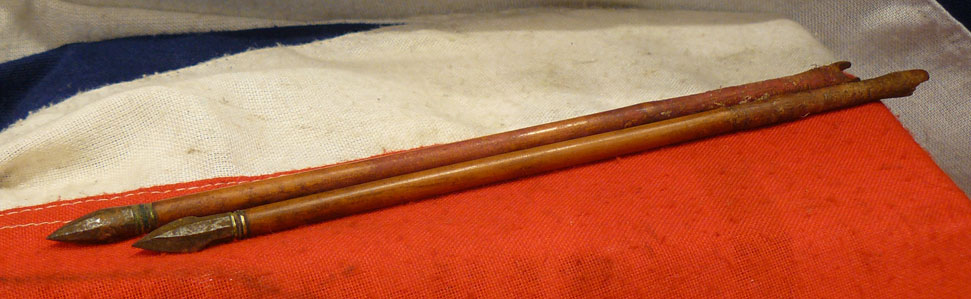
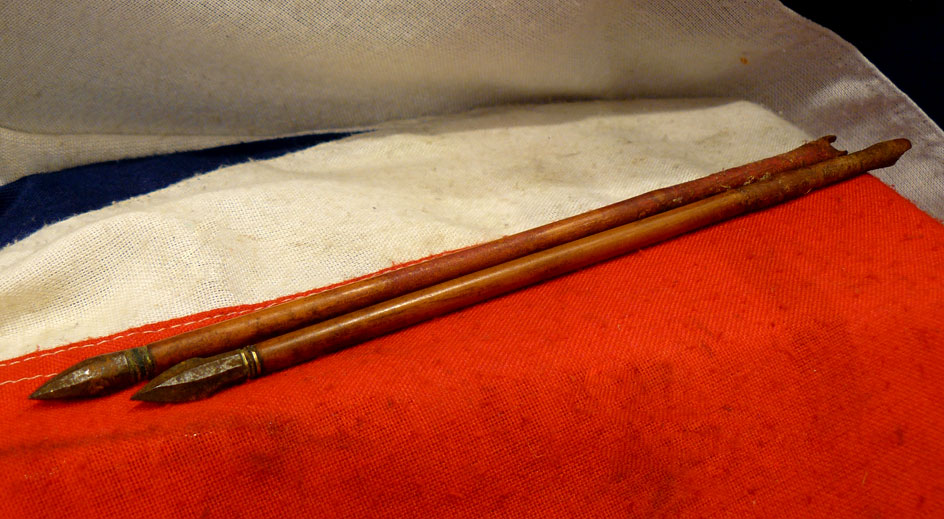
Recovered From Waterloo Battle Site in the 1820's A Pair of Late 18th Early 19th Century Napoleonic War's Officer's Crossbow Pistol Bolts
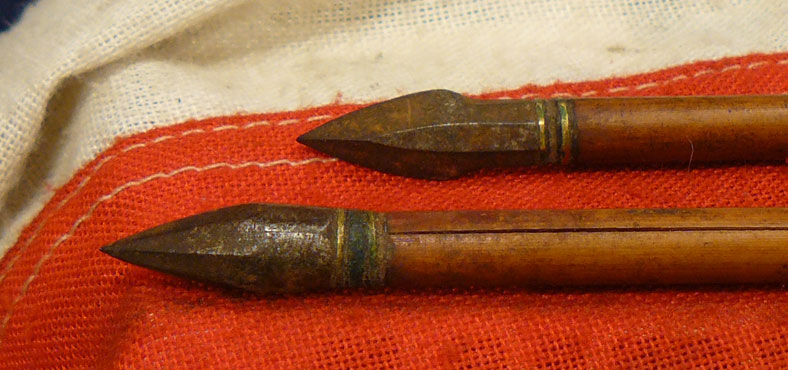
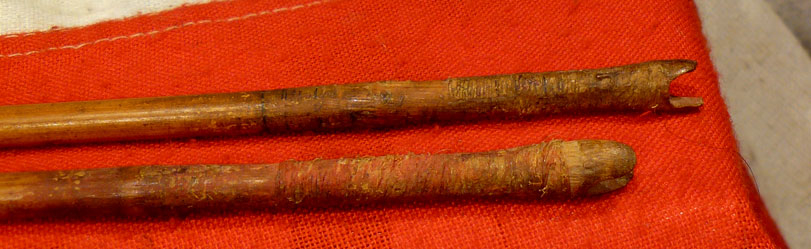
Very finely made steel quarrel heads, beautifully facetted, with brass lined collars. On wooden hafts.
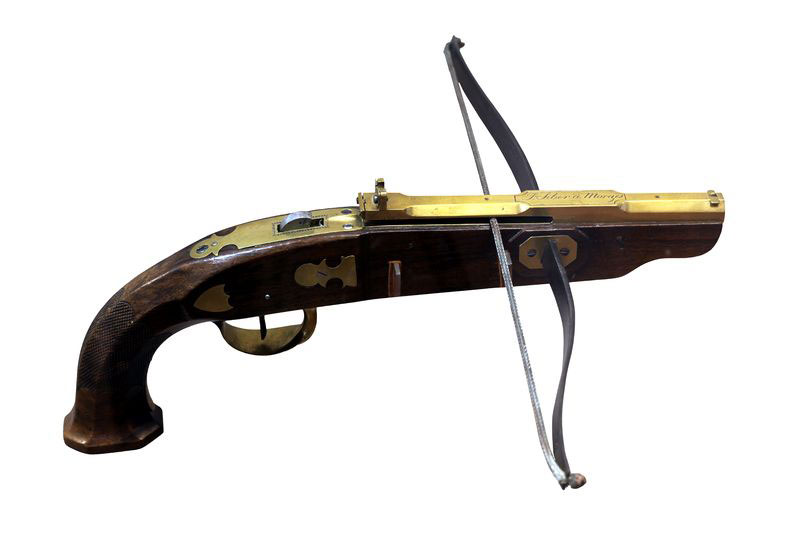
Superbly made pieces and very scarce indeed. Illustrated with the kind of pistol used from the Napoleonic era. We acquired another rare pair from a Napoleonic collector around 14 years ago, thus we recognised them immediately
A weapon as silent as the grave, yet more deadly than a pistol as it's range was greater and penetrating power more effective. The heads could easily be beautifully polished to brighter steel. A picture in the gallery of an idisyncratic Napoleonic officer's pistol that used such bolts.
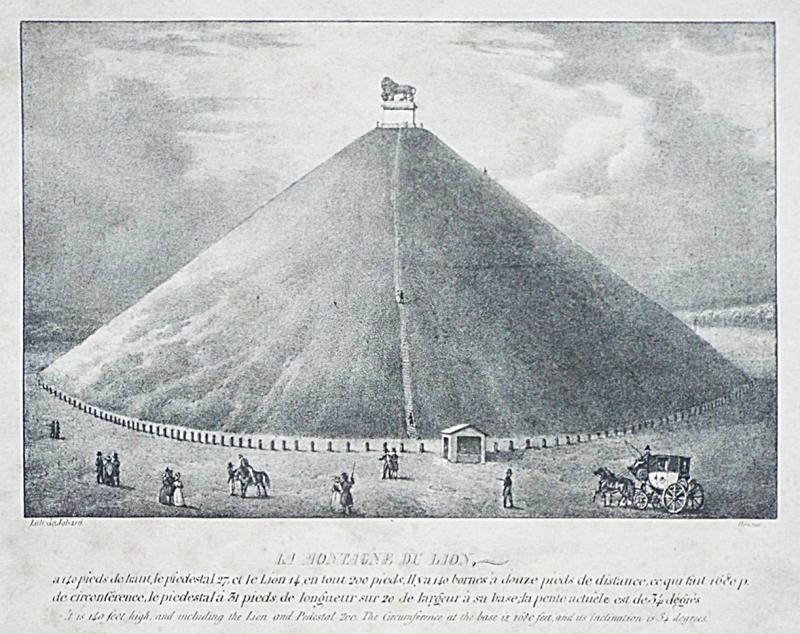
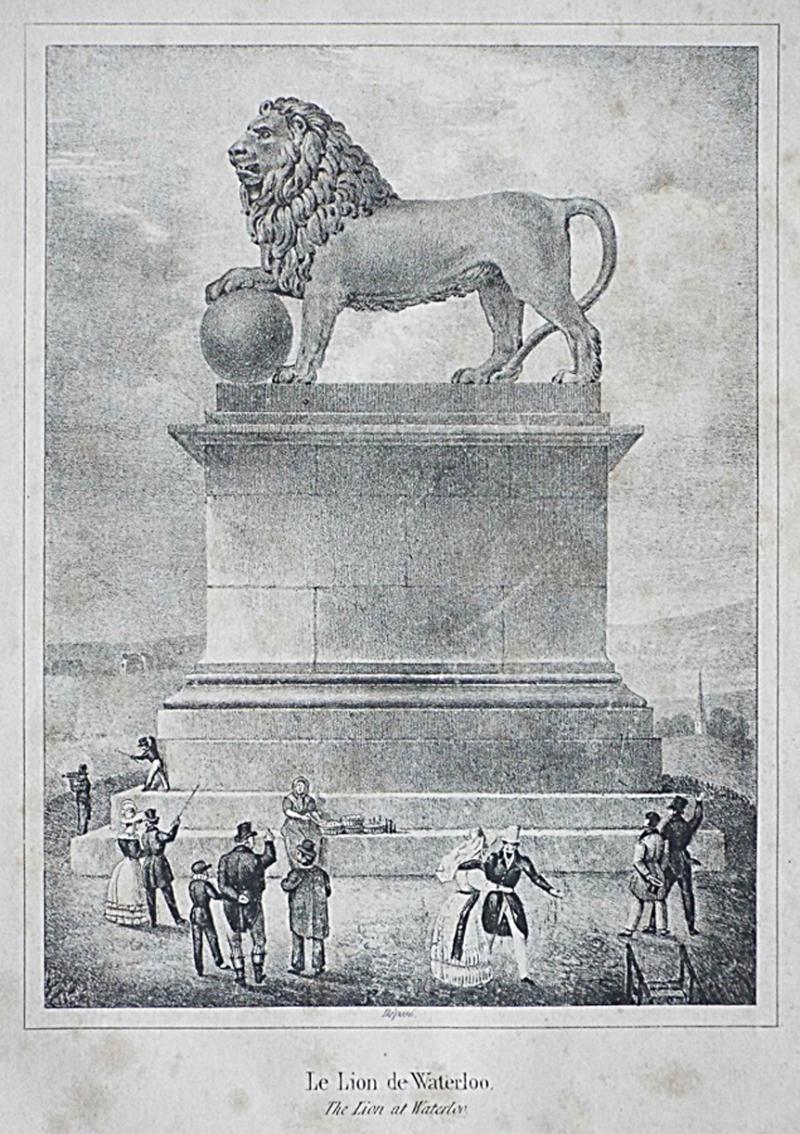
From the field of the 1815 Battle of Waterloo, during a Grand Tour at the building of the Waterloo mound, a huge lion monument at the battle site of Waterloo, in honour of the Prince of Orange. A collection antiques recovered by members of the Hamilton family, Originally purchased by the nobility from the peasant excavators in Belgium, while building the Prince of Orange's Waterloo Mound at the battlefield in the 1820's, and acquired by us from their descendants as a collection of 20. From part of our antiquities and curiosities acquired from a circa 1820's Grand Tour classical collection from Europe and the Middle East. Such as Agincout, Poitiers, Crecy, Waterloo, Philippi, and following Alexander's campaign trail of his conquests then part of the Ottoman Empire. We have been purchasing piecemeal from the same family for around 20 years, military items and artefacts from the family's forebears Grand Tour in the early 19th century.
Strategic importance
A view of the battlefield from the Lion's mound. On the top right are the buildings of La Haye Sainte. This view looks east, with Allied forces behind the road to the left (north) and French forces out of shot to the right(south)
The road leads from La Belle Alliance, where Napoleon had his headquarters on the morning of the battle, through where the centre of the French front line was located, to a crossroads on the ridge which is at the top of the escarpment and then on to Brussels. The Duke of Wellington placed the majority of his forces on either side of the Brussels road behind the ridge on the Brussels side. This kept most of his forces out of sight of the French artillery.
During the night from the 17th to the 18th, the main door to the courtyard of the farm was used as firewood by the occupying troops. Therefore, when the King's German Legion (KGL) was stationed in the farm at the morning of the battle they had to hastily fortify La Haye Sainte.
The troops were the 2nd Light Battalion KGL commanded by Major Georg Baring, and part of the 1st Light Battalion KGL. During the battle, they were supported by the 1/2 Nassau Regiment and the light company of the 5th Line Battalion KGL. The majority of these troops were armed with the Baker rifle with grooved barrels, as opposed to the normal Brown Bess musket of the British Army. The French troops also used muskets which were quicker to load than the Baker rifle but the latter was more accurate and had about twice the range of a musket.
Both Napoleon and Wellington made crucial mistakes about La Haye Sainte as it was fought over and around during most of the day. Napoleon failed to allocate enough forces to take the farm earlier in the day while Wellington only realised the strategic value of the position when it was almost too late.
9 inches long.
They could look superb framed.
Every single item from The Lanes Armoury is accompanied by our unique Certificate of Authenticity. Part of our continued dedication to maintain the standards forged by us over the past 100 years of our family’s trading, as Britain’s oldest established, and favourite, armoury and gallery.
Code: 17642
335.00 GBP