
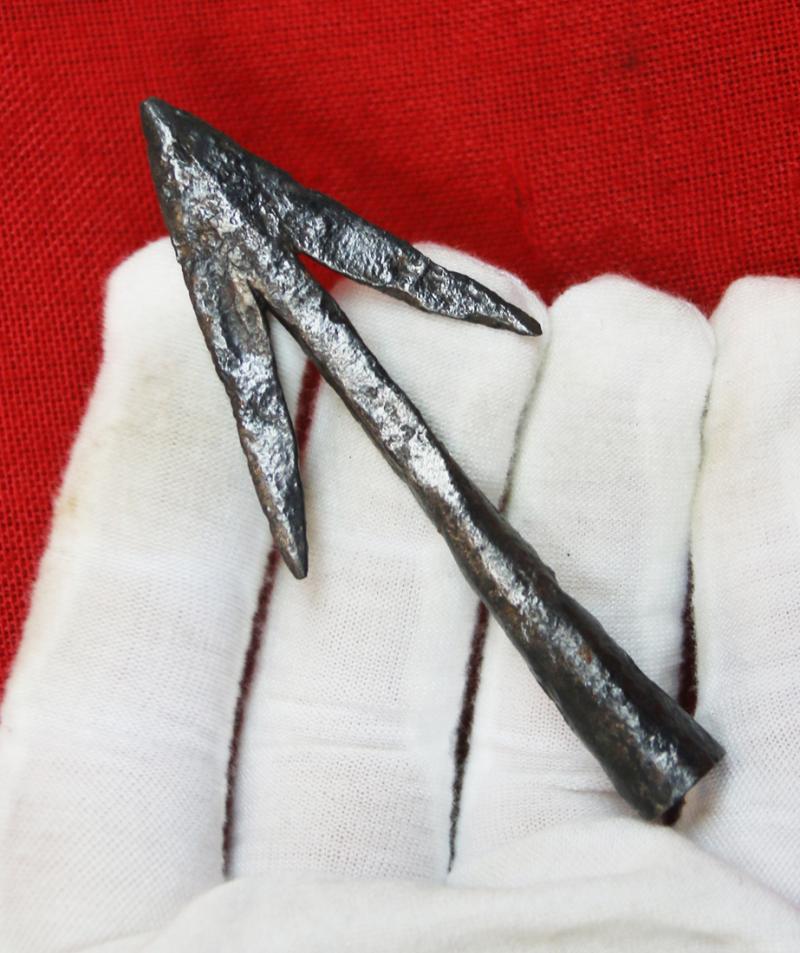
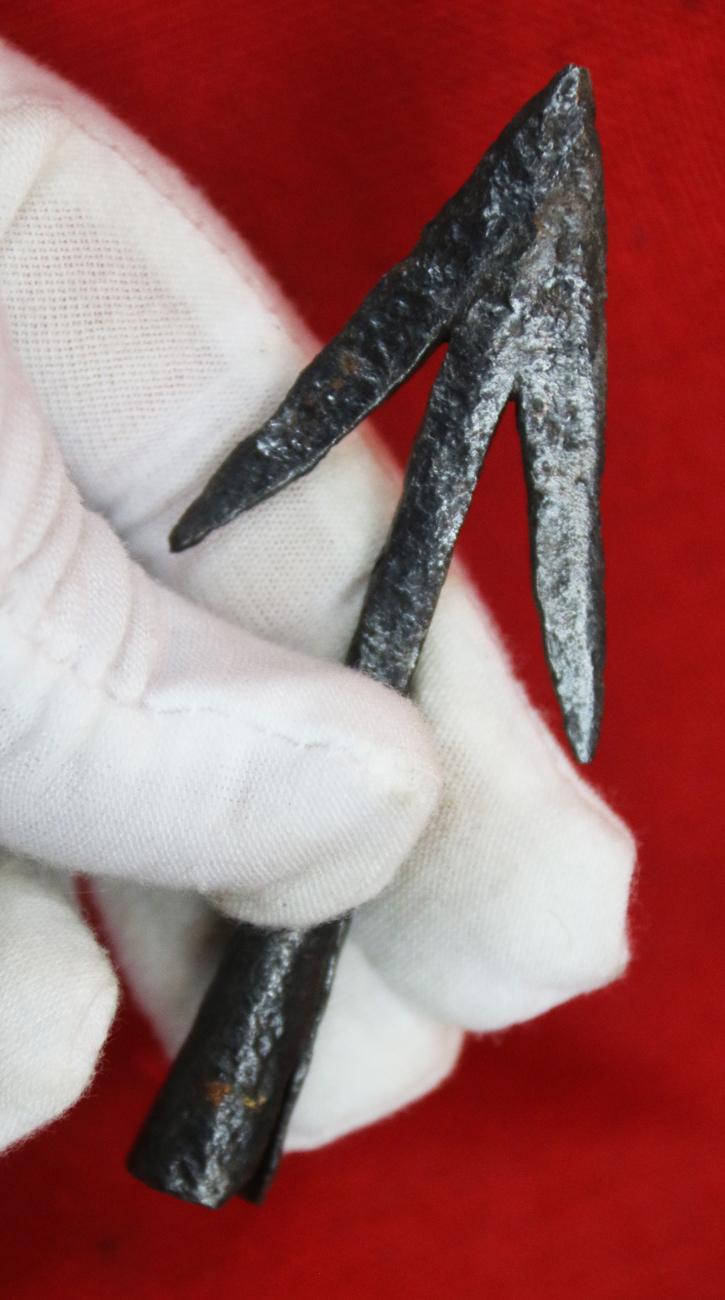
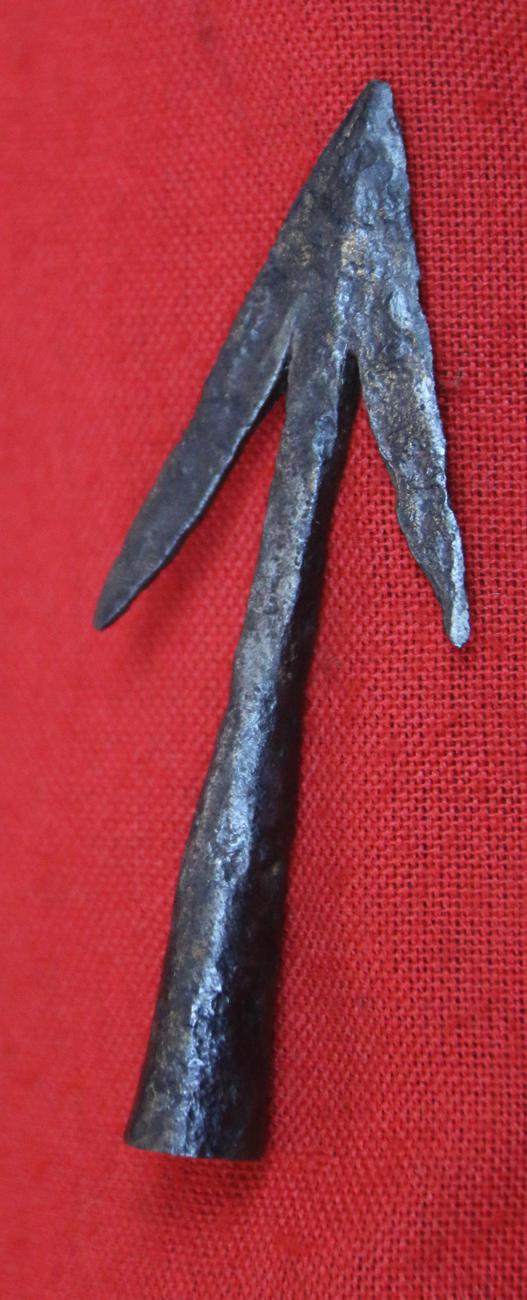
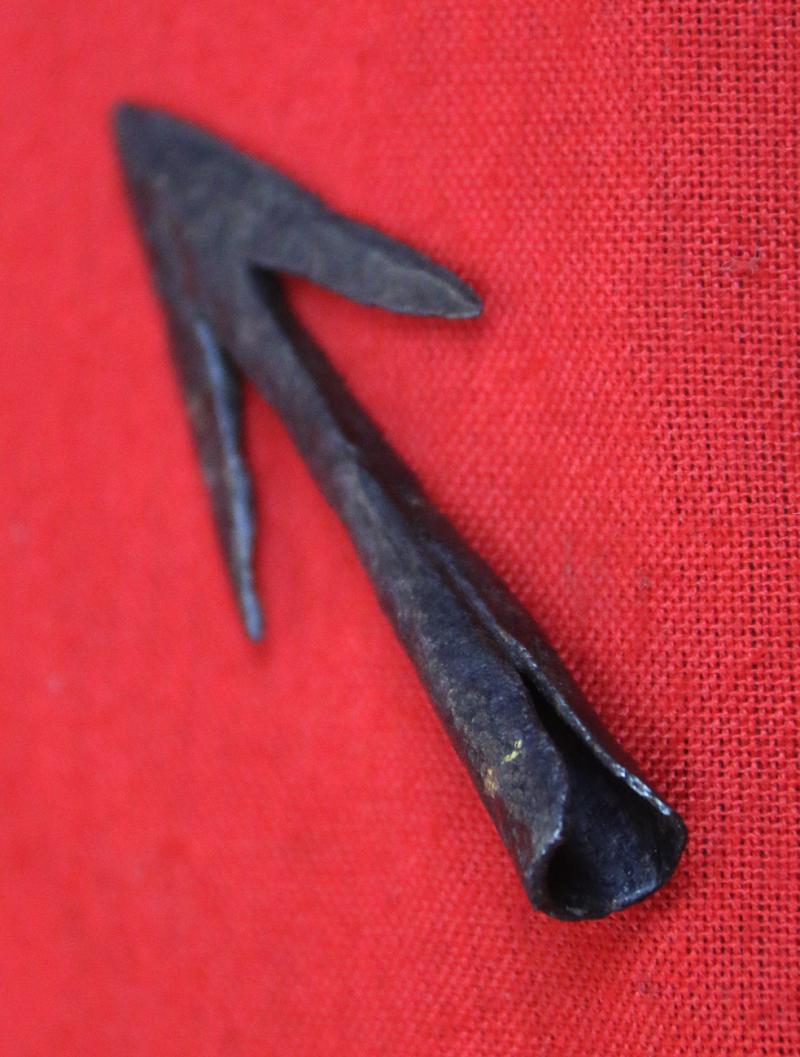
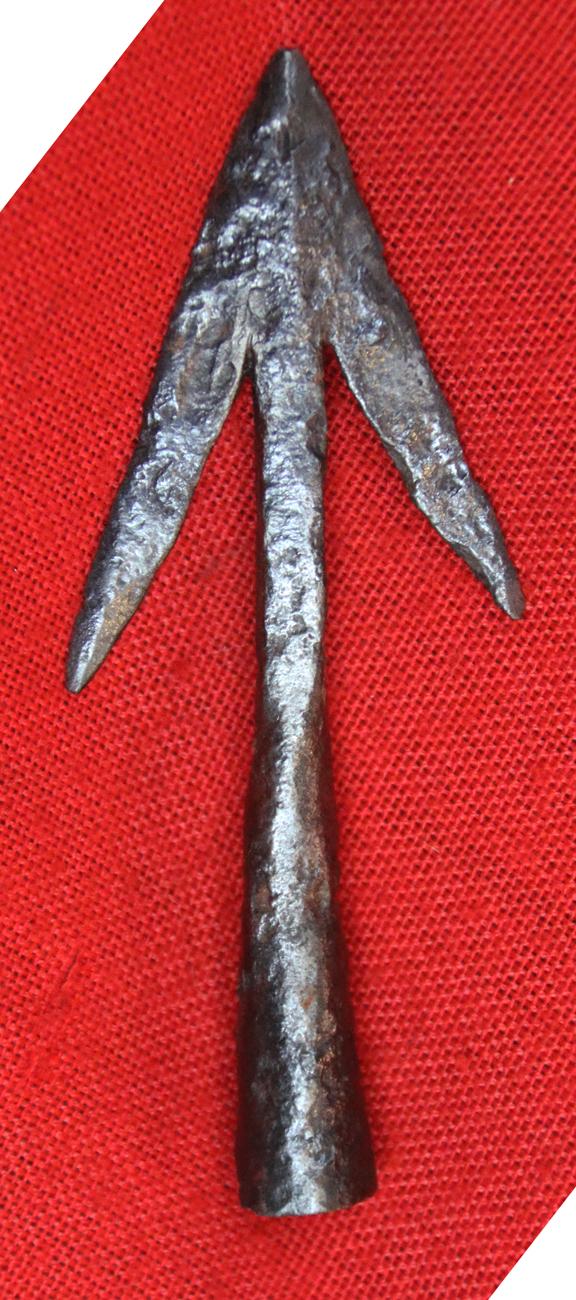


A Very Good Large, Barbed, 'Deep Swallow Tail' Original English & Welsh Arrowhead of Agincourt
Part of our wondrous, historical and original antiquities, Roman, Viking crusaders, and medeavil battlefield artefacts collection. Iron arrowhead of a tapering round-section socket, rectangular-section shaft, and the rare deep swallowtail type barbed head. Early 15th century, circa 1400. An absolute iconic original piece of British history. In battlefield recovered condition but very nice indeed. Approx. 3.5 inches long, 1.3 inches wide. Items such as this were oft acquired in the 18th century by British noblemen touring Northern France and Italy on their Grand Tour. Originally placed on display in the family 'cabinet of curiosities', within his country house upon his return home. A popular pastime in the 18th and 19th century, comprised of English ladies and gentlemen travelling for many months, or even years, throughout classical Europe, acquiring antiquities and antiques for their private collections.
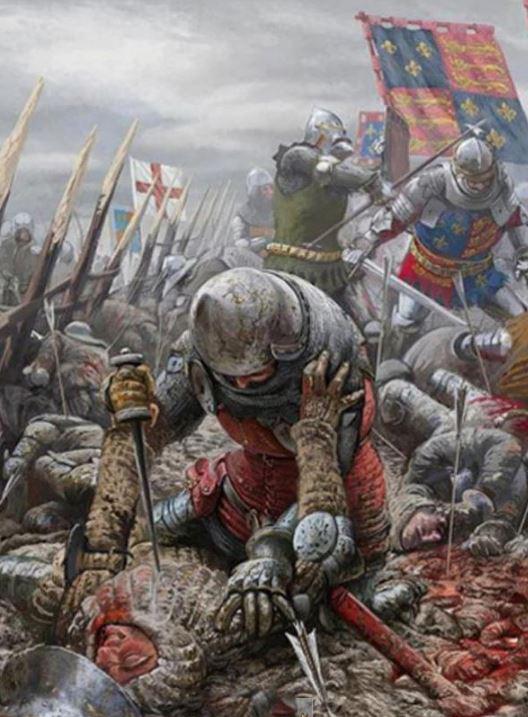
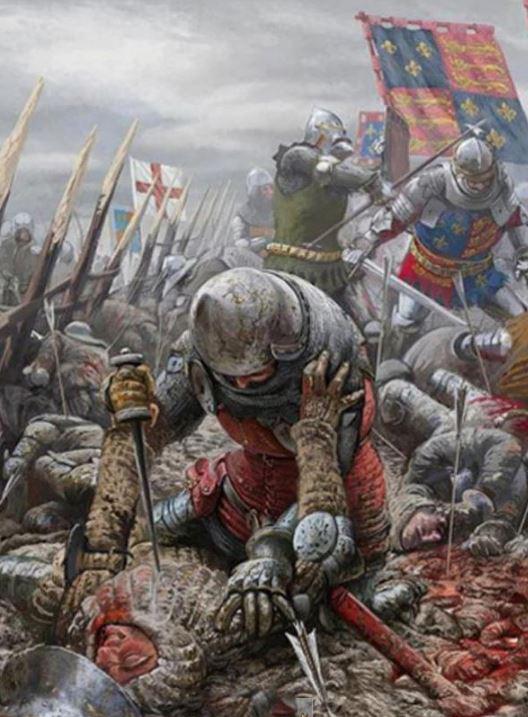
The Battle of Agincourt was a major English victory in the Hundred Years' War. The battle took place on 25 October 1415 (Saint Crispin's Day) in the County of Saint-Pol, Artois, some 40 km south of Calais. Along with the battles of Crécy (1346) and Poitiers (1356), it was one of the most important English triumphs in the conflict. England's victory at Agincourt against a numerically superior French army crippled France, and started a new period in the war during which the English began enjoying great military successes.
After several decades of relative peace, the English had renewed their war effort in 1415 amid the failure of negotiations with the French. In the ensuing campaign, many soldiers perished due to disease and the English numbers dwindled, but as they tried to withdraw to English-held Calais they found their path blocked by a considerably larger French army. Despite the disadvantage, the following battle ended in an overwhelming tactical victory for the English.
King Henry V of England led his troops into battle and participated in hand-to-hand fighting. The French king of the time, Charles VI, did not command the French army himself, as he suffered from severe psychotic illnesses with moderate mental incapacitation. Instead, the French were commanded by Constable Charles d'Albret and various prominent French noblemen of the Armagnac party.
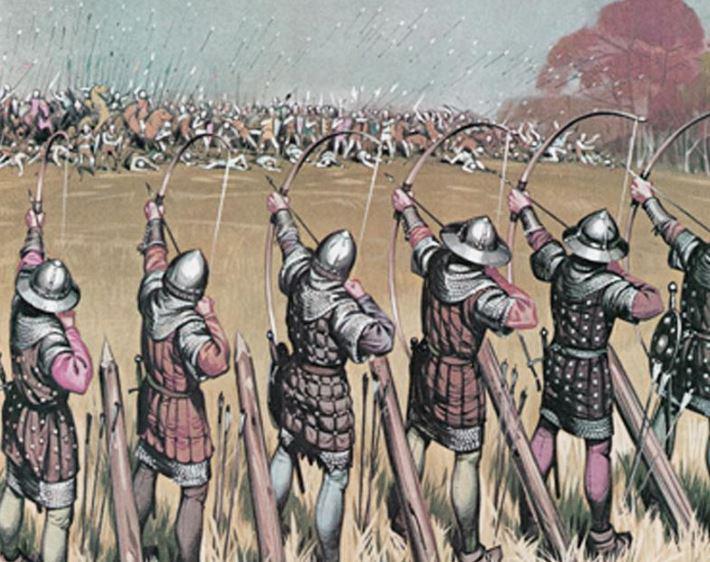
This battle is notable for the use of the English longbow in very large numbers, with the English and Welsh archers forming up to 80 percent of Henry's army. The decimation of the French cavalry at their hands is regarded as an indicator of the decline of cavalry and the beginning of the dominance of ranged weapons on the battlefield.
Agincourt is one of England's most celebrated victories. The battle is the centrepiece of the play Henry V by Shakespeare. Juliet Barker in her book Agincourt: The King, the Campaign, the Battle ( published in 2005) argues the English and Welsh were outnumbered "at least four to one and possibly as much as six to one". She suggests figures of about 6,000 for the English and 36,000 for the French, based on the Gesta Henrici's figures of 5,000 archers and 900 men-at-arms for the English, and Jean de Wavrin's statement "that the French were six times more numerous than the English". The 2009 Encyclopædia Britannica uses the figures of about 6,000 for the English and 20,000 to 30,000 for the French. Part of an original medieval collection we acquired, of antiquities and in particular early Anglo Welsh relics of warfare from ancient French battle sites recovered up to 220 years ago.
Richard Lassels, an expatriate Roman Catholic priest, first used the phrase “Grand Tour” in his 1670 book Voyage to Italy, published posthumously in Paris in 1670. In its introduction, Lassels listed four areas in which travel furnished "an accomplished, consummate traveler" with opportunities to experience first hand the intellectual, the social, the ethical, and the political life of the Continent.
The English gentry of the 17th century believed that what a person knew came from the physical stimuli to which he or she has been exposed. Thus, being on-site and seeing famous works of art and history was an all important part of the Grand Tour. So most Grand Tourists spent the majority of their time visiting museums and historic sites.
Once young men began embarking on these journeys, additional guidebooks and tour guides began to appear to meet the needs of the 20-something male and female travelers and their tutors traveling a standard European itinerary. They carried letters of reference and introduction with them as they departed from southern England, enabling them to access money and invitations along the way.
With nearly unlimited funds, aristocratic connections and months or years to roam, these wealthy young tourists commissioned paintings, perfected their language skills and mingled with the upper crust of the Continent.
The wealthy believed the primary value of the Grand Tour lay in the exposure both to classical antiquity and the Renaissance, and to the aristocratic and fashionably polite society of the European continent. In addition, it provided the only opportunity to view specific works of art, and possibly the only chance to hear certain music. A Grand Tour could last from several months to several years. The youthful Grand Tourists usually traveled in the company of a Cicerone, a knowledgeable guide or tutor.
The ‘Grand Tour’ era of classical acquisitions from history existed up to around the 1850’s, and extended around the whole of Europe, Egypt, the Ottoman Empire, and the Holy Land.
Code: 24361
345.00 GBP