
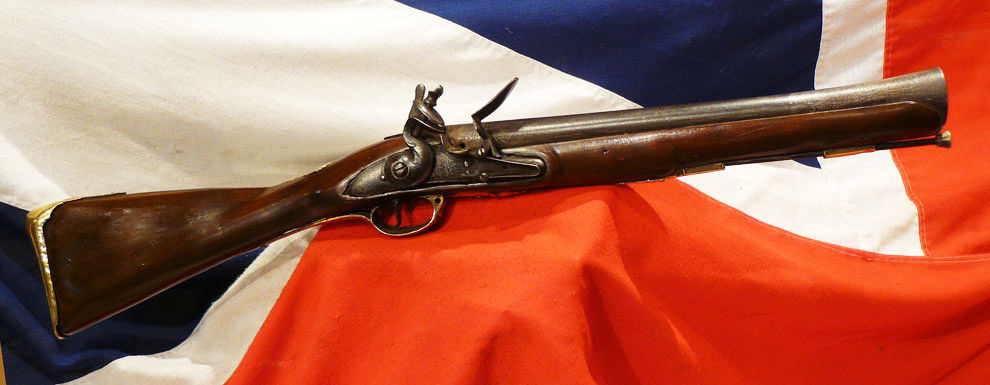
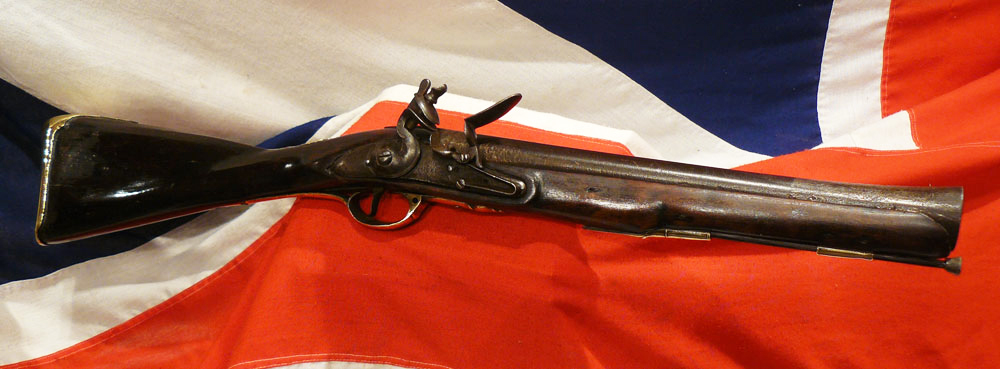
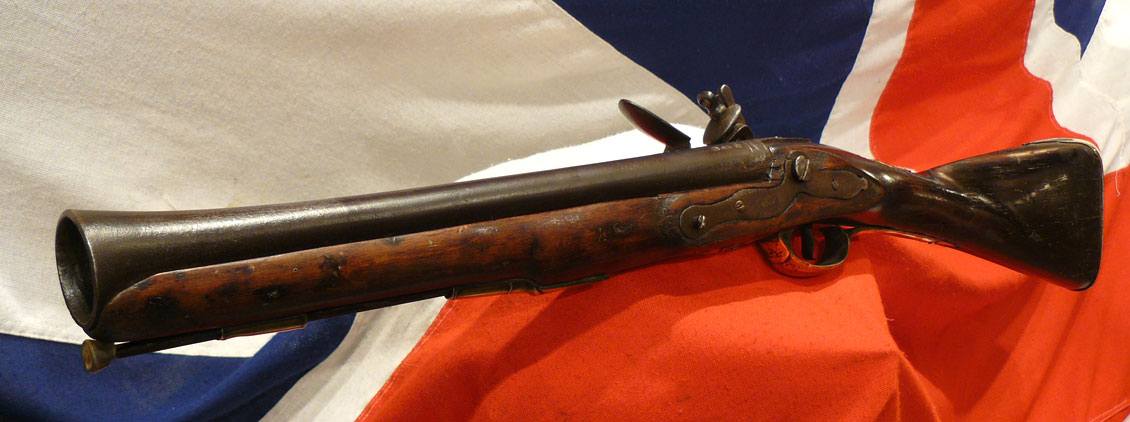

An Amazing 18th Century Naval ‘Behemoth’ Blunderbuss by Govers of London Napoleonic Wars ‘Martial‘ Ships Blunderbuss cum Swivel Cannon
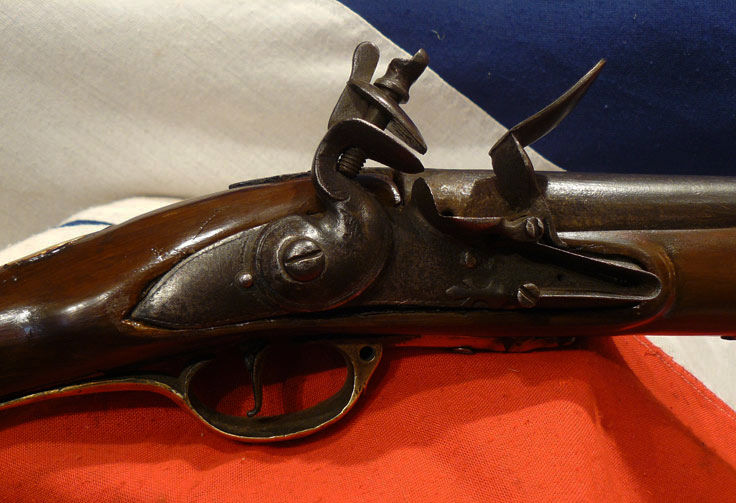
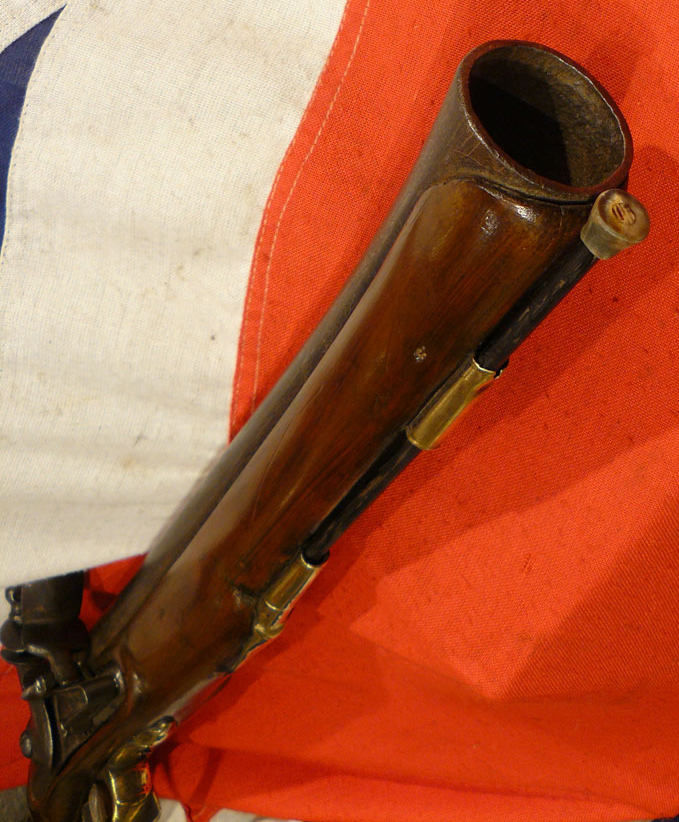
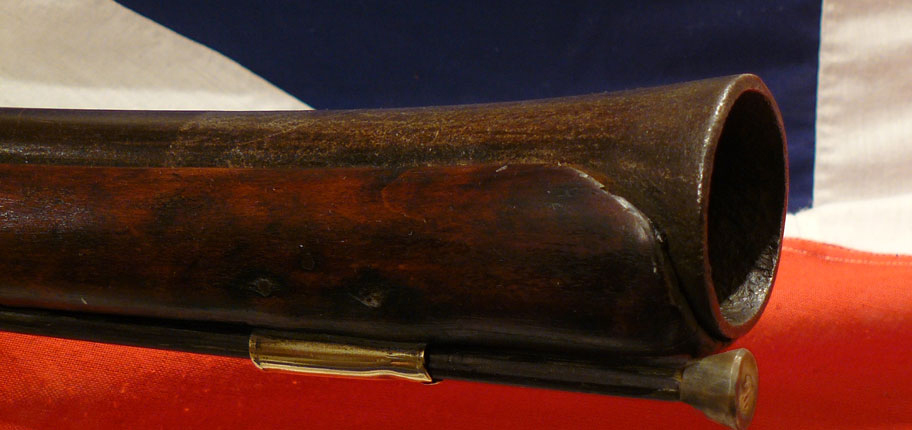
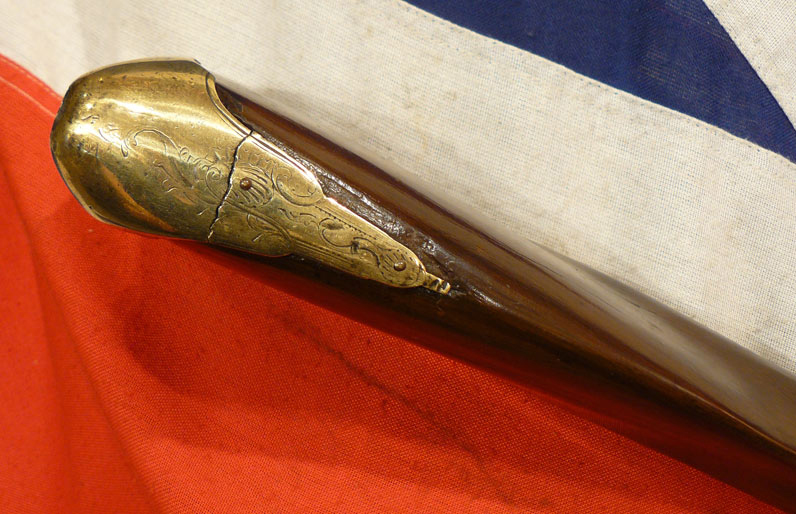
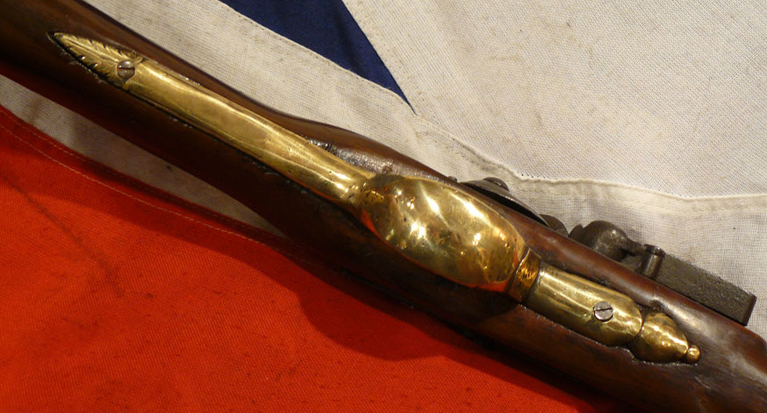
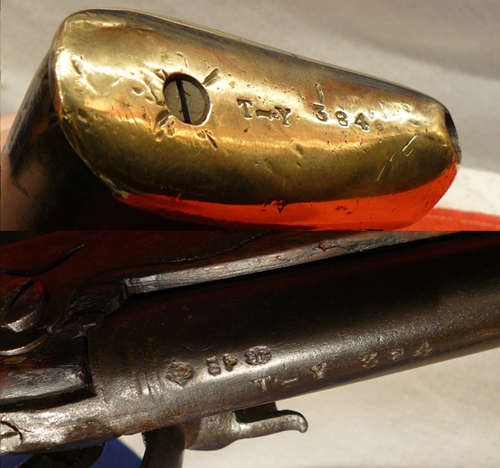
Made and used In the American Revolutionary War period and used right through the Napoleonic Wars up to the 1840’s. This blunderbuss is a true titan of a hand held gun, formidable, substantial and simply oozing power and presence. No man would fail to tremble at the sight of this gun's muzzle pointed his way. Made from around 1750 to 1780, it is probably the largest size of naval flintlock that a man could fire from the hip or shoulder without doing personal injury to the user. When on ship it could have had a spigot block added with a removable iron bracket, and it would have to have been mounted on a swivel at the side of the ship. It last saw service in Ireland, County Tyrone, in the 1840’s. This gun has several distinctive features. The lock has the early so-called 'banana' shape and the brass mounts are typically engraved with strawberry leaf influences typical of the 18th century. The side plate is typical military and sea service ‘Land’ pattern type, in steel. Originally intended for military or maritime sea service purposes, these arms can be traced back to 1598, when Germany's Henrich Thielman applied for a patent for a shoulder arm designed for shipboard use to repel enemy boarders. The blunderbuss quickly became popular with the Dutch and English navies. England's growing maritime power seems to have fuelled production of these short bell-barrel arms, which were useful during close-in engagements between warships by enabling marines clinging to ship's rigging to use them against the gun crews of opposing vessels. The barrels were of steel or brass and the furniture of the blunderbuss were typically made from brass, with stocks most commonly made from walnut. Other, less robust woods were sometimes used, but their tendency to shatter ensured that walnut would remain in widespread use as a stocking material. The blunderbuss played a role during the English Civil War of 1642-48, and these arms were widely used as a personal defence arm in England during the Commonwealth Period. The lack of an organized system of law enforcement at that time, coupled with the growing threat posed by highwaymen, placed the burden of protecting life and property in the hands of honest citizens. Although some blunderbusses bore the royal cipher of the Sovereign, they typically did not feature the Broad Arrow identifying government ownership or the markings of the Board of Ordnance. Several brass- and iron-barrelled blunderbusses were captured from the forces of Lord Cornwallis upon the latter's surrender to the Continental Army at Yorktown, Virginia in the final land campaign of the American Revolution. This may well have been the very kind as used in that engagement. As with all our antique guns no license is required as they are all unrestricted antique collectables. The stock on this gun, during the Georgian period, has been very slightly slimmed at the butt, possibly due to an armourer's field repair in it's working life, and surface wear to the finish. The specific history of this gun and it's makers are as follows; The Govers family of London also had a gunsmith with a shop and trade in Ireland, and this specific gun was last recorded registered and used in Ireland, in County Tyrone, in 1843 and stamped on the gun twice accordingly. This gun has likely seen incredible combat service and shows contemporary field work to the butt plate and stock, just to be expected for gun of this purpose and age. 32.5 inches long, 16.5 inch barrel As with all our antique guns no license is required as they are all unrestricted antique collectables
Code: 21444
3000.00 GBP